REVIEW · KYOTO
Kyoto: Newly Opened Tea Ceremony – Sanjo Chasuian
Book on GetYourGuide →Operated by Sanjo Chasuian · Bookable on GetYourGuide
Want calm in Kyoto, fast? Sanjo Chasuian is newly opened, starting with a crawl-in Nijiriguchi entrance and then English tea guidance. It’s also part of a small cultural facility that includes sake tasting options, so the place has a broader Japanese-food vibe than a one-room show.
I really like the hands-on core of this experience. You get a first matcha bowl made by the host, then you whisk your own bowl right after, so you taste and learn in the same hour. I also appreciate the included seasonal wagashi (Japanese sweets) from a Kyoto confectioner with over 100 years of history.
The main thing to plan for is comfort and timing. Bring socks and get there early, because once the session begins the door locks and late entry isn’t possible for the group session.
In This Review
- Key things to know before you go
- Entering Sanjo Chasuian: the Nijiriguchi moment
- One hour of tea: how the ceremony unfolds
- Two bowls of matcha: why learning by doing hits different
- Wagashi and the 100+ year Kyoto sweets angle
- Shared group format: small, quiet, and still personal
- Price and value: is $31 worth it
- Practical tips: socks, seating, and the optional uchikake
- Should you book Sanjo Chasuian?
- FAQ
- How long is the Kyoto tea ceremony at Sanjo Chasuian?
- What’s included in the $31 per person price?
- Do I need to bring socks?
- Is the instruction available in English?
- Are chairs available during the ceremony?
- What happens if I’m late to the start time?
- Can I cancel and get a full refund?
Key things to know before you go
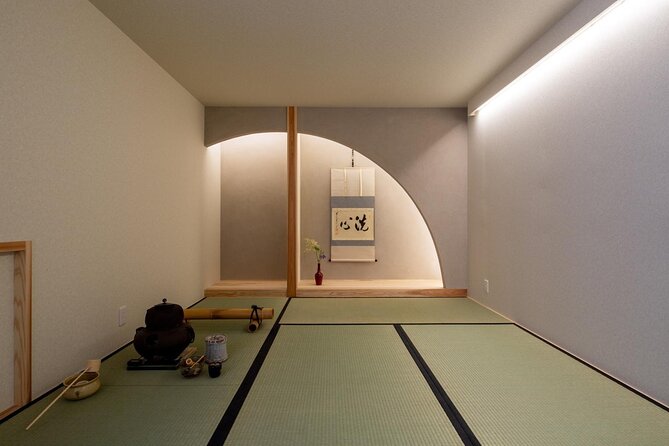
- Newly opened and easy to reach: about a 5-minute walk from Subway Karasuma Oike Station.
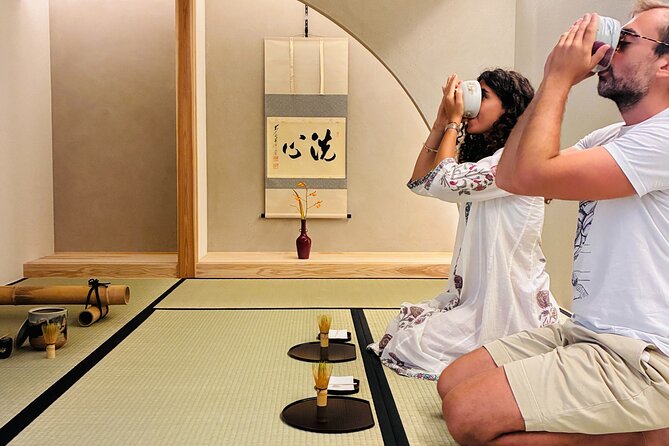
- Two bowls of matcha: one prepared by the host, one whisked by you (with a companion if you want).
- Nijiriguchi crawl-in entrance: a low entry that helps you shift into the ceremony mode fast.
- Seasonal sweets are included from a Kyoto sweet shop with 100+ years behind it.
- Small shared group limited to 10 participants, with chairs available if you prefer sitting.
- You can buy tea items (like matcha and certain utensils) after the ceremony; pictures/videos are also provided while you whisk.
Entering Sanjo Chasuian: the Nijiriguchi moment
The ceremony starts before you even taste anything. You’ll enter through Nijiriguchi, a crawl-in doorway that feels intentionally small—just enough to cut off street noise and reset your brain. It’s a clever design choice: you physically slow down, and the room does the rest.
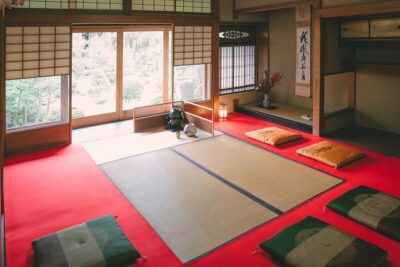
Sanjo Chasuian is newly opened, so the setting feels fresh without feeling gimmicky. It’s set up for international visitors, and the session is guided in English, which matters because the tea ceremony is all about small details—how you hold a bowl, how you whisk, how you move your hands.
One practical note: this isn’t a casual “sit and watch” style experience. You’ll be participating. If you don’t love quiet, structured activities, that’s your warning sign. If you like focus for a short, contained time block, you’ll probably find it very satisfying.
And yes, chairs are available. The experience doesn’t force everyone into floor seating, which makes it more realistic for different bodies and comfort levels.
You can also read our reviews of more tours and experiences in Kyoto.
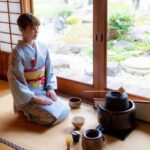
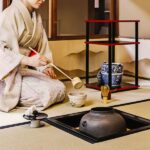
One hour of tea: how the ceremony unfolds
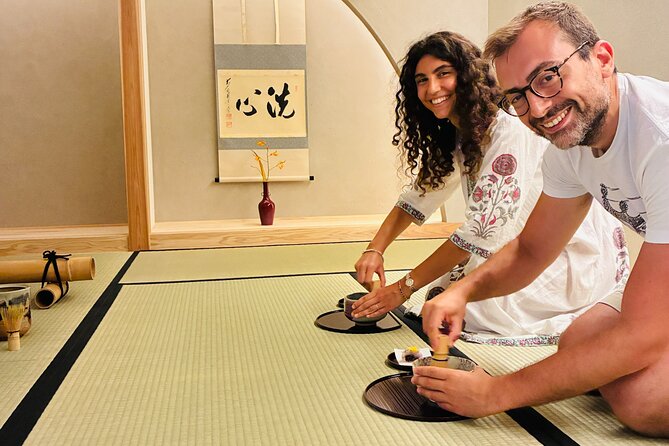
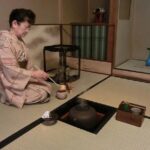
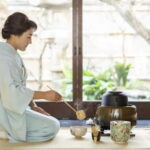
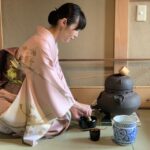
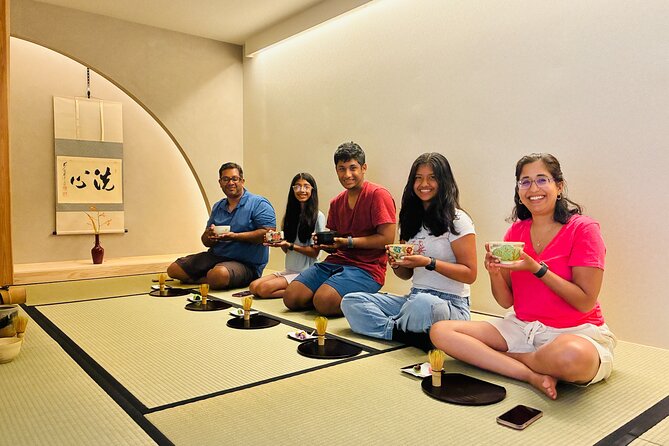
You’re there for about 1 hour, and the structure is paced so you understand what’s happening before you repeat the actions. The flow goes in stages: first, you learn the tea ceremony’s background and meaning. Then you taste a matcha bowl prepared by the host and enjoy included seasonal sweets.
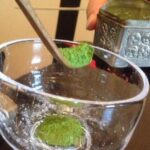
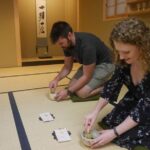
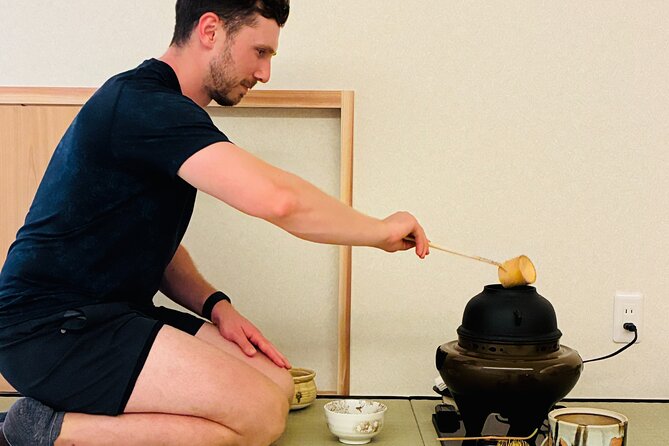
After that comes the hands-on part. The host demonstrates the process step-by-step, including how to choose a tea bowl and how to whisk properly. Then you make your own bowl of matcha.
The room stays calm by design. The guidance explains the ceremony before the actual whisking moment, and the pace is meant to keep distractions low. One person specifically liked that explanations happen up front, so the actual tea-making can stay focused and quiet.
If you’re the type who likes to ask questions, good news: the hosts answer questions and help people feel included. I’d still plan to keep your questions brief until the explanation time, so you don’t disrupt the atmosphere.
Two bowls of matcha: why learning by doing hits different
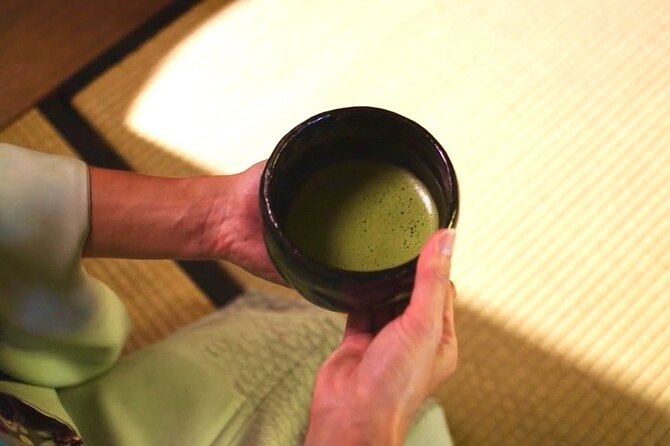
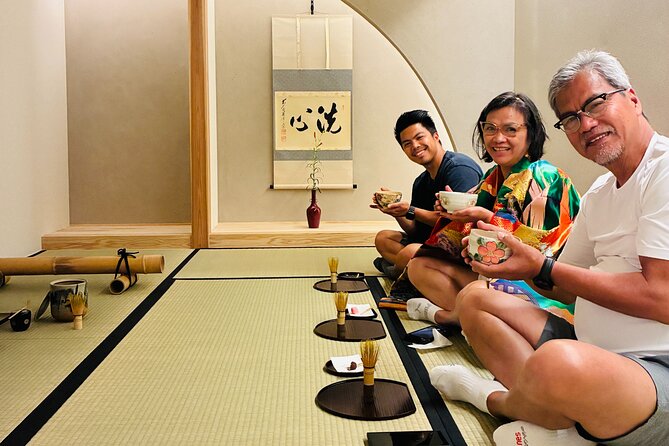
Most Kyoto tea ceremonies give you one cup and a quick demo. Here, you get two bowls of matcha—one made by the host, and one you make yourself or with a companion. That second bowl is where the penny drops.
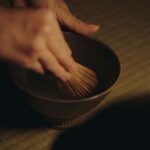
When you whisk your own matcha, you start noticing what the host has been describing: timing, wrist control, and how the whisking affects texture. It also makes the whole ritual feel less mysterious and more skill-based. You’re not just consuming tradition—you’re practicing it.
The hosts’ teaching style seems to land well for English-speaking visitors. People mention guides like Yuko and Reina (and also names such as Yoku-san and Renna) guiding in clear English and walking people through each step. Even when English pronunciation can vary by host, the overall experience still works because instruction is physical as well as verbal: you watch, then you copy.
Also, the staff will take pictures and videos while you’re making the matcha. So you get a record without needing to break the flow to handle a phone at the wrong moment.
Wagashi and the 100+ year Kyoto sweets angle
The matcha is only half the story. You also get traditional seasonal Japanese confectionary (wagashi) from a Kyoto sweet shop with over 100 years of history.
This matters because wagashi isn’t just a dessert add-on. In tea culture, sweets often balance the bitterness of matcha and set the mood for the ceremony. Seasonal wagashi also ties into the idea of paying attention to what the moment calls for, not just what you happen to want.
People consistently note that the sweets taste good and pair well with the tea. If you’re coming from a busy Kyoto day, this course-sized portion is a nice reset—small, delicate, and not heavy.
If you’re someone who hates sweet clutter, you’ll still likely like it here because it’s curated as part of the ritual, not as a buffet of options.
Shared group format: small, quiet, and still personal
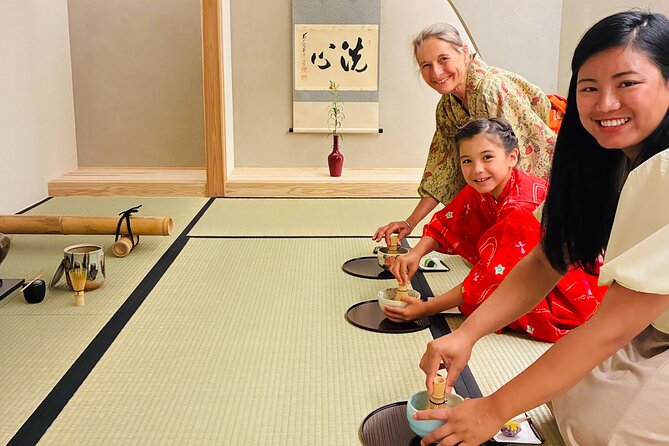
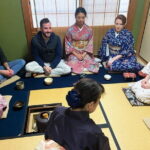
This is a small group shared session, limited to 10 participants. That limit is important. With a bigger group, tea ceremonies can turn into a performance with minimal interaction. Here, you still get hands-on time, and the host can keep watch over technique.
There’s also a subtle social benefit: because the ceremony stays calm and structured, you don’t need to perform. People come, learn, whisk, sip, and move on. That’s a plus if you prefer your cultural activities organized rather than freestyle.
One thing to watch: timing is strict in the room. Entry is allowed from 5 minutes before the start time, and once the session begins, the door locks. Even being a minute late can mean you miss the session and don’t get a refund. So treat this like a train departure, not a casual reservation.
If you need a more tailored setup—like extra support—there’s an option language mentions: children under 5 years old or requiring an interpreter must book the private plan. Also note the experience is listed as not suitable for wheelchair users and children under 6 years.
Price and value: is $31 worth it
At $31 per person, this experience is priced like a short cultural workshop—except you’re not just learning theory. You’re doing the ritual, tasting it twice, and eating the included seasonal sweets.
Here’s what you get for that price:
- Two matcha servings, one hosted and one whisked by you
- Seasonal wagashi included
- English-led guidance
- The Nijiriguchi entry experience
- A small group setting (max 10)
- Photos/videos while you make matcha
- Optional purchases afterward (matcha and certain utensils)
That combination is where the value comes from. If you’ve paid similar money elsewhere for watching someone else work, you’ll probably feel the difference when your hands are involved.
There’s also a grand-opening discount running until September 15th, so the “$31” price may improve depending on your booking date. When you book, check the current total so you don’t miss the opening deal.
Practical tips: socks, seating, and the optional uchikake
Let’s make this easy to plan.
First: wear or bring socks. The ceremony requires socks during the experience. You can also use the stairs-and-sitting approach: chairs are available if you want them, so you don’t have to guess whether your body will be comfortable.
Second: go in knowing the room asks for quiet. It’s designed to maintain calm so the ceremony can work as ceremony, not talk show. If you want a chatty activity, choose a different plan.
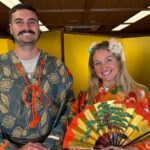
Third: clothing. There’s no standard kimono rental or dressing service included. But there is an optional uchikake (a coat-style kimono experience) for ¥1,500 (tax included). It’s limited in quantity, not available via advance reservation, and handled on the day—so plan to ask staff early when you arrive.
Finally: entry timing. The door opens only up to 5 minutes before the start time, and then it locks once the session begins. That rule is non-negotiable for the shared format.
Should you book Sanjo Chasuian?
Book this if you want a tea ceremony that’s structured, hands-on, and easy to fit into a Kyoto day. The big reasons to say yes are the two-bowl matcha format and the fact that English guidance helps you understand what you’re doing, not just perform gestures.
Skip it (or pick a different option) if you’re uncomfortable with strict start times, don’t want a quiet shared room, or need accessibility support that isn’t listed as available here. Also, the requirement of socks and the suitability rules for children are worth checking before you commit.
If you’re deciding last minute, my practical rule is simple: if you can arrive a bit early and you like hands-on cultural activities, this is a great way to slow down for an hour in Kyoto.
FAQ
How long is the Kyoto tea ceremony at Sanjo Chasuian?
The experience runs for 1 hour.
What’s included in the $31 per person price?
You receive two cups of matcha (one made by the host and one you make yourself or with a companion) and traditional seasonal Japanese confectionary.
Do I need to bring socks?
Yes. You must bring or wear socks during the experience.
Is the instruction available in English?
Yes. The instructor provides guidance in English.
Are chairs available during the ceremony?
Yes, chairs are available for those who prefer them.
What happens if I’m late to the start time?
Entry is allowed from 5 minutes before the start time. Once the session begins, the door is locked, and even 1 minute late means you can’t join, with no refunds.
Can I cancel and get a full refund?
Yes. You can cancel up to 24 hours in advance for a full refund. You can also reserve now and pay later.