REVIEW · KYOTO
Kyoto Tea ceremony with Japanese Flower Arrangement Ikebana
Book on Viator →Bookable on Viator
A quiet Kyoto workshop beats the big sights. You pick seasonal flowers at a flower shop in a traditional townhouse, then build your own ikebana to be shown in a tokonoma during tea ceremony. It’s one of those experiences where the pace is calm, and the details matter.
Two things I really like: you start by choosing the stems yourself, and the instructors coach you in a way that works even if you’re new. One possible drawback: it’s about 90 minutes, so you’ll create one arrangement and move on—not a long, repeated practice session.
In This Review
- Key things that make this class worth your time
- Kyoto’s 100-year townhouse: where the mood changes fast
- Start with flower picking: your arrangement begins before the lessons
- Ikebana workshop: more natural than “perfect”
- Guidance that works for beginners
- From workshop table to tokonoma: your ikebana becomes part of the room
- Tea ceremony: watch a master, then try the role
- What “wabi-sabi” looks like in real hands
- Why the ikebana + tea ceremony pairing is such good value
- Price and value: $61 for a small-group, two-part experience
- Who should book this Kyoto tea and ikebana experience
- Potential considerations before you go
- Getting there and timing without stress
- Can you take your ikebana back to your hotel?
- Should you book this Kyoto tea ceremony and Ikebana class?
- FAQ
- Where is the meeting point?
- How long does the experience take?
- How much does it cost?
- Is this experience okay for beginners?
- What do I do during the ikebana workshop?
- Where will my ikebana be shown?
- Do I just watch the tea ceremony?
- What is the group size?
- What is the cancellation policy?
Key things that make this class worth your time
- A townhouse setting near Kinkaku-ji and Daitoku-ji that feels local, not touristy
- Pick-your-own seasonal flowers before you learn the arrangement
- Beginner-friendly guidance for ikebana and the tea ceremony
- Your ikebana gets displayed in the tokonoma alcove during tea ceremony
- A chance to play a role as a tea master, not just watch
- Small group size (max 6) for a more personal feel
Kyoto’s 100-year townhouse: where the mood changes fast
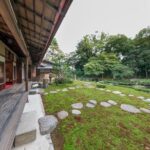
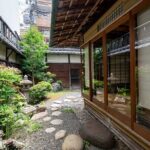
This class starts in a renovated traditional townhouse in Kyoto’s Kita Ward area, about 100 years old. It’s the kind of place where you naturally lower your voice and slow your hands. The location is also convenient for sightseeing—you’re roughly near Kinkaku-ji and Daitoku-ji, but you’re doing the workshop on a calmer street side of town.
If you’ve been hitting temples all day, this is a helpful contrast. Temples can be big and crowded; this is smaller, quieter, and focused on materials you can hold. The small group size (up to 6) matters here. With fewer people, you get more attention and less waiting around.
You can also read our reviews of more tours and experiences in Kyoto.
Start with flower picking: your arrangement begins before the lessons
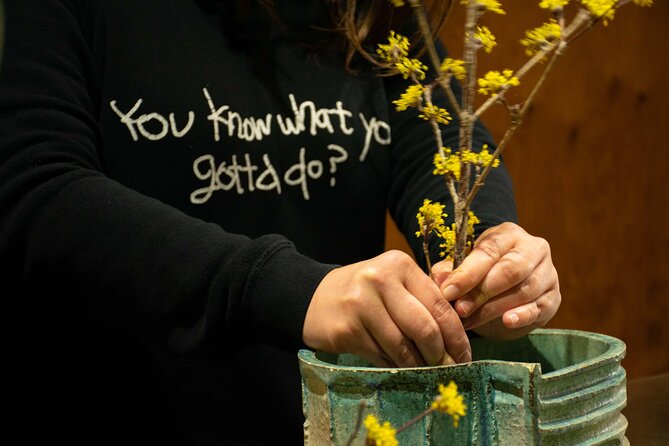
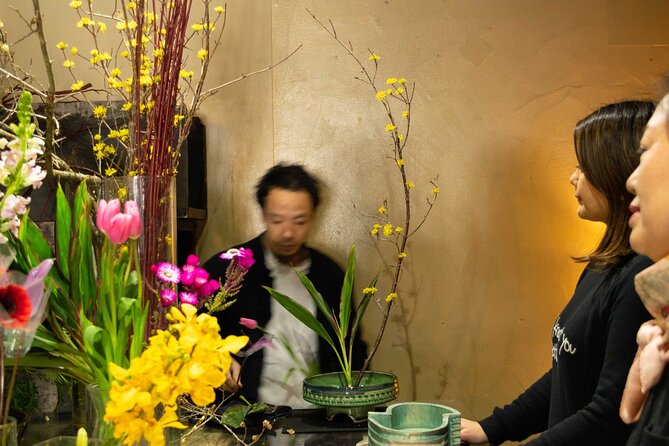
One of the best parts is that the experience doesn’t start with instructions. It starts with you. At the flower shop, you select your favorite flowers from what’s available. The shop’s offerings are seasonal, so the arrangement feels tied to the time of year instead of being a “made-for-photos” setup.
This step changes how you approach the workshop. When you choose the stems yourself, the ikebana stops being a craft you complete and starts being a composition you make. Even if your understanding of ikebana is basic at first, your own choices give the instructor something concrete to work with.
Practical note: plan to spend your attention here. Don’t rush picking. Look closely at shape, color, and how the stems naturally lean or curve.
Ikebana workshop: more natural than “perfect”
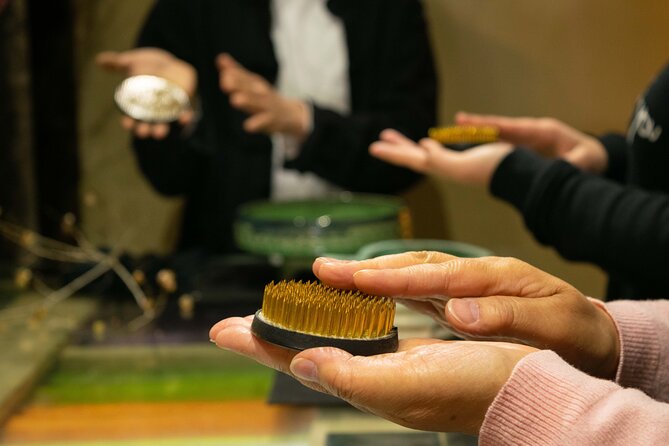
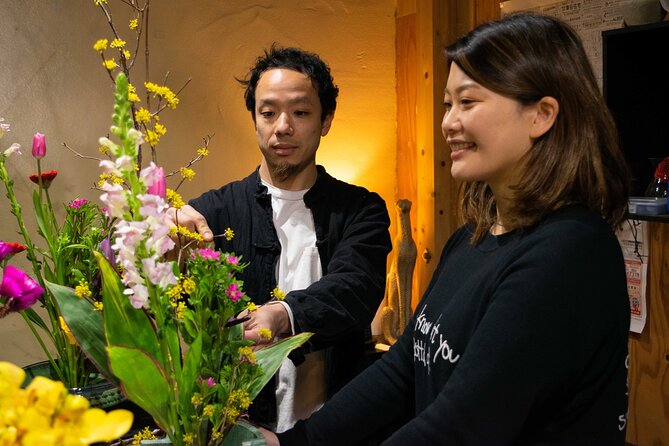
You’ll learn the history and art of ikebana while working with your chosen flowers. And while ikebana has classic styles, the instructor’s approach is described as slightly different from the most rigid forms. The emphasis is on bringing out the beauty of the plants while respecting their natural form.
In plain terms, that means you’re not trying to force everything into a strict pattern. You’re looking at the flowers as living shapes, then building an arrangement that feels honest to those shapes. The style is compared to something with a wabi-sabi feeling—practical and a little raw, with an acceptance of natural character rather than perfection.
If you like arts that feel “close to reality,” you’ll probably enjoy this angle. It’s also a nice mental shift. Instead of thinking, Am I doing it right?, you can think, What does this plant want to be?
Guidance that works for beginners
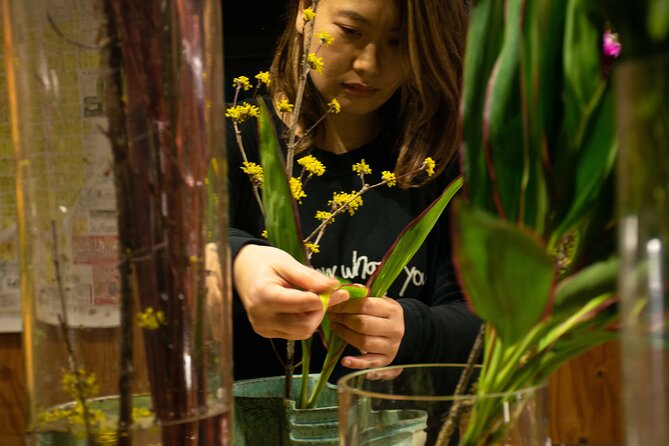
The workshop is explicitly beginner-friendly. That matters because ikebana can sound intimidating if you’ve only seen formal arrangements in museums. Here, the setup is designed so you can get results without already knowing terminology.
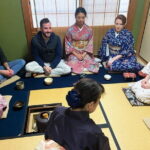
The group is small, and the instructors are patient. Based on the experience’s feedback, the teaching style is gentle and informative. That’s exactly what you want in a hands-on class, especially if you’re traveling solo or feeling shy about asking questions.
From workshop table to tokonoma: your ikebana becomes part of the room
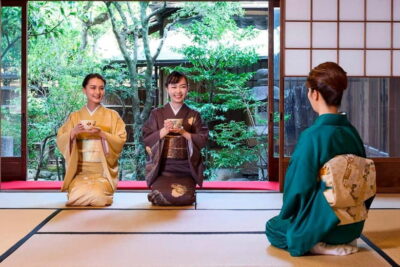
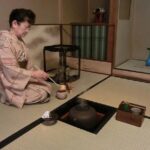
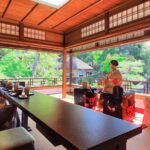
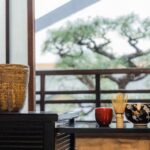
After you finish the ikebana portion, you move into a traditional Japanese room where tea ceremony takes place. The key moment is display: you’ll have your ikebana placed in the tokonoma (the alcove). This isn’t just a “photo stop.” It changes the meaning of what you made.
A tokonoma is meant to frame a single focus—often art or seasonal objects—so your flowers become part of a formal, intentional setting. Seeing your arrangement mounted for that space helps you understand why ikebana is often treated like more than decoration. It’s a way of selecting, shaping, and presenting time through nature.
Also, the contrast is educational. You’ll watch how the space and ceremony rhythm slow everything down. Even if you don’t fully understand each element at first, you’ll feel the logic: the room is structured to support attention.
Tea ceremony: watch a master, then try the role
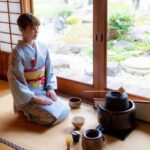
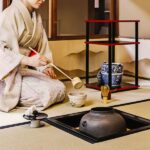
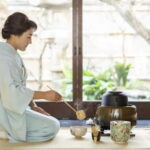
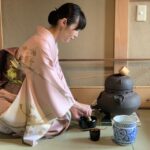
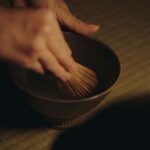
Tea ceremony is part performance, part etiquette, and part atmosphere. Here you’ll see how the master conducts it, which gives you a baseline for what to look for—timing, gestures, and the overall calm pace.
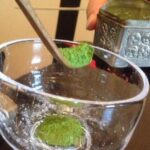
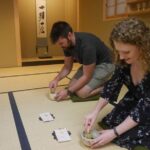
Then there’s a hands-on option: you can play a role as a tea master if you want. That’s one reason this experience feels more satisfying than classes where you only observe. Participating—even in a limited role—helps your body learn the rhythm in a way that watching alone can’t.
If you’re hoping for a Zen-leaning experience, this combo is a good fit. The overall framing of the class is described as a nature-focused, reflective time—something like meditation, with room for self-dialogue. You’re not just collecting facts. You’re practicing attentiveness.
What “wabi-sabi” looks like in real hands
The workshop is guided as a kind of reverent practice toward plants. You’re asked to respect how they grow, not just how they photograph. That’s where the wabi-sabi comparison lands.
Wabi-sabi isn’t about making things look messy. It’s about letting natural imperfections be part of the design. In an ikebana context, that can mean:
- using stems that already bend or curve
- choosing flowers that bring character, not just bright color
- accepting that your arrangement may not match someone else’s “ideal” textbook form
If that sounds appealing, you’ll probably love the way the class teaches you to trust the materials. It can also make your finished arrangement feel more personal—less like a craft kit, more like a small reflection.
Why the ikebana + tea ceremony pairing is such good value
A lot of cultural activities in Kyoto are one-note: either a workshop or a ceremony. This one stacks them. You create something from nature, then you place it into the room where tea ceremony happens.
That pairing gives you a loop:
1) You select and shape nature.
2) You present it formally.
3) You slow down with tea ceremony in the same atmosphere.
It’s not just “two activities for the price of one.” It’s a linked experience where each part helps you understand the other. Ikebana teaches you attention to form. Tea ceremony teaches attention to ritual and timing. Together, the lesson sticks.
Price and value: $61 for a small-group, two-part experience
At $61 for roughly 1.5 hours, this is priced like a focused cultural workshop rather than a high-end private lesson. The value comes from what you actually get:
- you make an ikebana arrangement from seasonal flowers
- you get instruction and coaching as a beginner
- your ikebana is displayed in the tokonoma
- you watch tea ceremony and can take part as a tea master
- the group is capped at 6, which keeps the experience more personal
You’re also paying for a traditional setting: a renovated townhouse and a traditional room for ceremony. That kind of ambiance costs money and usually limits the class size.
If you’re trying to compare options, think about this: the “cheap” classes often skip the ceremony or skip real instruction. Here, you’re getting the full package.
Who should book this Kyoto tea and ikebana experience
This experience is especially well-suited for:
- solo travelers who want something calm and not overpacked
- beginners who want patient guidance without feeling rushed
- people who like Japanese arts that connect nature, form, and reflection
- travelers who want a break from fast temple hopping
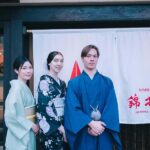
The small group and family-like atmosphere reported in feedback also suggest it’s a good choice if you want a warm, human feel rather than a big-group program.
Potential considerations before you go
The biggest practical consideration is time. With about 90 minutes on the clock, you’ll complete one arrangement and then shift into tea ceremony. If you’re the type who loves to linger, you may finish feeling like you want more practice and more repetition.
Also, because it takes place in a townhouse and traditional room, it’s not a “show up and sit anywhere” style experience. You’ll want to arrive ready to follow directions and keep your attention on the instructor.
Getting there and timing without stress
The meeting point is at 44-4 Murasakino Kamimonzenchō, Kita Ward, Kyoto, 603-8217, Japan. The area is near public transportation, so you shouldn’t need a complicated plan, but do check your route in advance because you’ll be in residential streets, not a central landmark plaza.
Timing is simple: you’re looking at about 1 hour 30 minutes total, and the activity ends back at the meeting point.
You’ll receive a confirmation within 48 hours of booking, depending on availability, and you use a mobile ticket.
Can you take your ikebana back to your hotel?
If you want, you can take your floral creation with you. That’s one of those extras that makes the experience more memorable. You’re not just making something for a moment—you can bring a piece of that seasonal character back to your room.
Because you’ll be moving a real arrangement, it’s smart to think about transport. Even without special instructions listed, the safe approach is to plan for careful carrying right after the ceremony.
Should you book this Kyoto tea ceremony and Ikebana class?
I’d book it if you want Kyoto culture that’s quiet, hands-on, and meaningful. The combination is strong: you shape nature through ikebana, then place it in a formal alcove, then slow down with tea ceremony where you can even try a role as a tea master. The small group size and patient teaching style make it beginner-friendly without turning it into a watered-down experience.
Skip it if you only want a long, deeply technical ikebana lesson or if you prefer big sightseeing energy over a calm, indoor workshop pace. For most travelers, though, this is a very practical way to learn something real in a short time—and leave with a memory (and possibly flowers) you can actually hold.
FAQ
Where is the meeting point?
The meeting point is 44-4 Murasakino Kamimonzenchō, Kita Ward, Kyoto, 603-8217, Japan.
How long does the experience take?
It takes about 1 hour 30 minutes (approx.).
How much does it cost?
The price is $61.
Is this experience okay for beginners?
Yes. The experience is described as welcoming beginners, and you’ll get guided instruction for both ikebana and tea ceremony.
What do I do during the ikebana workshop?
You select seasonal flowers from the flower shop and create your own ikebana arrangement with instructor guidance. You can also learn about the history and art of ikebana during the workshop.
Where will my ikebana be shown?
Your ikebana will be displayed in a tokonoma (alcove) in the traditional Japanese room where the tea ceremony takes place.
Do I just watch the tea ceremony?
You’ll watch the master conduct the tea ceremony, and you can also play a role as a tea master if you wish.
What is the group size?
The activity has a maximum of 6 travelers.
What is the cancellation policy?
You can cancel for a full refund up to 24 hours in advance. If you cancel less than 24 hours before the start time, the amount paid is not refunded.