REVIEW · KYOTO
Kyoto: Table-Style Tea Ceremony at a Kyo-Machiya
Book on GetYourGuide →Operated by Éclat Japon · Bookable on GetYourGuide
Tea ceremony on a chair, not on the floor. This Kyoto table-style tea ceremony turns the usual kneeling routine into a comfortable, photo-friendly way to experience the spirit of matcha culture. You’ll also whisk creamy matcha with a bamboo whisk, guided step-by-step in an old-school Kyo-machiya setting.
I especially like how the experience goes beyond just drinking tea. You’ll learn the why behind the movements (including a simple PowerPoint history-style explanation), then try fun extras like calligraphy and flower arranging, plus taking photos in the townhouse garden atmosphere.
One consideration: this takes place in southern Kyoto’s outskirts, so plan your train time and give yourself buffer to find the meeting point calmly.
In This Review
- Key highlights worth planning for
- Entering a 100-Year-Old Kyo-Machiya Without the Floor Kneel
- Finding the Blue-Curtain Townhouse in Southern Kyoto (and Why It’s a Good Base)
- The Ceremony Starts With Purification and Quiet Rules
- Whisking Matcha, Plus Thick-Tea Latte Art and Traditional Sweets
- Taking Photos the Way the Hosts Clearly Want You To
- Calligraphy With Your Name (Kanji or Hiragana) and a Keepsake Scroll
- Flower Arranging: Why It Fits the Tea Ceremony Mood
- The Real Value: About $45 for 90 Minutes and Real Participation
- Kimono Rental: Worth It, Especially for Photos and Comfort Rules
- When to Go and What to Do Next: Sake Town, Fushimi Inari, or Uji
- Should You Book This Chair-Style Kyoto Tea Ceremony?
- FAQ
- How long is the Kyoto tea ceremony table experience?
- Do I need to sit on the floor?
- What’s included in the price?
- Do I get to make matcha myself?
- Do I need hotel pickup?
- Is the kimono option available, and when should I arrive?
Key highlights worth planning for
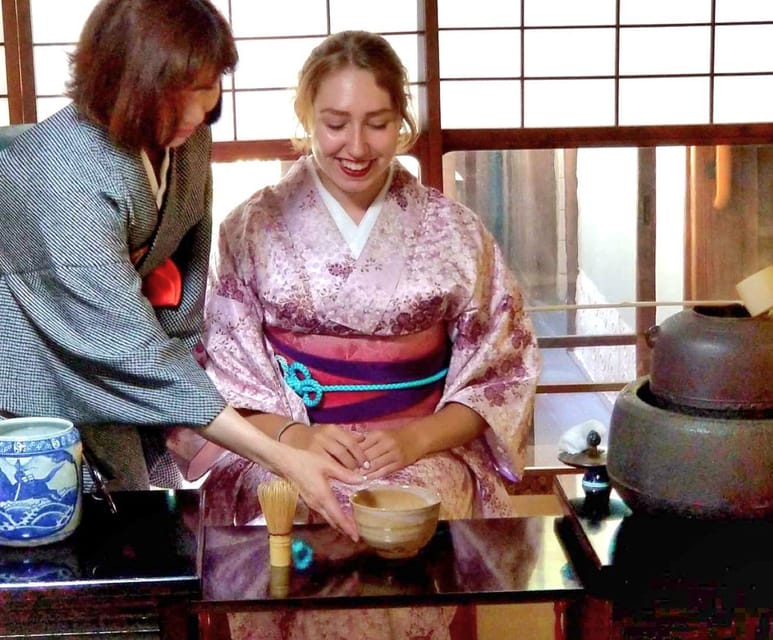
- Chair-style seating: no floor kneeling needed, so you can relax and enjoy.
- Your own matcha: whisk it yourself for that thick, frothy cup.
- Photo moments that feel period-correct: umbrellas, folding fans, and katana-style prop sword for pictures.
- Personal calligraphy: write your name in kanji or hiragana and take home a scroll/envelope.
- More than tea: flower arranging and a walkthrough of Kyoto townhouse details, altars, and antiques.
Entering a 100-Year-Old Kyo-Machiya Without the Floor Kneel
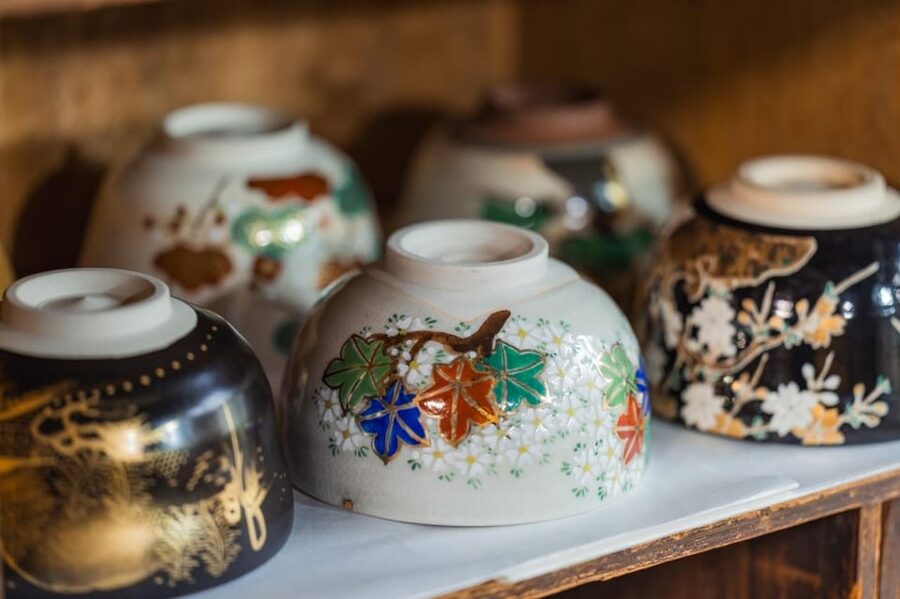
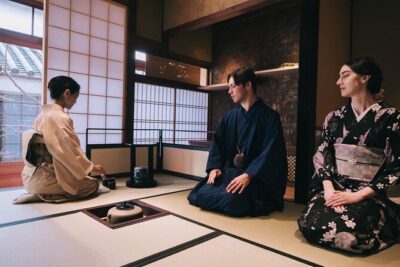
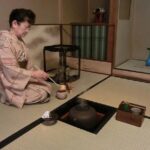
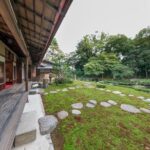
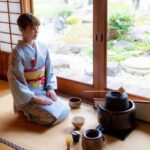
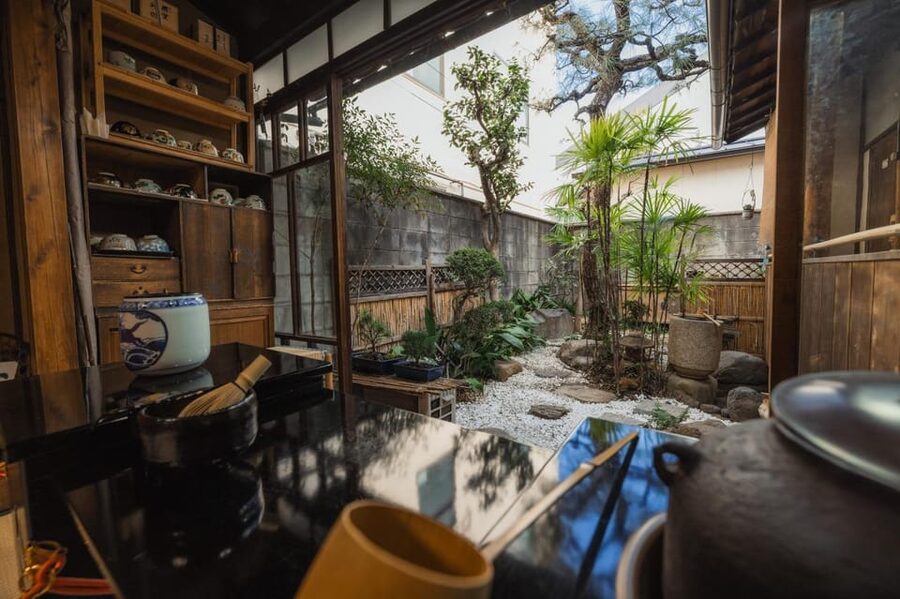
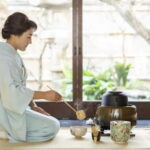
This is the kind of Kyoto experience that makes you slow down. You’re not just watching a demonstration in a modern room. You step into a 100+ year-old traditional townhouse that feels like daily life in old Kyoto, with garden space and architectural details that make the whole ceremony feel grounded.
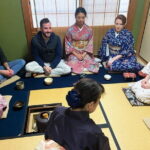
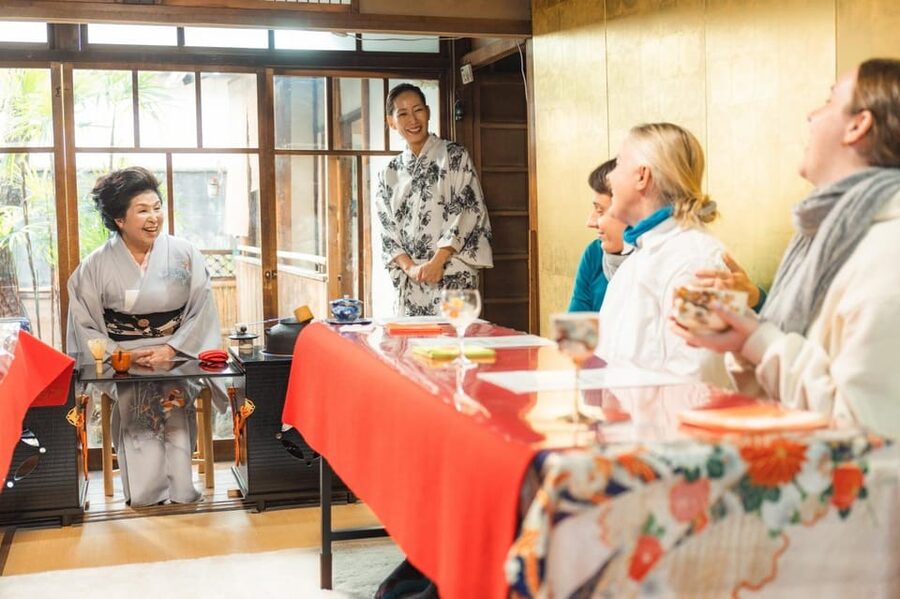
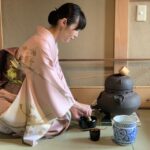
The biggest practical win is that you sit comfortably at a table with chairs. That small change matters more than you’d think. It lets you focus on the tea ritual instead of fighting stiff knees or adjusting position for a long session. You still get the manners and flow of a real tea ceremony, just with modern comfort built in.
You’ll also get a welcome drink right away—think sake, juice, Japanese tea, and similar options—so you’re not waiting around while everyone settles. It sets the tone: calm, attentive, and warm.
You can also read our reviews of more tours and experiences in Kyoto.
Finding the Blue-Curtain Townhouse in Southern Kyoto (and Why It’s a Good Base)
The meeting point is on the outskirts of Kyoto, about 20 minutes by train from central areas. That sounds mild on paper, but in practice it means you get two bonuses: fewer crowds than the densest tourist cores, and easy add-ons afterward.
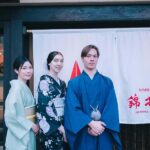
From Kintetsu Kyoto Station, you take an express train for about 15 minutes to Kintetsu Momoyama-Goryo-mae Station. If you’re coming from Keihan Gion-Shijo Station, you get off at Fushimi-Momoyama Station. Then you walk west on the Otesuji shopping arcade, and turn right at landmarks like the Mizuho Bank or the mobile shop labeled Rakuten. You’re looking for an old Kyoto townhouse with a blue curtain.
If that sounds like a lot, don’t panic. Just treat it like a short city scavenger hunt. It’s also why I like doing this in southern Kyoto: you’re not bouncing between ten areas. After the ceremony, you can eat and shop nearby in a place known for sake.
Also note: there’s no hotel pickup or drop-off. You’ll want to navigate on your own, so build a little breathing room into your schedule.
The Ceremony Starts With Purification and Quiet Rules
Before matcha ever hits your cup, you’ll learn how the ceremony prepares you mentally and physically. One standout moment is a purification ritual at a stone basin in the garden, similar to what you’d see at shrine spaces. It’s a small action, but it signals the shift from sightseeing mode into ceremony mode.
Next comes the cultural context. You’ll watch PowerPoint presentations that explain how the tea ceremony developed in Japan and what the spirit and manners are meant to express. For me, this is the difference between copying steps and actually understanding why those steps exist.
Then you stroll through the townhouse. You’ll see the architecture and details, including old Buddhist and Shinto altars (or antiques). This isn’t just decoration. It helps explain how tea culture fits into everyday Japanese spaces and not just museum-style displays.
Expect a calm, guided pace. The hosts walk you through what to do, what to notice, and what to avoid. And because the session runs about 90 minutes, it never feels like you’re rushed through the basics.
Whisking Matcha, Plus Thick-Tea Latte Art and Traditional Sweets
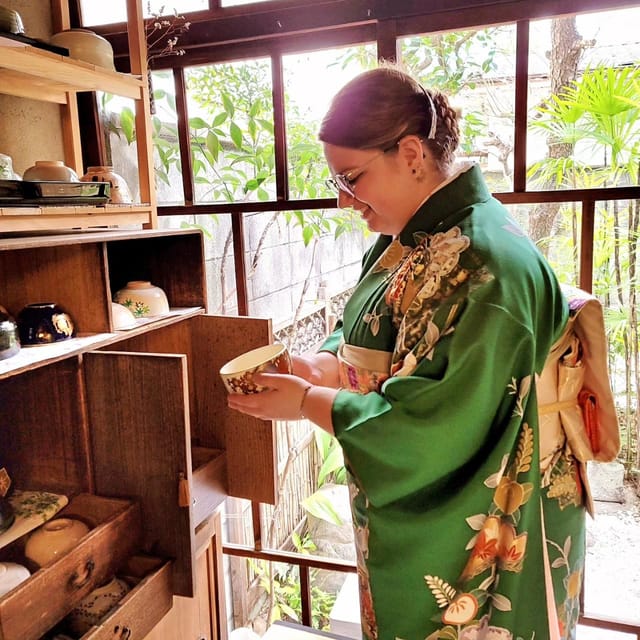
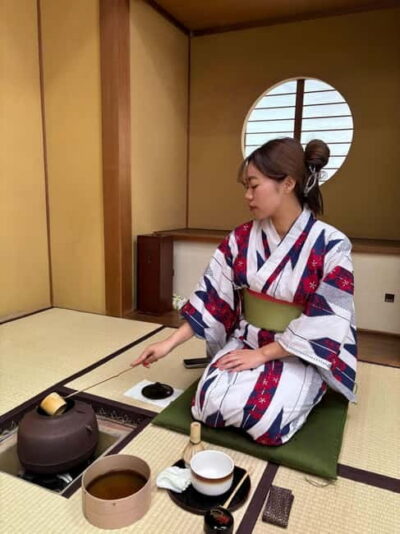
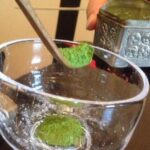
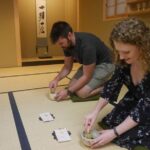
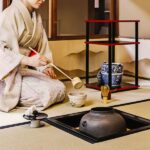
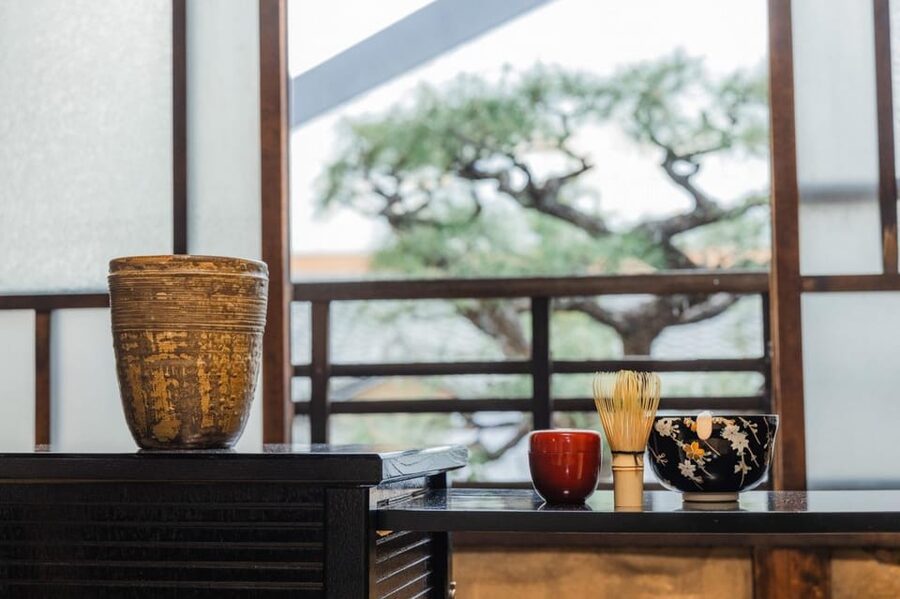
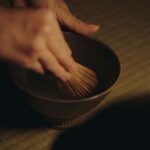
Now for the part you’ll remember when you’re back home. You make your own matcha using a bamboo whisk. This is not a throw-it-in-a-cup situation. The goal is that creamy, frothy texture, and you’ll get instructions on how to achieve it.
If you think matcha is all about taste, you’ll appreciate how much the ceremony teaches about texture, temperature, and mindful sipping. The guided pacing helps you notice the difference between a flat drink and one that’s properly aerated.
You’ll also get traditional sweets with your tea. These aren’t random snacks. They’re served as part of the ceremony rhythm, balancing sweetness with the matcha’s character.
And here’s a fun twist included in the experience: latte art using thick tea. It’s not the same as coffee latte art, but it scratches the same visual itch. You get to see how technique turns into a satisfying little performance, even for beginners.
Taking Photos the Way the Hosts Clearly Want You To
Kyoto is obsessed with atmosphere, so the photo rules matter. This experience encourages it in a thoughtful way, not in a chaotic way.
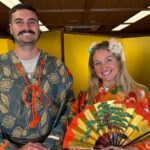
You’ll get photo and video moments using props like umbrellas, folding fans, and a katana-style prop sword. The point isn’t weapon practice. It’s visual storytelling—turning you into a living part of the scene. The hosts guide you so the photos still fit the vibe of the townhouse and garden.
If you want pictures that don’t look like you borrowed a costume and ran, this is a big plus. The ceremony structure gives you natural “pause points” where you can step into photos without breaking the flow.
Tip: if you’re choosing between kimono and no kimono, the photo aspect is one reason kimono rental can be worth it. Even if you skip the kimono, you can still get great townhouse and garden shots.
Calligraphy With Your Name (Kanji or Hiragana) and a Keepsake Scroll
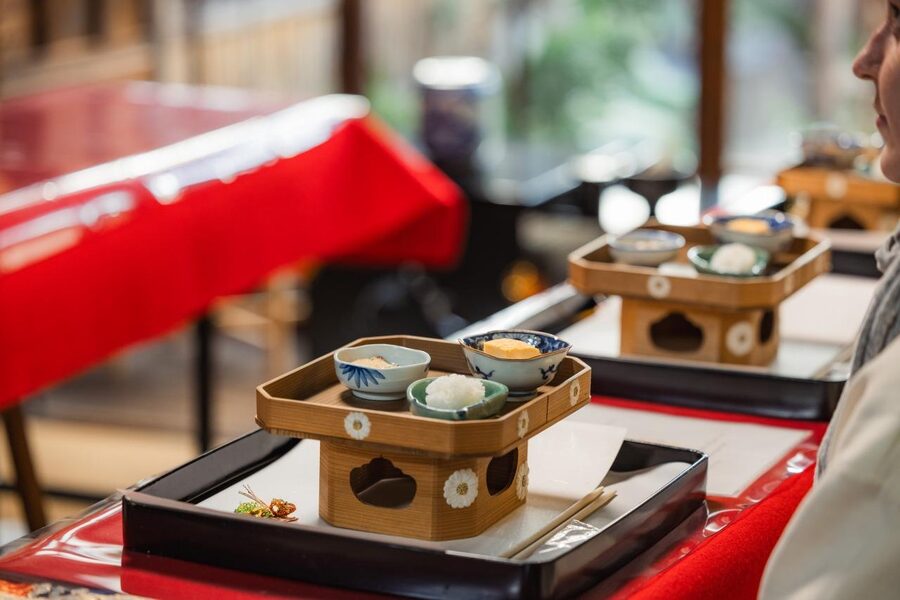
After the tea rhythm settles, you shift into something personal and hands-on: calligraphy. You’ll write your name in kanji or hiragana depending on what you choose or what the hosts guide you through.
This is one of those activities that feels simple while you’re doing it, then turns emotional later when you look at the result. It’s not just a souvenir. It’s proof you participated.
You’ll receive a hanging scroll or an envelope with your name written in Japanese characters. That makes it easy to keep, transport, or gift. It’s also a nice activity for anyone who worries they won’t “do well” with tea ceremony etiquette. With calligraphy, you’re evaluated by effort, not perfection.
Flower Arranging: Why It Fits the Tea Ceremony Mood
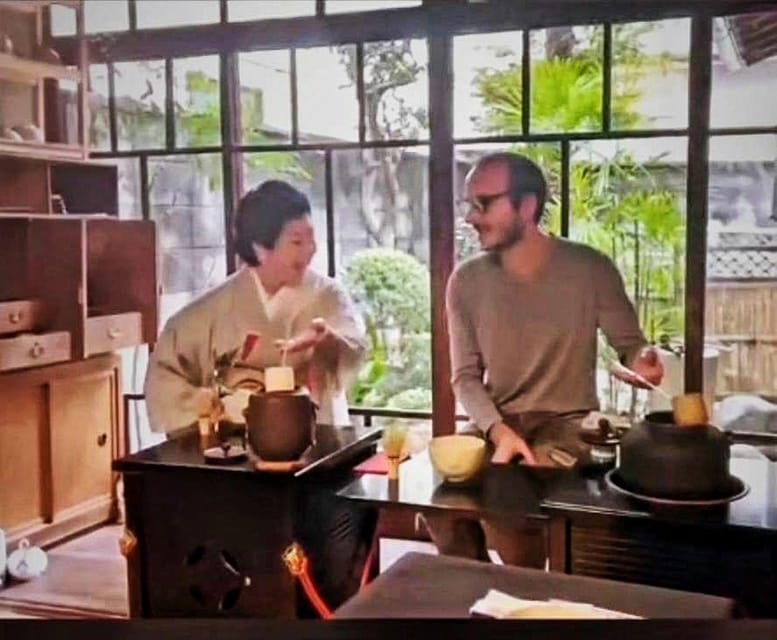
Tea ceremonies often feel like they’re teaching you how to notice small things. Flower arranging fits that mindset perfectly.
You’ll do a tea ceremony flower arranging experience as part of the session. The goal is to create a simple arrangement that complements the mood of the ceremony. Even if your style is more practical than artsy, the hosts guide you through what to do and how to shape the final look.
Think of it as visual punctuation. After matcha and calligraphy, the arrangement helps the whole experience feel complete—like you finished a mini ritual, not just attended a workshop.
The Real Value: About $45 for 90 Minutes and Real Participation
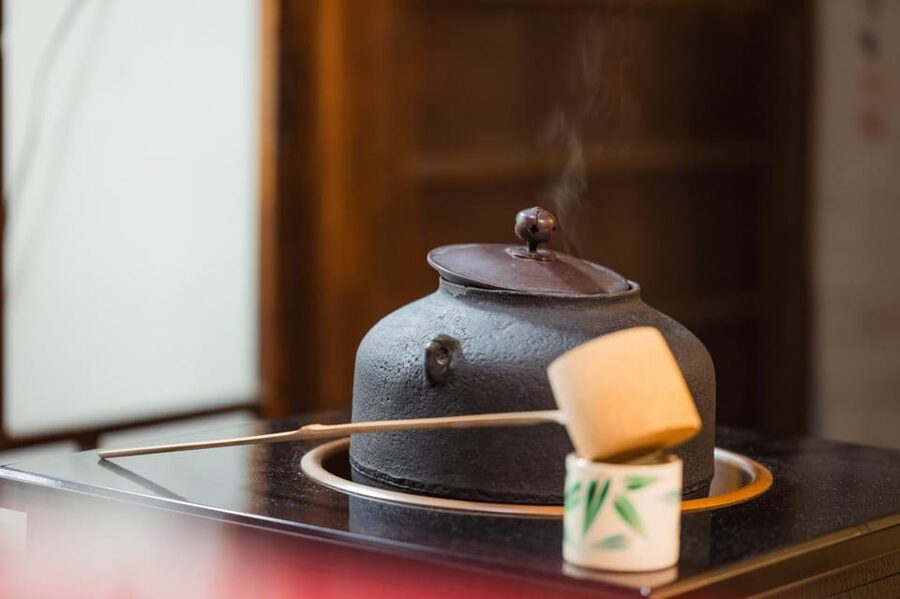
At $45 per person for about 90 minutes, this sits in the “mid-priced, high-included” category for Kyoto cultural activities. The value comes from how much you actually do.
You’re not paying only for a single matcha sip. You get:
- a guided tea ceremony experience with chair seating
- welcome drinks like sake or juice
- traditional sweets
- making your own matcha with a bamboo whisk
- thick-tea latte art
- calligraphy with your name, plus a scroll/envelope
- tea ceremony flower arranging
- and optional kimono rental plus photo-friendly moments
If you’ve tried the more basic tea tastings in tourist zones, this feels different. Here, technique and participation matter. And because it’s hosted in a traditional townhouse setting, the experience feels like Kyoto culture you can touch, not culture you just observe.
Kimono Rental: Worth It, Especially for Photos and Comfort Rules
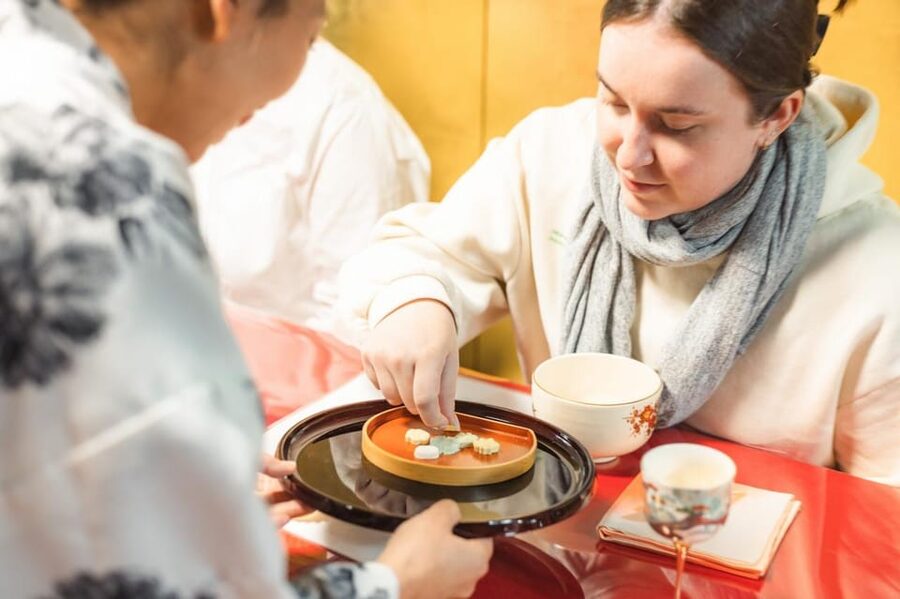
The kimono rental is optional, but if you’re on the fence, I’d lean toward it. Not because it’s a fashion moment, but because the hosts help you wear it properly, which makes everything feel more authentic and photo-ready.
If you choose the kimono option, you’ll need to arrive 30 minutes before the experience starts. That extra time is for fitting and getting ready so you’re not stressed once the ceremony begins.
One caution from the experience guidelines: if you’re pregnant, the suggestion is to refrain from wearing a kimono for health and safety reasons.
Also, this activity is not suitable for wheelchair users. There’s a lot of movement through a traditional space, so plan around that if mobility is a concern.
When to Go and What to Do Next: Sake Town, Fushimi Inari, or Uji
This is a smart stop in a Kyoto day because it’s near other easy wins. Since it’s in southern Kyoto, you can stack dining and shopping nearby after your 90-minute session.
It’s also well-positioned for:
- Fushimi Inari Shrine: about 15 minutes from Keihan Fushimi Inari Station (and it’s easy to include on a similar route)
- Uji City, famous for tea: about 20 minutes by train
- Osaka, about 40 minutes by express train
- Nara, about 50 minutes
If you’re trying to build a day without constant long transfers, this location helps. You do one focused cultural activity, then you can enjoy the area without planning your entire itinerary from scratch.
Should You Book This Chair-Style Kyoto Tea Ceremony?
Book it if you want a real tea ceremony feel with hands-on participation: you make matcha, you do calligraphy, and you take part in flower arranging. The chair seating is a genuine quality-of-life upgrade, especially if you’re not comfortable kneeling on the floor.
I’d skip it or think twice if you’re sensitive to mobility constraints (it’s not wheelchair accessible) or you don’t want to navigate to a meeting point in southern Kyoto on foot after the train.
If your goal is Kyoto culture that feels intimate, structured, and memorable in a short window, this is a strong choice. You’ll leave with matcha skills you can explain, a name written in Japanese, and photos that fit the setting instead of looking like a random costume stop.
FAQ
How long is the Kyoto tea ceremony table experience?
It lasts 90 minutes.
Do I need to sit on the floor?
No. This experience uses tables and chairs, so you don’t have to sit on the floor.
What’s included in the price?
The experience includes the tea ceremony, traditional sweets, welcome drinks (including options like sake or juice), latte art using thick tea, calligraphy, a hanging scroll or envelope with your name in kanji or hiragana, and tea ceremony flower arranging. Kimono rental is included only if you select the kimono option.
Do I get to make matcha myself?
Yes. You’ll learn how to make creamy, frothy matcha using a bamboo whisk.
Do I need hotel pickup?
No. Hotel pickup and drop-off are not included.
Is the kimono option available, and when should I arrive?
Yes, kimono rental is available if you select the option. If you choose it, you should arrive 30 minutes before the experience begins.