REVIEW · KYOTO
A Unique Antique Kimono and Tea ceremony Experience in English
Book on Viator →Operated by Miyagawa Tokusaburo Shoten · Bookable on Viator
A quiet tea lesson starts with a wardrobe. This small-group session pairs a rare antique kimono with an English-led tea ceremony where you learn how matcha tea is made. You’ll do it in a 100-year-old private house near Katsura Imperial Villa, where things stay calm instead of crowded.
I really like two things here: the way the kimono fitting is handled like part of the experience (not an afterthought), and the pacing—slow enough for you to actually pick up the etiquette and rhythm. One possible drawback is that the setting is a residential-style house, not a showy garden venue, so if you’re expecting a big visual spectacle, this may feel more subtle than you hoped.
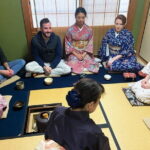
You’ll spend about 1 hour 30 minutes in a small circle (maximum 6), guided by the owner, Mr. Miyagawa (often called Toku) with 20+ years of tea experience. Expect a serious, respectful ceremony—but also plenty of personal attention so you don’t feel lost. If you want lots of different tea varieties or a long food-and-tea tasting, the included experience is focused on the ceremony steps, green tea, and Japanese sweets.
In This Review
- Key points worth knowing before you go
- A 100-Year-Old House Tea Room Near Katsura Imperial Villa
- Antique Kimono Fitting: More Than a Costume Change
- Mr. Miyagawa (Toku) and the Etiquette Lesson You’ll Actually Use
- The Flow of the Ceremony: From Green Tea and Sweets to Participating
- Matcha Tea: Learning the Ritual, Not Just Watching
- Small Group, English Explanations, and Adaptations That Matter
- Price and Value: What $99.10 Really Covers
- How to Think About the Setting: Authentic House vs Big Venue
- Who This Experience Fits Best
- Should You Book This Kyoto Kimono and Matcha Tea Ceremony?
- FAQ
- How long is the antique kimono and tea ceremony experience?
- What is the group size limit?
- Is the tea ceremony available in English?
- Where does the experience start?
- What is included in the price?
- Is lunch or dinner included?
- Is matcha tea part of the experience?
- Is it near public transportation?
- Are service animals allowed?
- What is the cancellation policy?
Key points worth knowing before you go
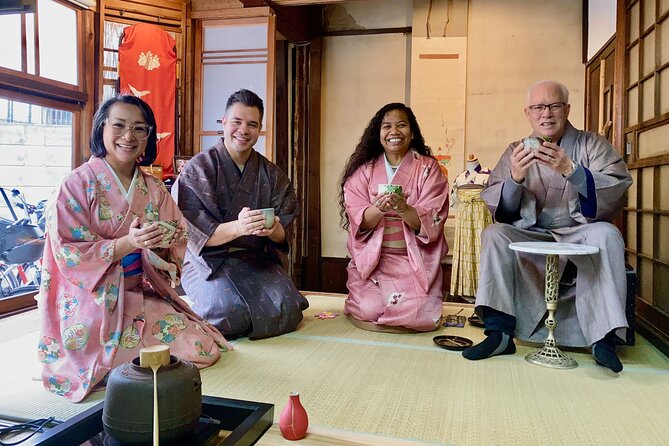
- Antique kimono rental included, with rare pieces and styling help
- English session with an owner who brings years of tea-ceremony practice to the explanations
- Small group size (max 6) for a calmer, more personal feel
- Matcha-making instruction focused on the ritual and technique, not just watching
- 100-year-old house near Katsura Imperial Villa, which keeps the whole mood quieter than central Kyoto
A 100-Year-Old House Tea Room Near Katsura Imperial Villa
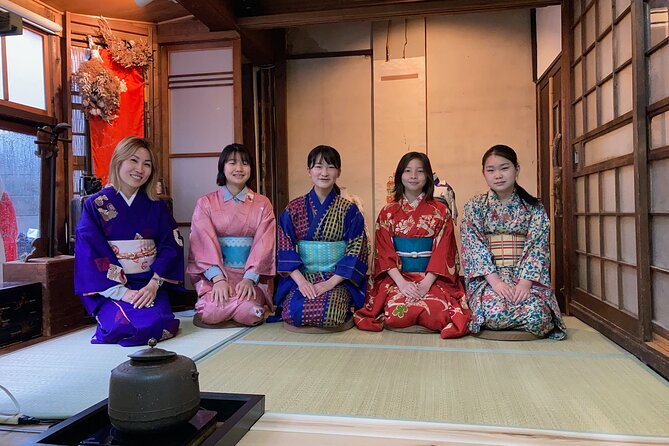
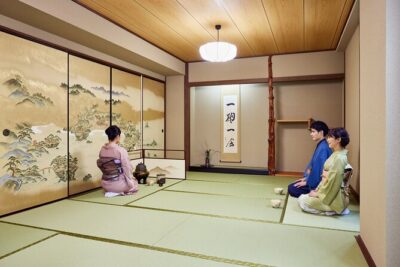
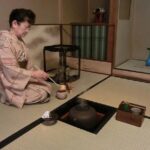
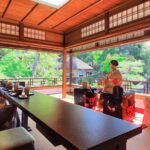
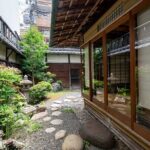
The first thing that changes your mood here is the location. You’re in Nishikyo Ward, at Miyagawa Tokusaburo shoten, in an old private house near Katsura Imperial Villa. That means you’re not doing the tea ceremony in the middle of a busy tourist strip. The atmosphere is described as quieter and calmer, and that matters because tea ceremony etiquette works best when you can hear your own thoughts.
When you arrive, you’re not stepping into a staged “performance space.” It feels more like visiting a family tradition held carefully inside a real home. That quiet is part of the point: the tea ceremony is slow, deliberate, and respectful. If you’re the kind of traveler who likes standing still for a while and paying attention, this will feel natural.
There’s also a practical angle. The meeting point is clearly listed at 32-4 Katsuranozatochō, Nishikyo Ward, Kyoto (Miyagawa Tokusaburo shoten). And while the area is residential, the experience is marked as near public transportation, so you shouldn’t need complicated logistics to get there.
You can also read our reviews of more tours and experiences in Kyoto.
Antique Kimono Fitting: More Than a Costume Change
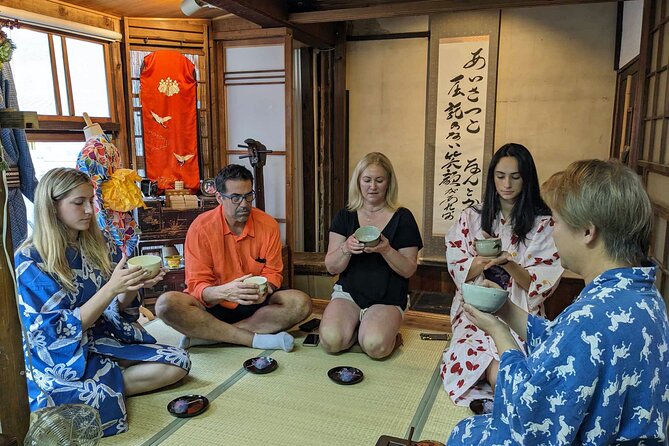
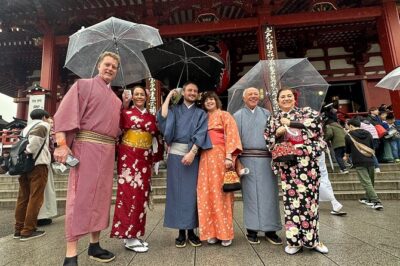
The kimono part is a big deal in this experience, and not just because it looks good in photos. The rental fee is included, and the kimono pieces are described as antique and over 80 years old—so you’re not wearing something that feels newly manufactured and generic.
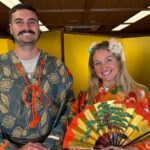
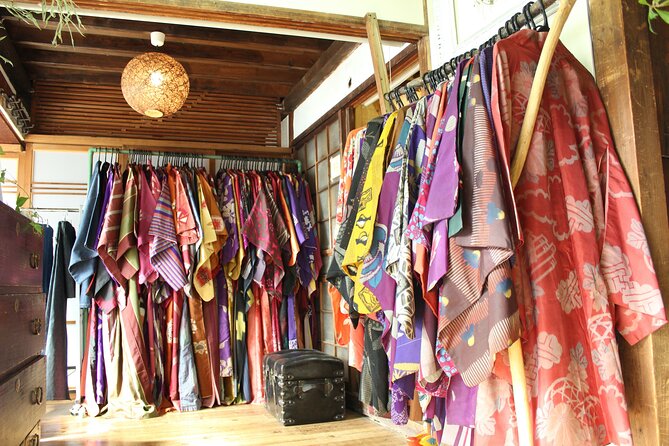
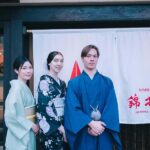
What I like best is the way you’re treated like you’ll be comfortable and styled properly, not simply handed a garment and told good luck. The owner, Toku, and his wife help you choose a kimono you like, and they guide you through accessories and fit. Several reviews specifically mention hair styling support too, with helpful details and hair accessories.
Also: you’re not stuck with a single basic look. Reviews highlight that you can select from a selection of kimonos and choose what you want to wear. That gives the experience a personal feel. And since this is a tea ceremony, your clothing isn’t just decoration. It changes how you move, how you hold yourself, and how you pay attention to small actions.
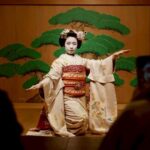
One consideration: a few less-satisfied guests felt the kimono presentation didn’t match what they expected from more “exotic-looking” town venues. The takeaway for you is simple—go in understanding that this is an authentic small house experience. The kimono styling will be real, but it’s not a theme park set.
Mr. Miyagawa (Toku) and the Etiquette Lesson You’ll Actually Use
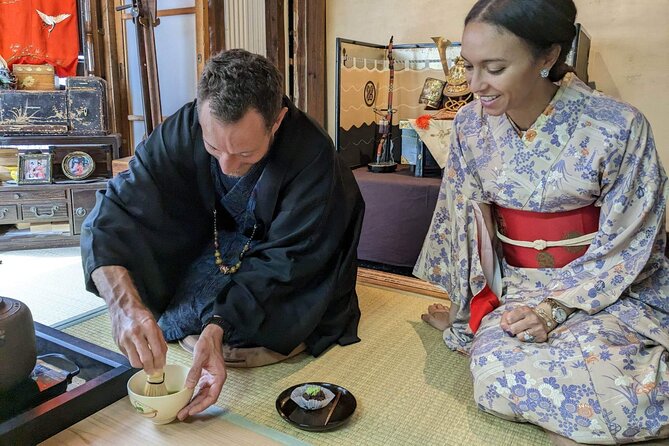
The owner, Mr. Miyagawa (often mentioned as Toku), leads the ceremony and the explanations. He’s described as having over 20 years of experience, and that shows in how he teaches. The style is patient and step-by-step, which matters when you’re unfamiliar with Japanese tea ceremony manners.
You’ll learn traditional etiquette and manners, including the “why” behind actions. That’s where the experience becomes more than a pretty half-hour. A couple of reviews also mention Toku sharing his background and why he became a kimono fitter—again, that personal context helps you connect the ceremony to real life and real craft.
There’s another thread that comes up: the relationship between samurai and the tea ceremony. That’s a useful bit of context if you’ve ever seen tea culture described as formal and disciplined. Tea practice has long been tied to self-control and respect, and samurai associations help explain why the ceremony feels so structured.
If you like learning customs instead of just taking pictures, this is a strong match. The ceremony itself is described as solemn, but explanations keep it approachable. And because it’s capped at six people, you get a better chance to ask questions or slow down with the group.
The Flow of the Ceremony: From Green Tea and Sweets to Participating
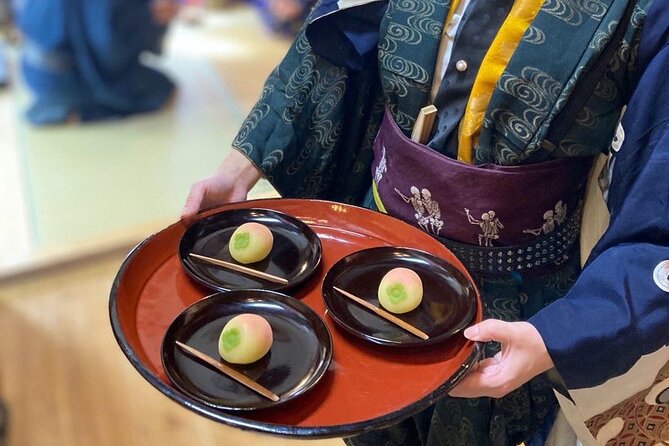
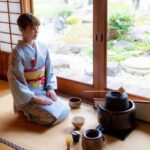
Here’s what the experience is built around: you’ll be in that older private house for the ceremony. You’ll be guided through etiquette, and you’ll also get hands-on instruction for the matcha part. Green tea and Japanese sweets are included, so you’re not left hungry while you’re learning.
From the structure implied by the experience description and how people describe it in reviews, the flow typically feels like this:
- Arrival and welcome in the shop/house setting
- Kimono selection and fitting, including assistance with how it sits and how you should move
- Tea ceremony instruction that covers manners and the meaning of key steps
- Matcha tea making learning, where you’re taught how matcha is prepared
- Your time with green tea and Japanese sweets
- Photos during and around the experience, with hosts taking pictures for you
The hosts also appear to be proactive about photos. Multiple reviews mention lots of photographs, plus the hosts helping with costume and moments during the ceremony. That’s helpful because tea ceremony etiquette often uses specific postures, and you don’t want to spend your whole session fiddling with a camera.
One detail to keep in mind: the whole session is about 1 hour 30 minutes. That’s long enough for a real introduction, but it’s not a multi-hour masterclass. If you came hoping for a deeper tea tasting flight or extra tea styles beyond what’s included, you may feel the time constraint.
Matcha Tea: Learning the Ritual, Not Just Watching
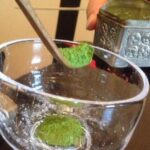
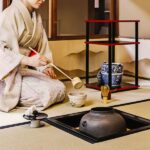
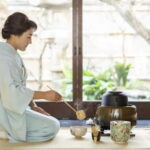
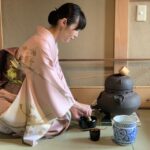
The experience highlights a special opportunity to learn how matcha tea is made, and that comes through in reviews where guests describe learning the rituals and steps of preparation. That’s the real value here: you’re not just observing someone pour tea. You’re learning how the process works and why each motion is part of the ceremony.
Even if you’ve seen matcha videos online, there’s a difference between watching and being taught in person, in the correct order, with etiquette cues. This is where the calm setting helps. In a busy environment, it’s hard to focus. Here, the quieter house near Katsura Imperial Villa supports concentration, so you can actually absorb technique.
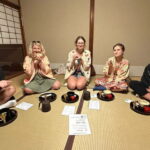
In the included experience, you’ll also taste the result: green tea is served along with Japanese sweets. That pairing is important because it gives context. You can connect what you learned about matcha preparation to how it tastes, rather than leaving the ceremony and having the tea be an afterthought.
Small Group, English Explanations, and Adaptations That Matter
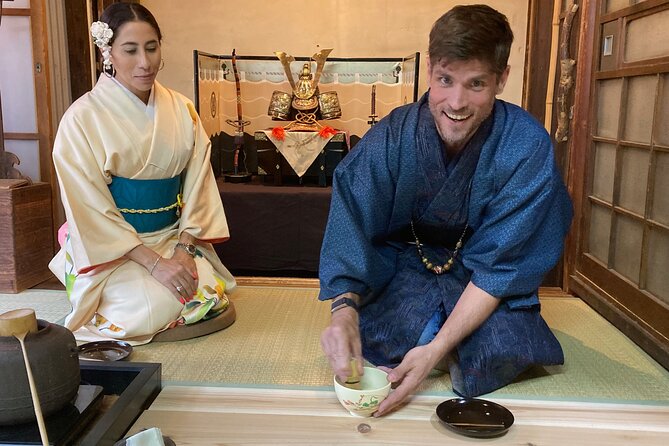
This is capped at six travelers, and that’s one of the most practical reasons it feels worth the price. In a tiny group, the host can slow down. It also becomes easier to remember what you’re supposed to do, because you’re not trying to keep up with a large crowd.
It’s also available in English. Several reviews praise the host explaining things in clear English, which is crucial for a ceremony full of subtle manners. If you don’t understand the instructions, you’ll still enjoy the visuals, but you won’t get the full cultural meaning.
Another helpful detail: one review specifically mentions the host adapting the ceremony for a guest who couldn’t kneel. That’s a strong sign you should speak up if you have mobility limits or concerns. The ceremony is structured, but it’s not rigid in a way that leaves you stuck.
Price and Value: What $99.10 Really Covers
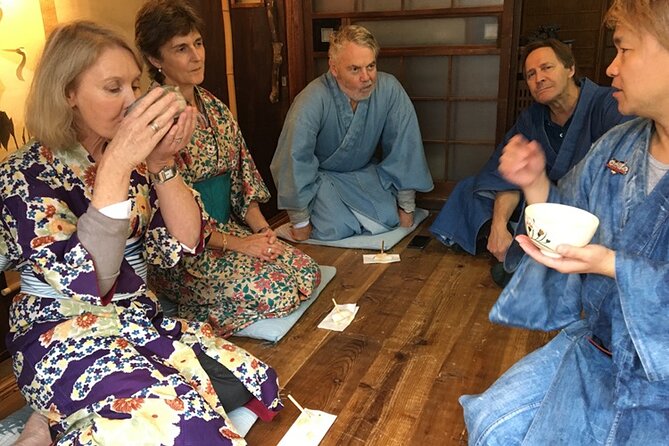
At $99.10 per person, this isn’t the cheapest tea lesson in Kyoto. The value comes from what’s included:
- Antique kimono rental fee
- Tea ceremony experience fee
- Green tea and Japanese sweets
So you’re paying for two big components that normally cost extra on their own: the kimono experience and the guided tea ceremony. You’re also paying for the small group size (max 6) and the fact that the owner leads the teaching, rather than a quick handoff to a separate staff member.
Where you need to be realistic is what you’re not paying for. Lunch and dinner aren’t included, so plan to eat before or after. Also, the ceremony is about etiquette and matcha ritual in a limited time window. It’s not marketed as a long, multi-tea tasting event with many extra flavors.
If you want a “tea ceremony you remember,” the kimono + calm house + matcha instruction combo is the reason. If you only want to taste matcha and move on, you may feel it’s more money than you needed.
How to Think About the Setting: Authentic House vs Big Venue
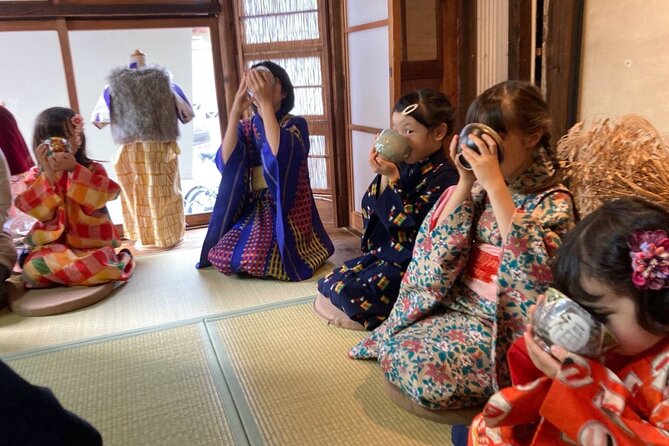
One mismatch shows up in the less favorable feedback: a few guests felt the setting was less picturesque than they expected, describing it as inside a regular residence and in a residential area. That’s not necessarily a dealbreaker, but it is a key choice point for you.
If you prefer your culture experiences in places that look like postcard scenery, this might not give you that “outdoors garden drama” feeling. But if you care more about craft, etiquette, and learning the ritual in the right kind of quiet space, you’ll probably like what you see.
Here’s a good way to frame it: the ceremony’s goal is focus. A calmer, more private house helps you experience that focus. A big tourist venue can look impressive, but it often makes concentration harder.
Who This Experience Fits Best
This tour is especially strong for:
- Kimono lovers who want an actual antique rental, not a generic costume
- People who want a structured etiquette lesson in English
- Travelers who like smaller, quieter experiences with max 6 people
- Anyone curious about the meaning behind tea ritual, including the samurai connection
- Families and people who want a personal, patient host (reviews mention hosts making room for kids too)
It may be less satisfying if:
- You’re expecting a showy, garden-style tea ceremony with lots of scenery
- You want many different specialty teas beyond the included green tea
- You’re looking for a longer workshop than the 90-minute format
Should You Book This Kyoto Kimono and Matcha Tea Ceremony?
If you’re the type of traveler who likes doing one thing slowly and doing it correctly, I’d book it. The biggest reasons are the antique kimono rental included, the English instruction, and the calm setting near Katsura Imperial Villa. Add in matcha-making instruction and the chance to learn etiquette in a small group, and you get an experience that feels personal instead of rushed.
Before you hit book, just set expectations: this is a private-house ceremony. It’s not built for dramatic outdoor views. And it’s focused—green tea, Japanese sweets, and the ritual steps—so it’s not a long tasting tour.
If that sounds like your idea of a good Kyoto afternoon, Miyagawa Tokusaburo shoten is a very smart choice.
FAQ
How long is the antique kimono and tea ceremony experience?
It lasts about 1 hour 30 minutes.
What is the group size limit?
The experience is capped at a maximum of 6 travelers.
Is the tea ceremony available in English?
Yes, it is available in English.
Where does the experience start?
The meeting point is Miyagawa Tokusaburo shoten, 32-4 Katsuranozatochō, Nishikyo Ward, Kyoto 615-8073, Japan.
What is included in the price?
The price includes the antique kimono rental fee and the tea ceremony experience fee, with green tea and Japanese sweets.
Is lunch or dinner included?
No, lunch and dinner are not included.
Is matcha tea part of the experience?
Yes. You’ll learn how matcha tea is made as part of the tea ceremony experience.
Is it near public transportation?
Yes, the experience is listed as near public transportation.
Are service animals allowed?
Yes, service animals are allowed.
What is the cancellation policy?
Free cancellation is available up to 24 hours in advance for a full refund. If you cancel less than 24 hours before the start time, the amount paid is not refunded.