REVIEW · OSAKA
Tea and Calligraphy Session at a Table in Osaka
Book on Viator →Operated by 道-michi- · Bookable on Viator
Brush and sip in central Osaka. This tea ceremony and calligraphy session at a table in Shinsaibashi turns two famous Japanese traditions into a beginner-friendly, one-hour experience led by a professional tea master. You’re not stuck doing everything on tatami, so the whole thing feels approachable from minute one.
I like the table format for first-timers and the clear, friendly coaching throughout. You also get the full combo: matcha plus Japanese sweets paired with hands-on calligraphy where you create an artwork you take home.
One consideration: the extra add-ons people often notice on-site (like samurai-costume experiences or dressing options) are not included. If you’re hoping for full kimono or armor time, you’ll need to budget separately and keep expectations focused on tea and calligraphy in the main session.
In This Review
- Key highlights you’ll care about
- Shinsaibashi’s Tea-Plus-Calligraphy Setup: less intimidating than you think
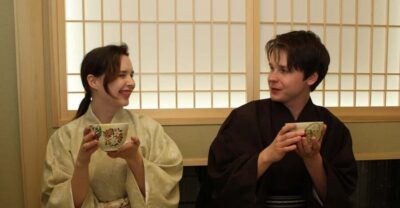
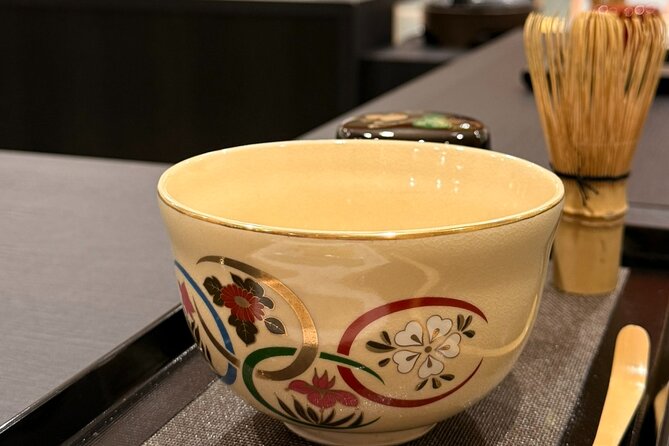
- Your Tea Ceremony at the Table: matcha, sweets, and calm guidance
- Calligraphy Lesson: make characters, learn what they mean, take it home
- How the hour actually feels: a tight plan with a natural rhythm
- On-site extras you might notice: samurai options are separate
- Price and value: $22.76 for two skills in one hour
- Who this is best for (and who should pick something else)
- Before you go: make it easy on yourself
- Should you book this tea and calligraphy session?
- FAQ
- How long is the tea and calligraphy session?
- What does it cost per person?
- What’s included in the experience?
- Can I do only tea ceremony or only calligraphy?
- Where do I meet for the experience?
- Is it a mobile-ticket experience?
- How many people are in each group?
- Is it near public transportation?
- What’s the cancellation policy?
- Are service animals allowed?
Key highlights you’ll care about
- Table-based tea ceremony that feels natural for beginners
- Matcha and Japanese sweets included with your session
- Calligraphy you create and take home after your lesson
- Small group size (max 10) for more hands-on time
- Professional tea master guidance throughout the hour
- Central Shinsaibashi location near public transportation
Shinsaibashi’s Tea-Plus-Calligraphy Setup: less intimidating than you think
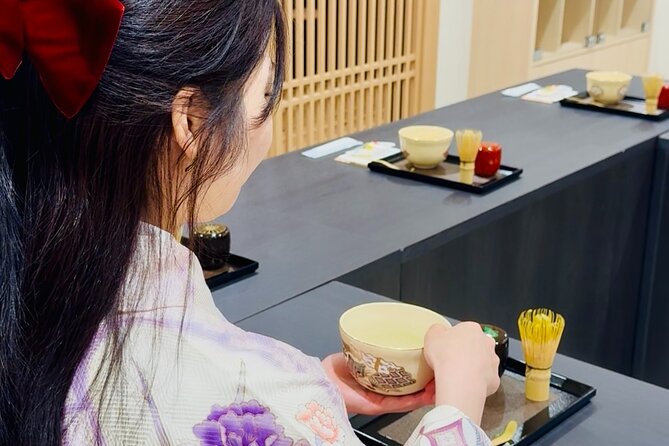
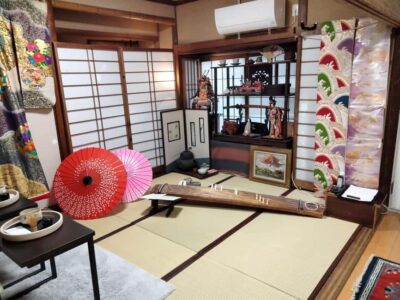
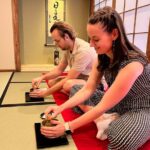
Osaka is great for trying cultural activities that don’t require background knowledge. This one is designed that way. The experience takes place in Shinsaibashi, at Shinsaibashi ARTY Inn, in a setting built specifically for this kind of “do it yourself” lesson. The big practical win is the table setup. Traditional tea ceremonies are often shown on tatami, but here you’re seated at a table, which usually makes posture, timing, and participation easier—especially if you’re not used to formal floor seating.
The plan is also structured so you can do the pair or choose one. The limited-time setup includes both tea ceremony and calligraphy together, but you’re not forced to do everything if you’d rather focus. That flexibility is useful if you’re traveling with someone who wants tea only, or if you’re more interested in brushwork than tasting rituals.
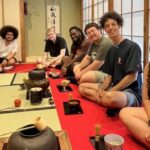
Also, you’re not dealing with a huge crowd. The group maximum is 10. That matters because calligraphy takes practice, and tea ceremony etiquette benefits from real-time guidance. Smaller groups tend to mean you get more than a quick demo before you’re on your own.
You can also read our reviews of more tours and experiences in Osaka.
Your Tea Ceremony at the Table: matcha, sweets, and calm guidance
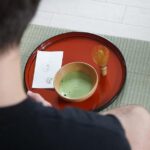
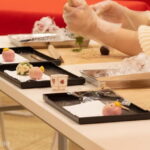
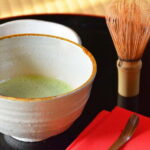
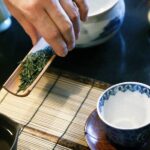
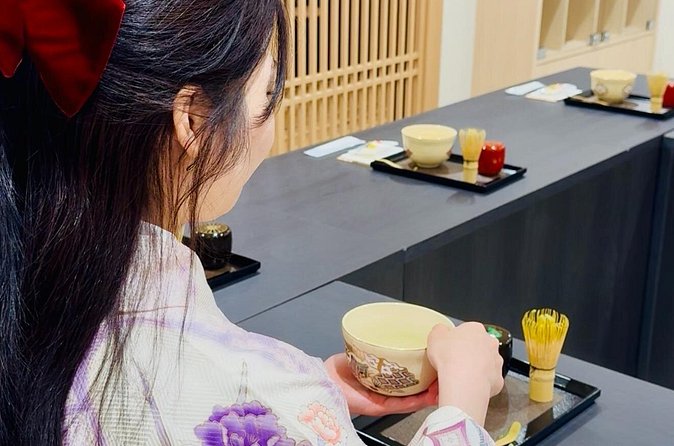
Your tea portion includes matcha and Japanese sweets. That pairing is more than a snack break. Matcha has a strong, earthy flavor, and sweets are there to balance it while keeping the experience pleasantly timed. In lessons like this, sweets also help you slow down. You’re not rushing through a tasting; you’re learning the rhythm.
The session is guided by professionals, including a professional tea master. While you’ll follow instructions, the goal isn’t to make you perform perfect etiquette. The goal is to teach you what you’re seeing and what you’re doing—so you can connect the motions with meaning.
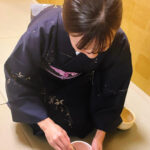
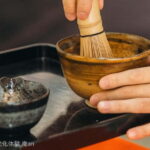
What I like about this format: the table setup reduces the fear factor. If you’ve ever worried about making a mistake in a formal ritual, this kind of environment helps you relax enough to learn. You’ll likely get direct coaching on things like how to hold and pour, and when to pause before sipping. Those small moments are where the calm of the tea ceremony comes from.
One more practical note: this is about an hour total for the whole experience. That’s great for people who want culture without blocking half a day in Osaka. But it also means the tea part will be focused—think guided learning and participation, not a long multi-course ceremony.
Calligraphy Lesson: make characters, learn what they mean, take it home
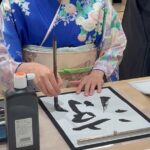
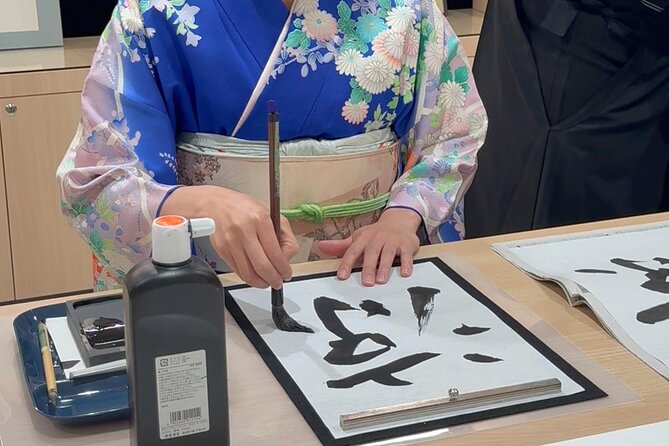
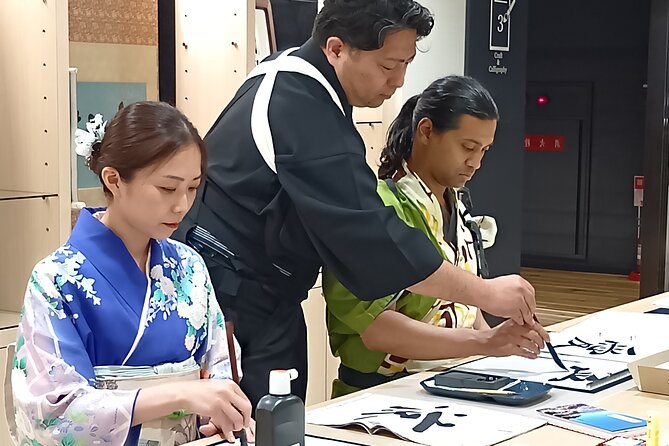
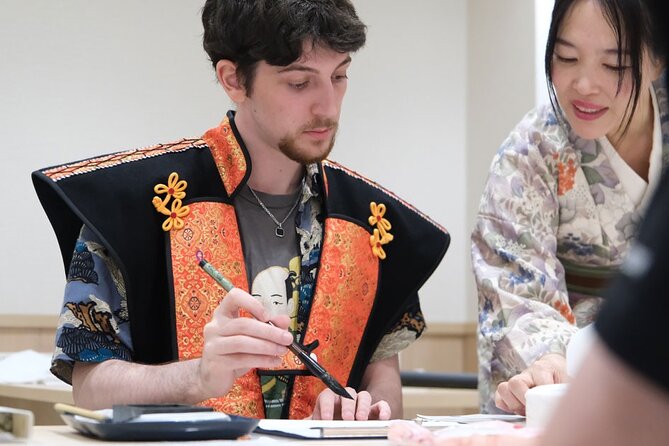
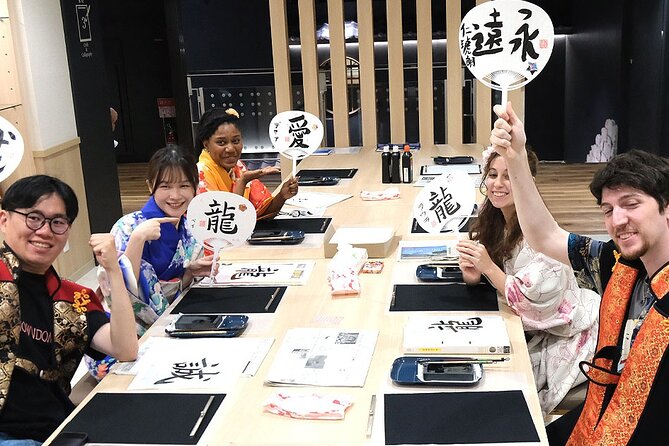
Then you switch gears to calligraphy. Included is Japanese calligraphy (create & take home your artwork). That “take home” piece is key. It gives you a physical souvenir that’s not just photos. You’ll have something you made with your own brushwork, which tends to stick in your memory longer than a stamp-sized item from a shop.
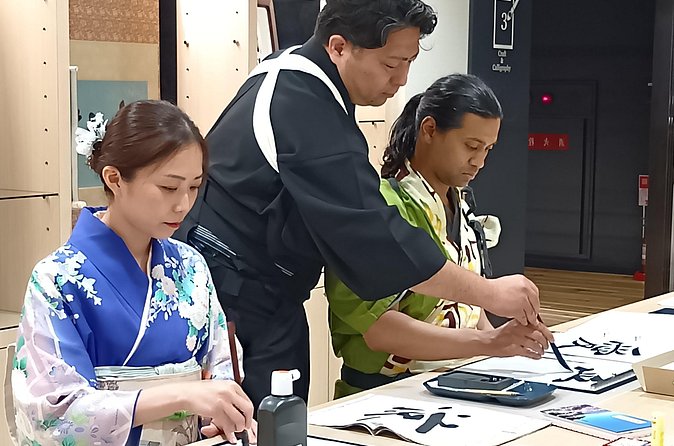
Calligraphy is one of those activities that can look mysterious from the outside. Up close, it becomes surprisingly learnable. A good lesson breaks it into steps: how to hold the brush, how to control pressure, and how to shape strokes. Even if you’ve never written in Japanese, you can usually get something satisfying within a short class when the instruction is paced properly.
The other big value here is that calligraphy and tea work together conceptually. Tea ceremony emphasizes attention—how you handle objects and your timing. Calligraphy emphasizes attention too—how you move with control. Doing both back-to-back helps the ideas click. You’re training the same kind of focus in two different forms.
And because the group is small, you’re less likely to feel like you’re watching a screen while everyone else gets individualized correction. You should be able to see the brushwork clearly and get help when your strokes need adjustment.
How the hour actually feels: a tight plan with a natural rhythm
This is approximately 1 hour for the full experience. That time constraint can be intimidating for activities that sound slow and formal. But the table setting plus the limited scope (tea + calligraphy, included items only) keeps it realistic. You won’t be stuck in an all-day workshop. Instead, you get a concentrated version of both traditions.
Here’s what the flow usually accomplishes:
- Tea gives you a guided start: taste, etiquette, pacing.
- Calligraphy gives you a creative finish: practice, guidance, and a takeaway.
- Both parts reinforce each other through attention and repetition.
If you like hands-on activities where you leave with something tangible, this hour is a good match. If you’re expecting a long, ceremonial deep study with many courses and extended reflection, you may want something longer. But for most visitors, a short class is exactly the right dosage—especially in a city itinerary packed with sights.
Also, the experience ends back at the meeting point, so you’re not walking all over town after. That keeps your day easier, particularly if you’re squeezing this between shopping and dinner.
On-site extras you might notice: samurai options are separate
One thing to know: the core session includes tea ceremony and calligraphy only. There are optional add-ons tied to samurai-themed experiences and dressing options, and those cost extra.
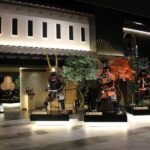
For example, you may see samurai-related activities on-site—like samurai armor dressing, kimono dressing, or ninja dressing—and there can also be samurai immersive-style add-ons. Those are listed as not included. The upside is that the facility atmosphere can still feel special, and you may spot displays or themed elements while you’re there. The downside is simple: if you want the full costume and dressing experience, you’ll need to book or pay for it separately.
So I’d treat this as a cultural workshop first. The samurai pieces are a bonus only if you add them.
Price and value: $22.76 for two skills in one hour
At $22.76 per person, the price is relatively straightforward for a two-part cultural class: tea (matcha + sweets) plus calligraphy (lesson + take-home artwork). You’re not just watching. You’re doing both activities in one sitting with professional guidance.
Value usually depends on what you’re comparing it to:
- If you compare it to buying a souvenir calligraphy item, this is often more meaningful because you create it yourself.
- If you compare it to a longer workshop, this is simpler and shorter. You pay less time, not just less money.
- If you plan to add kimono or armor dressing, then the total cost can rise quickly. But the base session still has clear included value without those extras.
One tip: check whether you want both experiences or only one. Choosing the option that matches your interests can make the value feel even better, because you’re not paying for something you won’t care about as much.
Who this is best for (and who should pick something else)
This experience fits best if you:
- want Japanese culture you can actually do, not only observe
- are new to both tea ceremony and calligraphy
- prefer a short class that fits into a typical Osaka day
- want a take-home item you made yourself
It may be less ideal if you:
- want a multi-hour deep dive into tea etiquette
- are specifically hunting for full costume time as the main event (since dressing is not included)
- need a lot more time to practice calligraphy than a one-hour format allows
The group max of 10 is another signal. If you like smaller settings, you’re in the right place.
Before you go: make it easy on yourself
You’ll start at: 2-chōme-17-3 Nishishinsaibashi, Chuo Ward, Osaka, 542-0086, Japan. The activity ends back at the meeting point. It’s also near public transportation, which matters because Shinsaibashi is a busy area and getting around fast saves energy.
Bring a normal day mindset. This is a guided cultural activity, not a performance. Wear comfortable clothes and shoes that make standing and sitting easy at a table. Keep your phone charged for photos—some staff attention and photo help comes up in the experience vibe, and you’ll probably want pictures of the final artwork.
Finally, book ahead if your dates are fixed. On average, people book about 18 days in advance, which suggests it can fill up around popular time slots.
Should you book this tea and calligraphy session?
I’d book it if you want a simple, beginner-friendly way to learn two Japanese traditions in one hour, with included tea (matcha + sweets) and calligraphy you take home. The table format is the practical reason it works for many people who worry about formal etiquette.
I’d skip the base booking or plan upgrades differently if your main goal is the costume-heavy samurai experience. The samurai-themed extras and dressing options aren’t part of the included package, so you’d want to budget for those separately.
If your ideal Osaka day looks like: shop, snack, and add one hands-on cultural stop that you can actually take with you, this is a solid choice.
FAQ
How long is the tea and calligraphy session?
It’s about 1 hour.
What does it cost per person?
The price is $22.76 per person.
What’s included in the experience?
You get tea ceremony with matcha and Japanese sweets, plus Japanese calligraphy where you create artwork and take it home.
Can I do only tea ceremony or only calligraphy?
Yes. The plan can include both, but you can also choose just tea ceremony or just calligraphy if you prefer.
Where do I meet for the experience?
The meeting point is 2-chōme-17-3 Nishishinsaibashi, Chuo Ward, Osaka, 542-0086, Japan.
Is it a mobile-ticket experience?
Yes, it uses a mobile ticket.
How many people are in each group?
The experience has a maximum of 10 travelers.
Is it near public transportation?
Yes, it’s near public transportation.
What’s the cancellation policy?
You can cancel for a full refund up to 24 hours before the experience’s start time. After that, refunds aren’t available.
Are service animals allowed?
Yes, service animals are allowed.