REVIEW · KYOTO
Kyoto: Tea Ceremony with Maiko Premium
Book on GetYourGuide →Operated by B.B.Advisors Inc. AN KYOTO · Bookable on GetYourGuide
Matcha and Maiko in 90 minutes.
This Kyoto experience is built around one of the most memorable combos in Japan: you learn the tea basics from a Maiko, then sit close enough to actually see her poise, hear her story, and ask questions face-to-face. I especially like the chance to make your own matcha and the Q&A that turns a performance into something personal.
One thing to know up front: this isn’t held in a classic tatami ochaya. The setting is in a building with tables and chairs, and some people find the backdrop a bit plain (and photos can catch vendor signage). Still, if you want a guided, structured introduction to Maiko culture, it delivers.
In This Review
- Key moments that make this Kyoto program work
- Kyoto’s Maiko Tea Ceremony: what you actually get
- Gojo Station meeting point and the building reality
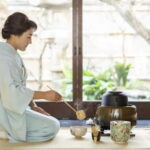
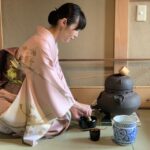
- The matcha lesson and sweets: a short tea ceremony you can manage
- Q&A with Maiko (and sometimes Geiko): ask smarter questions
- Close-up photos, Senjyafuda, and how to not ruin your shots
- Two dances and the game: entertainment with real cultural signals
- Premium value and price: what you’re really paying for
- Room atmosphere: why it still works even if it feels less traditional
- Who should book this Kyoto tea ceremony (and who might skip)
- If you do book: practical tips that improve the experience
- Should you book Kyoto Tea Ceremony with Maiko Premium?
- FAQ
- How long is the Kyoto Tea Ceremony with Maiko Premium?
- Where do I meet the group?
- What does the experience include besides matcha?
- Do I get to take a photo with the Maiko?
- Is this held in a traditional ochaya?
- Is there an elevator at the venue?
- Does the program always feature a Maiko?
- What are the operating hours?
- Are children allowed free of charge?
Key moments that make this Kyoto program work
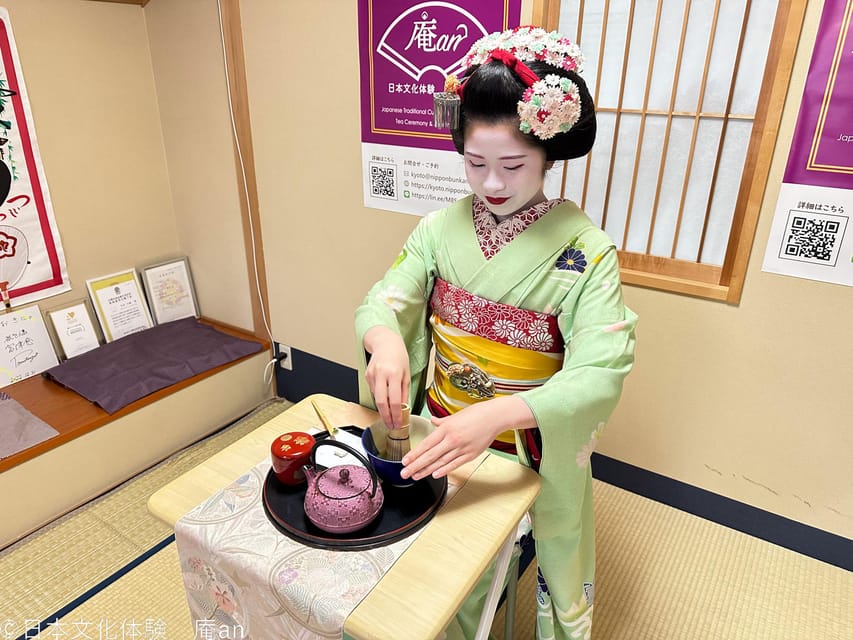
- Matcha hands-on time with a Maiko guiding you through making your own tea
- Direct Q&A where you can ask about training, routines, and daily life
- Close-up photos taken beside the performer, plus a lucky charm (Senjyafuda)
- Two traditional dances tied to seasons, love stories, or everyday life
- Interactive game moments where you can clap, cheer, and sometimes play along
- Maiko vs Geiko swap depending on the situation, which can surprise you in a good way
Kyoto’s Maiko Tea Ceremony: what you actually get
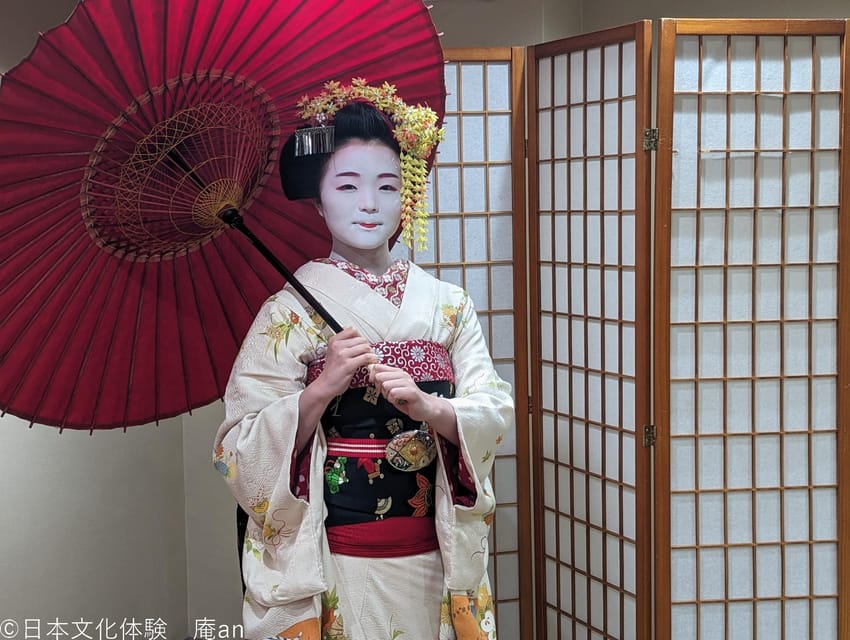
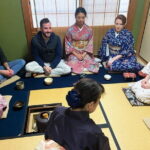
Think of this as a 90-minute “culture plus contact” session. You’re not just watching a script from far away. You’ll greet the performer, make tea, listen to her explain the meaning behind what she’s doing, and then get time to ask questions in a group setting.
The program is clearly designed to give you three kinds of memories:
1) a skill (matcha-making), 2) a story (her life in the world of Maiko/Geiko), and 3) a visual souvenir (a close photo plus the Senjyafuda lucky charm).
It also helps that the rhythm is steady: no long waits, no complicated flow. Even people who prefer “active” experiences tend to have a good time here because you’re doing more than sitting.
You can also read our reviews of more tours and experiences in Kyoto.
Gojo Station meeting point and the building reality
The meeting point is easy: it’s about a 1-minute walk from Exit 1 of Subway Karasuma Line Gojo Station. The store entrance faces Gojo-dori, so you shouldn’t be hunting for an alley entrance.
Now the key practical note: there’s no elevator, so you’ll take stairs to reach the venue spaces. That matters if you’re traveling with kids, big bags, or anyone who doesn’t like climbing.
Also, this isn’t an ochaya (a traditional tea-house house setup). Expect a more straightforward building environment. That’s why this experience feels less like a movie-set tea room and more like a well-run cultural event.
The matcha lesson and sweets: a short tea ceremony you can manage
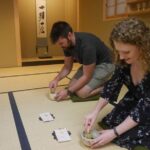
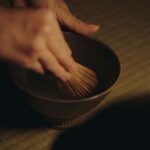
The tea portion is the heart of the booking. You’ll do a guided matcha experience with the Maiko, and you’ll get two dried-type Japanese sweets along with the tea.
Because it’s structured, you don’t need prior knowledge. You’ll learn how matcha is made, what to pay attention to, and then you’ll make your own cup. The big value here is that your participation makes the tea more than a sip. You’ll understand why the steps matter, even if this isn’t a full-length, ultra-formal traditional ceremony.
One small “real life” detail: the venue setup can make the room feel more like a staged event than an intimate traditional tatami space. I still think the tea lesson works well because you’re seated close enough to see the motions, not just the result.
Q&A with Maiko (and sometimes Geiko): ask smarter questions
Here’s where the program often earns its high marks. The Maiko (or occasionally a Geiko) isn’t just presenting. You get a Q&A session with the performer, which turns the visit into a two-way experience.
This is the part you should lean into. If you only watch and take photos, you’ll miss the reason this program feels different from other cultural shows. Ask about things like training length, daily routines, how kimono details connect to tradition, or what her workday looks like. People in reviews repeatedly highlight how clearly the performer answers and how much insight you can get in a short time.
Some hosts have been praised for speaking both Japanese and English to fit mixed groups. Names that came up in feedback include Karen as an informative host in at least one session, and Kanosuzu-san as a Maiko mentioned in another. Even if your performer’s name is different, the pattern is the same: the explanation is meant to be understood, not just admired.
Close-up photos, Senjyafuda, and how to not ruin your shots
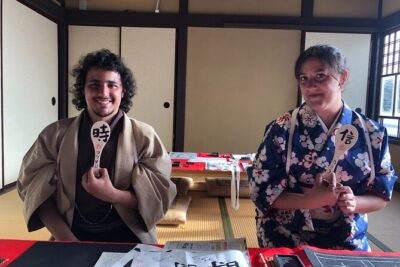
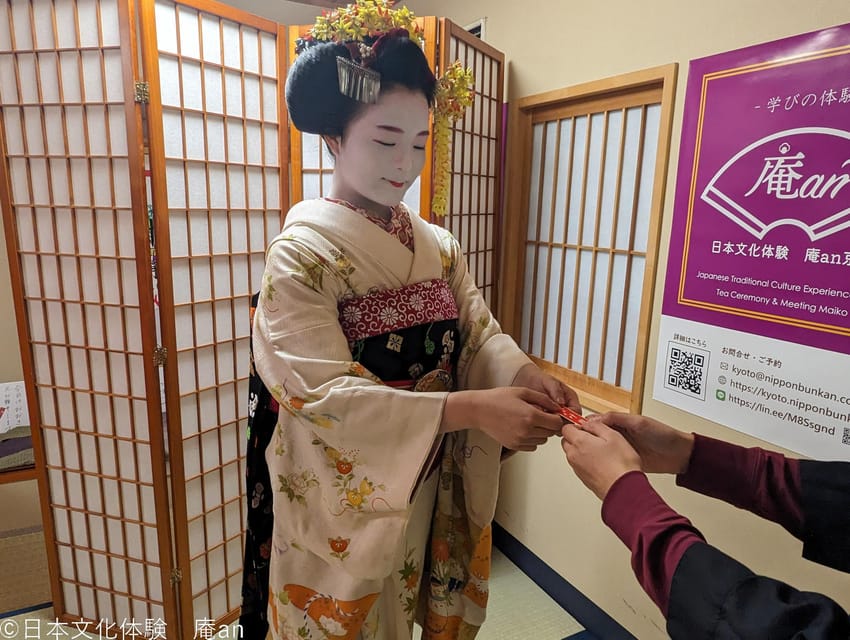
You’ll get a commemorative photo opportunity right beside the Maiko, up close enough to actually feel like you’re part of the moment. As a special gift, she presents you with a lucky charm called a Senjyafuda.
Photo tips, based on what people struggled with:
- If vendor signage shows up in the frame, reposition slightly before the shutter. In a group setting, you can often shift your angle without losing the face-to-face composition.
- Ask the staff for the best camera spot before you start taking multiple pictures. It’s faster than trying to fix it after everyone lines up.
- Keep an eye on background distractions. Some people specifically noted that advertising in the background can make “clean” photos harder to get.
Also, take advantage of the fact the performer is close. This is one of the rare Kyoto experiences where you’re not forced to choose between seeing her and photographing her. You’ll get both.
Two dances and the game: entertainment with real cultural signals
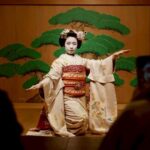
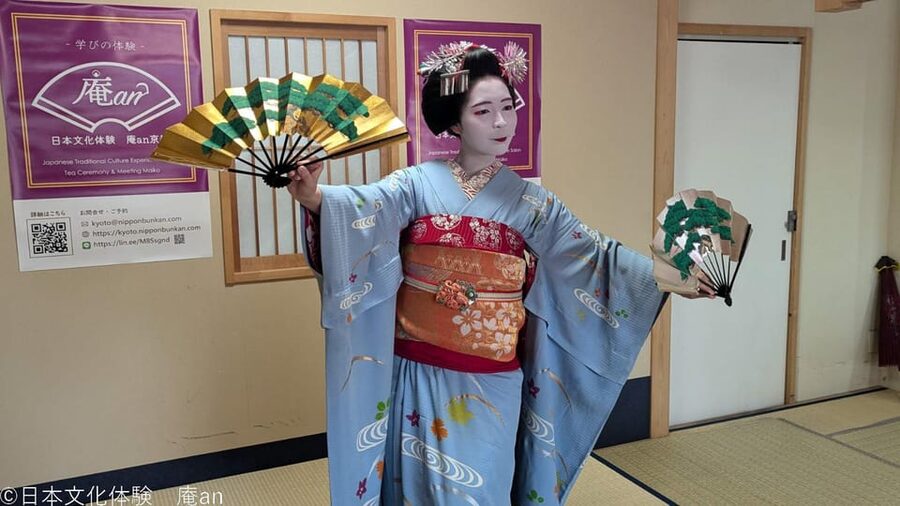
After tea and Q&A, you’ll watch a dance performance that includes two traditional dances. The program description frames them around themes such as seasons, love stories, and everyday life. Reviews mention goosebumps from the beauty and elegance of the movement, so don’t assume it’ll feel like a quick filler.
Then comes the interactive part: a game with the Maiko. You can clap and cheer, and you may even be invited to participate. The point isn’t competition. It’s hospitality—this is how the performer connects with the room and makes sure you feel included.
If you’re traveling as a couple, solo, or with kids, this is often the section that makes the evening feel like “we were there” rather than “we watched an exhibit.” One family-friendly note from reviews: kids enjoyed the games as much as the adults.
Premium value and price: what you’re really paying for
The price is listed as $50 per person for the Maiko Premium experience, and the structure is what you’re paying for. You’re not just buying entry into a tea demo. You’re getting:
- matcha-making with guidance
- Q&A time with the performer
- photos close enough to matter
- dance performance
- a game element
- two sweets plus snacks and a drink
That’s why people recommend choosing the premium version: it’s the bundle that includes the full show and interaction. Reviews also mention that there can be a surprise shift to Geiko instead of Maiko, which can make the evening feel extra special.
One additional cost to be aware of is optional seating. “SS” first row is 3,300 JPY, then “S2” second row 2,200 JPY, and “S3” third row 1,100 JPY. If photos are a top priority, it’s worth considering the higher rows because your perspective improves immediately.
Room atmosphere: why it still works even if it feels less traditional
Some people go to Kyoto expecting tatami, low tables, and that quiet “pause” you get in a classic tea-house setting. This experience is different. It’s relaxed, and it’s in a building with chairs and tables.
But here’s why that still can be a good trade:
- You spend your energy on the performer and the tea, not on navigating a strict ritual.
- The layout supports Q&A and photos without you needing to figure out how everything works.
- The staff tend to be friendly and the schedule is organized.
The downside is exactly what you’d expect: the visual atmosphere might not feel as authentic as a traditional home. Reviews specifically point to plain backdrops and ad signage showing in photos. If you’re the type who needs an ultra-traditional room to enjoy the experience, this may feel a little staged. If you want clear explanations and close access, it’s a strong match.
Who should book this Kyoto tea ceremony (and who might skip)
This works best for you if you:
- want a short, guided introduction to Maiko/Geiko culture without spending a full day hunting for the right place
- care about photos and want to be close enough to feel the moment
- enjoy interactive formats (Q&A and games) more than silent demonstrations
- are traveling with kids and want an experience that still has structure but includes participation
It may be less ideal if:
- you’re a “only tatami, no exceptions” traditionalist
- you’re extremely sensitive to room ambiance and backgrounds in photos
- you dislike group settings (even though the schedule is organized, it’s still shared time)
If you do book: practical tips that improve the experience
A few small moves can make this feel more memorable.
First, arrive early. One tip that came up: get there about 15 minutes early. Some people noted seeing the Maiko arrive by taxi to enter the building, which adds a fun “real moment” before the ceremony.
Second, stay a little after the main show. Reviews mention hanging around 10–15 minutes after the performance to watch the performer depart and wave goodbye. It’s a small detail, but it can make your evening feel warmer and more personal.
Finally, manage expectations about the room. Bring your best “Kyoto tea ceremony with performer access” mindset, not your “quiet traditional household” mindset. You’ll enjoy it more.
Should you book Kyoto Tea Ceremony with Maiko Premium?
Yes, if you want a concentrated Kyoto night that blends matcha-making, a real Q&A, and close photos with Maiko (or sometimes Geiko). For the time and the set of activities—tea + interaction + dances + charm—the value is strong.
I’d only hesitate if you need the setting to be fully traditional inside. This is a building venue, and the background can affect photo aesthetics. But if your priority is learning from the performer and getting close, this is one of the more direct ways to do it in a short window.
FAQ
How long is the Kyoto Tea Ceremony with Maiko Premium?
The program runs about 90 minutes.
Where do I meet the group?
You meet about 1 minute walk from Exit 1 of the Karasuma Line Subway Gojo Station. The store entrance faces Gojo-dori.
What does the experience include besides matcha?
You get two Japanese sweets, a Q&A session with the Maiko, a close photo opportunity, a Senjyafuda lucky charm gift, a dance performance, and an interactive game.
Do I get to take a photo with the Maiko?
Yes. There is a scheduled photo opportunity right beside the performer.
Is this held in a traditional ochaya?
No. The venue is located in a building and offers a relaxed atmosphere, but it is not an ochaya or a traditional Japanese house.
Is there an elevator at the venue?
No elevator is available, and you will need to take stairs.
Does the program always feature a Maiko?
Sometimes they may invite a Geiko instead of a Maiko depending on the situation.
What are the operating hours?
Operation hours are 10:00 to 17:00. Reservations received after 17:00 are processed the next day.
Are children allowed free of charge?
Children under 2 years old are free if they sit on a parent’s lap. If a seat or meal is required, the same fee as one person will be charged.