REVIEW · KYOTO
Kyoto Private Tea Ceremony at a Japanese Inns
Book on Viator →Operated by ZEN: Tea Ceremony Experience in Kyoto (茶道体験所 禅) · Bookable on Viator
Candlelight turns Kyoto into a quiet secret. This private tea ceremony happens after dark in a candle-lit room inside a long-established ryokan, using a 20-tatami banquet hall that’s normally closed to the public. I love the candlelit atmosphere and the way the evening feels focused, not like a crowded attraction.
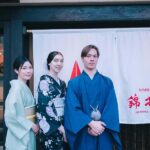
The kimono photo session is another highlight for me. You get dressed in a bridal uchikake or a men’s haori (with props like folding fans and swords), and the staff handles the photos with professional lighting. I also appreciate that translator devices are provided, so you can understand what’s going on and ask questions without needing Japanese.
One possible drawback: the whole experience runs about 59 minutes, so it’s a short, set sequence rather than a long, wandering tour of Kyoto at night. If you’re hoping for lots of extra time to roam or linger, plan to pair this with daytime temple time.
In This Review
- Key Things To Know Before You Go
- After Dark Kyoto: Why This Candlelit Ryokan Room Works
- Finding ZEN in Shimogyo: The Start of Your Evening Ritual
- Kimono Dressing and Photo Shoot: Uchikake or Haori, Plus Props and Lighting
- Zen Meditation (4 Minutes): Short, But It Changes the Mood
- The Tea Ceremony Demo (20 Minutes): Matcha as a Guided Ritual
- Your Matcha Whisking (20 Minutes): Doing the Work, Not Just Watching
- Hosts You’ll Actually Click With: Matsuda and Mayumi
- Price and Value: What About $98 for 59 Minutes?
- Who This Is For (and Who Might Prefer Something Else)
- Should You Book This Kyoto Private Tea Ceremony?
- FAQ
- How long is the tea ceremony experience?
- Is this a private tour or group activity?
- What’s included in the ceremony?
- Do I need to speak Japanese?
- Do you take photos for us?
- What happens first?
- Can children participate?
- Where do we meet, and where does it end?
- What if the weather is bad?
- Is free cancellation available?
Key Things To Know Before You Go
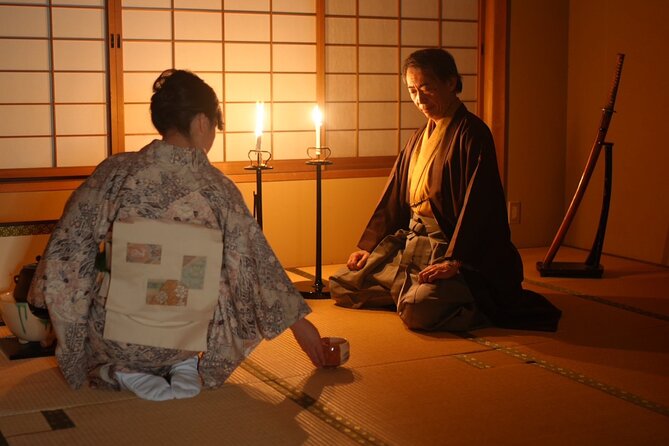
- A 20-tatami room you usually can’t access: You’re using a space typically closed to the public, and it’s lit by candlelight for a moody, calm feeling.
- Kimono dressing plus guided photos: You don’t just change clothes—you get a photo shoot with props and lighting support.
- Zen meditation is built in: A short 4-minute meditation helps you shift gears before the tea portion.
- You learn by doing: After the tea demonstration, you whisk your own matcha for the full hands-on experience.
- Translation devices remove the stress: Communication support is part of the experience, so you can ask questions in your own language.
After Dark Kyoto: Why This Candlelit Ryokan Room Works
Kyoto is stunning in the daytime, but it can feel oddly unfinished after dark if you only chase temple sights. This is different: instead of trying to see everything outside, you get a contained evening ritual in a traditional setting. The candlelight matters. In a pitch-black room, even small gestures—pouring, whisking, bowing—feel more intentional.
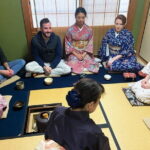
That “private room” format is a big deal for most people. In a group of 2 to 6, the staff can slow down, explain what’s happening, and help you keep up. It also means you get a calmer pace than you’d expect at many public activities.
And there’s a Zen angle that helps the whole thing land. You’re not just watching a performance; you get a brief meditation to reset your mind. Even if you’re skeptical at first, the timing is useful because it puts you in the right headspace for the tea flow.
You can also read our reviews of more tours and experiences in Kyoto.
Finding ZEN in Shimogyo: The Start of Your Evening Ritual
Your experience starts at 茶道体験所 禅 (ZEN: Tea Ceremony Experience in Kyoto), located at 緑風荘 4階 in Shimogyo Ward, Kyoto. It’s set in an area that’s near public transportation, which makes it easier to plug into your evening plans without a hassle.
From the start, you’re stepping into the rhythm of the activity right away. Expect the evening to feel like a “program” with a clear sequence, not a stop-and-start museum visit. The experience also ends back at the meeting point, so you’re not left figuring out where to go after your tea is finished.
If you’re the type who likes simple logistics, this setup helps. You show up, you’re guided through clothing, photos, meditation, and the tea flow, and you’re done within about an hour. It’s structured, and for many people that’s a win.
Kimono Dressing and Photo Shoot: Uchikake or Haori, Plus Props and Lighting
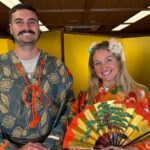
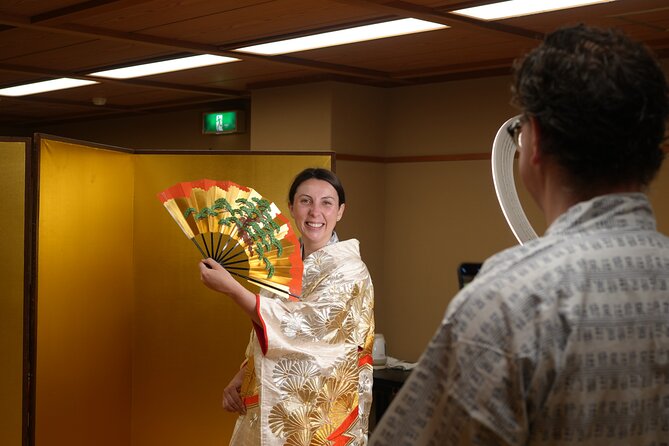
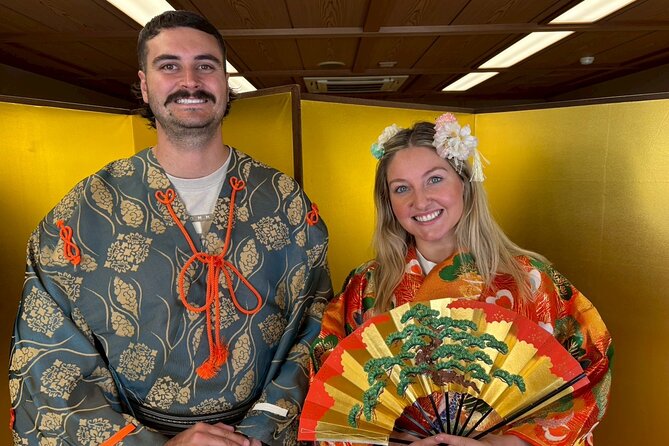
The first major block is dressing and a photo shoot, designed to be both fun and visually impressive. You’ll wear either a bridal uchikake or a men’s haori, and you’ll have photo props like folding fans and swords. There’s also professional lighting, which makes a difference—you’re not just taking random phone snapshots.
This part is also where the experience becomes memorable beyond the tea itself. The kimono moment turns the evening into something you can picture later. And because there are staff members assisting with photography, you’re not stuck trying to direct your own shoot or translate your intentions into awkward camera directions.
A practical tip: treat this as an experience, not a quick costume change. If you’re wearing something heavier or structured, give your body a few minutes to settle. You’ll do better in photos if you’re comfortable during the time posing and moving into different prop positions.
Zen Meditation (4 Minutes): Short, But It Changes the Mood
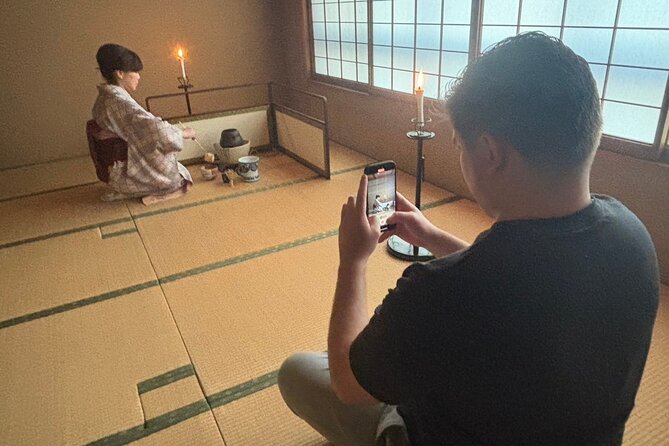
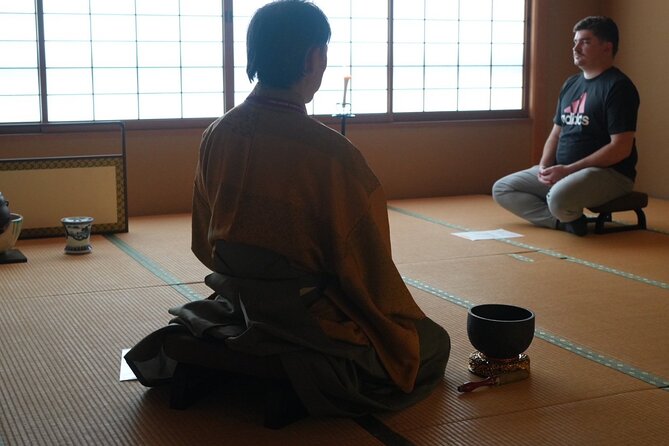
After the photo session, you get a brief Zen meditation—about 4 minutes. It’s short on purpose, so you’re not sitting through a long guided session when you’re new to it.
In a candle-lit room, that tiny shift can feel surprisingly powerful. You’re going from performance-mode (photos) to calm-mode (quiet focus). For me, this is one of the smartest design choices of the evening because it makes the tea part feel earned rather than rushed.
Even if you’re not into meditation, the structure helps you slow down. And slowing down is the hidden ingredient in a good tea ceremony. You notice details more, your movements feel steadier, and the whole flow becomes easier to follow.
The Tea Ceremony Demo (20 Minutes): Matcha as a Guided Ritual
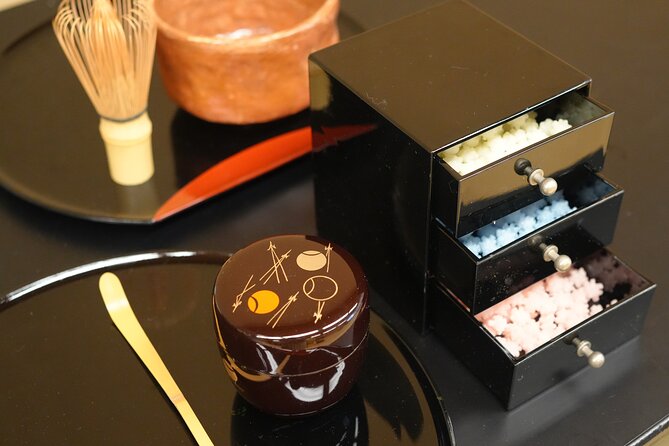
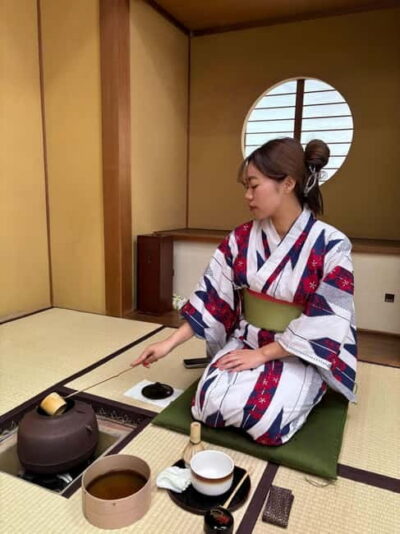
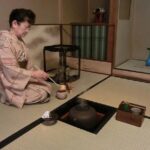
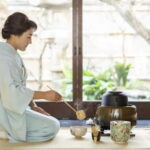
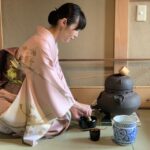
Then comes the tea ceremony demonstration, about 20 minutes. You’re welcomed as a guest and given a bowl of matcha, and you experience the flow of a traditional tea gathering.
This is where the language support becomes more than a nice extra. When you understand what’s happening at each step—how the host handles the bowl, what each gesture means—you stop guessing and start participating. The tea ceremony becomes something you can actually follow.
You’ll also have sweets included, and matcha is part of the experience, not an afterthought. In a short format, the pairing of tea and sweets helps you feel like you completed a full ritual, not just watched someone make a drink.
One consideration: a ceremony like this works best when you’re willing to go a little slowly. You don’t need to be perfect. Just follow along with the staff and focus on the sequence. The point isn’t to “perform” it like a tea master—it’s to experience it.
Your Matcha Whisking (20 Minutes): Doing the Work, Not Just Watching
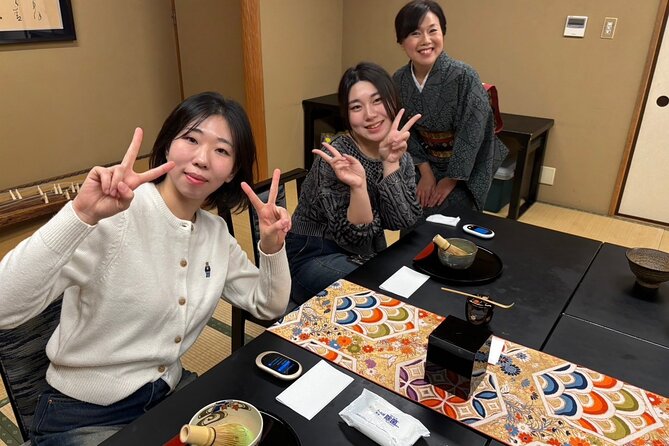
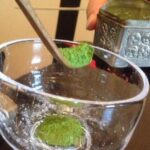
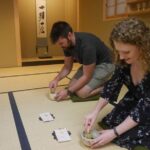
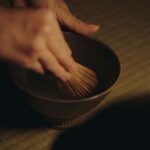
After the demonstration, you get hands-on time: matcha whisking for about 20 minutes. This is the part most people remember because it’s practical. You don’t just taste matcha—you learn how it’s whisked as part of the ritual.
This portion also fits the private-room format well. In a smaller group, the staff can offer help and keep the experience moving without everyone feeling lost. If something doesn’t make sense, you can ask.
And because the activity includes the tea ceremony utensils, you don’t have to bring anything. Everything needed for the process is part of the program, along with costumes and other tools used during the ceremony. That’s real value, because you avoid the “I planned this but I forgot gear” stress.
If you’re nervous about doing it wrong, relax. The goal is participation. In fact, making matcha is already a change from typical Kyoto sightseeing. It’s a skill you practice for the evening, then you carry the memory home.
Hosts You’ll Actually Click With: Matsuda and Mayumi

A big part of why people rate this so highly is the human energy from the hosts. Matsuda and Mayumi come across as genuinely friendly, with joy and patience that make the ritual feel welcoming instead of intimidating.
This matters because a tea ceremony can sound formal on paper. In practice, the hosts set the tone. They guide you through the steps, help with photos, and support the communication so you’re not left interpreting silence.
If you’re traveling with kids, this is especially useful. The translation support means kids can ask questions in their own language rather than bottling everything up. That changes the experience from a one-way activity into something everyone can participate in.
Price and Value: What About $98 for 59 Minutes?
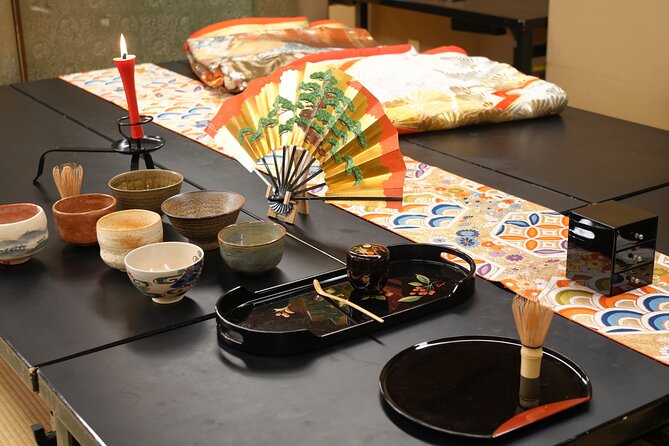
At $97.98 per person (and ¥15,000 for adults), you’re paying for more than a quick tea tasting. You’re paying for a full, guided, multi-part experience: kimono dressing, a photo shoot with props and professional lighting, a short Zen meditation, a tea ceremony demonstration, and your own matcha whisking. Plus sweets are included, and translator devices are provided.
That sounds like a lot, but it also explains why the timeline is around 59 minutes. The value is packed in. You get multiple parts of Japanese culture in one evening, in a private setting with support.
Is it pricey compared to a casual drink? Yes. But it’s more like paying for a cultural workshop with a photo session attached. If you like hands-on learning and you want a Kyoto memory that feels personal (not just scenic photos), this pricing makes more sense.
Also, the group size (2 to 6) is part of the value equation. You’re not being processed through a line with strangers. You’re in a small group with a guide and time for questions.
Who This Is For (and Who Might Prefer Something Else)
This tea ceremony experience is ideal if you want an evening activity that feels calm, respectful, and interactive. You’ll likely enjoy it if you like trying things—like whisking matcha—or if you want a guided way to understand a Japanese ritual without feeling lost.
It’s also a great option if your Kyoto days are full of temples and you want a different kind of cultural activity when the major sights close at night. Instead of chasing late openings, you get an atmospheric indoor ritual.
On the other hand, if you dislike structured activities or hate dressing up, you might find the kimono portion a bit much. And if you expect a long evening with lots of wandering, the 59-minute program will feel short. This is a focused highlight, not an all-evening experience.
Should You Book This Kyoto Private Tea Ceremony?
I’d book it if you want a real Kyoto night with a private, candlelit setting and a hands-on matcha moment. The combination of kimono photo session, guided tea flow, brief Zen meditation, and translation support makes it feel accessible even if you don’t speak Japanese.
Skip it only if you’re hoping for a slow, open-ended evening where you roam freely and linger for hours. This one is about the sequence—and doing it well, within a tight time window.
If that sounds like your style, you’ll likely love the way the experience turns into a concrete memory: photos in traditional clothing, matcha you whisked yourself, and a calm reset that’s hard to recreate on your own.
FAQ
How long is the tea ceremony experience?
The experience runs about 59 minutes.
Is this a private tour or group activity?
It’s a private activity for your group only, with group size typically 2 to 6 people.
What’s included in the ceremony?
You’ll have matcha green tea and sweets, plus the tea ceremony utensils. Costumes and katana props are also included for the kimono/photo portion.
Do I need to speak Japanese?
No. Translator devices are available, so you can communicate during the activity.
Do you take photos for us?
Yes. Staff assist with photography, and photos are welcome throughout the experience.
What happens first?
You start with kimono dressing and a photo shoot, then you do a short Zen meditation before the tea ceremony demonstration and matcha whisking.
Can children participate?
Yes. Pricing is available for children under 15.
Where do we meet, and where does it end?
Meet at 茶道体験所 禅 (ZEN: Tea Ceremony Experience in Kyoto) at 緑風荘 4階 in Shimogyo Ward, and the activity ends back at the meeting point.
What if the weather is bad?
This experience requires good weather. If canceled due to poor weather, you’ll be offered a different date or a full refund.
Is free cancellation available?
Yes. You can cancel for a full refund if you cancel at least 24 hours before the experience starts, and cancellation within 24 hours isn’t refundable.