REVIEW · KYOTO
Kyoto near Fushimiinari Wagashi making&Small Group Tea Ceremony
Book on Viator →Operated by Japanese cooking class & walking tour · Bookable on Viator
Tea ceremony in a real Kyoto home feels different.
You get a hands-on wagashi lesson and then a full matcha ceremony in an authentic tatami room, with an English-speaking host guiding you through the why, not just the what. The setting is local-house calm, not a showroom, and the pace is thoughtful even with a short, 1 hour 15 minute time slot.
Two things I especially like: first, you don’t just watch. You’ll shape and make one type of wagashi yourself, then eat the sweets you made during the ceremony. Second, the group stays small—max 8 people—so the instructor can actually help you with the steps.
One thing to consider: this is not for everyone—it’s not recommended if you don’t drink caffeine, since you’ll have two bowls of matcha as part of the experience.
In This Review
- Key things to know before you go
- A Small Kyoto Home Experience, Close to Fushimi Inari
- Start in the Kitchen: Making Wagashi Hands-On
- The Walk to the Tea Room: Garden Moment + Etiquette Setup
- Tatami Seating Tip: Socks, Bare Feet Rules, and Optional Chairs
- Inside the Ceremony: How the Matcha Steps Fit Together
- Two Bowls of Matcha: Flavor, Caffeine, and What to Expect
- What You’ll Leave With: Skills and an Actual Souvenir
- English Guidance That Doesn’t Feel Like a Script
- Price and Value: Is $52.26 a Fair Deal?
- Who Should Book This (and Who Might Skip It)
- Quick Prep Tips That Make the Ceremony Easier
- Should You Book This Kyoto Wagashi and Matcha Class?
- FAQ
- How long is the Kyoto Wagashi making and small group tea ceremony?
- How many people are in the group?
- What’s included in the price?
- Do I need to wear socks?
- Can I sit on a chair instead of tatami?
- Is it okay if I don’t like caffeine?
- Are there age restrictions for children?
Key things to know before you go
- Small group max 8 means you get real coaching, not a quick lecture.
- You make wagashi (not just a demo) and then taste it during the ceremony.
- Two bowls of matcha are included, so plan for caffeine.
- Licensed English guide interpreters explain etiquette, scroll meaning, and technique clearly.
- Tatami seating with optional chairs if you prefer not to sit on the floor.
- Socks required (bare feet not allowed), so plan your outfit.
A Small Kyoto Home Experience, Close to Fushimi Inari
The experience starts at 9:45am at an address in Fushimi Ward: 38-4 Fukakusa Watamorichō. It’s near public transportation, and it’s also easy to pair with sightseeing—people note it’s about a 10-minute walk to Fushimi Inari Taisha, the famous torii gates.
What makes this location style of tour worth your time is the “between places” feeling. You’re not only doing a temple checklist. You’re stepping into everyday Kyoto domestic culture: a traditional-style room, a small garden approach, and a host who walks you through the rhythm of tea.
Also, you’ll get a mobile ticket. That’s one less thing to fuss with that morning.
You can also read our reviews of more tours and experiences in Kyoto.
Start in the Kitchen: Making Wagashi Hands-On
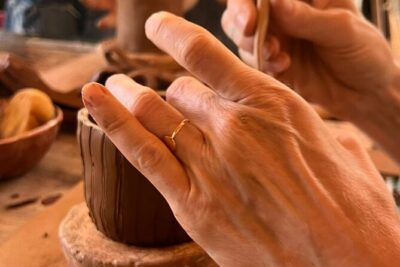
Before tea, you’ll be guided into the kitchen. This part matters. Wagashi is often treated like a decorative afterthought, but here you learn it as a craft with steps you can actually repeat.
You’ll learn how to make one kind of wagashi. The class is hands-on, not a performance from across the room. The host leads you through the process at a pace that makes sense for a small group, and you’ll end up with sweets you can later enjoy as part of the tea ceremony itself.
A practical detail: since you’ll be making sweets, your hands may get a little sticky. That’s normal. Wear something you don’t mind getting slightly messy. And if you’re sensitive about food textures, don’t stress—everything is manageable and guided.
The Walk to the Tea Room: Garden Moment + Etiquette Setup
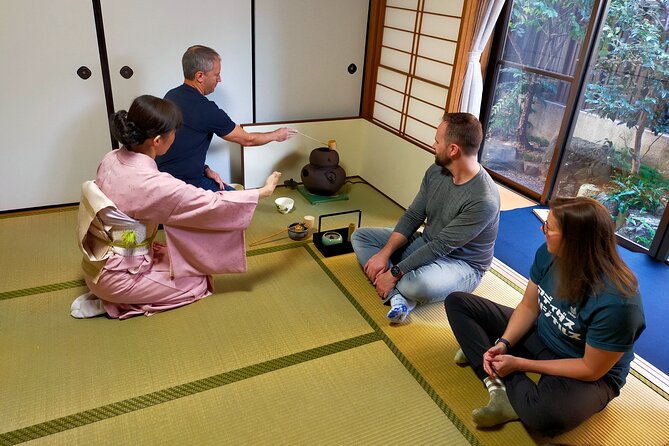
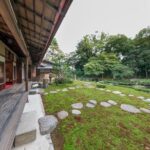
After the wagashi class, you transition into the tea ceremony. If it’s not raining, you’ll go outside and walk through a tiny garden on your way in. It’s a short pause that helps you shift gears—from activity mode to ceremony mode.
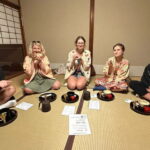
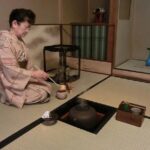
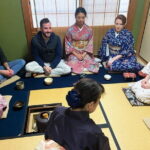
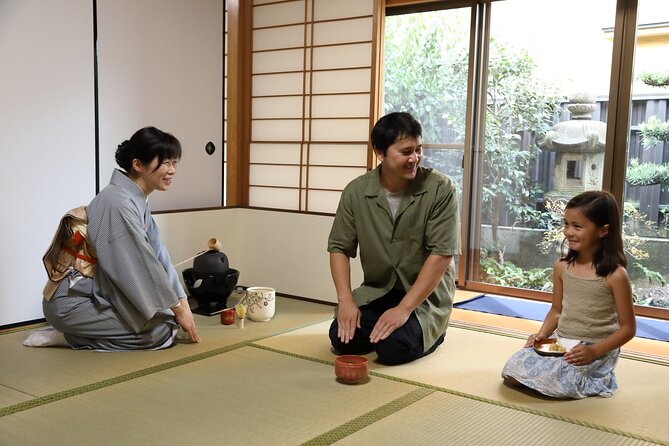
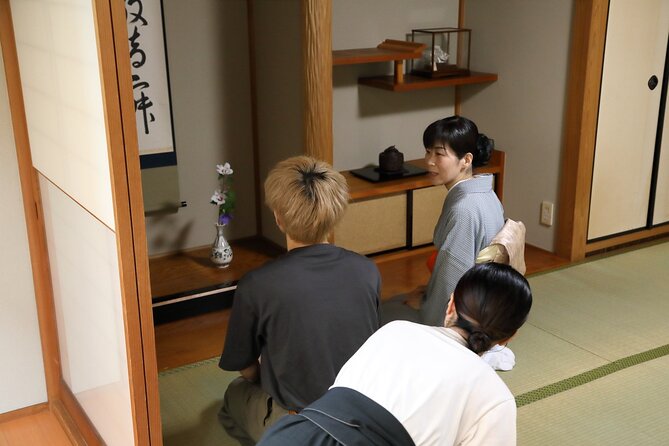
Then you enter an authentic Japanese-style room. You’ll sit on tatami floor. An instructor explains how to attend tea ceremony before you settle in, including small etiquette points that make the whole experience feel respectful rather than staged.
A detail I think is quietly smart: the instructor points out the meaning of the hanging scroll on the wall. Even if you don’t read Japanese calligraphy, that explanation gives context. It helps you understand that tea rooms aren’t empty decoration—they’re built around symbolism and seasonal feeling.
Tatami Seating Tip: Socks, Bare Feet Rules, and Optional Chairs
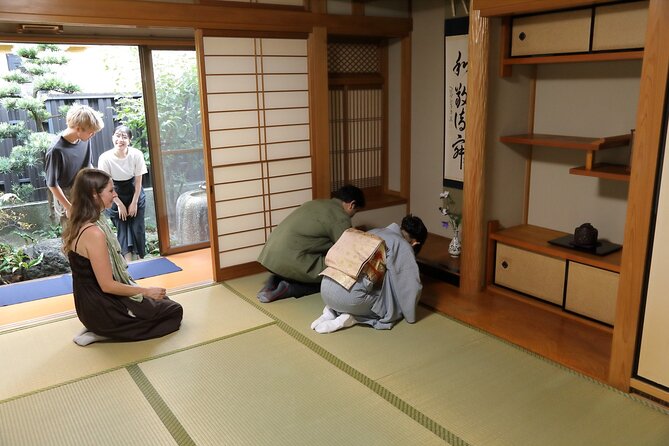
Tea rooms have rules, and Kyoto takes them seriously. You’ll need to bring or wear a pair of socks. Bare feet are not allowed in the room.
Plan your footwear accordingly:
- Wear shoes that are easy to take off and put back on.
- Keep socks clean and comfortable; you’ll be moving around a bit before sitting.
If tatami seating doesn’t work for you, you can request a chair instead of sitting on the floor. When you reserve, tell them how many chairs you want prepared. That one choice can be the difference between enjoying the ceremony and spending the whole time uncomfortable.
Inside the Ceremony: How the Matcha Steps Fit Together
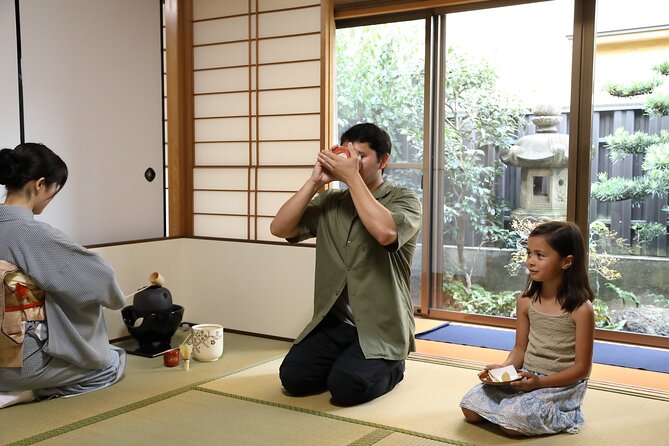
Once you’re seated, the instructor moves into the history and meaning of tea ceremony. This isn’t a long lecture. It’s framed to help you understand what you’re about to do.
Next comes the food-and-tea flow:
- You savor the Japanese sweets you just made.
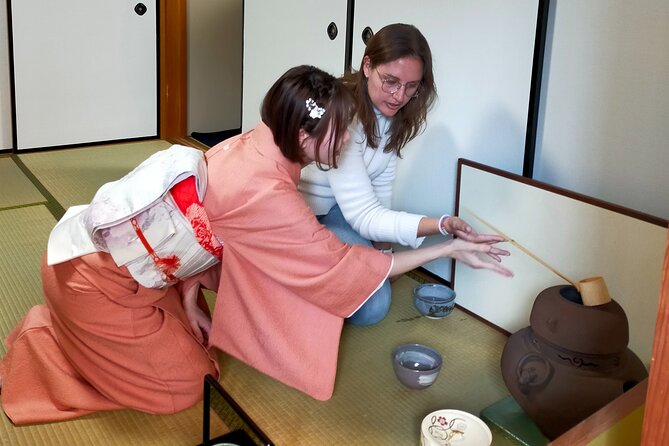
- Your instructor demonstrates how to drink a bowl of matcha.
- Then you meet the host for a demonstration of the ceremonial matcha preparation.
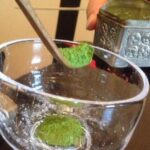
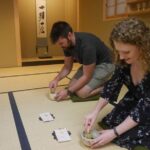
- Finally, you prepare matcha yourself and enjoy it.
That sequence is the key to the value here. You’re not learning matcha as a chemistry experiment—you’re learning it as a ritual with a clear order. The instructor shows you how the bowl is handled, how to approach the act calmly, and how to take your sip in the spirit of the room.
And yes, you’ll make matcha yourself at the end. That’s the part most people want: the ability to say, I can do this when I get home.
Two Bowls of Matcha: Flavor, Caffeine, and What to Expect
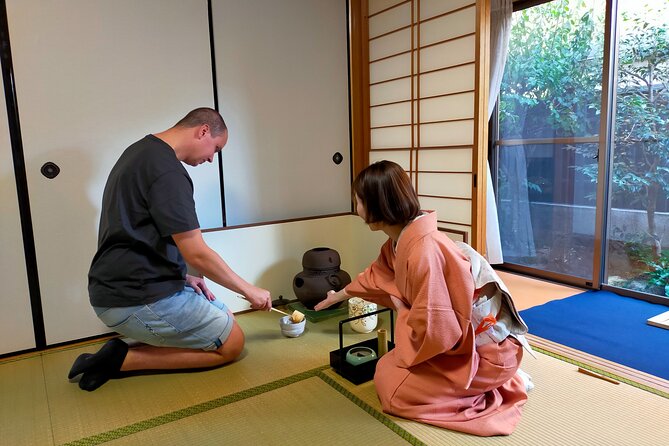
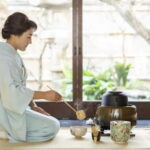
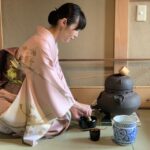
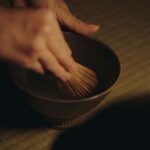
Matcha is included as two bowls of matcha. One bowl becomes “tea ceremony experience mode.” The second becomes “you’ll get to do it” mode, after the host demonstrates preparation and you practice.
This also means you should think about caffeine before booking. The experience is specifically not recommended for people who don’t take caffeine.
How to handle the taste? Matcha isn’t automatically sweet, and different matcha styles can taste more vegetal or more smooth. If you’re sensitive to bitterness, take it slow during the first bowl. The instructor’s guidance on how to drink matters more than you might think—you don’t rush tea in a tea room.
What You’ll Leave With: Skills and an Actual Souvenir
Most Kyoto souvenirs are cute. Few are useful. This experience gives you both.
You’ll leave with:
- The skill to make wagashi (at least the one you learn during class).
- The technique to prepare matcha and serve it in a way that matches the ceremony steps.
- A story you can tell because you did it—hands sticky, then calm.
And the best part is how edible it is. You’ll eat the wagashi during the ceremony while it’s freshest and part of the pacing. That’s not just a snack. It’s part of how the ceremony is structured: sweet first, then the bitterness/earthiness of matcha.
If you’re thinking about gifts, this is one of the rare experiences where your friends back home get something real next time you host. You’ll be able to make matcha for them and explain what each step is for.
English Guidance That Doesn’t Feel Like a Script
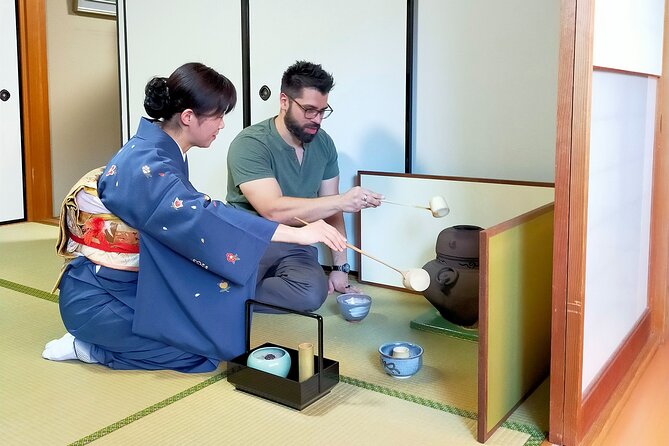
The hosts and instructors are licensed guide interpreters, and it shows. You get clear explanations of what’s happening—history, scroll meaning, and how to attend the ceremony—without it turning into a lecture you tune out.
Two details from the experience vibe:
- You’re treated like you’re being welcomed, not processed.
- The English narration is friendly and practical, with enough detail for beginners.
One reviewer highlighted the hostess’s English skill, naming Miho as friendly and helpful. That kind of host energy matters here, because tea ceremony is subtle. You’ll enjoy it more if you feel at ease.
Price and Value: Is $52.26 a Fair Deal?
At $52.26 per person, you’re paying for a short, focused cultural workshop plus real instruction and included food/drink. For 1 hour 15 minutes, that can feel “slightly pricey” if you’re comparing it to a basic ticketed activity.
But here’s the value argument:
- You’re getting an English-speaking instructor and host, not self-guided museum audio.
- You’re included for all fees and taxes.
- You get coffee and/or tea, plus two bowls of matcha.
- You also get traditional Japanese confectionaries (including the wagashi you make).
The hands-on part is the clincher. A tea ceremony where you only watch is more of a show. This one gives you skills: making wagashi, then preparing matcha yourself.
If you want one Kyoto activity that you can repeat later, the price starts to look like a bargain.
Who Should Book This (and Who Might Skip It)
This fits best if you:
- Like small-group learning and hands-on classes.
- Want a calmer cultural experience that isn’t centered on crowds.
- Enjoy eating as part of learning.
- Drink caffeine and don’t mind matcha’s character.
It might not be the best match if you:
- Don’t take caffeine (you’ll have two bowls).
- Have difficulty sitting on the floor and can’t plan for a chair.
- Prefer big “sightseeing” moments over quiet craft work.
If you’re traveling with curiosity rather than a checklist, you’ll probably love it.
Quick Prep Tips That Make the Ceremony Easier
A few practical points can make your morning smoother:
- Bring socks or wear them already (bare feet aren’t allowed inside).
- Wear easy slip-on/off shoes.
- Dress for calm indoor time. You’ll be sitting on tatami or in a chair.
- Expect sweetness and a bit of stickiness during wagashi making.
- Plan your caffeine tolerance for two bowls of matcha.
Also, remember this requires good weather in the sense that part of the flow includes a small garden walk. If it’s raining, the experience adjusts—tea still happens.
Should You Book This Kyoto Wagashi and Matcha Class?
I think you should book it if you want a real cultural “do it yourself” afternoon in Kyoto, not just photos. The small group size, the chance to make wagashi, and the included matcha (plus the step-by-step ceremonial guidance) make it one of the more satisfying ways to spend 1 hour 15 minutes in the city.
Skip it if caffeine is a no-go for you, or if you know floor seating will derail your comfort. Otherwise, this is a straightforward, value-minded experience that turns into a skill you can share afterward.
FAQ
How long is the Kyoto Wagashi making and small group tea ceremony?
It runs for about 1 hour 15 minutes.
How many people are in the group?
The experience has a maximum of 8 travelers.
What’s included in the price?
You get an English-speaking instructor, all fees and taxes, coffee and/or tea, two bowls of matcha, and Japanese traditional confectionaries.
Do I need to wear socks?
Yes. You need to bring or wear socks, and bare feet are not allowed in the room.
Can I sit on a chair instead of tatami?
Yes. You can request chairs instead of sitting on the tatami floor. Let them know how many chairs you want when you book.
Is it okay if I don’t like caffeine?
It’s not recommended for travelers who doesn’t take caffeine because matcha is included as part of the experience.
Are there age restrictions for children?
Children aged 8 to 12 need at least one adult to participate. Children aged 7 or under can’t participate in this session.