REVIEW · TOKYO
EDOCCO Tea House–A Quick Dive into Japanese Traditional Culture
Book on Viator →Operated by EDOCCO STUDIO · Bookable on Viator
Want Japanese culture in one compact hour? At EDOCCO Tea House you’ll do a hands-on matcha ceremony and shodo and origami, all in a restored studio with English support, but the Geisha dance segment can feel short if you’re a serious performer-spotter.
I like that it packs five different traditions into one smooth timeline, without turning it into a rushed checklist. You also get kimono cosplay for photos, so you leave with more than just a few notes—plus the group stays small (max 20), which helps the instructors keep an eye on beginners.
In This Review
- Key Highlights Worth Noting
- Entering EDOCCO Tea House: A Restored Studio with a Clear Plan
- Matcha Ceremony and Japanese Sweets: Make It, Then Understand It
- The Japanese Dance Show: Short Segment, Good Context
- Kimono Cosplay: Dressing Up Without Turning It into a Costume Zoo
- Shodo Calligraphy and Origami: Two Crafts That Feel Rewarding
- Shodo: The Character Isn’t the Only Lesson
- Origami: Paper Folding That Actually Holds Your Attention
- Price and Value: What You’re Really Paying For at $72.48
- How to Get There: Easy Tokyo Access, One Clear Meeting Spot
- Timing and What to Do Before/After
- Who Should Book EDOCCO Tea House (and Who Might Skip)
- Should You Book EDOCCO Tea House?
- FAQ
- FAQ
- How long is the EDOCCO Tea House experience?
- What’s included in the ticket price?
- Is the matcha set included, or do I need to buy tools?
- Is the experience offered in English?
- Where is the meeting point?
- What happens if the weather is bad or I need to cancel?
Key Highlights Worth Noting
- Five traditions in one hour: matcha and sweets, a dance performance with explanation, kimono dressing, calligraphy, and origami.
- English guidance throughout: explanations are provided in English, so you’re not stuck guessing what’s happening.
- Small-group feel (up to 20): you get attention and chances to ask questions.
- Instructors you’ll remember: I’ve seen guides credited by name, including Ori and Mr. Bambu, for clear teaching and friendly handling.
- You can buy matcha tools later: the matcha set tools aren’t included, but you can purchase them if you want to keep practicing.
Entering EDOCCO Tea House: A Restored Studio with a Clear Plan
EDOCCO Tea House is set up like a small cultural workshop inside a beautifully restored space, designed to mix “old” atmosphere with a modern, visitor-friendly flow. The goal is simple: give you an accurate look at everyday arts from Japan—tea, movement, paper craft, and brushwork—without requiring prior skill.
The experience runs about 1 hour and uses a mobile ticket, which makes it easy to manage on a trip where you’re already juggling train transfers. The venue is also near public transportation, so you’re not spending your whole day on logistics instead of learning.
You’ll notice right away that the pacing is built for first-timers. You’ll do something active, watch something cultural, then do another active craft. That rhythm helps the hour feel full rather than chaotic.
You can also read our reviews of more tours and experiences in Tokyo.
Matcha Ceremony and Japanese Sweets: Make It, Then Understand It
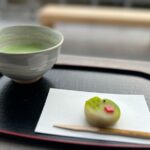
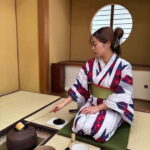
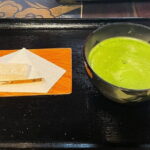
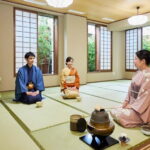
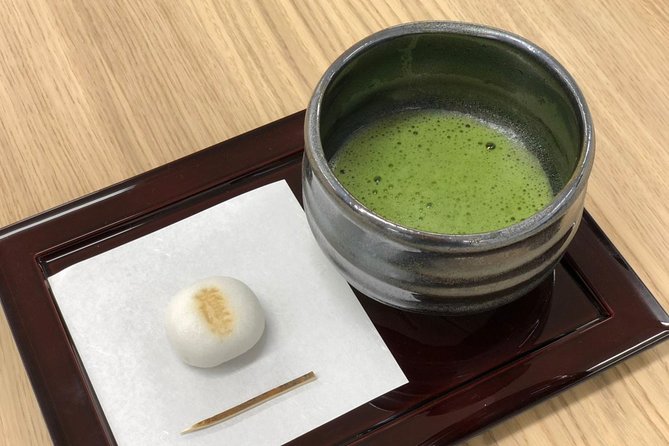
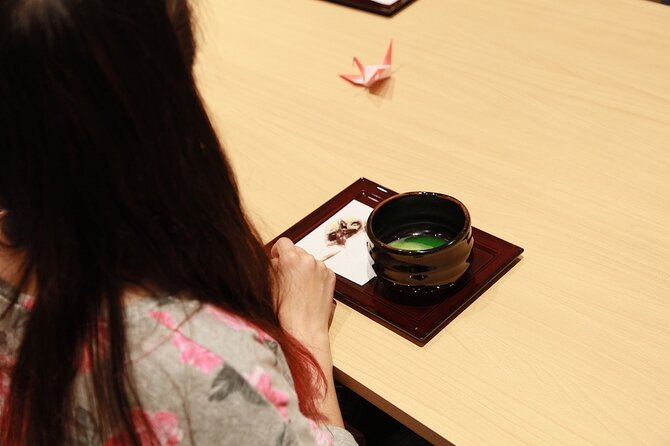
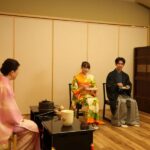
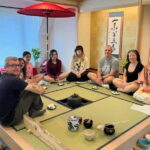
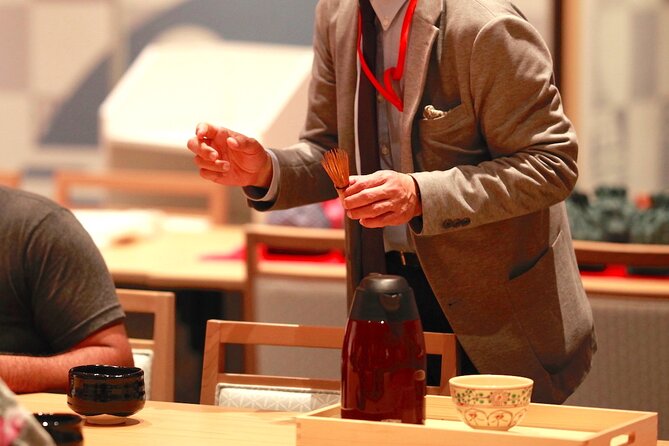
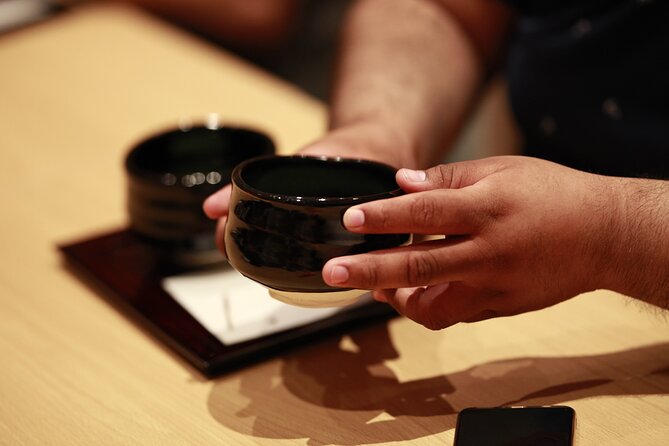
The heart of the experience starts with the tea ceremony, focused on making matcha and serving it properly. You’ll get instruction for preparing matcha (and you’re also served matcha and Japanese sweets as part of the included snack set).
This part matters because matcha isn’t just a drink here—it’s a small lesson in attention. Even if your brush strokes later look wobbly, matcha preparation teaches a similar idea: slow down, follow the steps, and aim for calm, controlled movement.
A practical note: the full matcha tool set (like a tea bowl, matcha powder, and a bamboo whisk, plus other items) is available for purchase, but it’s not included in the price. So don’t expect to leave with a full at-home kit unless you decide to buy one.
If you like food experiences, this section is a strong value. You’re not only tasting—you’re participating, and you’ll understand the basic logic behind what you’re doing.
The Japanese Dance Show: Short Segment, Good Context
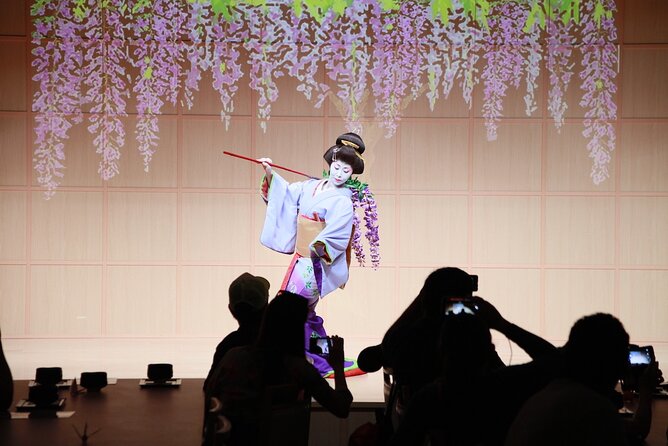
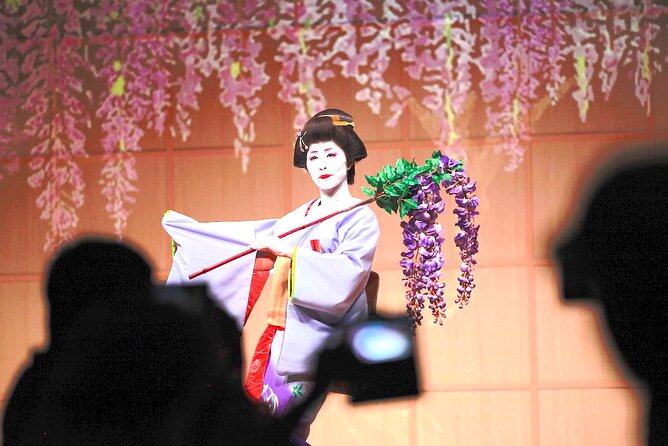
After the tea comes the Japanese dance show, paired with explanation in English so you know what you’re looking at. The dance performance is often associated with Geisha-style aesthetics in the way it’s described by visitors, and the key point is that you’re not just watching motions—you’re getting context for the movements and their meaning.
Here’s the trade-off: at under an hour total, the dance time is necessarily limited. One reviewer issue I would plan for is that the dance can be under 10 minutes, so if your main goal is to see a long, uninterrupted performance, this won’t replace a dedicated show.
But if your goal is a taste of traditional performance plus education, it works well. You’ll get the feeling of the art form without needing to carve out a separate evening.
Kimono Cosplay: Dressing Up Without Turning It into a Costume Zoo
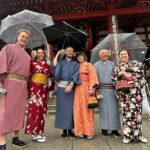
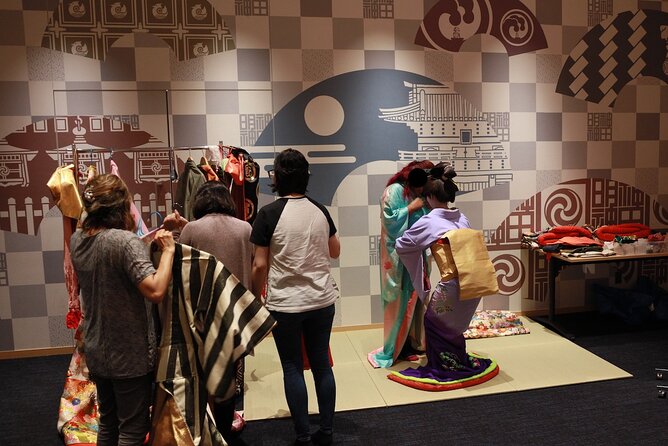
Then you’ll slip into a kimono cosplay experience. This is one of those parts that sounds simple until you try it—because dressing in a kimono changes how you stand, how you move, and how you take photos. The studio sets up a calm, photo-friendly moment where you can actually appreciate the look, not just throw on fabric.
What makes this worth your time is the pairing. You don’t just dress up while the rest of the workshop is going on; you’re in the same cultural theme the entire hour. Tea, paper, brushwork, dance, and kimono all point toward how aesthetics and discipline show up in different forms.
Also, kimono is a great “trip memory” piece. Even if the crafts are what you’ll remember most, the photos are what you’ll show friends when you get home.
Shodo Calligraphy and Origami: Two Crafts That Feel Rewarding
The back half of the experience focuses on shodo (Japanese calligraphy) and origami—and this is where many people get the most personal satisfaction.


Shodo: The Character Isn’t the Only Lesson
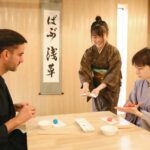
In shodo, you practice the basics of brush strokes and learn how to create your own character. The instruction is designed for beginners, meaning you’re not expected to already know kanji or Japanese lettering.
What I like about shodo in this kind of setting is that it teaches you how to slow down your hand. It’s less about producing perfect calligraphy and more about learning the mechanics: pressure, stroke direction, and control.
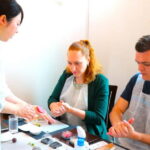
In the teaching team, Ori has been called out specifically for careful guidance and detail. If you’re someone who gets nervous at crafts, that kind of calm teaching matters.
Origami: Paper Folding That Actually Holds Your Attention
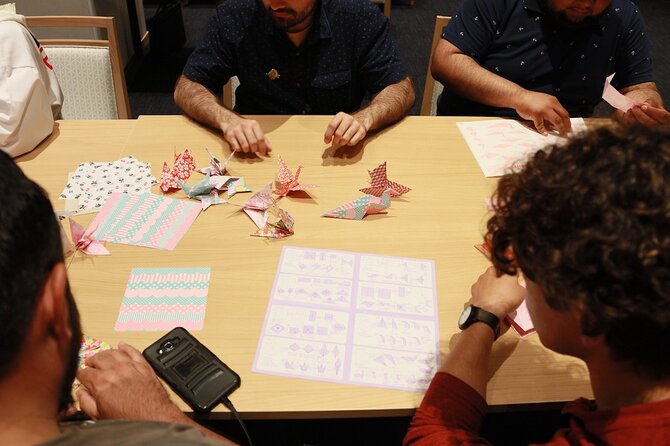
Origami is the other big win. You’ll learn traditional paper folding through a mini workshop, typically starting with simpler shapes (cranes and similar designs are mentioned as examples) and then moving through the logic of how a flat sheet becomes a form.
This is one of those activities that works for all ages. If you’re traveling with kids, origami gives them instant feedback. If you’re traveling solo, it gives you a finished object you can take home.
And since it happens inside the same hour as matcha and calligraphy, it keeps you in “Japan mode.” You’re not switching brain gears to something unrelated.
Price and Value: What You’re Really Paying For at $72.48
At $72.48 per person for about one hour, the value depends on what you want from Tokyo.
If you’re looking for one activity that gives you multiple cultural touchpoints—tea preparation, a dance performance with explanation, kimono dressing, calligraphy practice, and origami—this price can make sense. You’re paying for a structured “cultural sampler” with small group size (maximum 20) and English explanation that reduces the usual frustration of not understanding what you’re seeing.
If you’re the kind of traveler who wants deep practice—like spending half a day polishing only calligraphy—then this may feel like you’re getting highlights instead of mastery. But for most first-time visitors, the format is efficient. You can fit it into a busy itinerary without needing to rearrange your entire day.
Also remember: the matcha tool set isn’t included. If you want to keep practicing after the class, you might spend more later on supplies. Still, that’s a choice, not a surprise cost baked into the ticket.
How to Get There: Easy Tokyo Access, One Clear Meeting Spot
The meeting point is at EDOCCO2-chōme-16-2 Sotokanda, Chiyoda City, Tokyo 101-0021, Japan. It’s near public transportation, which is the best kind of convenience in central Tokyo.
One helpful arrival tip that came up in feedback is using the Marunouchi Line stop at Ochanomiza (M20), then following local directions on foot. The described path includes stairs up to a flyover road bridge, then turning left and taking the first right at the intersection—reported as a short walk once you’re out in the right area.
Even if you don’t follow those steps exactly, the takeaway is solid: once you reach Ochanomiza, you’re not dealing with a long trek across town. Keep your phone map ready for the final turns.
Timing and What to Do Before/After
Because the experience lasts about one hour, it fits well as an early or mid-day cultural anchor. It’s also ideal if your other Tokyo plans involve lots of walking and you’d like one scheduled block that’s indoor, guided, and calm.
A good strategy: choose a time when you can arrive a few minutes early. You’ll want time to settle in, put your things away, and get ready for kimono dressing without rushing.
After the workshop, give yourself a little buffer. You may feel “creative-brained” after calligraphy and origami, and it helps to keep your next plan flexible—coffee, a quick stroll nearby, or checking out the neighborhood streets works nicely.
Who Should Book EDOCCO Tea House (and Who Might Skip)
This is a great fit if you:
- want a first taste of Japanese traditions without prior knowledge
- like hands-on activities more than museum-only visits
- appreciate English explanations
- travel with kids, since the craft portions and costume element often go over well
You might consider another option if:
- your top priority is a long, uninterrupted traditional performance (the dance segment is limited)
- you’re seeking a heavy, skill-building course where you practice one craft for hours
- you’re only interested in one specialty (like matcha only or calligraphy only)
Should You Book EDOCCO Tea House?
Yes—if you want a smart, structured hour where you do real Japanese arts instead of only watching. This is the kind of activity that works even when your Japanese is basic, because the flow is guided and explained in English, and the small-group setting helps the instructors keep things moving at your level.
I’d book it especially if it’s your first Tokyo trip and you’re trying to balance iconic sights with authentic, hands-on culture. If you’re chasing the longest dance performance possible, you may want to pair this with a separate show—but for many visitors, this is the perfect “start your Tokyo culture story” experience.
And if plans change, you have some flexibility: the experience offers free cancellation up to 24 hours in advance.
FAQ
FAQ
How long is the EDOCCO Tea House experience?
It lasts about 1 hour.
What’s included in the ticket price?
Your ticket includes matcha and Japanese sweets, appreciation of the Japanese dance show, calligraphy experience, origami experience, and Japanese dress cosplay.
Is the matcha set included, or do I need to buy tools?
The matcha set (tea bowl, matcha powder, bamboo whisk, and other tools) is available for purchase, but it is not included.
Is the experience offered in English?
English explanations are included during the activities, including for the dance show.
Where is the meeting point?
You meet at EDOCCO2-chōme-16-2 Sotokanda, Chiyoda City, Tokyo 101-0021, Japan, and the experience ends back at the meeting point.
What happens if the weather is bad or I need to cancel?
The experience requires good weather. If it’s canceled due to poor weather, you’ll be offered a different date or a full refund. You can cancel up to 24 hours in advance for a full refund.