REVIEW · TOKYO
Day Trip to Kamakura & Enoshima: Shrines, Seaside, Temples & Tea
Book on Viator →Operated by Snow Monkey Resorts Tours (Machinovate Japan Ltd.) · Bookable on Viator
Two seaside temples, one easy day plan. This Kamakura & Enoshima trip is built around Great Buddha admission and a matcha tea stop, so you’re not hunting tickets or timing. The only real catch is the 11-hour schedule and lots of walking, so plan for steps and a comfy shoe day.
I like that the route removes decision fatigue. The guide handles navigation, and the included Enoshima Kamakura Free Pass keeps local transit simple once you’re in the area. Guides such as Jeff, Jade, Naoto, and Beth are known for making the day feel lively and story-driven, without turning it into a lecture.
You start in central Tokyo at 8:00 am, then ride out to the coast and come back at the end of the day. With a maximum of 20 people, it’s easier to hear your guide and move as a group—just keep expectations realistic for a packed highlights itinerary.
In This Review
- Key things to know before you go
- Why Kamakura + Enoshima in One Day Makes Sense
- Shinjuku Start and the Free Pass Plan (So You’re Not Doing Math)
- First Temple Stop: Bamboo Grounds, Tea House, and a Slower Moment
- Kotoku-in and the Great Buddha: Why This One Moment Is the Icon
- Enoshima Island: Sea Walk, Escalators, and the Sea Candle Observatory
- The Extras That Make This Feel Like a Day Trip, Not Just Admissions
- Price and Value: What You’re Paying For (and What You’re Not)
- Comfort Tips for an 11-Hour Highlights Day
- Who This Tour Suits Best (and Who Might Prefer Different Plans)
- Should You Book This Kamakura & Enoshima Day Trip?
- FAQ
- Where do we meet for the tour?
- What time does the tour start?
- How long is the day trip?
- Does the price include admission to the Great Buddha of Kamakura?
- Is the Enoshima and Kamakura transportation included?
- Are there any food or tea experiences included?
- Is Enoshima Island admission included for the observatory?
- What language is the guide?
- Can I cancel for a full refund?
Key things to know before you go
- Great Buddha of Kamakura tickets are included, including entry to go inside
- Enoshima Kamakura Free Pass covers your transport during the tour
- Tea and sweets at a bamboo temple experience break up the walking
- Sea Candle Observatory on Enoshima includes escalators and admission fees
- Small group size (up to 20) helps the day stay organized
- Koi feeding and multiple fee-covered sights reduce what you’ll need to buy separately
Why Kamakura + Enoshima in One Day Makes Sense
Kamakura and Enoshima sit close to Tokyo, but they feel like a different world: temple lanes, seaside air, and viewpoints that make you pause even when you’re on a schedule. Doing both in one day works because your route is designed to flow—coast views after temple stops, not the other way around.
What I like most is that this isn’t just “see a bunch of places.” It’s a story of the area, with time built in for small cultural moments, like the tea house and feeding koi. Those are the parts that make the trip feel more personal than a checklist.
The only drawback to watch for: you’re moving. You’ll walk between stations and attractions, including a seaside segment and an island climb via escalators. If you’re nursing an injury or you hate crowds and long walks, you may find this day a bit intense.
You can also read our reviews of more tours and experiences in Tokyo.
Shinjuku Start and the Free Pass Plan (So You’re Not Doing Math)
Your day kicks off at Green Window (Shinjuku Station South Exit) at 8:00 am. You meet your guide there, then board the 08:27 train to Fujisawa, arriving at 09:28. That timing matters. It gets you to the coast region early enough that you’re not starting the day mid-rush.
Here’s the practical win: the tour includes an Enoshima Kamakura Free Pass. Instead of figuring out individual fares, you travel with a single plan that the itinerary supports. For many people, that alone makes the day feel easier and less stressful—especially if your Japanese is basic or you simply want to enjoy the scenery instead of studying transit maps.
And with a group size capped at 20, you’re usually not stuck in a moving bottleneck for every stop. You’re part of a manageable cluster, which helps on busy temple approach streets.
First Temple Stop: Bamboo Grounds, Tea House, and a Slower Moment
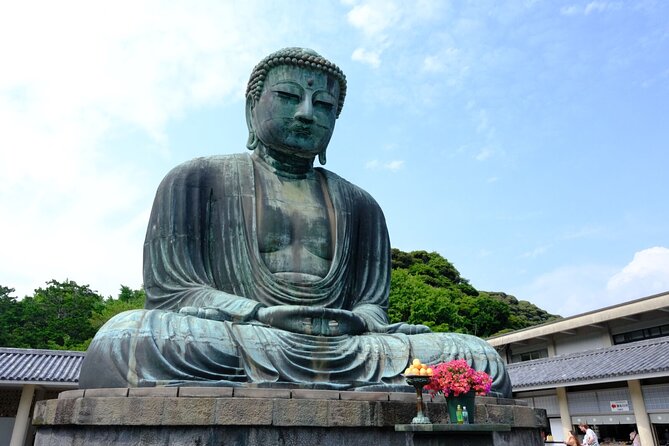
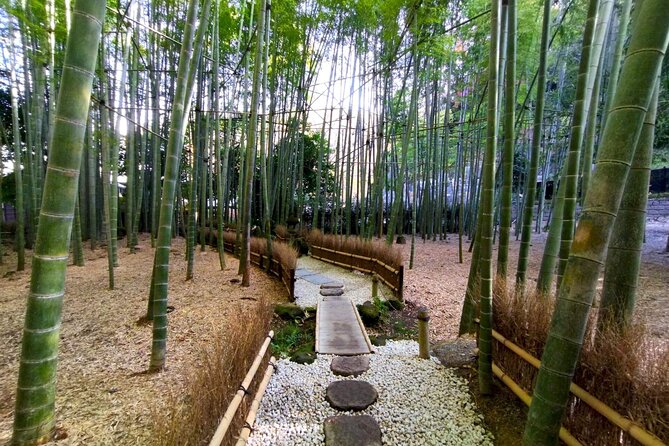
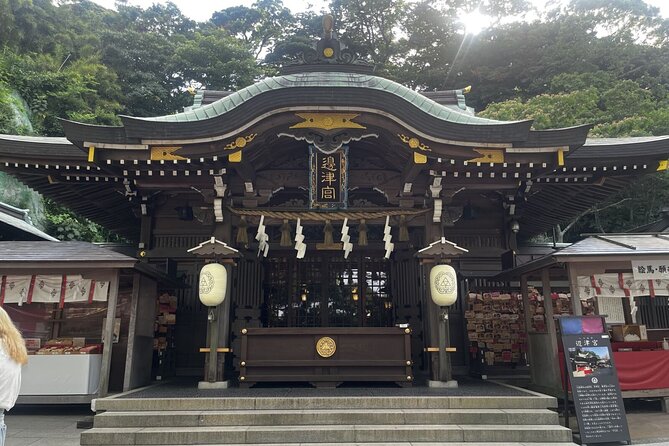
The first major stop after arriving in the area involves a 30-minute walk to your first destination: a temple complex set in bamboo surroundings. This is where the day shifts gears from train-station pace to “wander and notice.”
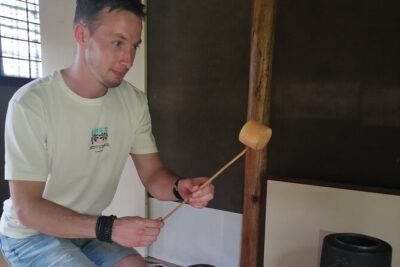
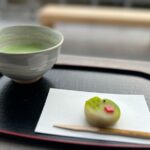
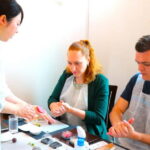
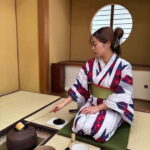
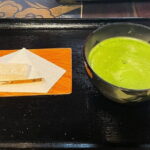
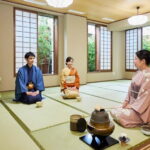
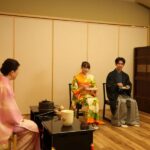
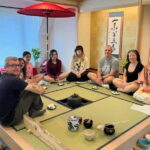
You’ll get a guided look around the temple grounds, with commentary tied to what you’re seeing. Then you’ll pause for a matcha and Japanese sweet experience at the temple’s tea house. This is more than a snack break. It’s a cultural reset button. You get a taste of the local rhythm—slow sip, small sweet, look around—before you head back into sightseeing mode.
What to consider: you’ll likely spend a decent chunk of this early portion on foot. If you can, wear shoes that handle uneven sidewalk sections and the temple-area stone paths.
Kotoku-in and the Great Buddha: Why This One Moment Is the Icon
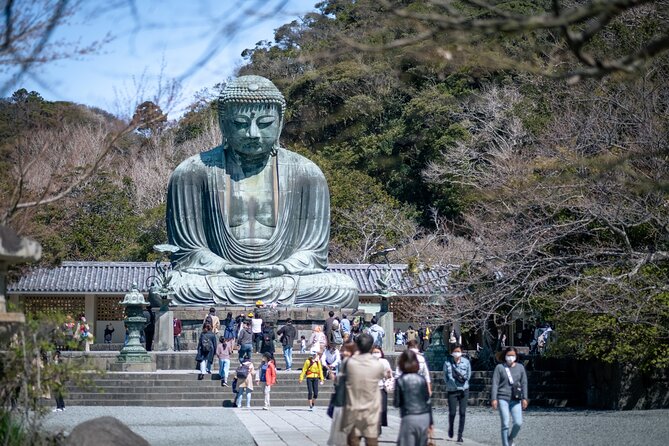
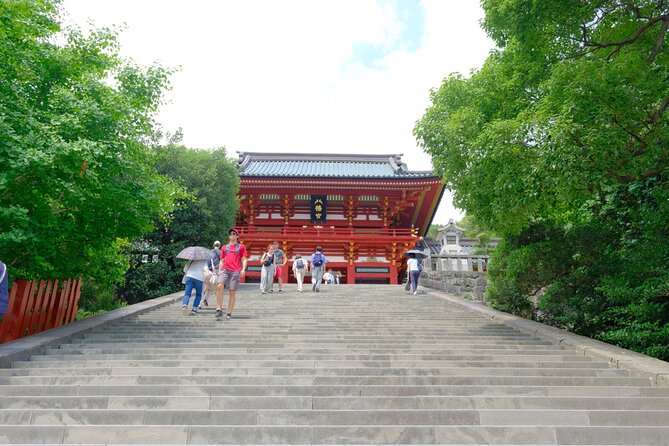
Next comes one of Kamakura’s best-known landmarks: the Great Buddha of Kamakura at Kotoku-in. You’ll head to Hase Station, then take a short 7-minute walk to the temple area. That walk is short, but it’s a good warm-up to the “big ticket” sight.
You’ll have about 30 minutes on site, which is a reasonable amount of time for what this place is. The Great Buddha isn’t just photo-worthy; it’s visually grounding. When you’re there, you understand why it became a symbol people travel across the country to see.
Your ticket is included, and you can also go inside of the Great Buddha, so you’re not limited to the exterior view. That inside access changes the experience from postcard to real monument—you get scale and space in a way you can’t fully capture from a distance.
Photo and timing tip: if the group is moving together, you’ll still want a moment to step back and let the view settle. Try to take one set of photos quickly, then give yourself a second, slower look.
Enoshima Island: Sea Walk, Escalators, and the Sea Candle Observatory
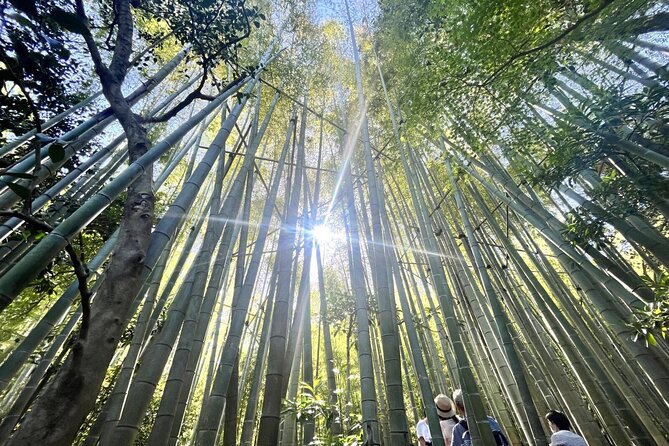
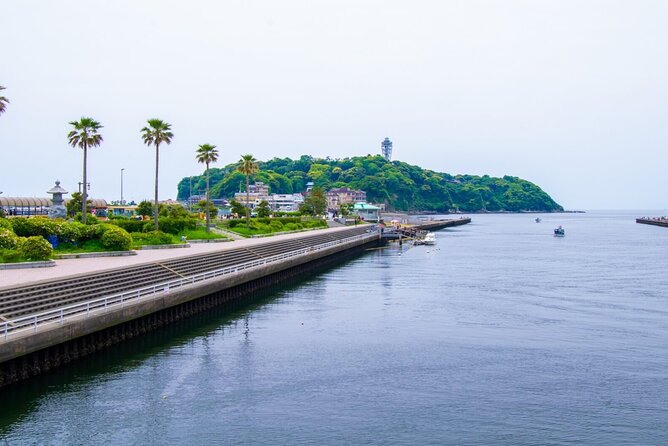
After Kamakura temple time, the day turns coastal on Enoshima Island. From Enoshima Station, you’ll enjoy a scenic walk to the island along the sea. This section is a nice break from the tight temple lanes—more open air, more horizon.
Once you arrive, you take escalators up toward the observatory area. That’s a relief for anyone who doesn’t want a long, steep climb. From there, you’ll visit the Sea Candle Observatory, with admission fees included.
The best part here is the payoff: your eyes get to roam. Enoshima gives you a “from here you can understand the setting” view, especially when you step into the observatory area after the seaside walk.
What to consider: it’s still sightseeing at full speed. You’ll want to pace yourself, because the day doesn’t slow down dramatically after you reach the island.

The Extras That Make This Feel Like a Day Trip, Not Just Admissions
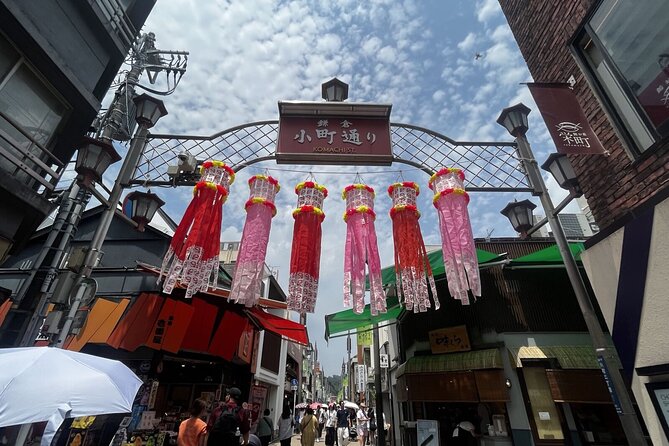
This tour bundles several smaller inclusions that add up when you’re doing the math on your own:
- Bamboo temple admission plus the tea and sweet experience
- Koi feeding fee
- Great Buddha temple admission, including entry inside
- Enoshima island escalators and Sea Candle Observatory admission fees
- Local English-speaking guide
That mix matters because it prevents the classic Japan-day-trip problem: the itinerary says highlights, but you still end up buying multiple tickets, figuring out which fees matter, and trying to coordinate your timing around lines.
Koi feeding is one of those “small but memorable” moments. It’s the kind of activity that turns a landmark stop into an interaction with the setting, not just a pass-through photo stop.
Price and Value: What You’re Paying For (and What You’re Not)
The price is $167.36 per person, and the duration is about 11 hours. That might sound steep at first, but the real question is what’s included.
You’re paying for:
- A guide who runs the route and commentary through multiple sites
- A local transport solution via the Enoshima Kamakura Free Pass
- A set of admissions and fee-covered activities, including the Great Buddha entry (inside access) and the Enoshima observatory/escalators
What’s not included is your meals and additional drinks, plus transport before and after the tour (you handle getting to the meeting point and any return travel outside the tour’s schedule).
So for value: if you’d otherwise buy tickets individually and piece together the transit plan, this tour tends to make sense. You’re trading some flexibility for organization, fewer logistics headaches, and a guide who connects the dots.
Comfort Tips for an 11-Hour Highlights Day
This is a full-day outing with multiple walking segments. Based on the structure of the day, here’s how to prep so you actually enjoy it:
- Wear comfortable, broken-in shoes. There’s a 30-minute walk early on, plus the 7-minute walk to Kotoku-in, plus the sea-walk on Enoshima.
- Bring a small snack or plan for one. You’re covered for key tea and sweet, but the tour doesn’t include all meals. You’ll want something easy to tide you over between stops.
- Stay hydrated. Coastal areas can feel breezy, but you can still get tired faster than you expect.
- Expect stairs and climbs in small bursts. Enoshima uses escalators, which helps, but the day still has vertical movement.
One more practical note: the group is small (up to 20), and that usually means fewer delays. Still, temple streets and station areas can get crowded. Your best strategy is patience: go with the flow, and don’t rush the transitions.
Who This Tour Suits Best (and Who Might Prefer Different Plans)
This day trip is a great match if you want:
- The major highlights of Kamakura and Enoshima in one go
- A guide to handle routing and context, instead of you building the plan
- Included tickets so you can spend more time looking and less time budgeting every admission
It can also work well for families. Guides associated with the experience have handled different group needs with patience, and a small-group format tends to make that easier.
Who might want a different approach:
- If you want lots of free time to wander independently without a schedule
- If you struggle with long days on foot and don’t want an organized route
- If you prefer a slower pace with fewer transfers and fewer “next stop” moments
Should You Book This Kamakura & Enoshima Day Trip?
Book it if you like a structured highlights day with fewer logistics headaches. The included Great Buddha access (including inside entry), the tea and sweet moment at the bamboo temple, and the Sea Candle Observatory stop make it feel like a complete package rather than a collection of optional extras.
I’d skip it if walking all day isn’t your thing, or if you want to spend most of your time free-roaming without sticking to a route. This is a strong choice for first-timers who want the big sights plus a few cultural pauses.
If you’re visiting Tokyo and you’ve only got one day to spare for the coast, this itinerary is the kind of plan that gets you out of the city and back with clear, memorable results.
FAQ
Where do we meet for the tour?
You meet at Green Window (Shinjuku Station South Exit).
What time does the tour start?
The start time is 8:00 am.
How long is the day trip?
It runs for about 11 hours.
Does the price include admission to the Great Buddha of Kamakura?
Yes. Great Buddha temple admission is included, including the entrance fee to go inside.
Is the Enoshima and Kamakura transportation included?
Yes. The tour includes an Enoshima Kamakura Free Pass to cover transport for the tour.
Are there any food or tea experiences included?
Yes. At the first temple stop, you’ll have a matcha and Japanese sweet experience at the tea house.
Is Enoshima Island admission included for the observatory?
Yes. Enoshima island escalators and Sea Candle Observatory admission fees are included.
What language is the guide?
The guide is local English speaking.
Can I cancel for a full refund?
Yes. You can cancel for free up to 24 hours before the experience start time for a full refund.