REVIEW · TOKYO
Matcha Experience with of Japanese Tea Tasting in Tokyo
Book on Viator →Operated by matcha trip · Bookable on Viator
Matcha starts before you even whisk. In Tokyo, this small-group tea session teaches Japanese tea culture the practical way: you compare several tea styles, taste them side-by-side, then learn the matcha ceremony steps from a tea expert. The instructor, Chisei, is a former tea farmer in Kyoto and a practicing pharmacist, so the lessons mix farming reality with careful, clear explanations.
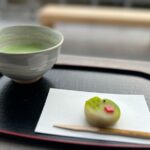
I loved how hands-on it is. You don’t just hear about tea—you smell it, look at leaf shape, and taste it through a lineup that includes sencha, kabuse-cha, gyokuro, deep steamed sencha, genmaicha (brown rice tea), hoji-cha, Japanese black tea, and matcha. I also loved the food: Rina’s homemade sweets pair with the tea, and in the best moments you even get to try tea leaves in a fun way.
One thing to consider: this is a guided learning session for general guests, so if you only want a casual matcha drink and zero structure, you may find the pacing a bit lesson-heavy. Still, the schedule is tight and the tasting keeps it interesting.
In This Review
- Key Things You’ll Notice Right Away
- Why This Tokyo Matcha Lesson Feels Different Than a Café
- Meet Chisei and Rina: The Team Behind the Tea
- The Welcome Drink: How They Start the Session
- Your Tea Lineup: From Sencha to Hoji-cha to Black Tea
- How They Teach the Differences: Look, Smell, Taste
- Homemade Sweets and Tea Leaves With Ponzu
- Making Ousucha Matcha With a Bamboo Whisk
- Matcha Latte and Hojicha Latte: How They Twist Familiar Drinks
- Price and Value: Is $57.98 Worth 1.5 Hours?
- Where to Go in Tokyo: The Meeting Point You Should Find Easily
- Who Should Book This (and Who Might Not)
- Should You Book Matcha Trip Japan’s Tea Tasting?
- FAQ
- How long is the Matcha Experience with Japanese Tea Tasting in Tokyo?
- What group size should I expect?
- What teas are included in the tasting?
- Do I get to make matcha myself?
- Are snacks included?
- Do they offer matcha latte and hojicha latte?
- Where is the meeting point?
- Is a mobile ticket used?
- What is the cancellation policy?
Key Things You’ll Notice Right Away
- Chisei’s Kyoto-farmer background and Chisei’s pharmacy mindset make the explanations very specific and careful
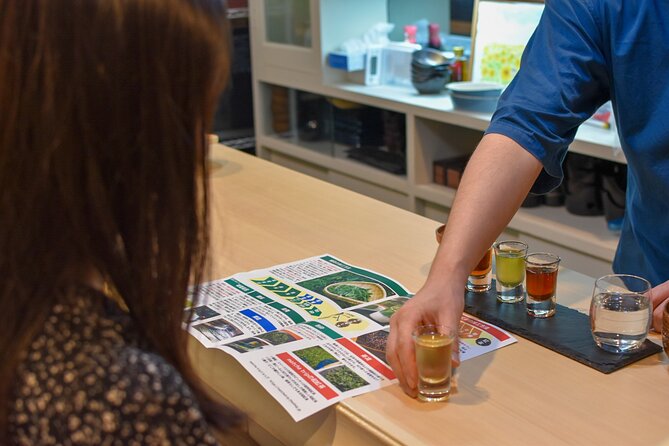
- A side-by-side tea flight (sencha through hoji-cha, plus black tea) helps you spot flavor differences fast
- Leaf-first tasting: you check color and shape before steeping, then compare aroma and taste
- Rina’s homemade sweets are built to match the tea flavors, not served as an afterthought
- You make Ousucha matcha with a bamboo whisk, so you can repeat the basics at home
Why This Tokyo Matcha Lesson Feels Different Than a Café
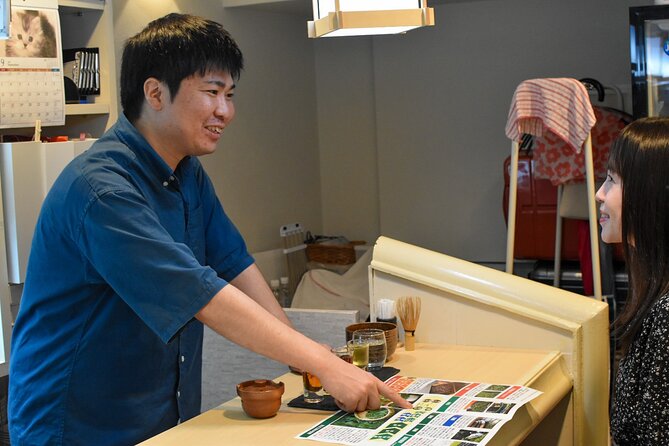
Tokyo has plenty of places to drink matcha. This experience is not one of those stops where you sit, order, and move on. Instead, you get a guided tea education that’s built around comparison—what changes when you alter shading, steaming, roasting, or steeping.
That matters because Japanese green tea is subtle. If you only drink one type, it’s easy to miss what makes each style distinct. Here, you taste multiple teas in sequence and learn how to read the tea itself: color, leaf shape, aroma, and flavor. It’s the difference between collecting opinions and collecting evidence.
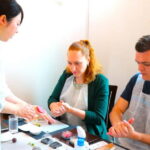
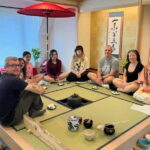
You’ll also notice the small group size. With a maximum of five people, you can actually ask questions and get answers that make sense for your level. Several people mention Chisei’s patience and how he uses diagrams and pictures while he talks—so even if you’re a total beginner, it doesn’t feel like you’re drowning in tea jargon.
You can also read our reviews of more tours and experiences in Tokyo.
Meet Chisei and Rina: The Team Behind the Tea
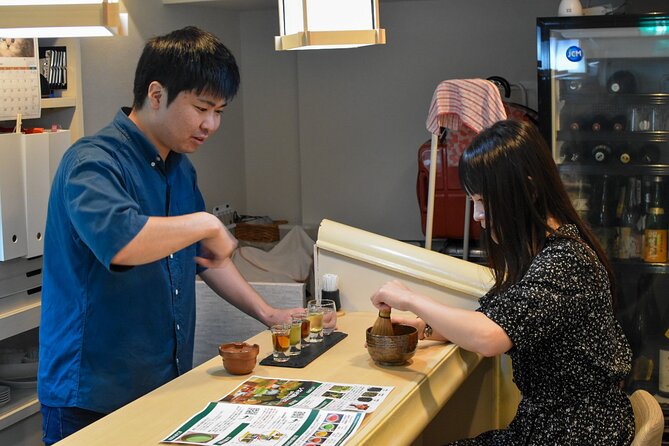
The real engine of this tour is the pairing of Chisei and Rina.
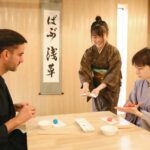
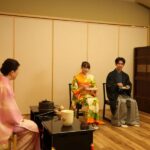
Chisei is the instructor and the one who explains cultivation and processing. He grew tea in Kyoto for six years and brings that on-the-ground farming perspective into the tasting. He also teaches like someone who cares about accurate details: people mention his clear diagrams and his habit of answering questions as they come up. One review also highlights that he proactively asks about allergy conditions, which is a nice sign if you have sensitivities.
Rina is the one in the kitchen and the sweetness department. Her homemade treats are repeatedly praised as some of the best food from the trip. In the session, she also contributes to the fun side of the experience—there’s even a moment where you can try tea leaves with ponzu, which sounds unusual until you do it.
Together, they turn a food-and-drink workshop into something more human. You’re not rushed, and it feels like they want you to leave with real skills, not just photos.
The Welcome Drink: How They Start the Session
The session kicks off with a seasonal welcome drink. While you sip, you get an introduction to Japanese tea—enough context to make the tasting make sense.
This small start does two things for you:
- It puts you in the right mindset before you taste anything.
- It gives you vocabulary for what you’re about to notice—like how aroma and flavor shift across tea types.
And because it’s seasonal, it can be a refreshing hit depending on the weather. One review specifically called out how helpful the cool welcome drink was in hot conditions.
Your Tea Lineup: From Sencha to Hoji-cha to Black Tea
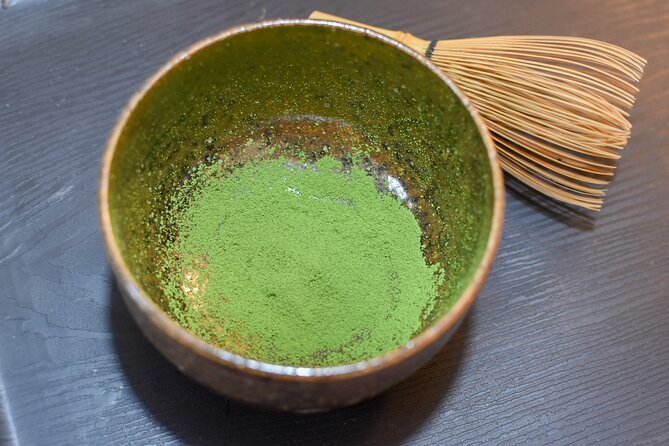
This experience is structured as a tasting journey. You compare several Japanese tea styles using what you see and smell first, then what you taste.
You’ll go through teas such as:
- Sencha
- Kabuse-cha
- Gyokuro
- Deep steamed sencha
- Hoji-cha (roasted green tea)
- Genmaicha (brown rice tea)
- Japanese black tea
- Plus matcha in multiple forms
At one point, the session includes a step focused on Japanese black tea paired with homemade sweets. The reason this pairing works is simple: black tea brings a different balance of aroma and bitterness than green teas, so it doesn’t compete with the sweetness. It also gives you a broader sense of how tea changes when you switch styles.
You’ll likely notice that hoji-cha shows up again later as a latte too. That’s a clue that the team thinks about the tea flavor profile beyond straight sipping.
How They Teach the Differences: Look, Smell, Taste
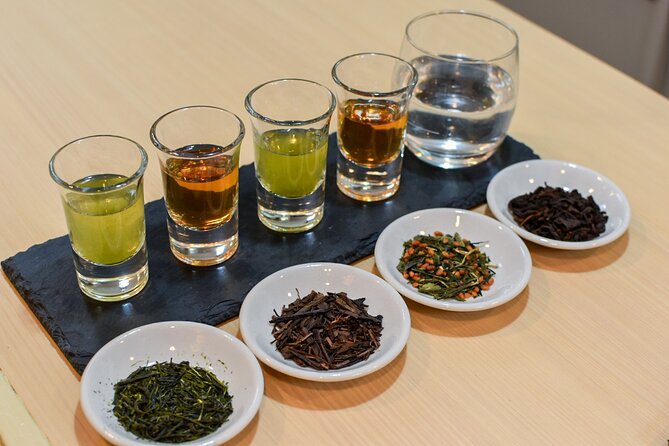
The most practical part is their method. They don’t just pour tea and hope you guess what’s different. They guide you through a sequence.
Before steeping, you look at the tea leaves—color and shape matter. Then you taste while focusing on:
- fragrance (what hits your nose first)
- flavor (how it develops)
- the overall feeling in your mouth (how it lands, not just how it tastes)
That approach is gold for you if you’ve ever left a tea shop thinking, I liked it, but I can’t explain why. Here, you learn a repeatable way to pay attention.
It also makes the sampling feel purposeful. Instead of chasing caffeine and sugar, you build a mental map of how each tea style behaves.

Homemade Sweets and Tea Leaves With Ponzu
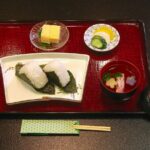
Rina’s homemade sweets are a standout. Multiple reviews call them delicious, even naming them as the best food on the trip. What I like about that, from a value perspective, is that your tasting isn’t just liquids. You get textures and flavors that change your perception of tea.
A neat extra: you may get to eat tea leaves with ponzu. It’s not something most people expect in a matcha experience, and it gives you a direct sense of how tea compounds taste in a different format than steeped leaves.
This is also where the tour becomes more than a class. You’re doing something memorable and a little playful, not only listening.
If you have allergies, bring them up early. One review specifically notes Chisei asking about allergy conditions, which suggests the hosts take that seriously.
Making Ousucha Matcha With a Bamboo Whisk
Now comes the part most people book for: hands-on matcha.
You learn how to make Ousucha (matcha) using a bamboo whisk. This is the moment where theory stops being theory. You see how matcha texture changes with technique, and you get the basics you need to make it at home—at least the approach, not just the final drink.
A good sign here: the experience is explicit that you can still make matcha at home after the session. That’s what you want. If you leave only knowing the history but not the steps, the value drains fast. Here, you’re getting both.
Also, since matcha is part of the lineup multiple ways (straight matcha and lattes), the workshop helps you understand how matcha behaves in different formats.
Matcha Latte and Hojicha Latte: How They Twist Familiar Drinks
You’ll also get to enjoy both matcha latte and hojicha latte. The pricing may look high until you realize this isn’t just one small cup of matcha. It’s multiple tea styles, plus different matcha formats.
From a practical standpoint, this helps you decide what you actually like. Some people love matcha when it’s pure and bitter. Others like it softened in latte form. Same with hoji-cha: roasted tea tastes different alone compared with dairy-based drinks.
If you’re the type who orders matcha in cafés but always wonders what variations are worth it, this section gives you a fast comparison.
Price and Value: Is $57.98 Worth 1.5 Hours?
At $57.98 per person for roughly 1 hour 30 minutes, this isn’t a bargain café tea run. But the value comes from three things you usually don’t get together:
- A guided tasting across multiple tea styles (not just one drink)
- Homemade sweets that are chosen to match the tea
- Hands-on matcha making with a bamboo whisk
The group size is also a factor. With a max of five, you’re not competing for attention. You’re more likely to get your questions answered and actually connect flavor differences to explanations.
If your main goal is to see Tokyo and grab a quick matcha shot, there are cheaper options. If your goal is to understand what you’re tasting and leave with a skill you can repeat, this price starts to look reasonable.
Where to Go in Tokyo: The Meeting Point You Should Find Easily
The meeting point is at matcha tripJapan, Taito City, Kotobuki 3-chōme 19-8, inside the Henn Na Hotel, on the 2F sports bar Leaf.
Two helpful notes: it’s near public transportation, and the tour uses a mobile ticket, so you don’t have to wrestle with paper.
If you’re prone to getting turned around, give yourself a little buffer time. The venue is inside a hotel complex, so you’ll want to confirm you’re at the right floor.
Who Should Book This (and Who Might Not)
This tour is a great fit if you:
- like food-and-drink experiences where you taste and learn
- want a matcha workshop that includes more than one kind of tea
- enjoy small-group teaching where you can ask questions
- want to understand Japanese tea culture in a practical way
You might skip it if you:
- want a fully freeform café experience
- only care about matcha and not about sencha, gyokuro, hoji-cha, and black tea
- prefer long downtime over structured tasting steps
Should You Book Matcha Trip Japan’s Tea Tasting?
If you’re choosing between a casual matcha stop and an actual tea lesson, I’d book this. The combination of Chisei’s Kyoto tea farming perspective, Rina’s homemade sweets, and the fact that you make Ousucha with a bamboo whisk gives you more value than a single beverage.
It’s also not just matcha-bubble hype. The session is built around learning how different teas behave, and that makes everything taste more meaningful afterward. If that sounds like your kind of Tokyo afternoon, this is a smart bet.
FAQ
How long is the Matcha Experience with Japanese Tea Tasting in Tokyo?
The experience lasts about 1 hour 30 minutes.
What group size should I expect?
The tour has a maximum of five travelers.
What teas are included in the tasting?
You’ll be served Japanese teas such as hoji-cha, sencha, kabuse-cha, gyokuro, deep steamed tea, genmaicha (brown rice tea), and Japanese black tea, plus matcha varieties.
Do I get to make matcha myself?
Yes. You’ll make Ousucha (matcha) using a bamboo tea whisk.
Are snacks included?
Yes. You’ll be served homemade sweets that go well with the tea.
Do they offer matcha latte and hojicha latte?
Yes. You can enjoy both matcha latte and hojicha latte.
Where is the meeting point?
The start point is matcha tripJapan at Henn Na Hotel, 2F sports bar Leaf, Taito City, Kotobuki 3-chōme 19-8.
Is a mobile ticket used?
Yes, the experience uses a mobile ticket.
What is the cancellation policy?
Cancellation is free up to 24 hours in advance for a full refund.