REVIEW · YOKOHAMA
Japanese Tea Ceremony at Private Home in Yokohama, suburban Tokyo
Book on Viator →Operated by Tea Ceremony At Private Home in Yokohama, suburban Tokyo · Bookable on Viator
A tea ritual in a real home.
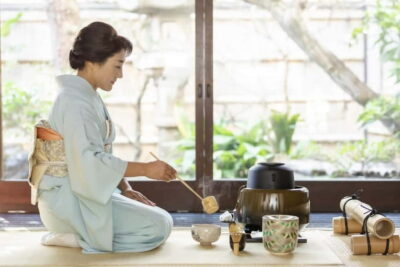
What makes this one work is the private setup and the hands-on pace: you start with seasonal sweets, watch the full flow, then make and drink your own matcha in a traditional tatami room.
I love the combination of ceremony and conversation. The tea master here has practiced for decades and teaches with an easy, patient style, and the host family vibe (the Kono Family) makes it feel like you’re visiting, not touring. One drawback to plan for: you’ll need clean socks to step onto the tatami floor, and the suburban meeting spot can take a bit more effort than central Tokyo.
Key idea: you’re not just watching tea. You’re learning how to be a guest.
In This Review
- Key Points You’ll Remember
- A Tatami Room Tea Lesson in Suburban Yokohama
- Meeting the Tea Master and Getting Set for Tatami
- Seasonal Wagashi and Why the Sweets Come First
- The Charcoal Water Procedure You Don’t Get in Standard Demos
- Watching Matcha Being Made, Then Mixing Your Own
- History, Etiquette, and Q&A That Makes It Click
- Price and Value: Is $52.71 Worth It?
- How to Plan Your Day Near Azamino (Then Keep Going)
- Who Should Book This Private Tea Ceremony in Yokohama?
- Should You Book This Tea Workshop or Skip It?
- FAQ
- How long is the Japanese Tea Ceremony workshop?
- What does the tour cost?
- Do I get pickup?
- Is this a private activity?
- What food is included?
- Do I need socks for the tatami room?
- Will I make matcha myself?
- How much matcha will I drink?
- What is the charcoal procedure mentioned in the experience?
- What is the cancellation policy?
- Where is the meeting point?
Key Points You’ll Remember
- Charcoal water procedure: a rare step you won’t usually see on quick city demos
- Seasonal wagashi included: nerikiri, gyuhi (mochi), manjyu, chosen based on the season
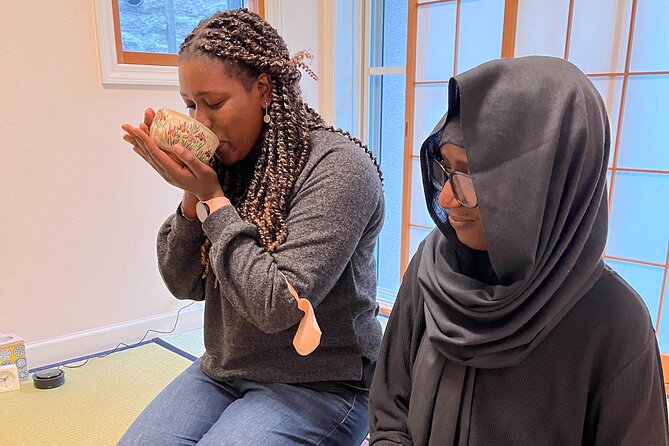
- Two cups of matcha: you’ll mix matcha yourself and drink it twice
- Tatami guest experience: you practice being a proper guest in a traditional room
- History plus Q&A: the tea master explains where the ritual comes from and answers your questions
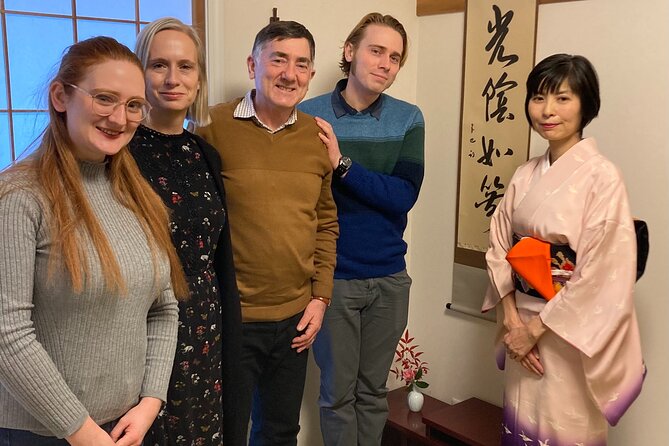
- Private group feel: only your group participates, so you can actually talk
A Tatami Room Tea Lesson in Suburban Yokohama
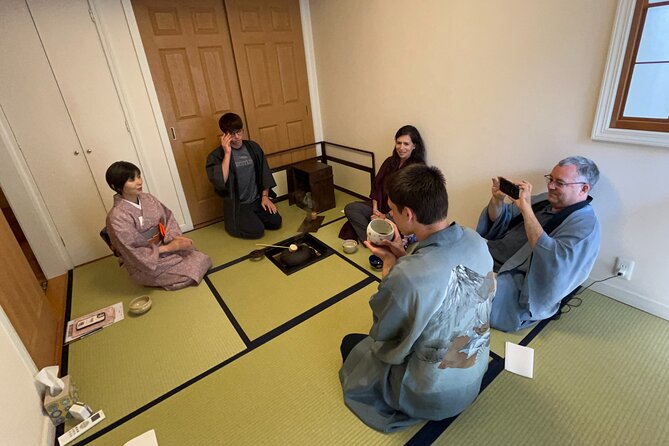
This experience is set in Yokohama, in suburban Tokyo-area life. That matters, because the tea ceremony doesn’t feel staged. You’re stepping into a private home setting with a traditional tatami room, the kind of place where the details actually hold meaning.
The ceremony runs about 1.5 hours, which is long enough to learn the flow without turning it into a lecture. You’ll also get pickup offered (when available), which helps a lot if you’re trying to build this into a day that already includes other Yokohama stops.
The focus stays on one clear goal: how to be a guest. You’ll learn the steps, taste the sweets that match the season, and get a small window to ask questions about tea culture and tea ceremony history.
You can also read our reviews of more tours and experiences in Yokohama.

Meeting the Tea Master and Getting Set for Tatami
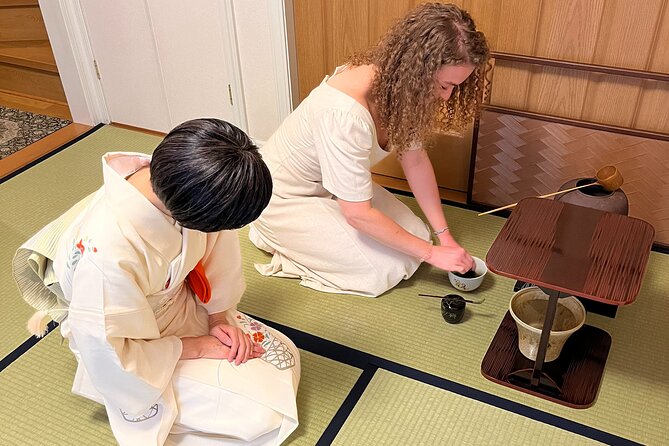
Your start is at Ōbachō in Aoba Ward, near Dorese Azamino Gardens. It’s close to public transportation, so you’re not completely on your own, but it’s still not the kind of location where you roll out of the subway and instantly blend into the crowd.
Before you go in, remember the one rule that changes everything: bring socks. The ceremony happens on tatami, and shoes don’t belong in that space. If you forget, you might end up scrambling for a solution that could take time and kill the calm mood.
Once you’re inside, the tea master sets the rhythm. Expect clear guidance on what to do and when. This isn’t just about technique; it’s about etiquette—how to move, where to look, and how to treat the moment like it matters.
And because it’s private, you can ask questions during the experience instead of waiting until the end or speaking only once. That’s where this tour feels more personal than many group lessons.
Seasonal Wagashi and Why the Sweets Come First
The sweets are not an afterthought here. You’ll eat wagashi (handmade Japanese sweets) made by the tea master, paired with tea timing and the ceremony flow.
What I like most is that the wagashi choice is seasonal. You might get examples such as nerikiri, gyuhi (mochi), or manjyu, and the tea master will pick what fits the time of year. That makes the tasting feel connected to place and season, not just “here are some sweets.”
Also, the listing notes that the wagashi and snacks are good even for vegan and gluten free. That’s a big practical win. Tea ceremonies can be tricky if you’re careful about ingredients, so it’s reassuring to know you’re not going in blind.
Even if you’re not an expert, you’ll notice how the sweets relate to the matcha moment: sweetness, texture, and timing. It gives you something concrete to experience before you get into the more technical part of whisking tea.
The Charcoal Water Procedure You Don’t Get in Standard Demos
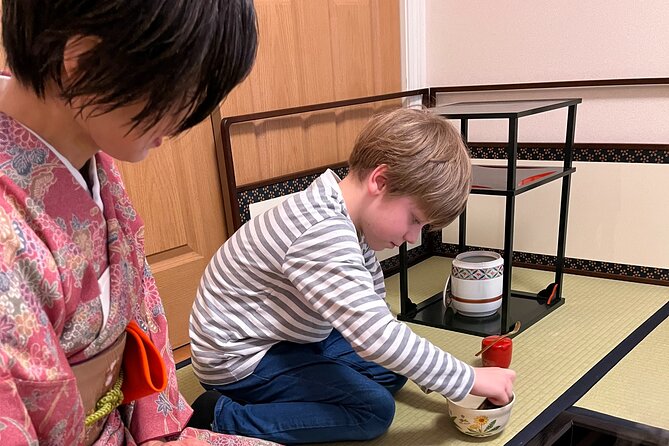
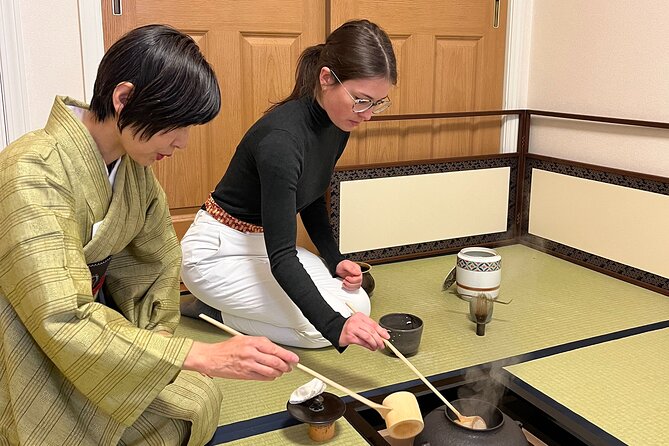
Here’s a step that makes this workshop stand out: you’ll see the charcoal procedure for boiling water. It’s described as rare, even for Japanese people, and that rarity is the point.
You’re not just learning a final presentation. You’re getting a glimpse of how the ritual connects to basic materials—heat source, temperature, and patience. This is where tea ceremony starts to feel less like a performance and more like careful craft.
There’s also a real-world reason to pay attention: charcoal heating changes how you think about the timing. You’ll watch the process and see how the tea master handles it. That creates a mental model you can carry even after the workshop ends.
If you’re the type who likes cultural experiences that include practical process—not just surface beauty—this section is a highlight.
Watching Matcha Being Made, Then Mixing Your Own
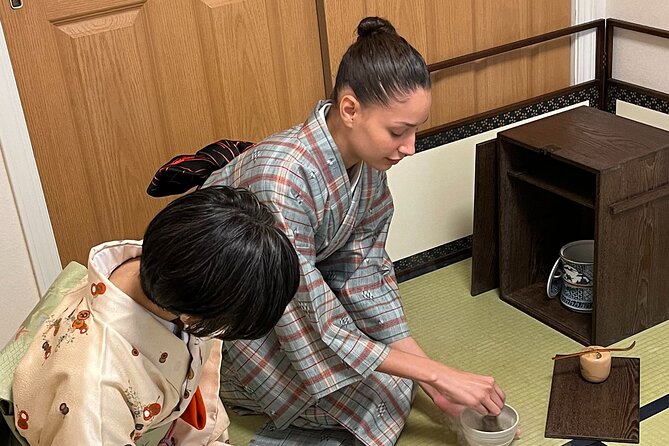
After the procedure, the tea master will make matcha for you. You’ll have a chance to see how it’s prepared, and then you’ll move into doing it yourself.
One of the best parts of this experience is the built-in practice: you can try mixing matcha and drink two cups. That’s important because matcha can be hard to get right on your first try. By giving you more than one cup, the workshop lets you learn without rushing.
Here’s how to get the most value from that hands-on time:
- Treat it like a short lesson, not like a test
- Watch how the tea master moves first, then copy the rhythm
- Don’t be shy about asking questions while you’re practicing
The experience also frames matcha as something you taste and control through technique. You’re not just consuming caffeine; you’re experiencing a specific approach to preparation and serving.
And because the workshop is in a private home setting, you’ll likely feel comfortable enough to focus on your learning instead of worrying about keeping up with a larger group.
History, Etiquette, and Q&A That Makes It Click
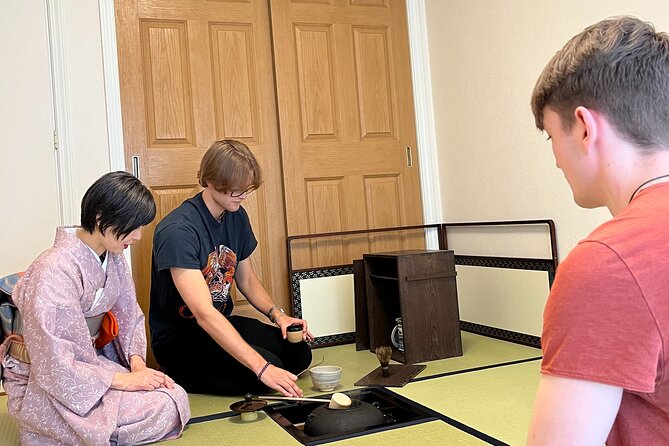
Tea ceremony history can sound abstract. In a workshop like this, it works better because you have context from what you just saw and did.
The tea master shares history of Japanese tea ceremony during the session, then you can ask questions. That Q&A piece matters because you’ll leave with answers that connect directly to the rituals you experienced: why certain steps exist, what guest behavior communicates, and how tea ceremony fits into Japanese life beyond the show.
If you’re curious and you like cultural context, this is where the lesson turns from skills to meaning. If you’re not into lectures, the history portion still lands because it’s tied to the actions happening around you.
Also, there’s a subtle but important benefit of the private format: you’re more likely to feel at ease. The tone reported in the reviews emphasizes warmth and conversation. That usually makes it easier to ask the real questions you’re thinking but might hesitate to ask in a classroom-like setting.
Price and Value: Is $52.71 Worth It?
At $52.71 per person, this sits in the middle zone for experiences in the Tokyo-Yokohama area. The value comes from what’s included and how much time you get to participate.
You’re not paying just for a demonstration. Your ticket includes:
- snacks with matcha and wagashi
- the chance to mix matcha yourself
- multiple tastings (you drink two cups)
- viewing the charcoal procedure
- history and room-for-questions time
Also, the listing notes wagashi can work for vegan and gluten free. That’s a genuine cost-saver if you’d otherwise have to spend extra money finding food.
The other value angle is atmosphere. A private home in suburban Yokohama is not the same as a factory-style workshop in a tourist district. You’re getting the “how this is actually done” feeling, even if you’re learning it as a guest.
If you’re the type who wants a quick photo moment, this may feel slower than you want. If you want a real cultural skill you can repeat, it’s a strong use of your time.
How to Plan Your Day Near Azamino (Then Keep Going)
The meeting point is near Ōbachō in Aoba Ward, close to Azamino. That’s helpful because it gives you easy anchors for planning.
A smart nearby option: the Yokohama Ramen Museum around Azamino. If you’re building a day, this can make sense before or after your tea ceremony. Since it’s local-area compatible, you won’t waste time commuting across the entire city.
You can also link to other Yokohama sights with transit. The info provided says it’s about 15 minutes from Azamino Station to the closest Shinyokohama Station by Yokohama subway. That’s useful if you want to pair your tea ceremony with something bigger in the Shinyokohama area.
If you’re time-boxing the day, I’d schedule the tea ceremony when you’re not rushing. Even with a short 1.5-hour window, you’ll enjoy it more if you can stay mentally present.
Who Should Book This Private Tea Ceremony in Yokohama?
This fits best if you want a cultural experience that’s more about being taught than performing.
Book it if:
- you enjoy hands-on lessons and want to make matcha yourself
- you like food-and-culture pairings (wagashi plus tea)
- you appreciate a calm, respectful pace
- you prefer a private group setting where questions are welcome
It might be less ideal if:
- you hate taking off shoes and using tatami-friendly socks
- you want the most central Tokyo sightseeing convenience
- you’re hoping for a fast, high-energy “see everything” style tour
For families, the reviews show it can be a warm fit. And since the ceremony includes clear guided steps and a friendly host atmosphere, it can work well even if you’re not an expert.
Should You Book This Tea Workshop or Skip It?
I’d book it if you’re looking for a genuine Japanese home-style tea ceremony experience, with the rare charcoal procedure and the real payoff of making matcha and drinking two cups.
I’d hesitate only if your travel day is packed tightly and you can’t slow down. Tea ceremony works best when you let the rhythm happen. Also, double-check you can handle the socks and tatami setup without stress.
If you want one experience that feels personal, includes food and technique, and gives you time for questions, this is a strong choice in the Yokohama suburban-Tokyo orbit.
FAQ
How long is the Japanese Tea Ceremony workshop?
It lasts about 1 hour 30 minutes.
What does the tour cost?
The price is $52.71 per person.
Do I get pickup?
Pickup is offered.
Is this a private activity?
Yes. Only your group will participate.
What food is included?
You’ll have snacks with matcha (green tea) and wagashi (handmade Japanese sweets). The wagashi is noted as good even for vegan and gluten free.
Do I need socks for the tatami room?
Yes. You are asked to bring socks to enter the tatami room.
Will I make matcha myself?
Yes. After watching the process, you can try mixing matcha yourself.
How much matcha will I drink?
You can drink two cups of matcha.
What is the charcoal procedure mentioned in the experience?
The tea master adds charcoal to boil the water, which is described as a rare experience.
What is the cancellation policy?
Free cancellation is available. You can cancel up to 24 hours in advance for a full refund; if you cancel less than 24 hours before the start time, the amount paid is not refunded.
Where is the meeting point?
The meeting point is in Yokohama: Ōbachō, Dorese Azamino Gardens, Aoba Ward, 〒225-0023. The activity ends back at the meeting point.