REVIEW · YOKOHAMA
Japanese Sweets Making & Tea Ceremony in Yokohama, suburban Tokyo
Book on Viator →Operated by Tea Ceremony At Private Home in Yokohama, suburban Tokyo · Bookable on Viator
Tea and sweets, side-by-side, in a real home setting. I love the hands-on wagashi making, and I also like the charcoal procedure during the tea ceremony. The main thing to consider is practical: you’ll need socks for the tatami room, and you should plan for a tight, 3-hour schedule.
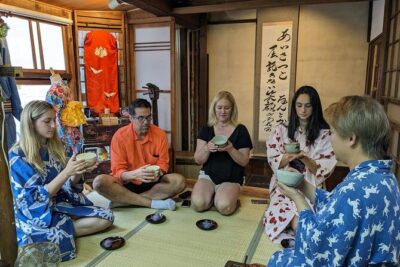
This is run in the Yokohama suburbs, not a showroom. Ikuyo-san (the tea teacher) welcomes you warmly, and the vibe feels calm and friendly, even if you’re a first-timer. With a small group (max 4), you get room to ask questions and actually practice, not just watch.
If you’re expecting a big city sight-seeing tour, this isn’t that. It’s about slow craft, guest manners, and taste, with a little behind-the-scenes look at how tea is prepared step by step.
In This Review
- Key highlights you’ll care about
- A private Yokohama tea room, not a scripted show
- Wagashi making: 5 pieces, season choices, and real technique
- What you’re learning while you shape sweets
- A small “check before you go” tip
- Tea ceremony on tatami: guest manners, matcha prep, and charcoal water
- The charcoal procedure (and why it’s a big deal)
- Eating your wagashi during the process
- Matcha mixing: you try it yourself (twice the fun)
- What to focus on as you mix
- Socks, tatami, and other practical details that can trip you up
- Timing and location: Azamino Station to a suburban home experience
- How much is it worth at $97.55 per person?
- Who this fits best (and who might want something else)
- What Ikuyo-san brings to the experience
- Should you book this wagashi and tea ceremony in Yokohama?
- FAQ
- What’s the duration of the workshop?
- Where does the class start and end?
- Is pickup available?
- What do I learn to make?
- What happens during the tea ceremony?
- Do I need to bring anything?
- How much matcha and wagashi do I get?
- How many people are in the group?
- Can I get a refund if I cancel?
Key highlights you’ll care about
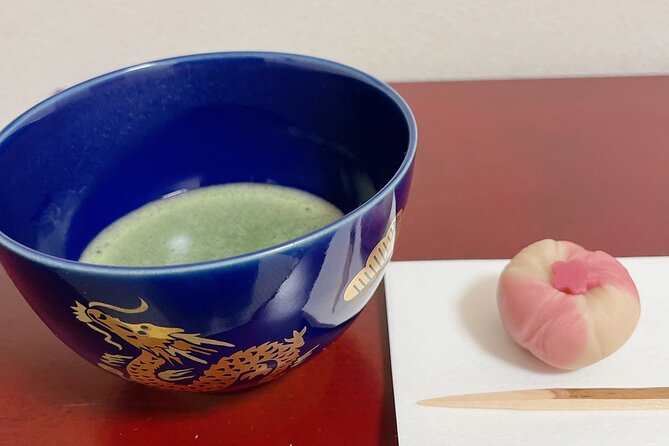
- Season-based wagashi choice: the teacher picks what you’ll make depending on the season
- You shape your own sweets: you’ll make 5 pieces, then use one in the tea ceremony
- Charcoal boiling is the star: you can see how charcoal is used to boil water, and it’s a rare experience
- Tatami guest manners explained: you learn how to act as a guest in the tea room
- Matcha practice, not just tasting: you’ll mix matcha yourself and drink two cups
- Take-home wagashi: you eat some during class and leave with the rest (4 pieces)
A private Yokohama tea room, not a scripted show
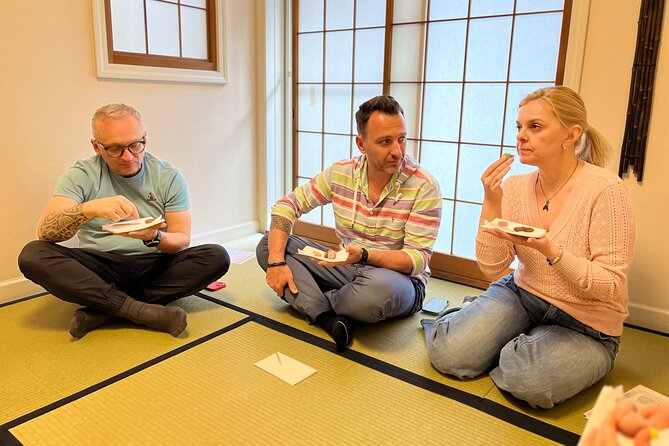
Yokohama is close to central Tokyo, but this experience lives in the suburbs—quiet, residential, and personal. That matters because tea ceremony can feel intimidating from a distance. In this home setting, it’s taught like a skill you can learn, one careful step at a time.
The workshop blends two traditional elements that usually get separated: making wagashi (Japanese sweets) and participating in a tea ceremony that matches them. You don’t just taste sweets and move on. You make them, hear the reasoning behind them, then eat them in the right context.
I also like that the group is intentionally small (up to 4). With fewer people, the teacher can slow down, check what you’re doing, and help you fix mistakes before they become a thing you’re embarrassed about.
You can also read our reviews of more tours and experiences in Yokohama.

Wagashi making: 5 pieces, season choices, and real technique
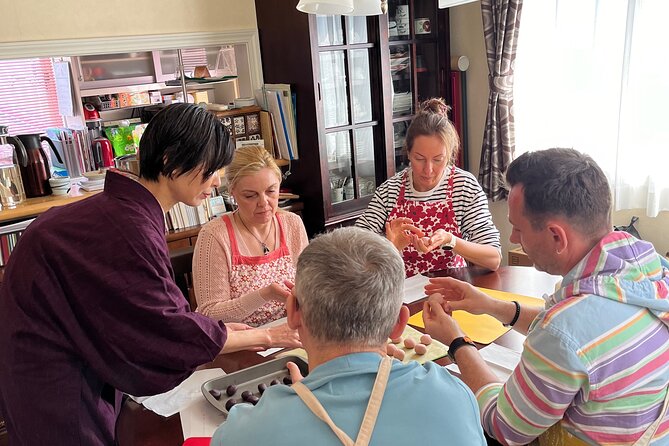
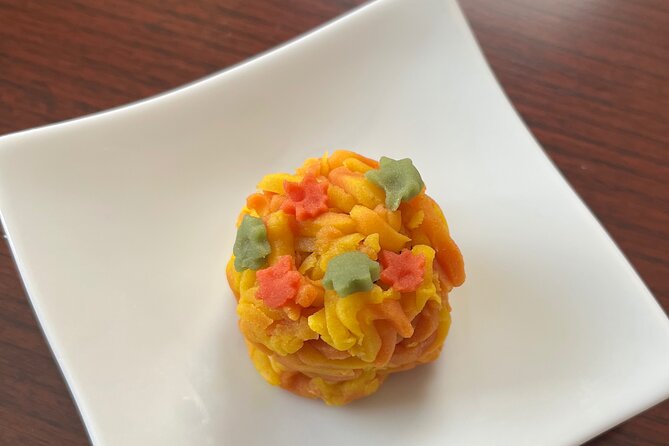
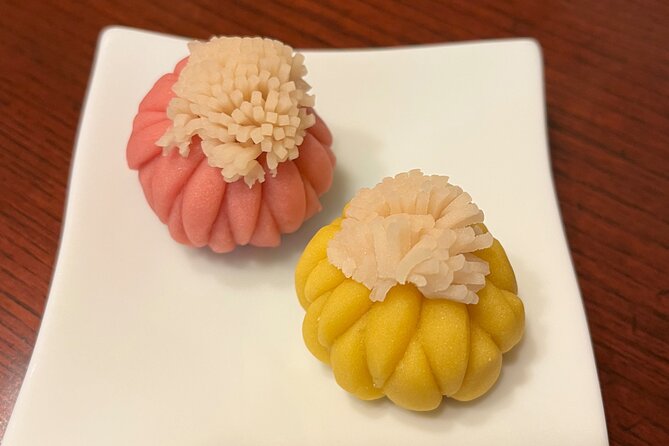
Your class starts with wagashi making at the private home. You’ll work from dough, learning how to shape different types of sweets. The type you make depends on the season, and common examples include nerikiri, gyuhi (mochi), and manjyu. Even if you’ve never seen these before, the teacher guides you through the process.
You’ll make 5 pieces of wagashi. Then 1 piece is set aside to be used in the tea ceremony. That small detail makes the whole experience feel cohesive—your craft directly feeds into what happens next.
What you’re learning while you shape sweets
Wagashi isn’t just food. It’s design, texture, and timing. As you form each piece, you learn how the dough responds, how delicate the finishing can be, and why the teacher’s choice matters for the day’s theme (which is tied to the season).
If you worry that you’ll be slow, don’t. This isn’t a factory line pace. The instruction is set up for you to practice. You get to handle the materials and see how the teacher’s technique translates into something you can repeat.
A small “check before you go” tip
You don’t need to bring anything for the wagashi class. That’s a relief after a day of packing and planning. Your only prep requirement is socks for later, when you enter the tatami tea room.
Tea ceremony on tatami: guest manners, matcha prep, and charcoal water
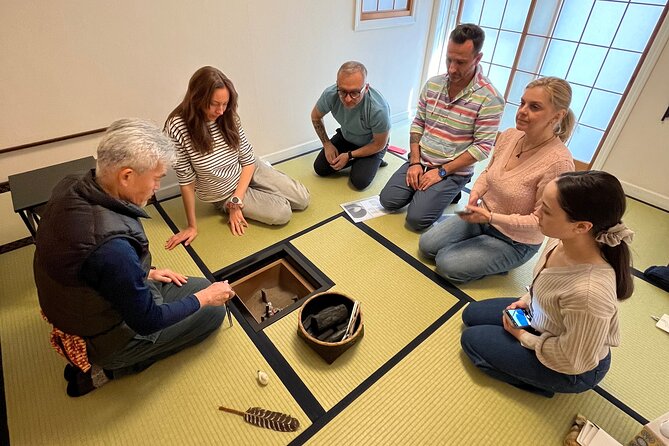
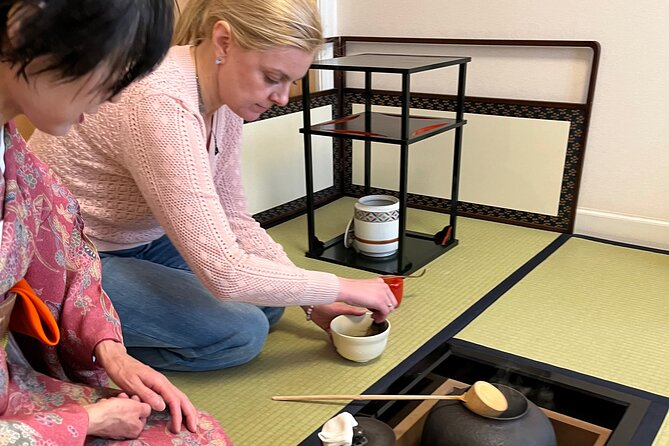
After wagashi making, you shift into the tea ceremony portion in the traditional tatami room. This is the part that people often picture as formal and distant. Here, you learn it in a way that makes you feel like a guest who belongs at the table.
You’ll get a demonstration of the tea ceremony process, plus an explanation of the background—history and meaning—straight from Ikuyo-san. You can also ask questions during the session, which helps if you’re curious about etiquette, tools, or why certain steps happen in a specific order.
The charcoal procedure (and why it’s a big deal)
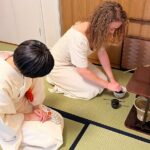
One of the standout moments is watching the teacher’s charcoal procedure—adding charcoal to boil water. It’s described as something truly rare even for Japanese people. That’s exactly the kind of practical, behind-the-scenes detail you can’t easily replicate elsewhere.
Why it matters: it turns the tea ceremony from a static performance into a living process. You see that the heat source isn’t just an ingredient list item. It affects the water and the timing, and it shapes the whole ritual.
Eating your wagashi during the process
During the ceremony procedure, you’ll eat wagashi along the way. This is important for first-timers. You get to taste while you learn, so the rules of etiquette and the flow of steps have a reason—not just a list to memorize.
You’ll also do more tasting later. By the end, you can enjoy:
- 2 cups of matcha
- 2 pieces of wagashi
- and take home 4 pieces of wagashi
That takeaway is a nice value bonus. It means you’re not walking away with only a memory—you’re bringing home a small, edible result of your work.
Matcha mixing: you try it yourself (twice the fun)
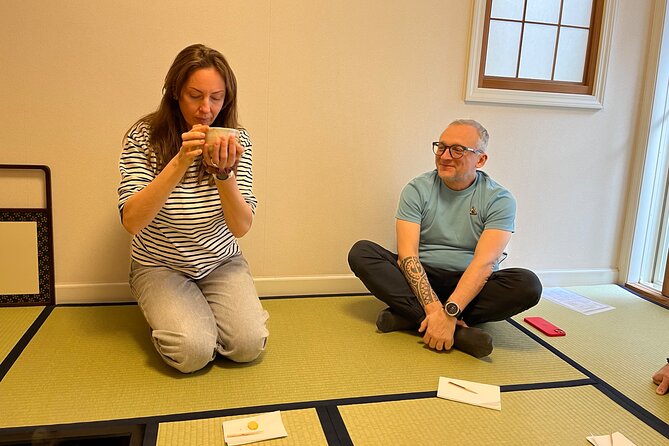
Matcha in a tea ceremony isn’t just about drinking green tea. It’s about mixing it correctly and understanding what the tea should look and feel like when prepared.
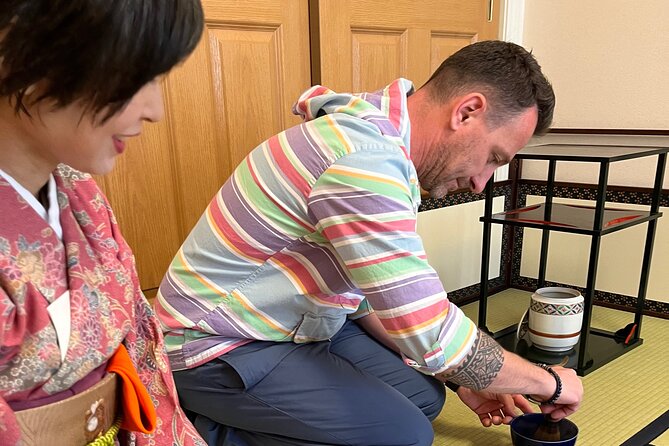
You’ll first see how matcha is made. Then you’ll get hands-on practice mixing matcha yourself. The idea is simple: the teacher helps you learn the motion and the timing, while you’re also eating and tasting the sweets you made.
The class includes matcha, and you’ll drink two cups during the experience. That’s a smart setup. You get an early taste while everything is explained, then a second cup after you’ve practiced enough to feel the difference.
What to focus on as you mix
The course doesn’t ask you to be perfect. It’s more about coordination—how you hold the bowl, how you move, and how patience shows up in the final result. If you’re the kind of person who likes doing things with your hands, you’ll probably enjoy this part a lot.
And if you’re the kind of person who worries about doing it wrong, you’ll still be fine. The small group size helps, and Ikuyo-san is there to guide you through.
Socks, tatami, and other practical details that can trip you up
This one is easy to miss if you’re used to standard tours. For the tea ceremony, you must wear socks to enter the tatami room.
The good news:
- You don’t need to bring anything else for wagashi making.
- The class is designed to be manageable in a 3-hour window.
- You’ll be near public transportation, with the activity starting at Azamino Station.
If you forget socks, you’ll lose time and comfort. If you hate the idea of last-minute purchases, bring your own.
Timing and location: Azamino Station to a suburban home experience
The workshop starts at 1:30 pm and runs about 3 hours. You return back to the meeting point afterward.
The meeting point is at Azamino Station (2 Chome Azamino, Aoba Ward, Yokohama, Kanagawa 225-0011, Japan). Pickup is offered, so if that’s important for your day, ask/check based on your booking options.
This is a great choice if you want a calmer activity rather than another train-transfer marathon. It’s close to the Yokohama Ramen Museum, which is about 15 minutes away from Azamino Station—handy if you want to build a food-focused day.
How much is it worth at $97.55 per person?
At $97.55 per person for about 3 hours, this doesn’t fit the category of cheap lunch workshops. But it also doesn’t feel like an inflated “experience tax.”
Here’s why the value makes sense:
- You get instruction for both wagashi and tea ceremony
- You receive ingredients for wagashi
- You receive matcha (and drink two cups)
- You practice, not just observe
- You can take home 4 pieces of wagashi you helped make
- The group is capped at 4 travelers, which supports actual guidance
If you’re the type who likes learning how a skill works, you’ll feel like your money went into time and teaching, not just the final photo. If you only want tasting, you might find the workshop format takes more effort than you expected—but the payoff is that you leave knowing how it’s done.
Who this fits best (and who might want something else)
This works especially well for:
- First-timers who want the full logic of wagashi + tea ceremony together
- People who like hands-on activities and small-group instruction
- Families with older kids (the setting has worked well with a 13-year-old group in at least one case)
- Anyone curious about Japanese tea culture beyond a quick demo
It may be less ideal if:
- You want a purely passive, sightseeing-style experience
- You’re uncomfortable with entering a tatami room and following etiquette steps
- You’re short on time and don’t want a 3-hour block with a fixed schedule
What Ikuyo-san brings to the experience
A big reason people rate this highly is the teaching style. Ikuyo-san is described as kind and welcoming, with a bright, calming presence that helps nervous first-timers settle in quickly. She also has a long background in tea ceremonies, having done it since she was young and being certified.
That combination matters because tea ceremony can feel serious on paper. When the teacher makes you feel at home, you can focus on learning instead of worrying about whether you’re doing everything right.
Also, the Q&A element is real. You’re not stuck in one-way listening—you can ask questions and get answers that actually help you connect the ritual to the meaning.
Should you book this wagashi and tea ceremony in Yokohama?
I’d book it if you want a day that feels like a real cultural visit, not a checklist. The best part is the pairing: you make the sweets and then you experience them in the tea ceremony context. That’s the sort of structure that turns a one-time tasting into a lasting memory.
I’d skip it only if you want lots of urban sights or you’re not comfortable following a small etiquette routine in a tatami room. And please, don’t forget socks. It’s the one practical detail that can ruin a good mood fast.
If you’re building an authentic food-and-culture plan around Tokyo and Yokohama, this is a strong pick. It’s hands-on, intimate, and quietly impressive in exactly the way you hope Japanese traditions will be.
FAQ
What’s the duration of the workshop?
It runs about 3 hours.
Where does the class start and end?
It starts at Azamino Station (2 Chome Azamino, Aoba Ward, Yokohama) and ends back at the same meeting point.
Is pickup available?
Pickup is offered.
What do I learn to make?
You make wagashi (Japanese sweets). You’ll make 5 pieces, and the teacher chooses the type based on the season.
What happens during the tea ceremony?
You’ll watch a demonstration of the Japanese tea ceremony, see the charcoal procedure for boiling water, learn the history of tea ceremony, and be guided on how to be a guest in a tatami room.
Do I need to bring anything?
For the wagashi class, you don’t need to bring anything. For the tea ceremony, you need to bring socks to enter the tatami room.
How much matcha and wagashi do I get?
You’ll drink 2 cups of matcha and eat 2 pieces of wagashi during the experience, and you can take home the remaining 4 pieces.
How many people are in the group?
The workshop has a maximum of 4 travelers.
Can I get a refund if I cancel?
Yes, free cancellation is available. You must cancel at least 24 hours in advance for a full refund.