REVIEW · NEW DELHI
Tea Tasting Session at India’s oldest tea boutique Sancha Tea/Aap Ki Pasand
Book on Viator →Operated by Sancha Tea Boutique · Bookable on Viator
Seven teas, one hour, big tea education. In New Delhi, a session at Aap Ki Pasand Tea Gallery (Sancha Tea) gets you tasting across Indian tea regions under the guidance of Mr Sanjay Kapur, the master tea taster and blender who’s run this boutique since 1981. The idea is simple: learn how terroir changes flavor, not just how strong a tea can be.
I like that you can keep it playful. You’ll sample a mix of black, white, and green teas plus the shop’s iconic masala chai blends, and you’re encouraged to ask the sommeliers to brew you the specific tea you want while you’re there. Another thing I love: the shop leans into variety with teas from Darjeeling, Assam, Nilgiri, Sikkim, and Kangra—so you’re comparing styles, not just repeating one kind of tea.
One consideration: the tasting is about 1 hour, so you’ll want to show up ready to taste and take notes. Also, the experience is listed as requiring good weather, so if conditions don’t cooperate you should plan for a possible reschedule or refund offer.
In This Review
- Key points to know before you taste
- Entering Aap Ki Pasand Tea Gallery in Daryaganj
- What you’ll taste: 7 Indian tea regions and 3 tea styles
- Brewing on request: how the tasting stays interactive
- Masala chai blends: saffron, cardamom, ginger, and Malabar spice ideas
- Ayurvedic herbal teas: wellness options beyond black tea
- How to get the most from a 1-hour tasting
- Buying tea gifts without the sales pressure
- Price and value: $7 for an hour that teaches more than it sells
- Who should book this tea tasting, and when should you go?
- Should you book Sancha Tea at Aap Ki Pasand?
- FAQ
- FAQ
- How long is the tea tasting session?
- How much does the tea tasting cost?
- Where does the session start?
- Where does the activity end?
- What is the group size limit?
- Do I get a mobile ticket?
- What kinds of teas can I taste?
- Can I request how a tea is brewed?
- What are the shop opening hours for this experience?
- Is free cancellation available?
- Does the session depend on weather?
Key points to know before you taste
- Founded in 1981: This is India’s oldest tea boutique concept, with a long-running focus on blending and tasting.
- Seven regions, multiple tea types: Plan for a comparison of black, white, and green teas from key growing areas.
- You can request how you brew: Sommeliers can brew any tea offered in-store on the house.
- About a dozen teas is realistic: Some groups end up trying 13 teas while still getting explanations.
- Low-pressure buying: You can browse and buy without feeling pushed.
- Small group size (max 20): That matters when you’re asking questions about taste and origin.
Entering Aap Ki Pasand Tea Gallery in Daryaganj
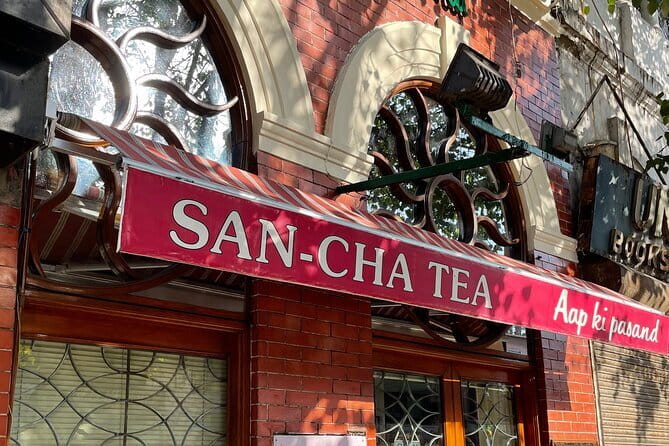
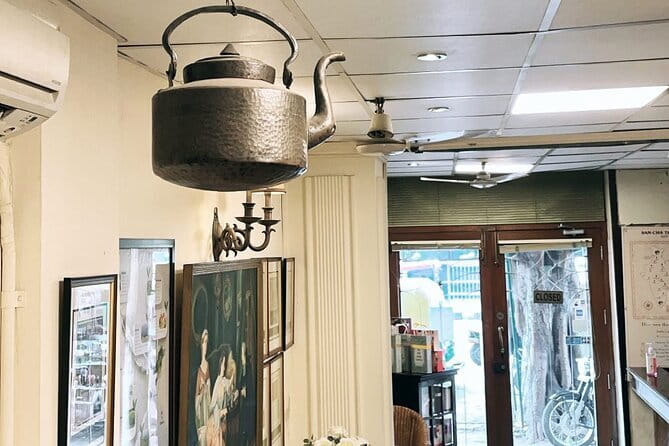
This tasting session starts right at Aap Ki Pasand Tea Gallery, also branded as Sancha Tea, at 15 Netaji Subhash Marg in Daryaganj. The shop’s location is practical: it’s near public transportation, which helps when you’re fitting this into a busy New Delhi day.
What makes this stop feel different is the place itself. This boutique is described as India’s oldest artisanal tea shop, created in 1981 and still led by Mr Sanjay Kapur. That long timeline matters because tea tasting isn’t only about getting a sip—it’s about repeatable tasting skill. When a shop has been doing the same job for decades, the explanations tend to be more direct, and the shop usually has the inventory to match what it teaches.
The setup also favors a casual, unhurried feel. You’re not herded through a lecture. You’re invited to taste, then learn while you taste. In one of the experiences’ highlights people mention, they were able to sit down and work through a lot of teas—13 in that case—without feeling rushed.
You can also read our reviews of more tours and experiences in New Delhi.

What you’ll taste: 7 Indian tea regions and 3 tea styles
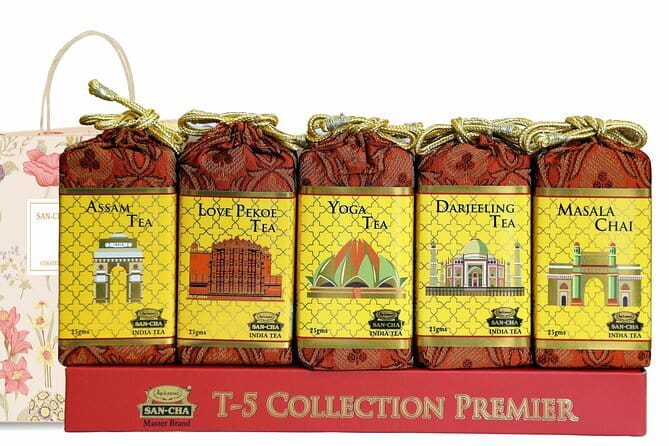
At the heart of the session is the comparison. You’ll be tasting teas tied to major Indian growing regions—specifically Darjeeling, Assam, Nilgiri, Sikkim, and Kangra—and you’ll also encounter newer trends like white teas alongside more classic styles like black tea.
Here’s why that’s valuable: India’s tea identity is regional. Climate, altitude, and soil can all shift the balance between floral notes, malty depth, briskness, and astringency. If you’re only drinking one “tea taste,” you miss the fact that black tea can behave in very different ways depending on where it’s from.
The shop’s lineup can include:
- Black teas (including classic regional styles)
- White teas
- Green teas
- Plus, signature masala chai blends
When you’re tasting this many types, the trick is to notice changes in:
- Aroma first (does it feel more floral, more roasted, more grassy?)
- Mouthfeel (smooth vs. brisk vs. drying)
- Finish (lingering sweetness vs. quick fade vs. spice warmth)
Even the way the tasting is presented seems designed for learning. You’re not just taking sips; you’re getting help connecting what you taste to where it comes from.
Brewing on request: how the tasting stays interactive
One of the best perks here is that you can ask the sommeliers to brew what you want. That means you’re not locked into a single pre-set flight.
This is where small details matter for your experience. If you discover you like one style early—say a white tea that feels lighter and more delicate—you can steer yourself toward a similar profile and compare. If you’re curious about a stronger black tea or a specific blend, you can ask for it and taste it at the table rather than relying on memory.
This “you ask, they brew” approach is also practical for first-timers. If you don’t know what you like yet, you can start broad, then narrow down. And because the session runs for around an hour, having that flexibility helps you get more out of limited time.
The group size cap of 20 is also important. In a small group, questions are easier. You’re more likely to get clear explanations rather than a general speech that leaves you guessing.
Masala chai blends: saffron, cardamom, ginger, and Malabar spice ideas
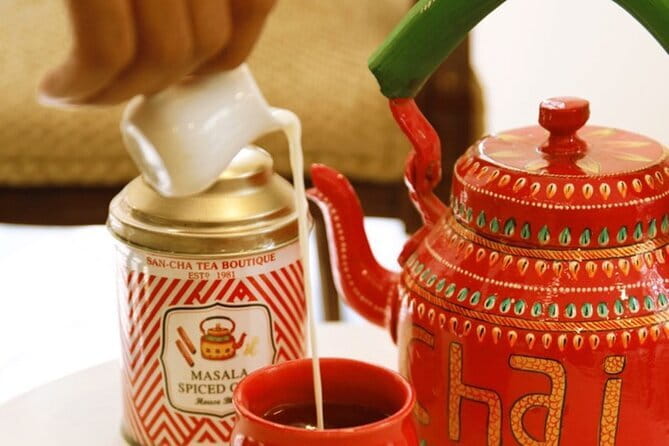
After you’ve sampled the regional teas, the session shifts toward the shop’s signature masala chai blends. These are described as including spices such as saffron, cardamom, ginger, and other spice notes from India’s Malabar Spice Coast.
Why this matters: masala chai isn’t one single flavor. It’s a system—spice choices plus tea strength plus how the drink is balanced. The same tea base can taste wildly different once you change:
- The spice mix
- The sweetness level
- How the blend handles heat
So when you taste the masala chai here, treat it like a calibration. Ask yourself: does it taste more spice-forward or tea-forward? Is the spice warming at the back of your throat, or does it hit quickly on the nose? Does saffron show up as floral richness or as a subtle background note?
If you’re a chai fan, this part is probably the most “giftable.” People buy blends to take home, and the shop is positioned to help you find a style that matches what you already enjoy—without forcing you to buy something you don’t.
Ayurvedic herbal teas: wellness options beyond black tea
Not everyone in a tasting wants only caffeinated tea. The shop also offers Ayurvedic herbal teas for wellness, so you can round out your tasting with options that feel different from leaf-based teas.
From the information given, the key point is that these are part of the menu alongside the regional tea lineup. If you’re trying to reduce caffeine for later in your trip—or you simply want to taste how the shop thinks about herbs and function—you’ll likely find something that fits.
One tip: when you switch from leaf tea to herbal options, reset your palate. Herbal blends can smell and taste “rounder” or more aromatic in a different way than black tea, so give yourself a moment between sips rather than comparing too quickly.
How to get the most from a 1-hour tasting
A one-hour tea tasting can feel short or exactly right, depending on how you approach it. For this one, you’ll do best if you show up with a plan—but a flexible one.
Here’s how to make it work:
- Decide what you want to learn: regional differences, white vs. black, masala chai styles, or wellness herbal notes.
- Ask for comparisons: if you like one tea, ask what’s similar and what’s different.
- Taste in order: start with lighter teas (often white/green) before moving into stronger black teas, then finish with chai and herbs if offered.
- Ask to brew again if you find a favorite: since you can request brewing from the store selection, you can come back to a tea you want to understand better.
Also, bring a simple note system. Even if you don’t write a full review, jot down a few words per tea (floral, malty, brisk, spicy, smooth). That turns your hour into a memory you can use later when shopping.
Buying tea gifts without the sales pressure
A big win here is the shopping vibe. Several people highlight that the staff didn’t make them feel obligated to buy. That’s huge in a tasting setting, because it lets you explore calmly, then decide when you genuinely want something.
The shop offers a wide selection—described as 100 Indian teas and blends—including gifts over 100 blends that use real spices, herbs, flowers, or plain pure tea. It also claims pride in quality and freshness, plus the chance to taste rare small-batch teas at the country of origin.
What to buy depends on you:
- If you’re new to Indian tea, buy a small set that covers at least two regions (for example, one Darjeeling-style and one Assam-style) plus one masala chai blend.
- If you already like chai, focus your purchases on the saffron/cardamom/ginger blends and pick the one that matches your spice tolerance.
- If you want low-caffeine options, add a wellness herbal blend so you have something for evenings.
One practical move: ask the staff what people typically brew at home. Even if the tasting is straightforward, home brewing is where tea can turn either great or disappointing. If they recommend a method, write it down.
Price and value: $7 for an hour that teaches more than it sells
At $7.00 per person for about 1 hour, this is one of the more affordable ways to do structured tea learning in New Delhi. The value isn’t only in the number of sips. It’s in the combination of:
- Regional tea comparison
- Multiple tea styles (black, white, green)
- Spice chai blends with clear ingredient cues
- Wellness herb options
- Interactive brewing on request
With a maximum of 20 travelers, the session is set up for questions and back-and-forth. For a short experience, that’s a big deal. You’re not stuck passively consuming.
There’s also a “buying later” advantage. If you find favorites during the tasting, you’re already in the store environment to pick up exactly what you liked rather than guessing later.
Who should book this tea tasting, and when should you go?
This experience suits you if you want:
- A focused tea education without a long tour day
- A hands-on tasting you can turn into real purchases
- Regional comparisons across multiple Indian tea growing areas
- An easy afternoon plan in a central New Delhi neighborhood
It’s especially good if you care about authenticity over theme-park experiences. This shop presents itself as India’s oldest tea boutique and has long-running recognition in travel media since 1981. The session also feels geared toward people who want to ask questions and taste widely.
Timing-wise, the shop’s opening hours are Monday–Saturday, 10:30 AM to 5:30 PM. It’s also offered with a mobile ticket, and booking is often made around a week ahead on average (8 days ahead is typical).
One note to keep in mind: the experience is listed as requiring good weather. Since this is a tea shop experience, you’ll likely still get options if conditions don’t cooperate, but it’s worth not planning this as your only rainy-day activity.
Should you book Sancha Tea at Aap Ki Pasand?
I’d book it if you want a compact, high-value taste lesson—especially if you like the idea of comparing India’s tea regions in one place. The combination of regional teas, white/green/black variety, masala chai spice blends, and on-request brewing is the kind of practical fun that fits a short trip.
Skip it only if you hate tasting sessions or you’re looking for an outdoor or sightseeing-focused tour. This is a shop-based experience: it’s about tea, explanations, and sampling. If that’s your kind of day, this is a very solid use of an hour in New Delhi.
FAQ
FAQ
How long is the tea tasting session?
The session is listed as about 1 hour.
How much does the tea tasting cost?
It costs $7.00 per person.
Where does the session start?
The meeting point is Aap Ki Pasand Tea Gallery (Sancha Tea), 15 Netaji Subhash Marg, opposite Golcha Cinema, diagonally Daryaganj, New Delhi, Delhi 110002, India.
Where does the activity end?
The activity ends back at the meeting point.
What is the group size limit?
The experience has a maximum of 20 travelers.
Do I get a mobile ticket?
Yes, it is listed as having a mobile ticket.
What kinds of teas can I taste?
You can expect teas from regions such as Darjeeling, Assam, Nilgiri, Sikkim, and Kangra, plus options including black, white, green, masala chai blends with spices, and Ayurvedic herbal teas.
Can I request how a tea is brewed?
Yes. The info says you can ask the sommeliers to brew you any tea in the store on the house.
What are the shop opening hours for this experience?
Monday through Saturday: 10:30 AM to 5:30 PM.
Is free cancellation available?
Yes. You can cancel up to 24 hours in advance for a full refund.
Does the session depend on weather?
The experience is listed as requiring good weather, and if it is canceled due to poor weather, you’ll be offered a different date or a full refund.