REVIEW · GLASGOW
Glasgow Gin Tea Experience
Book on Viator →Operated by Red Bus Bistro Company Limited · Bookable on Viator
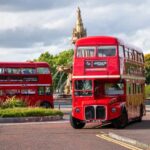
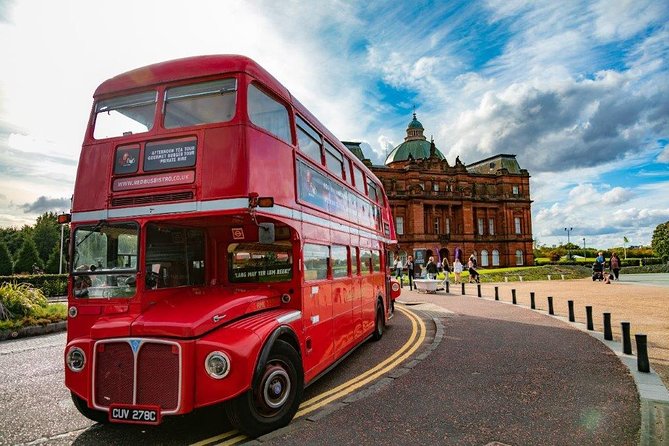
Vintage bus, big city charm. The Glasgow Gin Tea Experience pairs a proper tea spread with a ride past major landmarks, and your hosts share practical Glasgow tips as you travel between stops. You also get that all-important window for photos, without having to fight traffic or crowds.
I love the home-baked scone setup with cream and jam, plus warm mini quiche and handy sandwich selections. And I really like that the sweets include petit fours, so the tea feels like a full afternoon treat, not a token snack.
One thing to keep your expectations straight: even though it’s called a Gin Tea experience, alcohol or gin isn’t something you should assume will be served. Restrictions can change what’s available, and the name can be misleading.
In This Review
- Key highlights to look for
- What this Glasgow Gin Tea bus experience is really about
- The tea spread: scone to petit fours, plus what to know about gin
- The city loop: from galleries and cathedrals to the Clyde bridges
- Gallery of Modern Art: Glasgow’s art stop for people-watching
- City Chambers in George Square: civic power in stone
- Glasgow Cathedral: medieval survival and serious wow-factor
- The Necropolis: Victorian cemetery with big-city architecture
- Wellpark Brewery: Tennent’s brewing legacy since 1885
- Glasgow Tower (Tolbooth Steeple): the crown and the clock
- Doulton Fountain: the ceramic landmark from 1888
- People’s Palace and Winter Gardens: how Glaswegians lived
- Kingston Bridge: a busy transport statement
- Clyde Arc Bridge: curved engineering across the river
- Finnieston Crane: engineering heritage you can still feel
- SEC Armadillo: Foster + Partners meets the waterfront
- OVO Hydro: an indoor arena with superstar energy
- Clydeside Distillery: single malt focus and a modern visitor setup
- Riverside Museum of Transport and Travel: the one with 3,000 objects
- Glasgow Tower (Science Centre area): a high-tech counterpoint
- Tennent’s Bar: a real Glasgow pub moment
- Hunterian Art Gallery: names you recognize, in a public collection
- University of Glasgow: world-changing since 1451
- Kelvingrove Art Gallery and Museum: a 1901 classic
- Mitchell Library: a landmark you can use
- How to get the most from your 90 minutes
- Should you book the Glasgow Gin Tea Experience?
- FAQ
- Is there gin included in the Glasgow Gin Tea Experience?
- What food and drinks are included?
- How long is the experience?
- Are the attractions along the route ticketed?
- Do you get live or recorded guide commentary on the bus?
- Is there a toilet on board?
Key highlights to look for
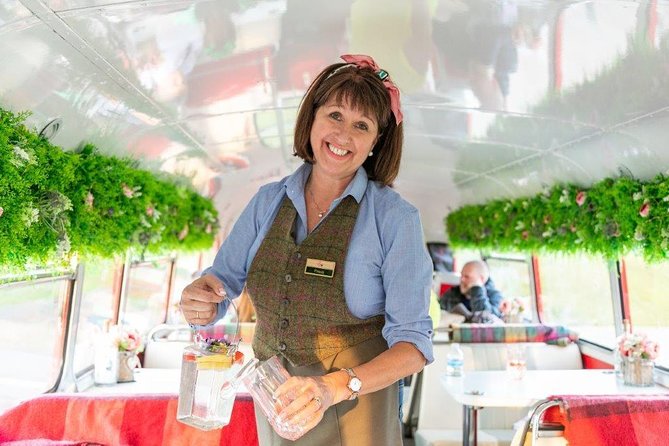
- Up to 15 people keeps the vibe friendly and lets you get to know fellow passengers at the table
- Home-baked scone, quiche, sandwiches, petit fours means you’re eating a full afternoon tea meal
- Free-entry stops along the route, from art museums to cathedrals to River Clyde engineering
- Hosts share tips, but there’s no guided coach narration like a classic sightseeing tour
- Photo-friendly viewpoints as you pass iconic bridges, towers, and Glasgow’s civic buildings
What this Glasgow Gin Tea bus experience is really about
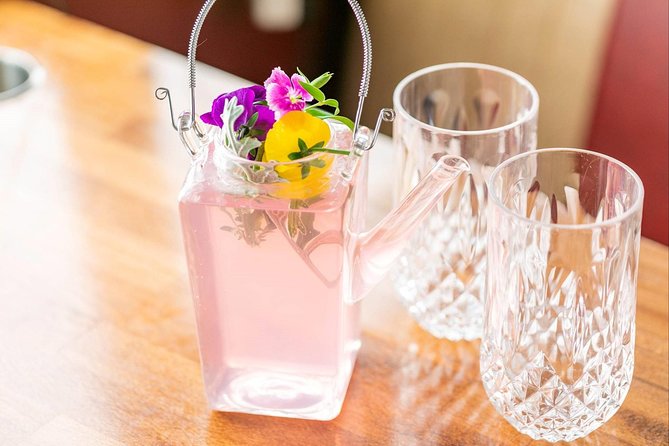
This is not a classic guided tour where you get a wall of commentary and then hop out for hour-long visits. Instead, you get a tea experience on wheels: a vintage Routemaster-style bus, a plated spread, and city highlights that feel like a guided day without the pressure to keep up.
The “why it works” for most people is simple. You get to tick off a lot of Glasgow in 90 minutes—especially the stuff visitors love—while you’re fed and comfortable. And because the group size tops out at 15, it’s easier to ask the crew questions and chat with strangers than it is on those huge coach tours.
Also, small but important: you’re likely to share a table on busier times. That can be fun if you’re social. If you’re not, plan for a quieter day if you have that choice.
Finally, remember this is a dining experience. The hosts can offer information and local tips, but the format isn’t built around live or recorded guide narration. If you want deep, structured history from a professional guide at every turn, you’ll want to pair this with a separate museum talk or a more traditional walking tour.
You can also read our reviews of more tours and experiences in Glasgow.
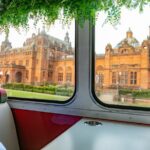
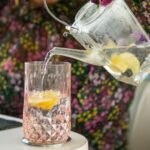
The tea spread: scone to petit fours, plus what to know about gin
Let’s talk food—because this is the main event. Your included set-up is substantial:
- a home baked warm scone with cream, jam, and a strawberry garnish
- handmade sandwich selections
- warm mini quiche
- unlimited tea & coffee
- a selection of petit fours
- coffee and/or tea again, as part of the flow
It’s a good mix of sweet and savory, and it’s paced like an afternoon tea should be, not like a rushed snack. If you’re arriving hungry (and many people in Glasgow are, after a morning of walking), this is a strong reason to book.
Now the gin part. The experience name says Gin Tea, but alcohol availability may be limited by restrictions, and the operator has said alcohol service can be affected. There may still be alcoholic beverages available to purchase in some situations, but I’d treat gin as an expectation you should confirm before you go, not a guarantee. If gin is the headline for you, double-check what’s currently being served on the day.
A practical note: there’s no toilet on board. So build in your own bathroom plan before you board, and don’t assume you’ll have an onboard reset mid-ride.
The city loop: from galleries and cathedrals to the Clyde bridges
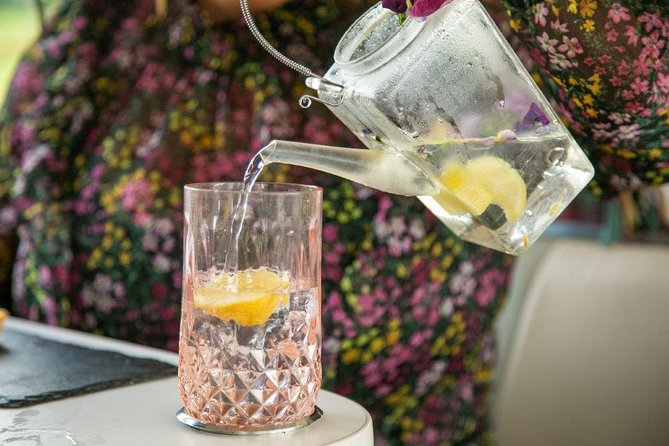
This route is designed to show you Glasgow’s contrast: medieval stones and grand civic buildings on one side, then big engineering and modern venues on the other. Many stops are listed as free admission, which matters for value because you’re not paying separate entry fees on top of your ticket.
Here’s what each stop is about, and how to make the most of your time.
Gallery of Modern Art: Glasgow’s art stop for people-watching
The Gallery of Modern Art is one of the places that feels built for the public. It’s described as world class and a place for people to gather, learn, and share ideas, with artworks sourced from around the world. Even if you’re not an art superfan, it’s a great “get your bearings” stop. Look for how the building frames the street energy outside.
City Chambers in George Square: civic power in stone
The City Chambers is a focal point on George Square, and it’s one of the most iconic buildings in Glasgow. What I like about this kind of stop is how it tells a story without a single museum label: the building reflects the wealth and industrial prosperity tied to Glasgow’s past. If you’re taking photos, aim for angles that show its imposing scale.

Glasgow Cathedral: medieval survival and serious wow-factor
Glasgow Cathedral is Scotland’s standout medieval church experience, and it has a specific claim to fame: it’s the only Scottish mainland cathedral reported to have survived the Reformation of 1560 intact. That makes it feel less like a relic and more like a survivor. When you’re there, slow down for a few minutes and take in the stonework—this is a place that rewards standing still.
The Necropolis: Victorian cemetery with big-city architecture
Right next to the cathedral, the Necropolis is a Victorian garden cemetery with architecture, sculpture, and stories written into the stone. It’s modeled on Père-Lachaise in Paris, and the numbers are dramatic: around 50,000 burials, with roughly 3,500 tombs. If you want a quick contrast to the cathedral, this does it—quiet, sculptural, and full of character.
Wellpark Brewery: Tennent’s brewing legacy since 1885
Tennent’s Wellpark Brewery is described as part of Scotland’s culture for generations, producing award-winning brews since 1885. This stop is valuable if you like real industrial heritage—less about polished tourism, more about Scotland’s everyday identity. Even if you don’t drink much, it’s a fun way to connect the city’s past industry to modern life.
Glasgow Tower (Tolbooth Steeple): the crown and the clock
Glasgow Tower is the Tolbooth Steeple, a seven-storey feature over Glasgow Cross with a clock and a stone crown. It once belonged to a larger Tolbooth complex that included the council hall and even a city prison. That mix—authority and punishment—shows how civic buildings used to serve multiple roles. Look up if you can. The details matter here.
Doulton Fountain: the ceramic landmark from 1888
The Doulton fountain was a popular attraction at the 1888 International Exhibition in Kelvingrove Park, which drew more than 5.7 million visitors. It’s noted as the largest fountain ever constructed in ceramic. This is a “wow, people built that?” kind of stop. If you’re into design history, you’ll enjoy how it reflects Victorian-era ambition.
People’s Palace and Winter Gardens: how Glaswegians lived
People’s Palace is set at historic Glasgow Green and focuses on how people lived, worked, and played over time—via objects, photographs, prints, and film. This is the kind of stop that helps you understand Glasgow as a working city, not just a postcard city. If you want context for the neighborhoods you’re seeing, this is one of the best places on the route.
Kingston Bridge: a busy transport statement
Kingston Bridge is described as a ten-lane road bridge carrying the M8 through the city center. It’s also one of Europe’s busiest bridges, handling around 150,000 vehicles a day. You might not care about concrete details, but it’s still useful: it shows how Glasgow moves, how the river and roads shape daily life, and why the waterfront feels active.
Clyde Arc Bridge: curved engineering across the river
The Clyde Arc connects Finnieston near the Clyde Auditorium and SEC with Pacific Quay and the Glasgow Science Centre area in Govan. Its curved design and angled crossing are the headline features. Stand where you can see the bridge’s line through the river—this is an engineering stop that looks good from multiple angles, and it makes for excellent photos.
Finnieston Crane: engineering heritage you can still feel
The Finnieston Crane is a disused giant cantilever crane kept as a symbol of Glasgow’s engineering history. It’s still operational, and it was used to load cargo—especially steam locomotives—onto ships heading overseas. This stop is a reminder that Glasgow’s story wasn’t only about shipyards in the past; it was also about how goods and machines traveled across oceans.
SEC Armadillo: Foster + Partners meets the waterfront
The SEC Armadillo is a landmark venue on the waterfront, designed by Foster + Partners and opened in 1997. What you get from stops like this is an easy visual sense of Glasgow’s newer identity: architecture as a signature. Even if you don’t catch an event, looking at the building from outside gives you context for what this area is today.
OVO Hydro: an indoor arena with superstar energy
The OVO Hydro (formerly the Hydro after Scottish & Southern Energy subsidiary Scottish Hydro) is the multi-purpose indoor arena at the Scottish Event Campus. It’s a major public-facing building, and it’s useful for understanding why this stretch is busy. If you’re visiting in event season, you might spot the buzz around it even from the outside.
Clydeside Distillery: single malt focus and a modern visitor setup
Clydeside Distillery is described as Glasgow’s first dedicated Single Malt Scotch Whisky distillery in over 100 years, with a visitor experience, café, and specialist whisky shop. If whiskey is your thing, this is one of the most straightforward “modern Glasgow pride” stops. Even if you don’t buy anything, the idea of a revived craft in the city center is worth your attention.
Riverside Museum of Transport and Travel: the one with 3,000 objects
Riverside Museum is Glasgow’s award-winning transport museum, with over 3,000 objects on display, from skateboards to locomotives and cars to prams. It even includes a Stormtrooper. That last detail matters because it signals the tone: fun, accessible, and built to keep people engaged. If you’ve been walking all day, this is a good indoor reset spot.
Glasgow Tower (Science Centre area): a high-tech counterpoint
Glasgow Tower is a free-standing tower on the south bank of the River Clyde and part of the Glasgow Science Centre complex. Pairing this with transport and waterfront stops helps you see Glasgow as a city of ideas, not only heritage. It’s a nice contrast after all the medieval and industrial stops earlier.
Tennent’s Bar: a real Glasgow pub moment
Tennent’s Bar in the West End is described as a local favorite with great beers, tasty food, and lively banter. It’s also one of the last traditional pubs in Glasgow’s West End. This stop is valuable because it’s about the social Glasgow you can’t reproduce from photos. Even if you just look around, you’ll feel the neighborhood rhythm.
Hunterian Art Gallery: names you recognize, in a public collection
The Hunterian Art Gallery has one of Scotland’s most distinguished public art collections, with permanent displays that include works by Rubens and Rembrandt, plus Scottish Colourists and Glasgow Boys. If you like art but don’t want to commit to a whole day in a museum, this is a good hit. It also works well for families and mixed groups because the collection is broad.
University of Glasgow: world-changing since 1451
The University of Glasgow has been changing the world since 1451. It’s linked with major names like Adam Smith, James Watt, and Lord Kelvin, and it connects to today’s world-changers working on discoveries. This stop adds depth: it tells you why Glasgow has long been more than factories—it’s also education and ideas.
Kelvingrove Art Gallery and Museum: a 1901 classic
Kelvingrove opened in 1901 and is a firm favorite with locals and visitors. It’s known for stunning architecture and a family-friendly atmosphere. This is the sort of place that makes you understand why Glasgow is comfortable with culture in everyday life. If you’re the kind of traveler who likes museums but also likes energy, you’ll probably enjoy it.
Mitchell Library: a landmark you can use
The Mitchell Library is an iconic Glasgow landmark at Charing Cross and sits at the heart of Glasgow Libraries. It holds some of the finest collections available in any public library, including Scottish and international materials. If you love reading, maps, or just the idea of researching a place before and after visiting, this stop feels practical, not just decorative.
How to get the most from your 90 minutes
Because this experience is built around food and a city loop, your strategy is simple: be ready to watch, not just listen. Here’s what pays off.
First, ask your hosts questions early. Since there’s no full narrated guide, the crew’s practical Glasgow tips are your best shortcut to what’s worth noticing. Second, bring a camera stance, not just a camera. The River Clyde bridges and the cathedral/necropolis area are photo-friendly, so keep your settings ready.
Third, plan your bathroom before you board. With no toilet on board, you want to avoid the end-of-ride scramble.
Fourth, think about table-sharing. On busier weekend tours, you should expect to share a table. If you prefer quiet conversation with your own group, choose your timing wisely.
Finally, handle the name carefully. If your heart is set on gin, confirm what’s being served right now. If you’re more into the tea ritual, the included scone-and-sweets lineup is the real promise—and it’s a strong one.
Should you book the Glasgow Gin Tea Experience?
Book it if you want a fun, low-stress intro to Glasgow that mixes afternoon tea treats with a fast-hit skyline and landmark route. It’s also a good fit if you’re traveling in a small group or solo and you like the chance to chat with fellow passengers.
Skip it or choose another option if you’re hunting for a strictly gin-forward drink package, or if you need a fully guided, narrated history at every stop. The experience works best as a dining-focused way to see the city, not as a deep-telling tour.
If your goal is a warm scone, petit fours, and a quick sweep of art, architecture, and Clyde engineering in 90 minutes, this is the kind of ticket that makes a day in Glasgow feel effortless.
FAQ
Is there gin included in the Glasgow Gin Tea Experience?
The experience is named Gin Tea, but alcohol service can be affected by government restrictions. The information provided also notes that alcoholic beverages may be available to purchase, so you should treat gin as something to confirm for your specific date.
What food and drinks are included?
You get a home baked warm scone with cream, jam, and strawberry garnish; handmade sandwich selections; warm mini quiche; unlimited tea & coffee; and a selection of petit fours. Coffee and/or tea are also included as part of the service.
How long is the experience?
It runs for about 1 hour 30 minutes.
Are the attractions along the route ticketed?
Admission for the listed stops is shown as free for each location. Also, no tickets are issued for the tour itself.
Do you get live or recorded guide commentary on the bus?
No. The experience is described as a dining experience with hosts who interact with passengers and offer information and tips, but it does not include live or recorded guide narration.
Is there a toilet on board?
No, there is no toilet on board.