REVIEW · BEIJING
Beijing Culture: Tea Ceremony, Heritage Instrument & Calligraphy
Book on Viator →Operated by Culture Heritage Tour China · Bookable on Viator
Forget crowded Beijing shows. This 2.5-hour workshop gives you something most sights can’t: hands-on practice of tea rituals, calligraphy, and Guqin. I like that it’s taught by high-level cultural specialists and explained in plain English, so it feels more like learning a living tradition than watching a performance.
My favorite part is the mix of doing and understanding. You’ll brew and taste Chinese tea with a certified tea master, then move from a short Guqin performance into guided finger practice to play a full melody. If you want something quiet and personal instead of another group photo at a landmark, this fits.
One thing to consider: transport isn’t included, so you’ll need to plan getting to the start point at 813 Creative Park. And because it’s a calm, indoors-leaning cultural session, it’s not the best pick if you’re only after big-ticket sightseeing.
In This Review
- Key Highlights Worth Booking For
- A Private Heritage Venue You Can Actually Hear Yourself Think In
- Tea Ceremony with a Certified Tea Master (More Than a Sip)
- Guqin in Your Hands: Learning the Melody, Not Just Watching Fingers
- Calligraphy Workshop: Characters, Meaning, and a Finished Result
- Traditional Outfit Rental for Ritual and Photos (Without the Costume Vibe)
- Timing, Small-Group Size, and Where You Meet
- Price and Value: Why $78.60 Can Make Sense Here
- Who Should Book This (And Who Might Want Something Else)
- Should You Book This Tea, Guqin and Calligraphy Workshop?
- FAQ
- What happens during the tea ceremony part?
- Is there Guqin performance, or do I actually learn to play?
- Will I have time to write calligraphy?
- What’s included, and what should I budget for?
- Where is the meeting point, and how long is the tour?
- What if weather is bad or the minimum number of travelers isn’t met?
- Can I bring a service animal?
Key Highlights Worth Booking For
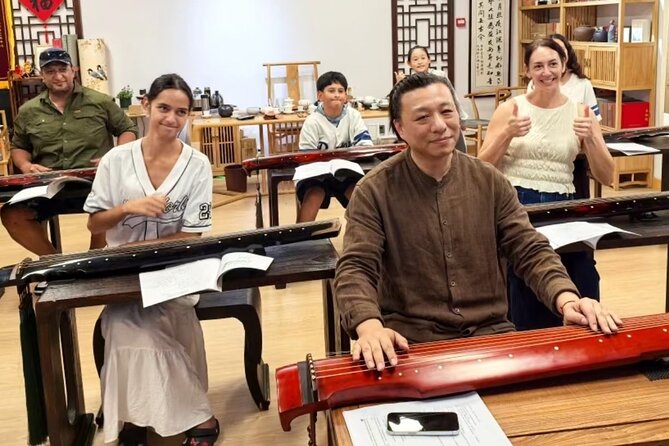
- Private heritage venue with a small group (max 8), away from the usual crowds
- Tea ceremony + tasting taught by a certified tea master
- Guqin: you don’t just listen, you get a hands-on learning session to play a full melody
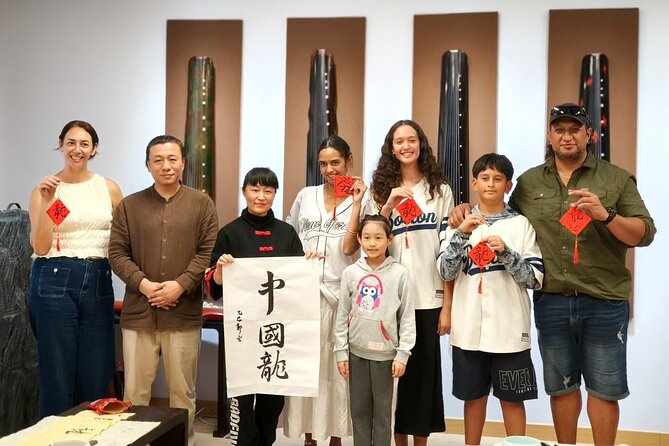
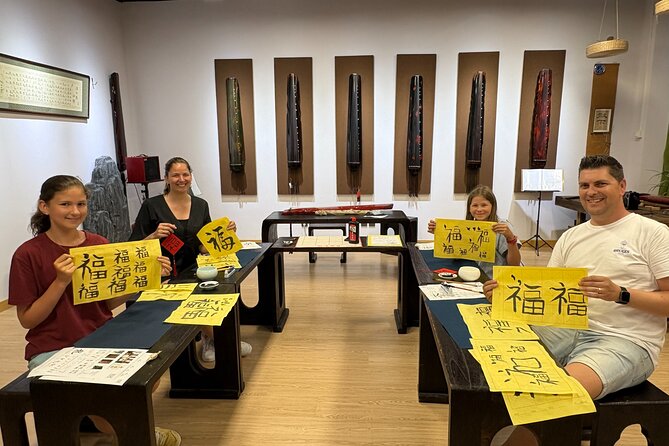
- Chinese calligraphy workshop with expert guidance, including writing meaningful characters
- Traditional outfit rental for the ritual moment and photos
- English support from a bilingual guide with an M.A. in History & Sociology
A Private Heritage Venue You Can Actually Hear Yourself Think In
This experience is built around a simple idea: tradition isn’t meant to be shouted over. The workshop happens in a serene, air-conditioned heritage space in Beijing that’s closed to the public. That matters because it keeps the tone slow and focused. You’re not trading attention spans for “quick hits” of culture.
The small group size (up to 8) also changes everything. Instead of feeling like you’re on a conveyor belt, you get time to ask questions and adjust your technique. Even the way the activities are sequenced supports that calm pace: tea first, then music, then calligraphy.
Also, this is guided for people who don’t want a scripted tourist show. The format is practical: you’ll handle the tools, follow instruction, and learn the meaning behind what you’re doing, not just the steps.
Good to know: the session includes a traditional outfit rental for the ritual and photos, so you’ll likely want to dress in a way that’s comfortable for changing and sitting.
You can also read our reviews of more tours and experiences in Beijing.
Tea Ceremony with a Certified Tea Master (More Than a Sip)
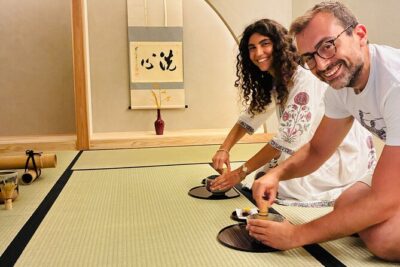
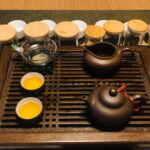
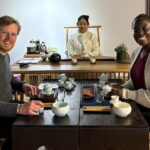
The tea portion is not just a taste test. You’ll brew and then taste real Chinese tea with a national-level tea master, with guidance geared toward understanding the ritual and its elegance. The point isn’t speed. It’s attention—how the process feels when you’re doing it slowly, on purpose.
What I like here is that the tea ceremony is treated as a skill and a philosophy, not a gimmick. The guide is trained in Chinese philosophy and history, so you’re not stuck translating everything in your head. You’re hearing explanations that connect the ritual to why it exists in the first place.
Practically, you’ll be able to take something away beyond memory. You’ll leave with the sensory understanding of the ceremony: the warmth of tea, the pacing, and the idea that the preparation is part of the experience, not just a lead-in to drinking.
A small consideration: you should be ready for a calmer rhythm. If you’re used to “walk, look, move fast,” this part asks you to slow down. For many people, that’s exactly why they book it.
Guqin in Your Hands: Learning the Melody, Not Just Watching Fingers
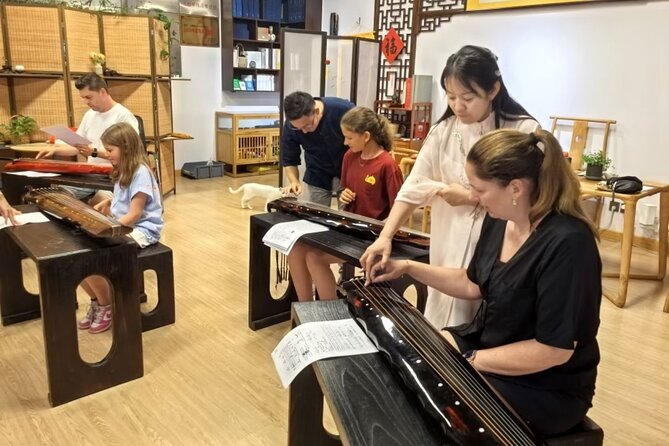
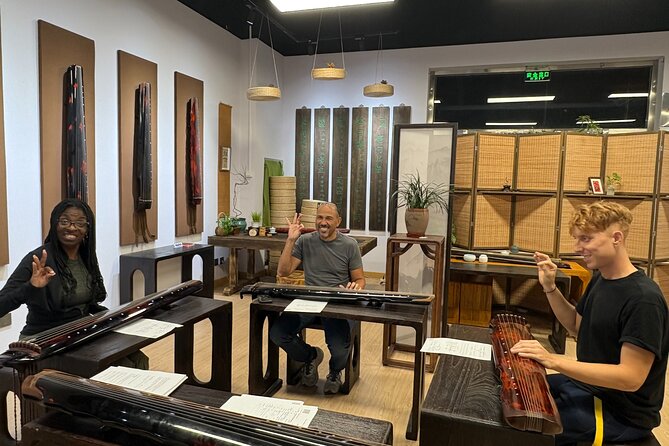
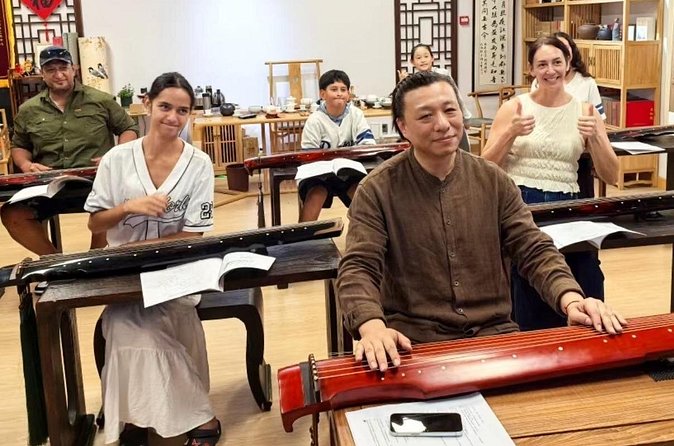
Guqin is described as China’s most revered ancient instrument, and this session matches that respect. You’ll start with a live performance by a national-level heritage artist. Then you’ll move into a hands-on learning session.
This is where the workshop earns its reputation for being different. The goal isn’t to let you sit quietly at the back. You’ll actually practice, with guidance on how to play. The experience emphasizes getting you to play a full melody, not just try a couple of notes.
Why that matters: listening is easy. Playing is harder. When someone guides your fingers while you try to produce the melody, it turns into a learning moment that feels personal. You stop thinking of Guqin as background music and start understanding it as a craft.
Another thoughtful touch is how the Guqin piece connects to the rest of the workshop. After tea, you’re already in a slower, more present mindset. Calligraphy later reinforces that same mental mode: control, patience, and focus.
If you’re wondering whether you need a musical background: the experience says most travelers can participate, and the structure is designed around guided learning, not prior training.
Calligraphy Workshop: Characters, Meaning, and a Finished Result
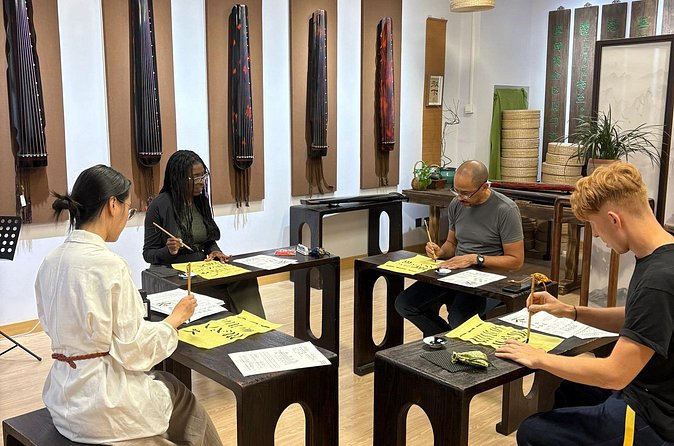
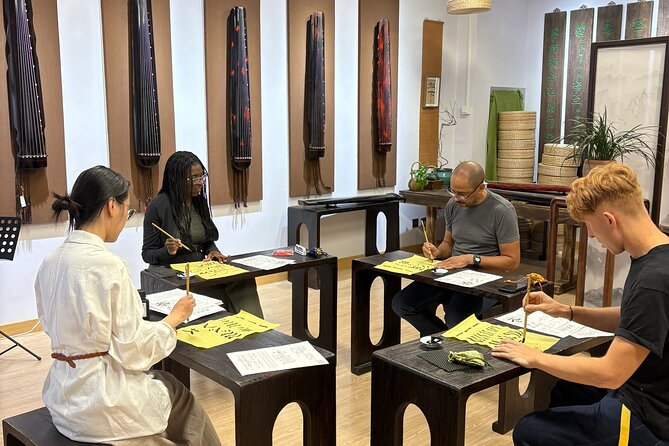
Calligraphy here isn’t framed as decorative scribbles. You’ll write real Chinese characters with expert guidance, and you’ll learn their ancient roots and the meaning behind writing meaningful characters.
The workshop gives you a practical reason to stay engaged: you’re producing something you can keep. One of the standout details from the experience’s feedback is that the calligraphy teacher can help you write your Chinese name, and you can take the paper home. That turns the session from a “nice hour” into a keepsake you’ll actually display.
Even if writing characters feels intimidating at first, the guidance style is the key. You’re not left with a brush and silence. You’re learning strokes and pacing from someone who teaches for real.
Also, calligraphy fits well with the tea and Guqin theme. It’s the same mindset in a different form: deliberate movement, patience, and the quiet confidence that comes from doing it correctly step by step.
Traditional Outfit Rental for Ritual and Photos (Without the Costume Vibe)
One of the most fun and useful inclusions is the traditional outfit rental. It’s provided for the ritual and photos, so you’re not just borrowing clothing for a quick picture and moving on.
Why this is worth noting: the outfit helps you slip into the mood of the ceremony. You’ll be wearing it during the cultural parts of the workshop, so it feels integrated rather than tacked on. Plus, having a consistent look makes it easier to capture the moment without awkward last-minute outfit decisions.
Tip (simple, practical): wear comfortable layers underneath in case you need to adjust clothing. You’ll be sitting during tea, and you’ll likely be stationary during instruction for Guqin and calligraphy too.
Timing, Small-Group Size, and Where You Meet
This is a 2 hours 30 minutes session, using a mobile ticket. The group limit is 8 travelers, so it’s designed for interaction, not passive listening.
You’ll meet at 813 Creative Park (Chaoyang). The activity ends back at the same meeting point, so you don’t need to hunt down a separate drop-off.
Transport is on you: the tour doesn’t include rides to and from the venue. The good news is that the meeting point is near public transportation, so it’s not a private-car-only situation.
Service animals are allowed, and the experience indicates most travelers can participate. If you have any specific needs, it’s smart to confirm ahead of time so the team can plan appropriately.
Price and Value: Why $78.60 Can Make Sense Here
At $78.60 per person for about 2.5 hours, this isn’t a “cheap and cheerful” activity. But it also isn’t priced like a big production show. You’re paying for three trained instruction elements, each tied to a specialist:
- Tea ceremony and tasting with a certified tea master
- Live Guqin performance plus a hands-on Guqin learning session
- Chinese calligraphy workshop with expert guidance
- Traditional outfit rental for ritual and photos
- A bilingual guide with an M.A. in History & Sociology
Add up the time with experts, and the price starts looking more reasonable. It’s also a better value than activities where you only watch. The structure here puts you in the middle of the tradition—brewing tea, practicing Guqin, and writing characters—so you leave with an experience you can remember with your body, not just your camera.
If you’re doing a short Beijing trip and want one “non-museum” cultural activity that feels real, this is the kind of choice that often pays off.
Who Should Book This (And Who Might Want Something Else)
I’d book this if you:
- want a quieter Beijing experience where you can focus
- like learning cultural practices by doing them
- enjoy hands-on crafts and guided technique
- prefer small groups and English support with real context
I’d think twice if you:
- want a faster, high-energy sightseeing day full of major landmarks
- dislike sitting and learning in a calm indoor setting
- need a transport-included option (because rides aren’t included)
This is the right kind of activity for travelers who are tired of scripted entertainment and want something thoughtful, respectful, and skill-based.
Should You Book This Tea, Guqin and Calligraphy Workshop?
If your Beijing plan is heavy on famous sites, I’d treat this as your “breathing space.” It’s small-group, quiet, and built around real participation: tea you brew and taste, Guqin you practice, and calligraphy you write and keep. The value comes from the mix—three traditions taught with context, not just performances.
One more practical reason: it’s booked well ahead on average (around 51 days). If you’re traveling during peak times, don’t wait until the last minute.
Book it if you want to connect with Chinese culture through calm, hands-on learning. Skip it only if you’re chasing spectacle and want your time filled with major outdoor attractions instead.
FAQ
What happens during the tea ceremony part?
You’ll do a traditional tea ceremony and tea tasting, guided by a certified tea master. You’ll brew and taste the tea as part of the experience.
Is there Guqin performance, or do I actually learn to play?
There’s a live Guqin performance by a national-level heritage artist, and you also get a hands-on Guqin learning session. The experience is designed to help you play a full melody.
Will I have time to write calligraphy?
Yes. You’ll join a Chinese calligraphy workshop with expert guidance and write Chinese characters. The session is set up so you’re doing the writing, not just watching.
What’s included, and what should I budget for?
Included are the tea ceremony and tasting, the Guqin performance plus learning session, the calligraphy workshop, traditional outfit rental for ritual and photos, and a bilingual guide (M.A. in History & Sociology). Not included: transportation to and from the venue, meals outside of the provided tea snacks, and personal expenses or optional tips.
Where is the meeting point, and how long is the tour?
You meet at 813 Creative Park (VGP3+CCX, Chaoyang, China, 100124) and it ends back at the same point. The duration is about 2 hours 30 minutes, and you’ll use a mobile ticket.
What if weather is bad or the minimum number of travelers isn’t met?
The experience requires good weather. If it’s canceled due to poor weather, you’ll be offered a different date or a full refund. If the minimum number of travelers isn’t met, you’ll also be offered a different date/experience or a full refund.
Can I bring a service animal?
Yes. Service animals are allowed.