REVIEW · BEIJING
Beijing Culture Event: Tradition Music, Tea Ceremony, Calligraphy
Book on Viator →Operated by ChiNice Travel · Bookable on Viator
Three arts, one quiet room. This small-group Beijing session links tea ceremony etiquette with Guqin music, then hands you a brush for calligraphy practice. I love how unhurried it feels, and I like that you learn what you’re doing instead of just watching.
The main drawback is time and expectations. You’ll get a beginner-friendly taste—great for trying the arts, but not enough for serious, weeks-long mastery—so come ready to enjoy the basics.
If you want a cultural stop that’s gentle, interactive, and truly traditional, this is the kind of evening your brain remembers long after you’ve left the room.
In This Review
- Key highlights at a glance
- Huagong Road is the calm start you’ll be glad you chose
- Tea ceremony: etiquette, tasting, and what to notice
- Guqin music: an official-level sound you can actually try
- You’ll hear it, then you’ll play something
- A musician’s detail worth holding onto
- Calligraphy workshop: write your own phrase with basic brush control
- What makes it feel worth doing
- The full flow in 2–3 hours (and why the mix works)
- Group size, English support, and why it feels low-pressure
- Price and value: $15 for three live traditions
- Who should book it (and who might pass)
- Practical tips before you go
- Should you book this Beijing Culture Event?
- FAQ
- How long is the Beijing tea, Guqin, and calligraphy experience?
- What’s included in the $15 price?
- Do I need any prior experience to play the Guqin or do calligraphy?
- How many people are in the group?
- Where do I meet, and does it end nearby?
- Is there an English guide?
- What is the cancellation policy?
Key highlights at a glance
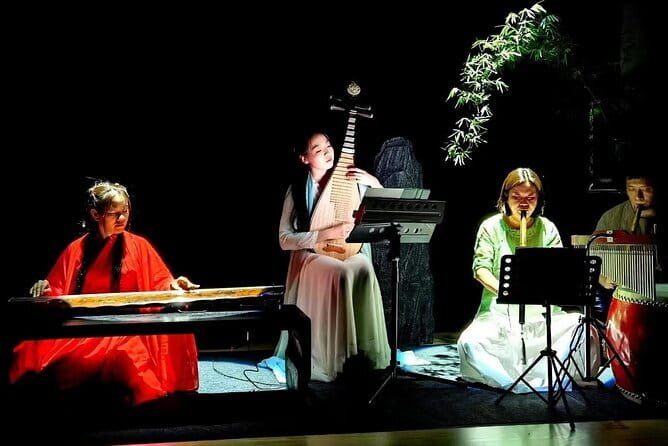
- Guqin expert from the Beijing Guqin Association: professional instruction, not a watered-down performance.
- Tea ceremony with philosophy and etiquette: you learn how to pour and how to read the moment.
- Hands-on calligraphy: basic brush techniques and you write your own meaningful word or phrase.
- A famous melody, taught simply: you try a tune from Crouching Tiger, Hidden Dragon with no prior experience.
- Small group size (up to 12): quieter and less performative than big group events.
- Great value for $15: multiple live cultural components plus an English guide.
Huagong Road is the calm start you’ll be glad you chose
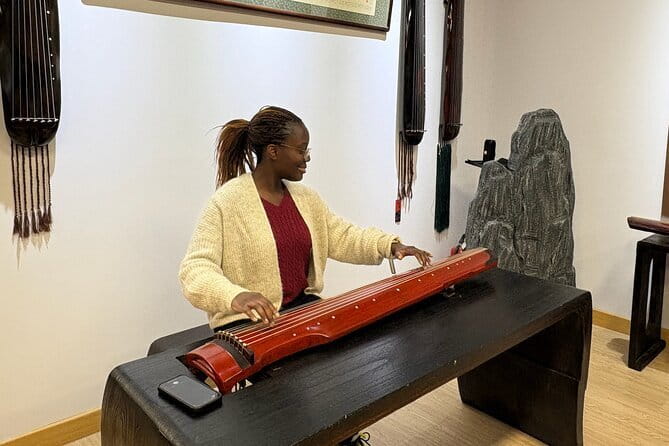
This experience takes place at Huagong Road (Hua Gong Lu) in Chaoyang District. It’s a good fit for a day when you want culture without the museum marathon energy.
You’ll also start and end back at the same meeting point, which makes the logistics easy. The pacing is part of the appeal: 2 to 3 hours feels long enough to learn and relax, but short enough that you won’t dread the next thing on your schedule.
You can also read our reviews of more tours and experiences in Beijing.
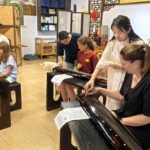
Tea ceremony: etiquette, tasting, and what to notice
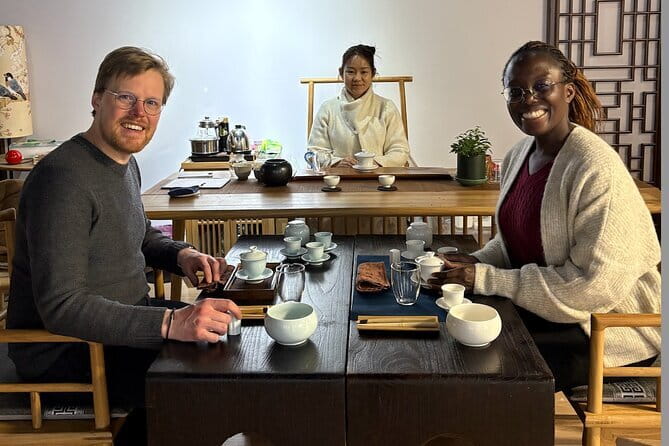
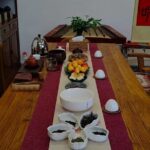
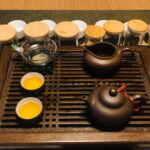
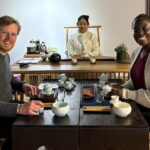
The tea portion is more than sipping something hot. You get a guided tea ceremony where you learn the philosophy behind it and the etiquette that shapes how people hold the cup, pour, and taste.
Here’s what I find useful as a first-timer: you’re not left guessing. The guide’s explanations help you understand why a tea ceremony is slow on purpose, not slow because nobody planned better. If you’re the type who likes structure, you’ll appreciate that your movements and attention are guided.
You’ll also have coffee and/or tea included, which keeps the whole session comfortable. Since the tea ceremony is part of the main event, it doesn’t feel like an add-on designed to fill time.
Guqin music: an official-level sound you can actually try
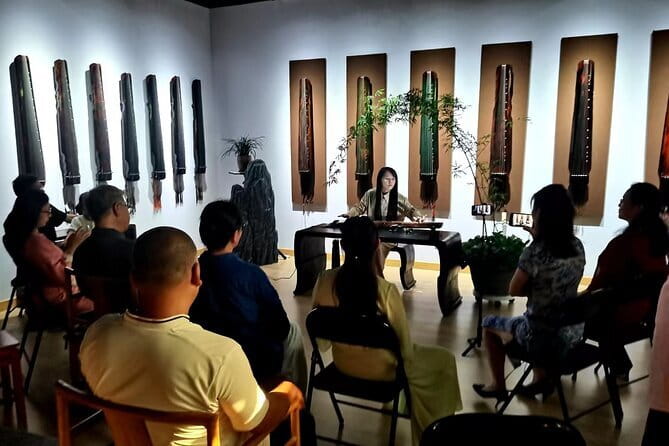
The star of the music side is the Guqin, a traditional Chinese instrument often described as having a history of about 2,000 years. The experience also highlights the Guqin as an instrument associated with scholars and dignitaries, and it’s used at the highest levels in official settings for receiving foreign guests.
What you’ll notice fast is that the tone is not like a guitar or a piano. It’s quieter, older-sounding, and mellow in a way that makes the room feel different.
You’ll hear it, then you’ll play something
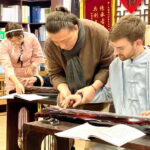
This is a hands-on class, not a lecture. You’ll watch the performance, and then you’ll learn to play a simple melody from Crouching Tiger, Hidden Dragon. The wording is clear: no prior experience is needed.
That matters, because many music experiences turn into a “you’ll listen” event. Here, you get a real moment of participation. It’s also a strong choice if you’re traveling with someone who wants interaction but doesn’t want pressure.
A musician’s detail worth holding onto
One of the most interesting teaching points mentioned is how ancient Chinese music scores can be written using Chinese characters. If you’re the kind of person who loves the mechanics behind an art form, this added context turns the Guqin from background ambiance into something you can understand.
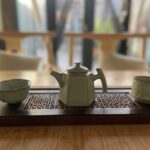
Calligraphy workshop: write your own phrase with basic brush control
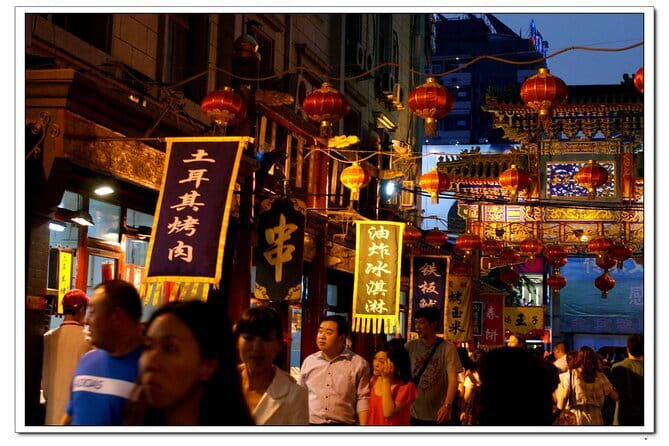
Then you shift from sound and steam to ink and timing. The calligraphy part focuses on basic brush techniques and writing your own meaningful word or phrase.
This is where the experience becomes personal. Even if your characters look imperfect at first, you’re building the habit of control: how you hold the brush, how you start a stroke, and how you finish it.
What makes it feel worth doing
A lot of calligraphy demos stop at watching. Here, you practice enough to walk away with something you made. And because you choose a word or phrase with meaning, the result tends to feel more like a souvenir of your moment in Beijing rather than a product someone printed for you.
If you like slow, focused tasks, this portion can feel almost meditative—quiet attention, simple steps, and time to get it right the way you want.
The full flow in 2–3 hours (and why the mix works)

You’re basically moving through three traditional skills in one sitting: tea, Guqin, and calligraphy. On paper that sounds like “too much.” In practice, it works because each part changes your attention.
- Tea resets your pace and gets you present.
- Guqin adds emotion and sound, with a clear learning path toward playing.
- Calligraphy brings you back to a tactile, controlled activity.
This rhythm is a big reason the experience gets high marks. It’s not random. It’s designed so you’re never stuck watching without participation.
Group size, English support, and why it feels low-pressure
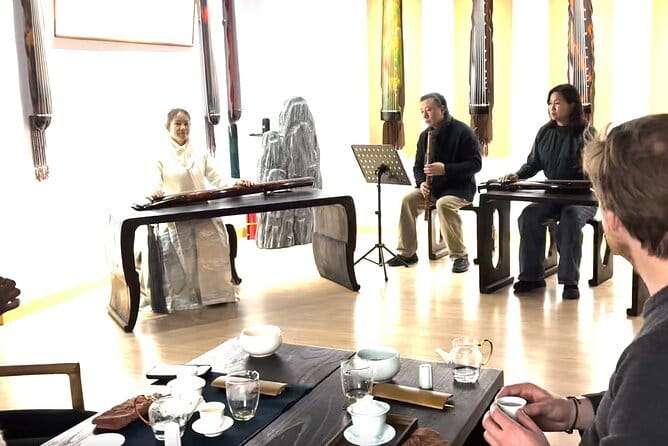
The group is kept small, up to 12 people. That alone changes the feel. You’re more likely to get attention when you ask questions, and you’re less likely to feel like you’re just waiting your turn.
You also have an English guide. That’s key for this kind of cultural content, because the “meaning” part matters just as much as the actions. Without translation, a tea ceremony can be impressive but vague. With a guide, it becomes clear.
The tone is also described as peaceful and no-pressure. If you’re an introvert, that matters more than you might think. You can participate without being put on the spot.
Price and value: $15 for three live traditions

At $15 per person, the biggest question is value. This isn’t one performance with a small craft at the end. You’re getting multiple components—tea ceremony experience, traditional music (Guqin), and a calligraphy workshop—plus an English guide.
The Guqin angle adds real value. Instruments like this aren’t common in casual cultural tours, and the experience specifically connects you with a Guqin performer associated with the Beijing Guqin Association. You’re not just hearing music; you’re learning in a way that’s meant to make sense.
Also, you’re not paying extra for the performance access. The session includes tea ceremony elements, and even coffee and/or tea are part of the experience. Compared with paying for separate activities, this single bundled outing tends to feel like a bargain.
One thing to keep realistic: you’re paying for a short introduction. You’re not buying hours of private instruction. But for trying three Chinese arts in one go, it’s strong value.
Who should book it (and who might pass)

This fits best if you:
- Want a calm cultural evening without getting overwhelmed.
- Love hands-on learning—especially if you like writing and trying instruments.
- Want a memorable date-night alternative to dinner, centered on shared experiences.
It also works well for people who get something out of learning the “why,” not just the “what.” Tea etiquette and calligraphy practice are both meaning-heavy activities.
Who might pass? If you’re looking for a deep, multi-session training track, this is likely too short. Treat it as an introduction, not the start of a formal certification.
If you want a guaranteed museum-grade art history lecture, you may prefer a different format. This is performance plus practice, with explanations built in.
Practical tips before you go
- Use the mobile ticket: plan to have it ready on your phone.
- Meet at Huagong Road (Hua Gong Lu, Chaoyang District): starting and ending at the same spot keeps things simple.
- Keep your schedule flexible: it runs about 2–3 hours and the session uses a calm pace.
- Bring curiosity, not supplies: you’re learning brush basics and trying a simple Guqin melody, so you don’t need to show up prepared like you’re starting a conservatory.
- Expect confirmation within 48 hours: booking confirmation is issued within that window, depending on availability.
If you’re booking close to your dates, watch for the standard “minimum number of travelers” rule. If the minimum isn’t met, you’ll be offered a different date or a full refund. Also, cancellations are free up to 24 hours before the experience start time for a full refund.
One more note: service animals are allowed, and the meeting area is near public transportation. That makes it easier to fit into a Beijing itinerary without long transit stress.
Should you book this Beijing Culture Event?
Yes—if you want a low-pressure, small-group intro to three deeply traditional arts in one evening. The combination is the point: tea ceremony meaning, Guqin music you can try, and calligraphy practice that produces something you made.
Skip it only if you’re chasing a long, intensive training experience. This session is short by design. For $15, it’s an efficient way to get authentic culture without turning your day into a full-time project.
If you’re deciding between this and a more standard “watch and leave” cultural show, choose this one. You’ll taste, listen, and write—three different ways to remember Beijing.
FAQ
How long is the Beijing tea, Guqin, and calligraphy experience?
It lasts about 2 to 3 hours.
What’s included in the $15 price?
You’ll have a tea ceremony experience, a traditional instrument performance with Guqin (including your participation), coffee and/or tea, and an English guide.
Do I need any prior experience to play the Guqin or do calligraphy?
No. The session is set up so you can try playing a simple melody from Crouching Tiger, Hidden Dragon without prior experience, and you’re taught basic brush techniques for calligraphy.
How many people are in the group?
The experience has a maximum of 12 travelers.
Where do I meet, and does it end nearby?
You meet at Huagong Road (Hua Gong Lu, Chaoyang Qu, Beijing). The activity ends back at the same meeting point.
Is there an English guide?
Yes. The experience includes an English guide.
What is the cancellation policy?
Free cancellation is available up to 24 hours before the experience start time for a full refund. If you cancel within 24 hours, the amount paid is not refunded.
If you’d like, tell me your travel dates and whether you’re more into tea, music, or writing—I can suggest the best time of day to fit this into a Beijing plan.
You Might Also Enjoy
 Tokyo: Tea Ceremony Experience in a small tea room
 Palampur and Bir Tour, Tea Gardens, Adventures and Paragliding
 Xiao Long Bao, Chicken vermicelli with mushroom and sesame oil, Tofu strips salad, Bubble milk tea. Taiwan Traditional Delicacies Experience-A (Taipei Cooking Class)
 Dublin: Afternoon Tea Vintage Bus Tour