REVIEW · ASAKUSA
Sweets Making and Kimono Tea Ceremony at Tokyo Maikoya
Book on Viator →Operated by Maikoya · Bookable on Viator
Wagashi and matcha in a kimono setting. I love the kimono fitting and hair styling, and I love the hands-on wagashi workshop that ends with a real tea ceremony. One thing to plan for: photo and video can be limited at points, and tripods are not allowed.
This is a calm, instructor-led experience in historic Asakusa, starting at 11:30 am at Tokyo Maikoya. You’ll get personalized attention because the session size is kept small. The only drawback is that you’ll need to be comfortable following etiquette closely during the ceremony, since the tea master sets the pace.
In This Review
- Key highlights
- Asakusa Meet-Up at Tokyo Maikoya: Start Simple, Stay Present
- Getting Dressed in a Kimono: Choice, Fitting, and That Final Hair Moment
- Making Wagashi at a Tea House: Shapes, Colors, and Matcha Pairing
- Matcha Tea Ceremony Etiquette: Calm Rules That Actually Make Sense
- Photo Time in Traditional Settings: Where to Look, What’s Allowed
- Price and Value: Why $112.29 Can Make Sense in Tokyo
- Who Should Book This, and Who Might Skip It
- Practical Tips So You Enjoy the 11:30 Session
- Should You Book This Tokyo Maikoya Workshop?
- FAQ
- How long is the Sweets Making and Kimono Tea Ceremony at Tokyo Maikoya?
- What time does the experience start?
- Where do I meet for the tour?
- Is transportation included?
- What’s included in the price?
- How big is the group?
- Can children under 7 participate?
- Are tripods allowed for photos or video?
- Do I get confirmation after booking?
- Can I cancel for a full refund?
Key highlights
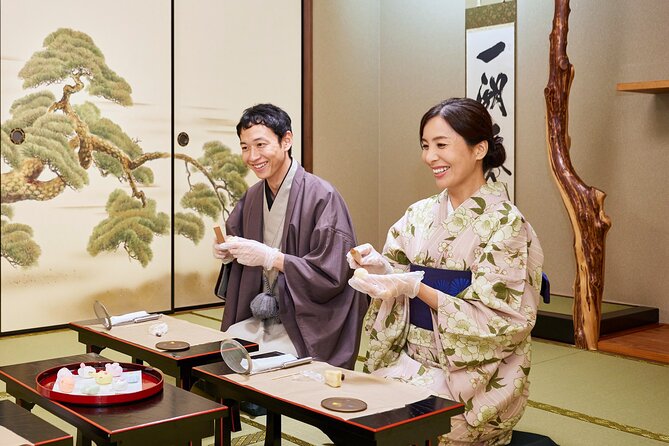
- Kimono wearing experience with choice of your outfit and accessories
- Wagashi workshop where you design sweets (often focusing on shaping and coloring)
- Matcha tea ceremony with instruction on etiquette and meaning
- Small group set-up for a more personal pace
- Guided photo moments in a traditional tearoom setting (tripods not allowed)
- A structured 2-hour flow that ties sweets and tea together
Asakusa Meet-Up at Tokyo Maikoya: Start Simple, Stay Present
You’ll meet at Kimono Tea Ceremony MAIKOYA Asakusa (1-chōme-12-2 Asakusa, Taito City) and the activity ends back there. The start time is 11:30 am, and it runs about 2 hours—long enough to feel like you did something real, not so long that you’re worn out before lunch.
Because this is built around a tea house schedule, the experience is very “show up ready” in spirit. Plan to arrive a few minutes early so you can settle in, especially if you’re also getting dressed and having your hair styled. You also want to know this is a near-public-transport kind of location, and transportation is not included—so build your route in advance.
There’s a nice rhythm here: sweets first, then tea. That order matters. When you’ve made something with your own hands, the matcha portion feels more intentional. Tea stops being a performance and becomes part of your meal.
You can also read our reviews of more tours and experiences in Asakusa.
Getting Dressed in a Kimono: Choice, Fitting, and That Final Hair Moment
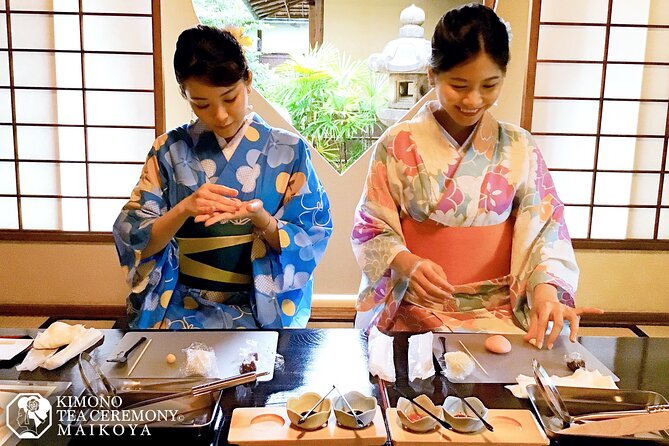
The kimono part is a major reason to book this, and it’s not just about throwing fabric on you. You’ll have a dedicated kimono wearing experience, and the team helps you get dressed properly. Multiple guests specifically mention being able to choose their kimono, plus accessories like the obi and hair details.
What I like about a kimono fitting done this way is that it’s practical, not stressful. You’re not stuck asking, What do I do with this sash? Someone walks you through it. And once your outfit is ready, you’re not thinking about your clothes anymore—you can focus on the experience in front of you.
Hair styling can be part of the fun too. Guests describe traditional up-dos being created, including flower-style hair accessories. You’ll look instantly more “Japan-mode,” and the photo opportunities feel natural rather than forced.
One small consideration: the ceremony and etiquette portion is structured, so keep your focus on listening and following instructions while you’re in kimono. It’s not the time to multitask or wander.
Making Wagashi at a Tea House: Shapes, Colors, and Matcha Pairing
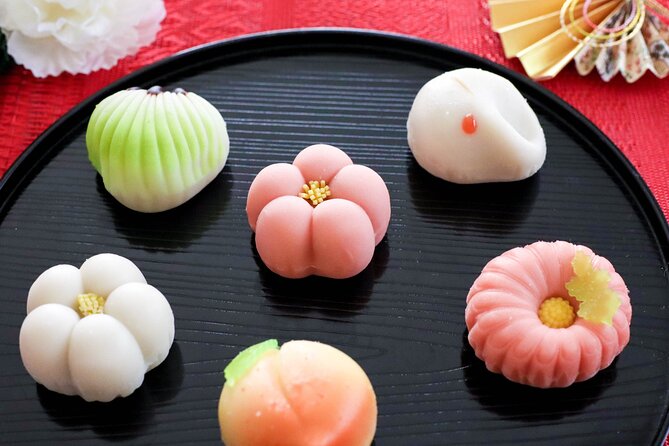
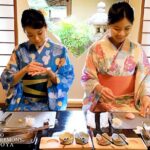
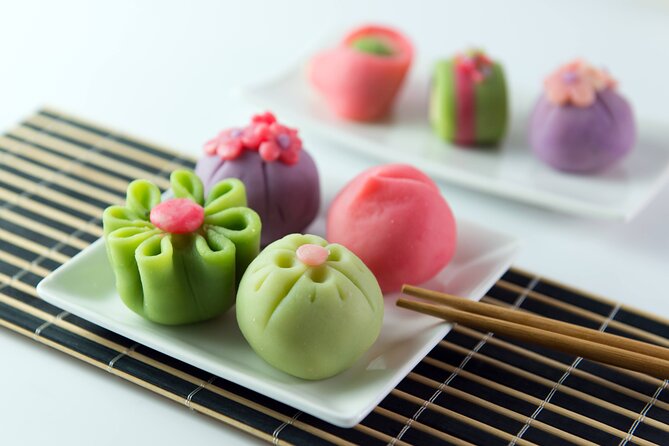
Now for the sweets: you’re making traditional Japanese wagashi, typically served with matcha. The session includes ingredients and utensils, so you’re not stuck watching someone else do it while you take pictures. The pace is set for a group, and you’re guided step by step.
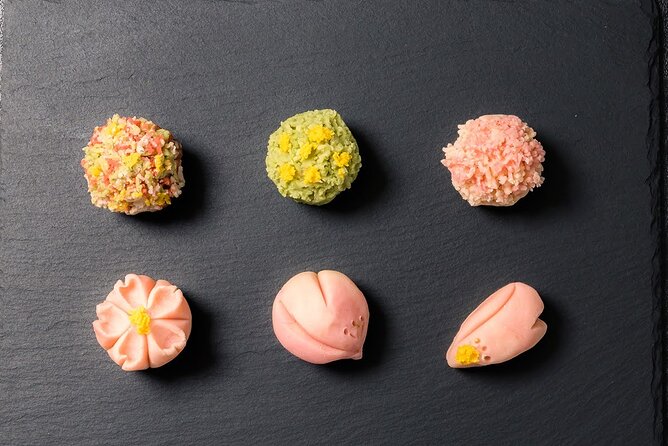
From the experience descriptions and guest feedback, you’ll likely get choices in how your sweets look—people mention selecting the shape and color of the wagashi. Some guests also share that you won’t be starting from raw dough in the way you might imagine from a home baking class. Instead, the process tends to be designed so you can meaningfully participate—often focusing on shaping, coloring, and creating something you can actually enjoy at the end.
This part is especially valuable if you want a hands-on souvenir that’s not plastic. Wagashi is delicate, and the workshop helps you understand why. You’re learning that presentation matters, not just taste. And since the sweets are meant to be paired with tea, you don’t just “make a snack”—you make a component of a ritual.
Also: the hands-on time is a good warm-up for the tea ceremony. Your brain shifts from sightseeing to doing something slow and careful. That change is the point.
Matcha Tea Ceremony Etiquette: Calm Rules That Actually Make Sense
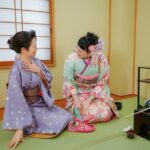
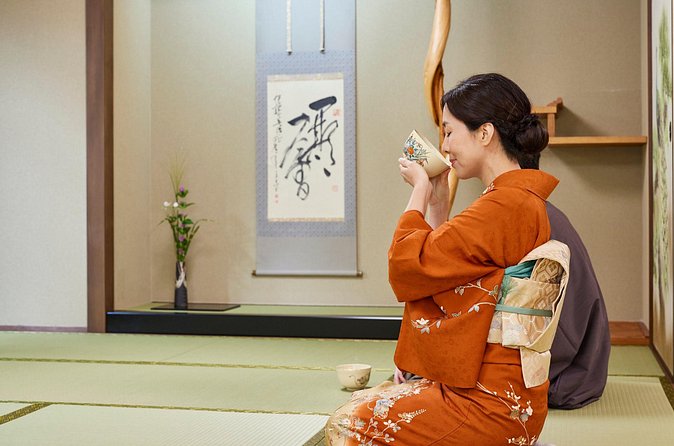
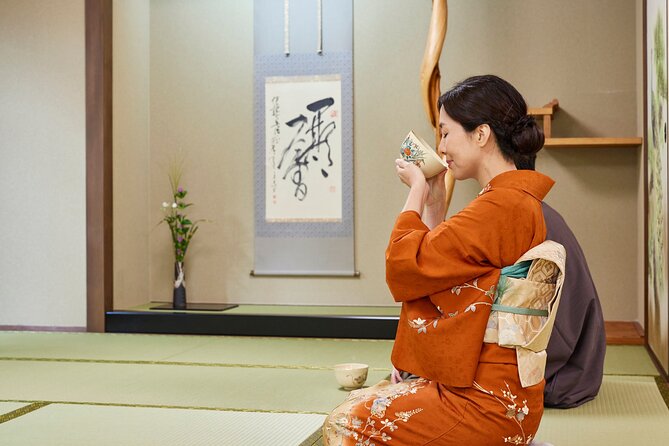
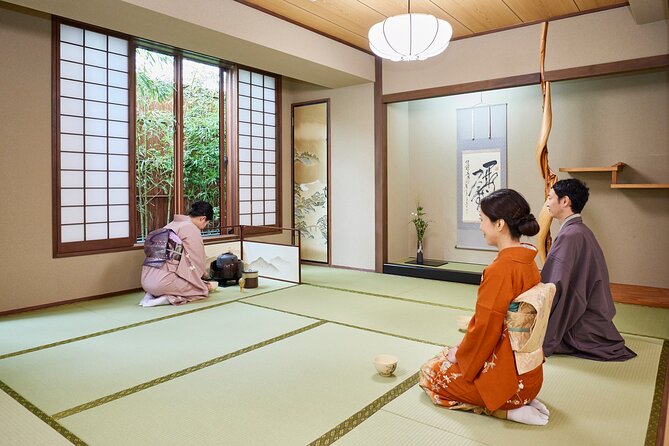
After sweets, you move into the authentic tea ceremony portion while wearing your kimono. The experience includes learning proper etiquette and the cultural meaning behind the steps. This isn’t just about being quiet. It’s about understanding why certain gestures matter and why timing is intentional.
What you’ll do centers on preparing and enjoying matcha green tea in a serene tearoom setting. Expect a guide to explain what’s happening as you go, plus a structured flow where you’re invited to observe and participate at the right moments.
One common theme from guest feedback: the hosts are patient during the sweets-making phase, and the ceremony itself is both informative and calming. If you’ve ever felt like Japanese rituals are either too formal or too vague, this format helps. You get context first, then you experience it, rather than trying to decode a ceremony on your own.
A practical note: photography rules can affect what you do during the ceremony. The tea master’s instructions come first, and photography/video may be limited during some parts. If you want a smooth time, treat the ceremony like the main event, not a backdrop.
Photo Time in Traditional Settings: Where to Look, What’s Allowed
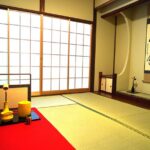
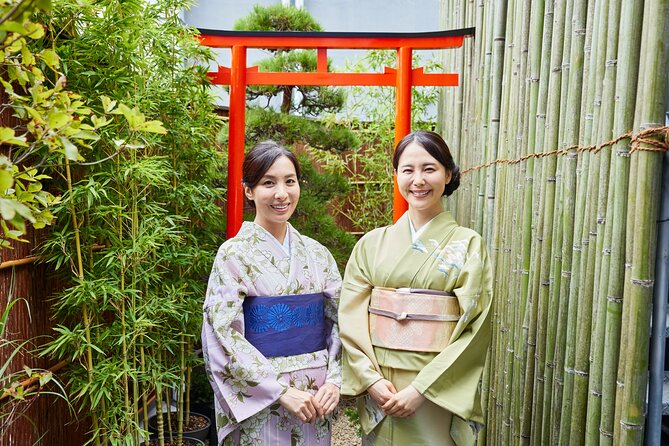
There’s usually dedicated time to take photos during the session. Guests mention photo moments in lovely settings, including outside terrace-style areas. Some people even describe props like an umbrella as part of the photo-friendly atmosphere.
Still, you need to respect the rules. Tripods are not allowed, and photography and video may be limited during parts of the ceremony. That means you’ll want to plan how you’ll shoot: bring a phone charged, use fast taps rather than long setup, and be ready to put the camera away when the tea master signals.
If you care about photos, here’s a useful mindset: grab the “kimono glow” moments during the photo segments, then fully participate during the etiquette segments. You’ll enjoy both more, and you’ll avoid that awkward feeling of interrupting something sacred to get the perfect shot.
Also, if you’re worried you’ll look awkward posing in kimono, don’t. The staff context helps a lot. People mention being guided to take pictures and being supported with their kimono styling first. By the time you’re outside, you’re already set up.
Price and Value: Why $112.29 Can Make Sense in Tokyo
At $112.29 per person, this isn’t a budget activity. So the key question is: what are you paying for, exactly?
You’re paying for a package that includes:
- Kimono wearing experience (with staff support)
- Wagashi ingredients and utensils
- Green tea and water
- A small-group format with instruction and guided photo opportunities
In Tokyo, you can spend money just to rent a kimono and still have no idea what to do once you’re dressed. Here, the kimono is tied directly to cultural practice: sweets making and then the tea ceremony. That structure is the value.
You’re also paying for time. The experience is about 2 hours, with an instructor-led pace that tries to keep things calm and personal. The group size is listed as a maximum of 10 for a calm, personal experience, and there’s also a note that the maximum can be 12. Either way, it’s not a giant tour crowd, which matters for getting help and staying comfortable in a ritual setting.
If you’re choosing between a cheap class that gives you minimal instruction and this one, I’d look at your style. If you like learning while you do, and you want the tea ceremony experience—not just a photo with matcha—this is strong value for Tokyo.
Who Should Book This, and Who Might Skip It
This experience fits best if you want a mix of hands-on making and calm cultural instruction. It’s a great match for:
- First-timers who want to understand tea ceremony basics without needing a background
- People who love food crafts and want something more meaningful than a snack tour
- Couples or families looking for an activity that feels special and photogenic without being chaotic
It’s also described as fun for a range of ages, including adult kids and families, as long as the age rule works for you. One important limitation: children under 7 cannot enter the tea ceremony venue, so you can’t book if your party includes a child under 7.
If you dislike structured etiquette or you want a completely free-form experience, you might find the tea ceremony portion more rules-based than you expect. But if you’re open to a guided pace, you’ll likely find it relaxing.
Practical Tips So You Enjoy the 11:30 Session
Before you go, a few practical checks that make the whole thing smoother:
- Plan to arrive a few minutes early at the Asakusa tea house meeting point.
- Bring your basic day needs (phone, water bottle is covered during the session, but you may want to stay comfortable before/after).
- If you’re sensitive to rules, remember: tripods are out, and the ceremony can limit video/photo at key moments.
- You’ll likely be in kimono and hair styling—so be mindful of how you move, and follow staff guidance.
One more tip: treat the activity as a focused block. It’s easy to tack this onto other sightseeing, but if you add too much right before, you’ll spend your kimono time rushing.
Should You Book This Tokyo Maikoya Workshop?
I think you should book it if you want an activity that’s genuinely interactive: you’ll make wagashi, you’ll learn matcha tea ceremony etiquette, and you’ll do it in a setting built for the experience. The kimono fitting isn’t a gimmick here—it’s part of how the tea and sweets connect.
Skip it if you’re mainly chasing bargain price or you only want casual sightseeing photos without following ceremony flow. Also skip if the photo restrictions would frustrate you, because you will be asked to follow the tea master’s instructions and some moments won’t be ideal for filming.
If you’re on the fence, a simple rule helps: if you’d be happy to spend two quiet hours learning and tasting rather than rushing between spots, this is a very good match.
FAQ
How long is the Sweets Making and Kimono Tea Ceremony at Tokyo Maikoya?
It runs for about 2 hours (approx.).
What time does the experience start?
The start time is 11:30 am.
Where do I meet for the tour?
You meet at Kimono Tea Ceremony MAIKOYA Asakusa at 1-chōme-12-2 Asakusa, Taito City, Tokyo 111-0032, Japan.
Is transportation included?
No. Transportation is not included, and there is no hotel pickup or drop-off.
What’s included in the price?
Included are the kimono wearing experience, ingredients and utensils for Japanese sweets, and green tea and water.
How big is the group?
It’s limited for a calm experience, with a maximum of 10 participants noted, and there is also a maximum of 12 travelers stated.
Can children under 7 participate?
No. Children under 7 cannot enter the tea ceremony venue, so you can’t make the reservation if that applies.
Are tripods allowed for photos or video?
No. Tripods are not allowed. Photography and video may be limited during parts of the ceremony.
Do I get confirmation after booking?
Yes. Confirmation will be received at time of booking.
Can I cancel for a full refund?
Yes, you can cancel for a full refund up to 24 hours before the experience’s start time (local time). If you cancel less than 24 hours before, it’s not refunded.