REVIEW · TOKYO
Japanese Traditional Sweets making and Tea Ceremony
Book on GetYourGuide →Operated by 日本文化体験 庵an東京 AN TOKYO · Bookable on GetYourGuide
Sweet art and tea, in one hour-and-a-half. You’ll shape colored bean paste into seasonal Nerikiri sweets, then enjoy a tea ceremony with Uji matcha and the chance to drink what you made.
What I like most is that you’re not watching. You’re making two Japanese sweets that match the season, and you’re using bean paste from Kyoto’s long-established shops, which matters because the flavor has to stand up to matcha.
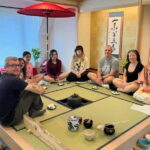
One consideration: the timing is tight, and the room can feel crowded, so if you need lots of back-and-forth or quiet to catch every word, plan to position yourself where you can see and follow the demo.
In This Review
- Key Things You’ll Actually Do Here
- Kyoto-Style Wagashi in 95 Minutes: The Point of This Class
- Finding AN TOKYO and How the Class Starts
- Making Nerikiri the Right Way: Seasonal Flowers and Kinton
- The Pace Break: When the Schedule Lets You Breathe
- Tea Ceremony with Uji Matcha: Grinding to the Final Sip
- What You’ll Eat and Drink: The Pairing Is the Whole Lesson
- Price and Value: Is $18 Worth 95 Minutes of Food Culture?
- Who Should Book This (and Who Might Not Love It)
- The Little Practical Tips That Improve Your Experience
- Should You Book This Class?
- FAQ
- What is the duration of this Japanese sweets and tea ceremony experience?
- What sweets will I make in the class?
- What matcha is used for the tea ceremony?
- Is the activity included in the price?
- Are there any extra charges?
- Can I get a refund if I cancel?
Key Things You’ll Actually Do Here
- Shape two season-matching sweets in Nerikiri style instead of just tasting
- Work with Kyoto-sourced white/red bean paste for a more balanced bite
- Grind matcha and learn what makes Uji matcha feel different
- Follow a real tea ceremony flow (not a slideshow pretending to be one)
- Pair your sweets with the matcha you made for a clean, simple finish
- Optional extras like a take-out box or a completion certificate if you want a souvenir
Kyoto-Style Wagashi in 95 Minutes: The Point of This Class
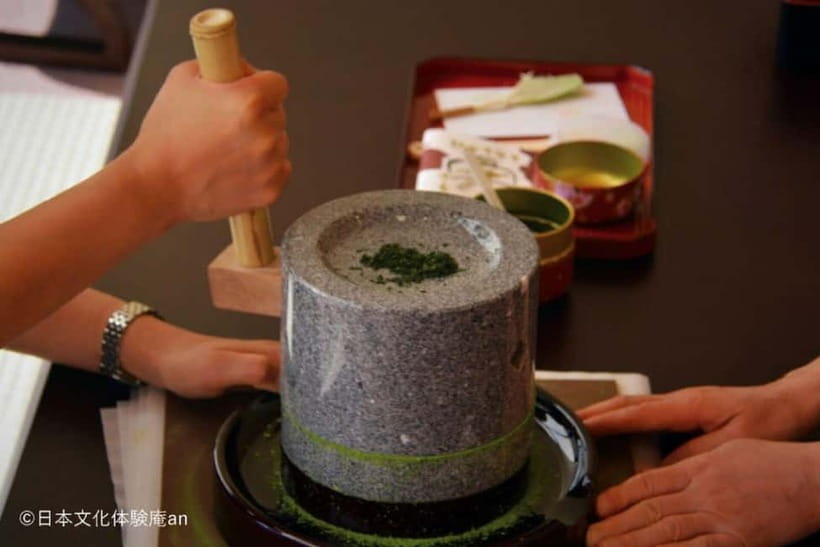
This experience is built for people who want a hands-on hit of Japanese food culture without clearing a whole afternoon. In 95 minutes, you get the full arc: explanation, making, a tea segment, then tasting what you created. It’s the kind of format that works well when you’re on a day full of walking and want something structured and satisfying at the end.
And the theme is practical: wagashi (traditional sweets) and tea aren’t separate here. Your sweets are designed to be eaten with matcha, and the class focuses on that pairing logic. That’s the value. You don’t just learn the look of Nerikiri. You learn why it tastes the way it does next to tea.
You can also read our reviews of more tours and experiences in Tokyo.
Finding AN TOKYO and How the Class Starts
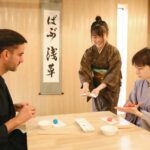
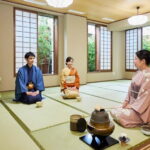
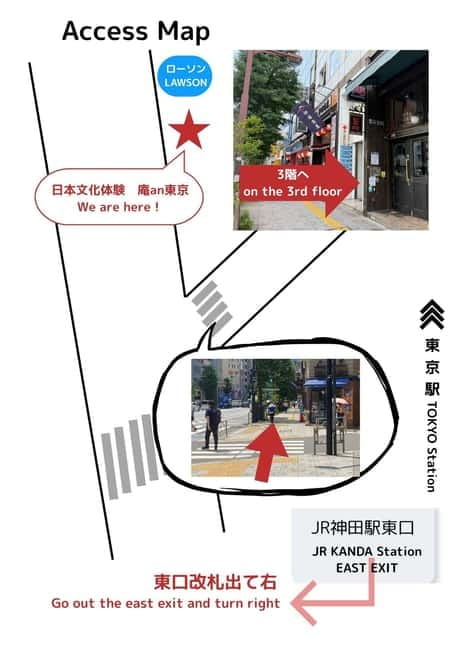
You’ll meet at AN TOKYO Japanese Culture Experience in Honshu (the listing gives coordinates near the area in Tokyo). Expect a check-in and then a quick intro before you touch the bean paste. The schedule is straightforward: you’ll start with an explanation of Japanese traditional sweets, then move into the first hands-on step.
The class language is Japanese, but English translation is provided as much as possible. If you’re worried about communication, don’t be. One review specifically praised the instructor’s demonstrations even when English wasn’t perfect. In practice, the “how” travels better than the “words.”
Also note the pace and the rules: they won’t hold the event for delays, and if you don’t participate, you won’t be allowed to enter. So arrive with enough buffer to feel calm, not rushed.
Making Nerikiri the Right Way: Seasonal Flowers and Kinton
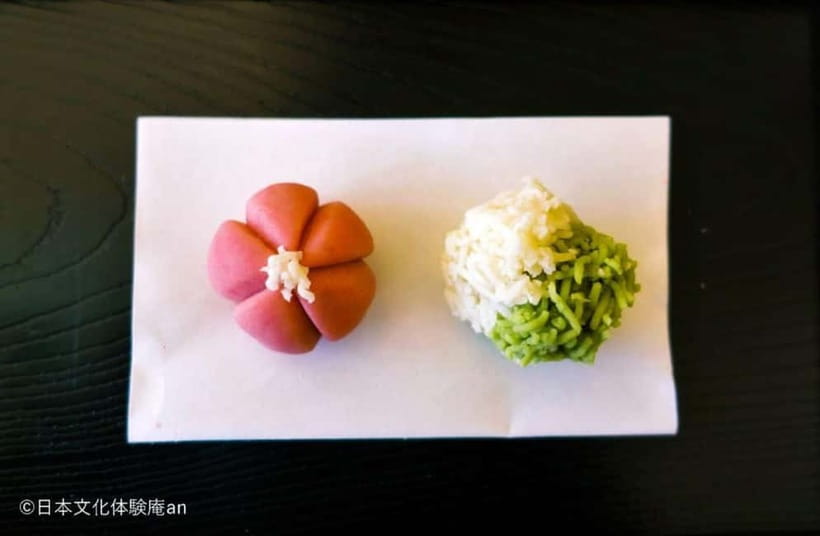
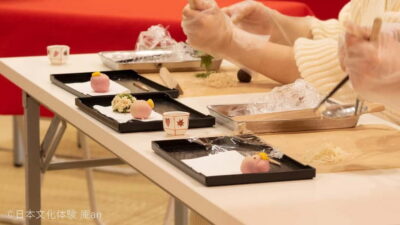
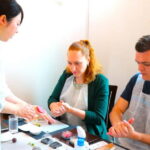
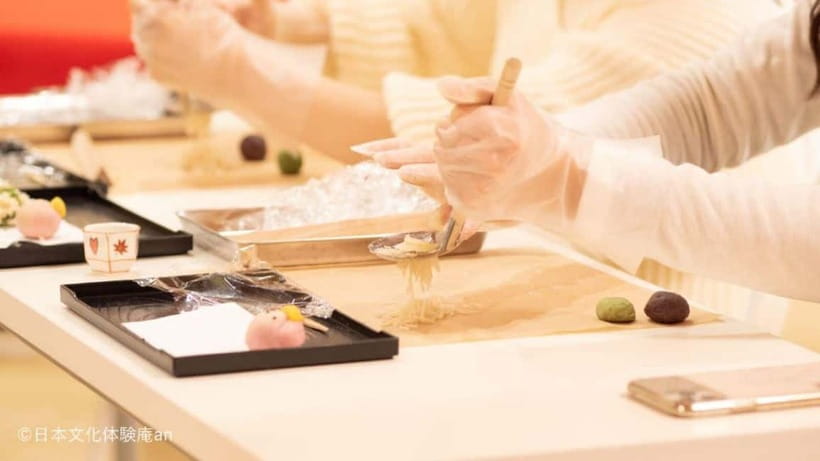
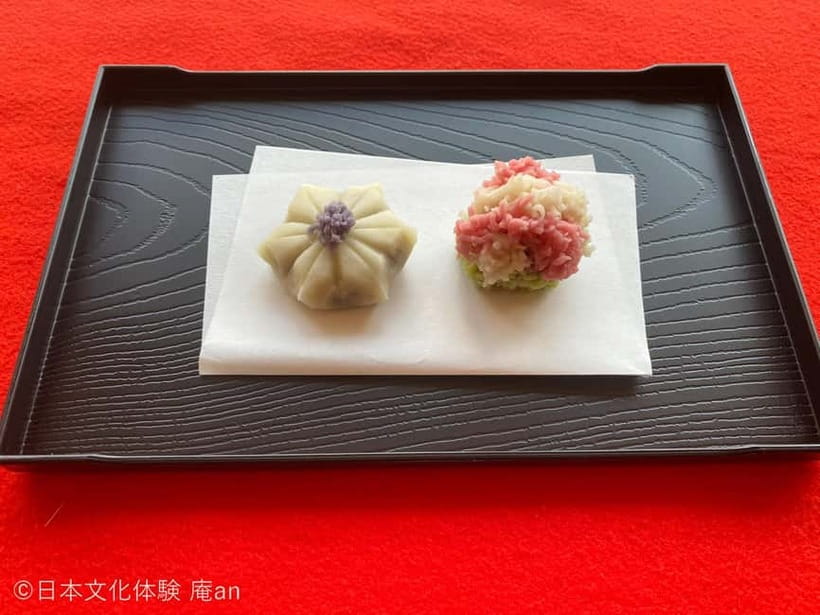
The first big activity is Nerikiri making. This is a higher-grade style of wagashi where colored white bean paste is shaped into seasonal forms—often flowers or fruit-like designs. Here, you start with the basics: coloring the white bean paste and then crafting it into a seasonal look.
What you’ll make matters. You don’t end up with one random sweet. You’ll make two Japanese sweets, and the shapes are intended to match the season. That seasonal matching is more than decoration. It helps wagashi feel like a calendar you can eat: spring, summer, autumn, winter each get their own visual cues and flavor balance.
You’ll also be guided through a specific style step listed as Kinton Nerikiri making. In plain terms, that means you’re not just pressing and rolling. You’re following a method that creates a more refined form. If you like cooking classes, you’ll appreciate the “technique first” approach.
A helpful detail here is the ingredient sourcing. The class uses white/red bean paste produced by Kyoto’s long-established shops. Even if you’ve never tasted Kyoto-style wagashi before, you can usually tell the difference: smoother texture, a steadier sweetness, and a better match with tea. That’s important because matcha isn’t sweet. Your sweet has to do its job without overpowering the tea.
The Pace Break: When the Schedule Lets You Breathe
After the Nerikiri work, there’s a scheduled break. The timing goes roughly like this: you begin and make your sweets early in the session, then there’s a break around the midpoint before the tea segment starts.
This matters more than you might think. Making shaped sweets takes focus, and tea ceremony instruction takes focus too. The break helps you reset so you can actually enjoy the second half instead of feeling like your brain is still stuck in “bean paste mode.”
If you’re the type who gets impatient when things run late, this schedule is your friend. It’s time-boxed and clear.
Tea Ceremony with Uji Matcha: Grinding to the Final Sip
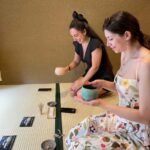
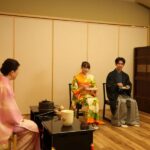
The second half is about tea—especially Uji matcha. The program includes a matcha grinding demonstration, and then you’ll move into the tea-ceremony experience. The sequence is designed so you understand tea as a process, not just a beverage.
You’re told this is single-origin special matcha, which is exactly the kind of phrase that usually means the tea isn’t meant to taste generic. In practice, single-origin matcha tends to show a more specific character. And since your sweets are already made to be seasonal and carefully balanced, you get a more meaningful pairing instead of a random dessert-and-tea combo.
Once you prepare the matcha, you’ll drink it with the sweets you made. This is where the class earns its keep. The instructor isn’t just teaching you how to perform a ritual. You’re actually tasting how the sweetness and the tea work together.
And since the activity is Japanese-language with English help as much as possible, visual instruction is key. Based on the feedback, the instructor’s demonstrations are doing a lot of the communicating, even when English isn’t flawless.

What You’ll Eat and Drink: The Pairing Is the Whole Lesson
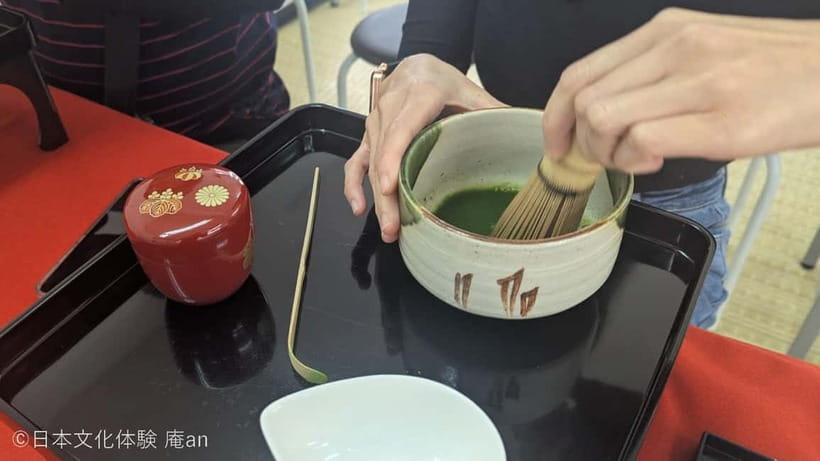
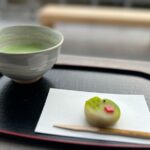
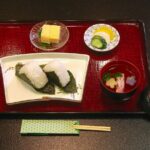
At the end, you eat and drink what you made. You’re pairing your own Nerikiri sweets with the matcha from the ceremony.
Here’s why that pairing is such good learning: matcha has structure. It’s not just “green tea.” It can feel bitter, grassy, creamy, and sometimes bold, depending on how it’s prepared. Your wagashi has to be balanced enough that it doesn’t just taste like sugar sitting on top of tea.
The program explicitly points out that the sweetness of the high quality white/red bean paste balances the matcha. That’s the practical goal. You’re not chasing sweetness. You’re chasing harmony.
If you’re thinking, I’m only here for dessert, you might still walk away with a new appreciation of tea. That’s the sneaky win.
Price and Value: Is $18 Worth 95 Minutes of Food Culture?
The price is $18 per person for 95 minutes, and it includes both main parts: Japanese traditional sweets making and tea ceremony. That’s strong value for two reasons.
First, you’re getting materials plus instruction plus tasting. This isn’t a passive workshop where you only watch and then leave. You’re shaping sweets and drinking what you prepare.
Second, the ingredients and theme are specific: Kyoto bean paste and single-origin Uji matcha. Those details cost money, even when a class keeps things simple. You’re not paying for generic snacks.
What might cost extra:
- Sweets take-out box: 100 JPY (if you want to bring some home)
- Experience completion certificate: 300 JPY (with the option to include your name; otherwise there’s a blank space)
If you’re price-checking, think of it like this: you’re paying for the making experience, the tea step, and the structured tasting. The extras are just that—extras.
Who Should Book This (and Who Might Not Love It)
This class fits best if you:
- Want a short, structured cultural food experience
- Like hands-on craft, especially shaping and coloring
- Care about learning the pairing between wagashi and tea
- Are comfortable following instruction even if English translation is limited
It might be less ideal if:
- You dislike crowded rooms and need to hear every word clearly
- You get frustrated when a class doesn’t stop for individual pacing
- You’re expecting a long, conversational lecture rather than a guided making process
One review called out that the instructor kept going and the class felt too full to hear well. That doesn’t mean everyone will struggle—but it’s a real flag if hearing is your priority. In that case, you’ll want to choose a session where you can sit close enough to watch clearly.
The Little Practical Tips That Improve Your Experience
These are the small things that actually help:
- Arrive early enough that you’re not stressing about being late. They won’t wait.
- Watch the hands, not just the words. Even when English is limited, the demo is meant to carry you.
- Take your time during tasting. Your brain will still be processing the making, so give yourself a minute to enjoy the pairing instead of rushing to finish.
If you like collecting small memories, ask about the take-out box or the completion certificate. The certificate is nominative if you provide names in advance; otherwise it uses a blank space.
Should You Book This Class?
Yes, you should book it if you want a compact, hands-on wagashi and tea experience with clear structure. The core strengths are simple: you make two Nerikiri sweets, you learn a genuine tea ceremony flow with Uji matcha, and you taste the results as an intentional pairing.
Skip it only if you know you’ll be unhappy in a crowded room or you need lots of spoken English conversation. Otherwise, this is the kind of class that turns “I like Japanese sweets” into “I can explain why they taste right with tea.”
FAQ
What is the duration of this Japanese sweets and tea ceremony experience?
The experience lasts 95 minutes.
What sweets will I make in the class?
You’ll make two Japanese traditional sweets that match the season, starting with Nerikiri.
What matcha is used for the tea ceremony?
The class uses single-origin special Matcha and specifically mentions Uji matcha for the tea ceremony.
Is the activity included in the price?
Yes. The price includes Japanese Traditional Sweets making and Tea Ceremony.
Are there any extra charges?
A sweets take-out box costs 100 JPY. A completion certificate costs 300 JPY.
Can I get a refund if I cancel?
You can cancel up to 24 hours in advance for a full refund.