REVIEW · UJI
Kyoto: Tea Museum Tickets and Matcha Grinding Experience
Book on GetYourGuide →Operated by Chazuna · Bookable on GetYourGuide
Grinding matcha in Uji feels like a small ritual. This Chazuna experience pairs matcha grinding with hands-on Uji tea history exhibits, so you’re not just watching from the sidelines.
The main thing I’d plan around is timing: you’re expected to arrive 15 minutes early, and participation can be refused if you’re more than 30 minutes late.
In This Review
- Key things I’d plan for
- Chazuna in Uji: the tea-town setting that makes it click
- The 1-hour session: where you start and how not to lose time
- History Room magic: the 10-yen coin and what to watch on the screens
- Matcha grinding at the tea mill: the hands-on moment you’ll remember
- Whisk, brew, and taste: learning matcha the instructor way
- The museum beyond the workshop: touch exhibits and tea “try it” learning
- The 2:45 p.m. summer-only twist: chilled matcha with ice cream
- Price and value: what $23 buys you in Uji
- Best for matcha lovers, curious food travelers, and first-timers
- Making it a full Uji half-day: pair it with Byodoin and the market
- Should you book the Chazuna tea museum and matcha grinding experience?
- FAQ
- How long does the matcha grinding experience take?
- What’s included with the ticket price?
- Where do I meet for the class?
- What languages are available during the workshop?
- What happens if I arrive late?
- Is this experience wheelchair accessible?
- Can I cancel and get a refund?
Key things I’d plan for
- Matcha grinding at a tea mill with a view of tea fields and gardens
- History Room moments like the huge 10-yen coin with Byodoin Phoenix Hall
- Touchable, digital exhibits including a large 4K screen with modernized townscape drawings
- Brew matcha with a tea instructor (Japanese or English) right after grinding
- Summer-only 2:45 p.m. option with ground matcha poured over ice cream and enjoyed cold
Chazuna in Uji: the tea-town setting that makes it click
Uji is the kind of place where tea is more than a product. The Chazuna program takes advantage of that. You’re in the Historical Park of Tea and Uji Town, so the experience feels grounded in the actual town where Uji tea culture lives.
What I like is how the class doesn’t treat matcha as a gimmick. You start with context, then you move to a physical process: grinding the leaves into powder and preparing what you made. The result is that your final cup has meaning. When you taste your matcha, you understand what you just did and why it matters.
Another plus: Uji itself is easy to build around. After your class, you can continue into town on foot, including the Byodoin area and the main market street (both are described as easy to reach from the center). If you’re only in Kyoto for a short time, this is one of the more practical ways to get a true tea-focused morning or afternoon without stretching your whole day.
You can also read our reviews of more tours and experiences in Uji.


The 1-hour session: where you start and how not to lose time
Your session runs for about 1 hour, and it’s structured like a guided workshop rather than a free-form museum wander. You’ll meet at the 1F reception area at Chazuna, in the Historical Park of Tea and Uji Town.
Getting there is straightforward by public transit. From Uji Station on the Keihan Uji Line, it’s about a 4-minute walk. From the South Exit of Uji Station on the JR Nara Line, it’s around a 12-minute walk. If you’re driving from Osaka, you’ll exit via Keiji Bypass Uji Nishi IC, then take the side road toward Uji (about 10 minutes). From Tokyo or Nagoya, you’ll typically turn left at the traffic light at Keiji Bypass Uji-higashi IC Exit (about 3 minutes).
Big practical advice: arrive early. The instruction is clear that you should show up 15 minutes before your reservation. If you miss the start, entry can be refused after 30 minutes. So build in a little buffer—Uji is walkable, but you don’t want to rush the first part of the experience.
History Room magic: the 10-yen coin and what to watch on the screens
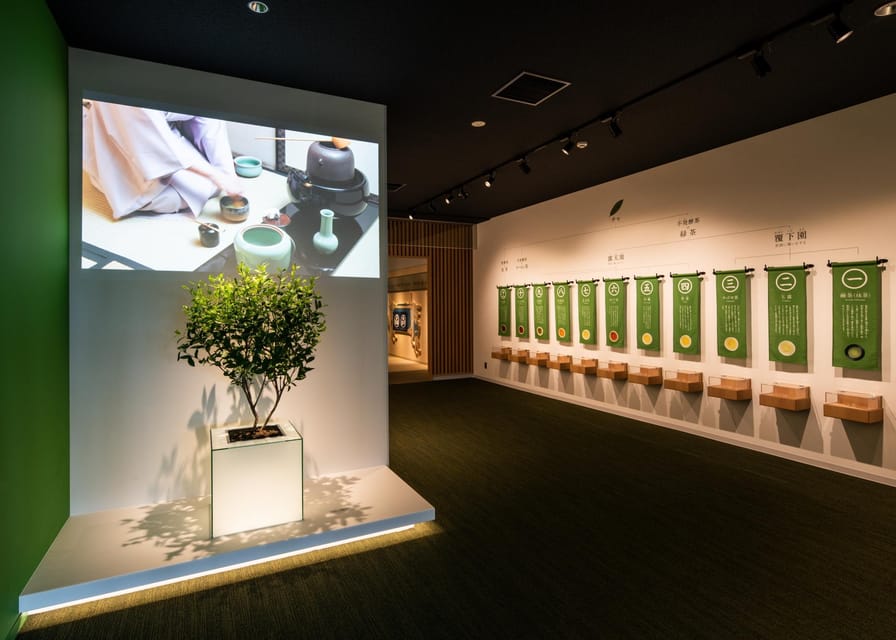
Before you touch anything tea-related, you get a short history and culture orientation in the History Room. It’s designed to make Uji tea feel understandable, not abstract.
A memorable first visual is a huge 10-yen coin featuring the Byodoin Phoenix Hall, which helps orient you fast to the spiritual and historical links between the region and tea culture. Then you move into digital exhibitions that teach you through modern formats. One standout element is a large 4K HDTV digital screen showing modernized townscape drawings (Meisho-zue). Even if you don’t read every word, the format helps you grasp how places and tea production connect over time.
There are also interactive, touch-friendly displays. This matters because tea history can become lecture mode if the museum is too static. Here, you’re meant to interact—so you remember what you learned when you’re grinding matcha later.
One consideration: the museum-and-history portion is short. Think of it as a focused primer that leads into your hands-on work. If you love museums and want a long browse, plan extra time after class to explore at your own pace.
Matcha grinding at the tea mill: the hands-on moment you’ll remember
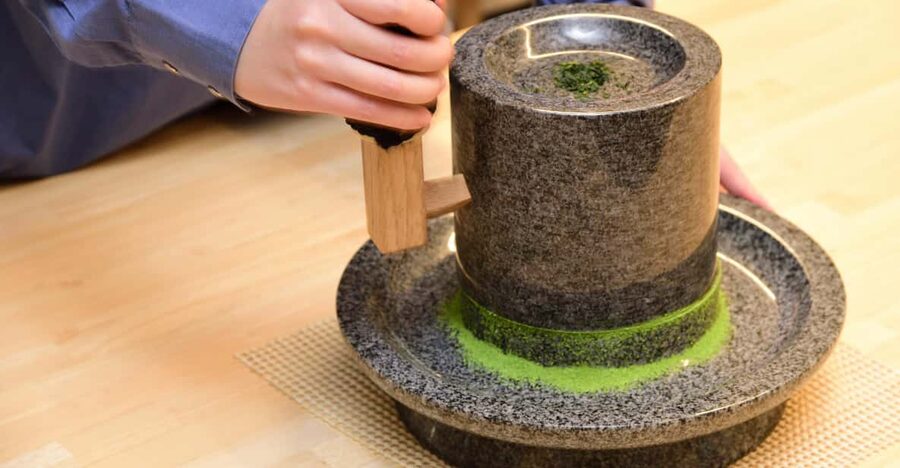
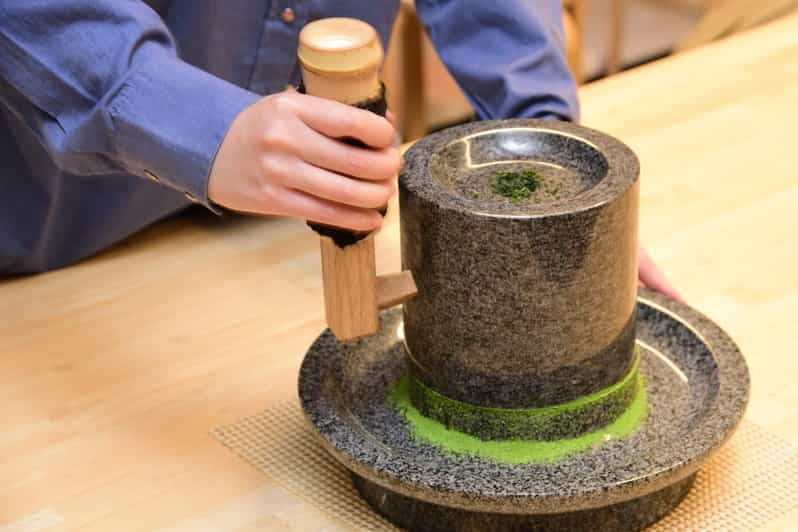
Then comes the main event: grinding the leaves. You’ll make matcha from tea leaves using a tea mill, turning them into powder. The experience is guided, so you’re not just given equipment—you’re taught how the process works and what to pay attention to.
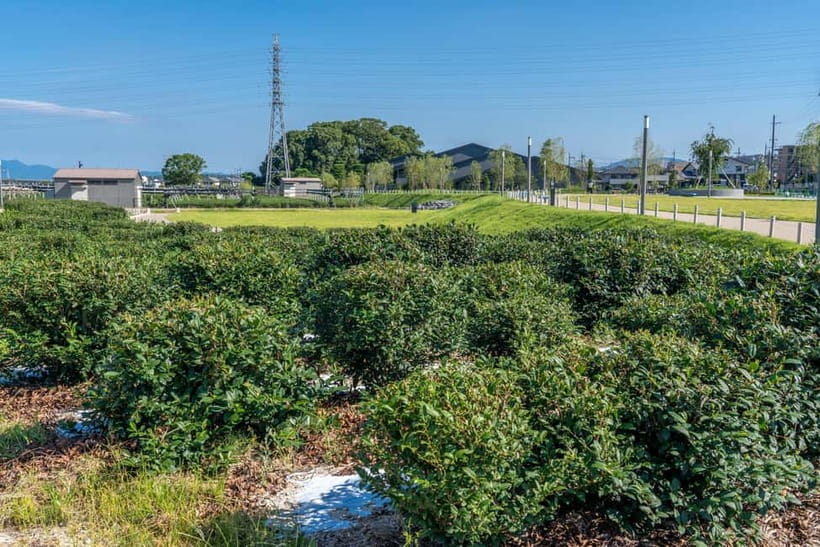
What I appreciate is the sensory side. Freshly ground matcha has a smell that’s different from matcha you buy in a jar. The workshop is designed so you can smell that shift while you’re doing the work. You’ll also get to enjoy the views of tea fields and gardens, which makes the session feel like more than a classroom task.
Expect a real workshop rhythm. You follow the instructor, grind, and move on to brewing. Your role is active from start to finish. That’s why people rate this experience so highly: you leave with muscle memory and a better sense of how matcha transforms from leaf to powder.
And it’s not just about grinding. The class frames the grinding as the key step that influences how the final drink tastes. Once you learn that, you’re more likely to recognize quality differences when you buy matcha in stores later.
Whisk, brew, and taste: learning matcha the instructor way
After grinding, you’re guided by a Japanese tea instructor (English support is available). The goal is simple: learn how to brew matcha using what you just ground.
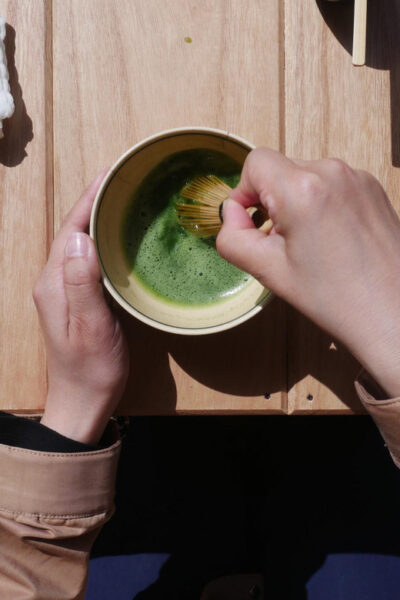
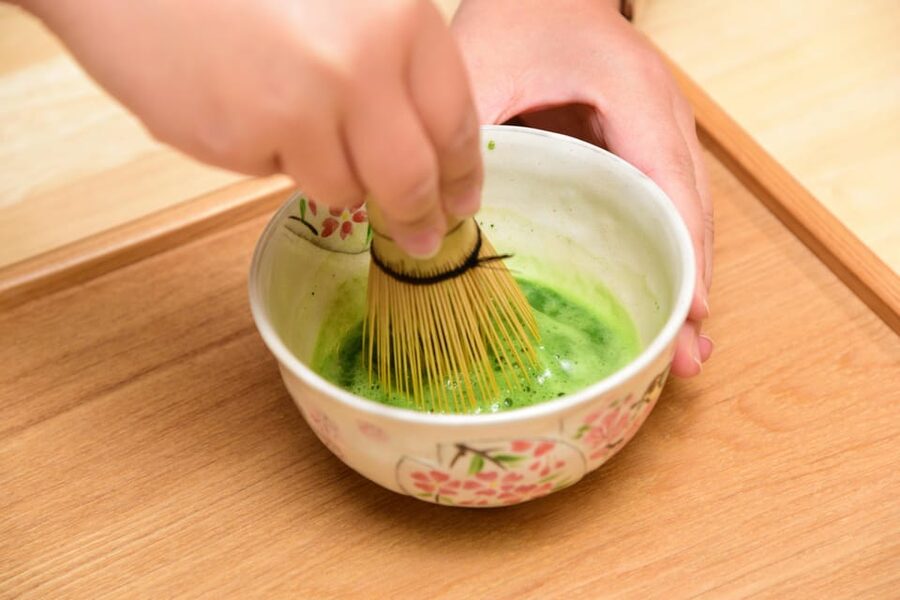
This part is where technique matters. Matcha isn’t just mixed like instant powder. You learn the method the instructor uses and you apply it. You’ll also have a chance to taste what you made, which is the quickest way to understand what you did right—and what you could repeat better next time.
A lot of the instructor personality comes through in how the class is described. Some guides are reported as funny and playful with explanations, while others focus on clarity and step-by-step support. Either way, the consistent theme is that you’re not left alone with the tools.
If you’ve done any tea ceremony-style activities before, you’ll recognize the logic, but this workshop keeps the pacing tighter. You don’t need a background in tea culture to participate. The instructor brings you through the steps and helps you get to the cup.
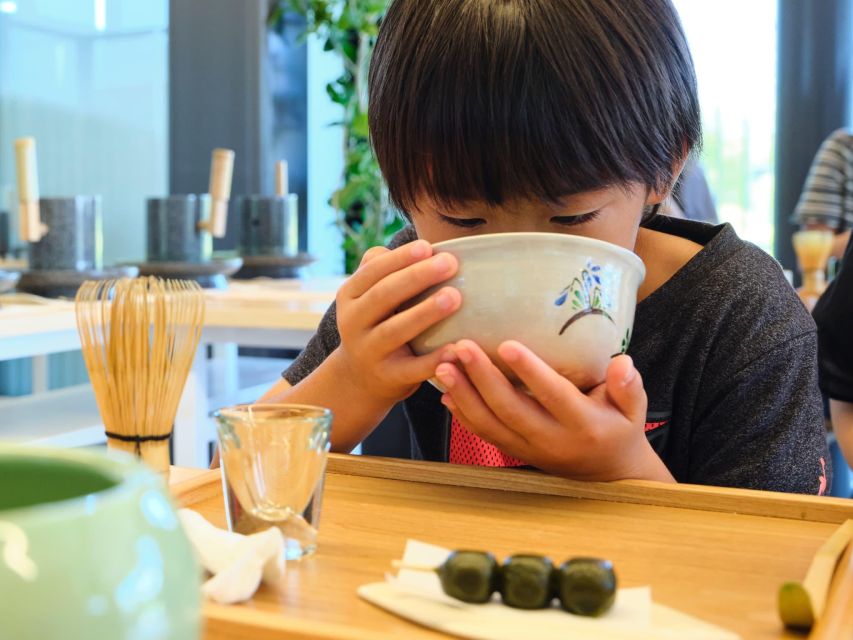
Practical tip: when you taste, slow down for a moment and notice differences between aroma, bitterness, and smoothness. Your workshop experience sets you up to read the drink instead of just chugging it.
The museum beyond the workshop: touch exhibits and tea “try it” learning
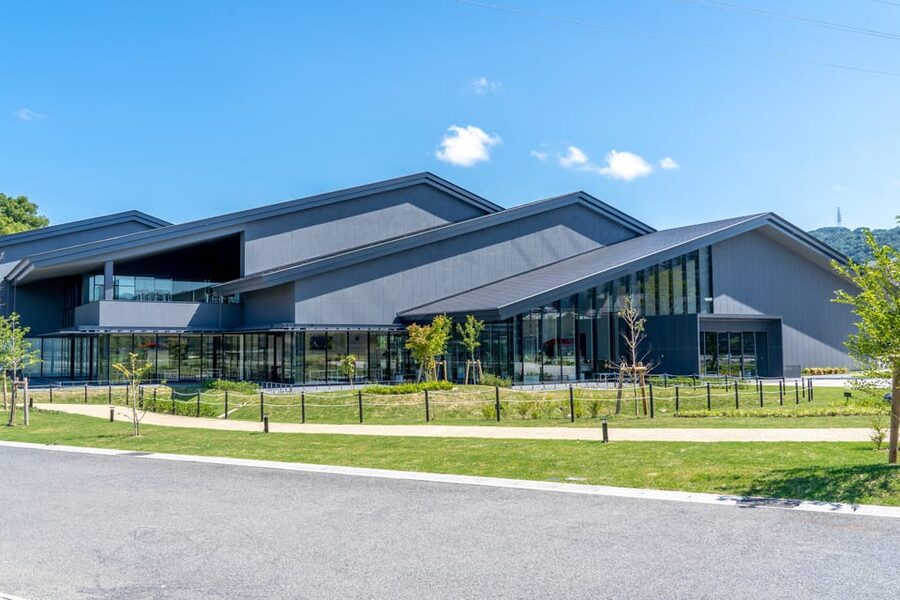
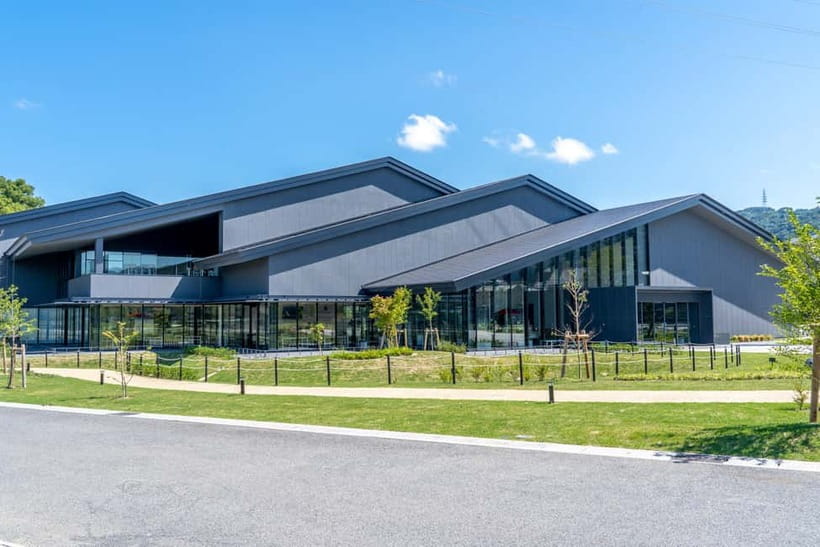
The ticket includes museum entry, and that helps you make sense of what you just did. The museum is described as short but information-rich—so you’re not stuck for hours, but you are given context that deepens the experience.
You’ll see videos and displays about the inception and production of Uji tea at Chazuna. You’ll also find digital exhibition elements that are meant to be touched and experienced. That matters because tea learning often fails when it stays visual-only. Here, you get prompts that lead your attention.
There’s even a photo spot experience built into the museum. One example mentioned is a playful area where you can “swim in matcha.” It sounds silly until you realize it changes the tone of the space—you leave with pictures and a lighter mood, not just notes in a tiny booklet.
If you want the most value from the museum part, don’t treat it as a quick photo stop. Hit the interactive displays first, then watch the videos while you’re still thinking about grinding and brewing. You’ll connect the dots faster.
The 2:45 p.m. summer-only twist: chilled matcha with ice cream
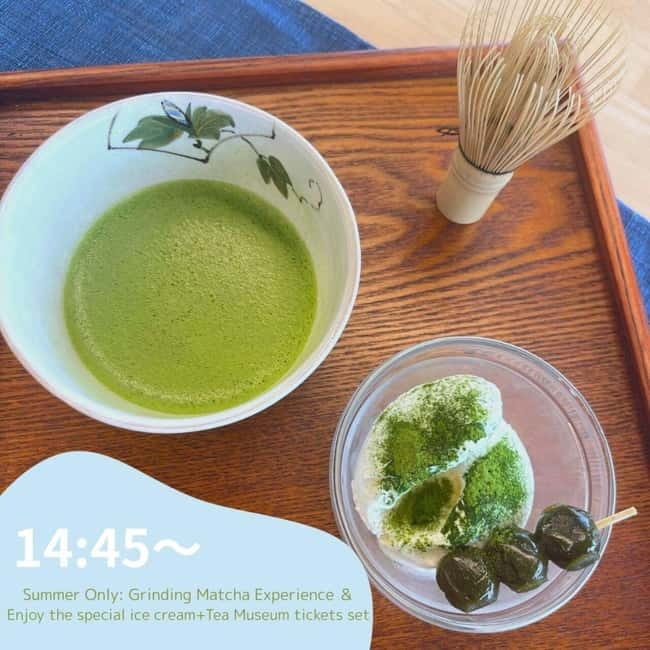
There’s a special program that’s only available in summer, and it runs at 2:45 p.m. only. In that slot, the restaurant offers a cool treat where you can pour your ground matcha over ice cream.
The way it’s described is fun and practical: you can pour the matcha over ice cream and eat it, or pour it and drink it cold. It’s a nice way to see matcha in a different texture and temperature than the warm cup you brew during the workshop.
If you’re traveling outside summer, you likely won’t have this extra component. But even without it, the grinding-and-brewing part gives you the core experience.
Price and value: what $23 buys you in Uji
At about $23 per person for an around 1-hour session, this is best viewed as a workshop plus museum ticket, not just a museum entry.
Here’s what makes it feel fair:
- You get a guided hands-on matcha-making experience, including grinding and instruction.
- You also get museum access in the same center, so your learning continues right away.
- Your instructor support includes Japanese and English, which lowers the risk that you’ll miss key steps.
Could you spend $23 on a standalone matcha drink and snacks? Sure. But that isn’t the same experience. This workshop-style format gives you skill you can repeat at home: grinding isn’t always practical for most people, but the brewing method is.
One caution on value: the included museum time may feel short if you’re expecting a long, slow browse. But that’s also why the overall program fits neatly into a day trip. You can combine it with Uji sightseeing afterward without feeling trapped by the schedule.
Best for matcha lovers, curious food travelers, and first-timers
This is a strong fit if you:
- love matcha and want to learn how it changes from leaf to powder
- want a tea-focused experience that’s hands-on, not lecture-heavy
- are new to Uji tea and want a clear starting point
It’s also a nice choice for couples and small groups because the activity is interactive and guided. People describe the staff as patient and helpful, with instructors giving clear support while keeping the mood light.
If you’re the kind of traveler who wants long museum hours or you hate any sense of schedule, you may find the pace tight. The program is designed to move efficiently from history to grinding to brewing. Plan your expectations accordingly.
Making it a full Uji half-day: pair it with Byodoin and the market
One of the best parts of choosing Uji is how easy it is to extend your day after the class. Many people pair the Chazuna experience with a walk to major landmarks, including Byodoin and the nearby main market street for matcha treats and souvenirs.
So here’s my practical approach: treat the workshop as your anchor activity, then give yourself time afterward to wander. You’ll enjoy the food and the shopping more because you’ll understand what you just learned. Even basic matcha desserts start to make sense when you know what went into the powder.
Should you book the Chazuna tea museum and matcha grinding experience?
Yes, I’d book it if you want a short, high-impact tea experience in Uji. The combination of grinding your own matcha, learning to brew it under instruction, and getting museum context makes the ticket feel like more than a pass to a room with displays.
Book it especially if you’re traveling with matcha enthusiasm or you want an authentic activity that feels different from standard Kyoto sightseeing. Just arrive on time, go in ready to participate, and keep extra time after the class for Uji’s streets—because that’s where your new tea knowledge turns into real fun.
FAQ
How long does the matcha grinding experience take?
The experience runs for about 1 hour.
What’s included with the ticket price?
Your ticket includes a Chazuna Museum entry, the matcha making experience, and instructor guidance.
Where do I meet for the class?
Meet at the 1F reception area at Chazuna, located in the Historical Park of Tea and Uji Town.
What languages are available during the workshop?
The instructor team provides Japanese and English support.
What happens if I arrive late?
You should arrive 15 minutes before your reservation. Participation can be refused if you are more than 30 minutes late.
Is this experience wheelchair accessible?
Yes, the experience is listed as wheelchair accessible.
Can I cancel and get a refund?
Yes. You can cancel up to 24 hours in advance for a full refund.