REVIEW · CHENGDU
Half-day Private Mahjong course in Local Tea House
Book on Viator →Operated by Chilli Cool China · Bookable on Viator
Chengdu smells like spice and tea. This half-day private class pairs a spice market walk with a Mahjong lesson in a cozy tea-house setting, taught in clear, friendly English by Lance and the Chilli Cool China team. I like that it feels local from minute one, starting in a real neighborhood rather than a staged demo.
I also like the practical flow: you get hotel pickup and drop-off, plus snacks and tea while you learn. One caveat: this is not a sightseeing bus tour, so if you’re hunting for only big-name landmarks, the value here is the market-and-game focus, not the view.
In This Review
- Key things I’d plan around
- Private Mahjong in Chengdu: What You Actually Get in 3–4 Hours
- Meeting at Zhangjia Alley and Using Hotel Pickup Smartly
- Chilli Cool’s Kitchen Spice Market: Learn Before You Sit Down
- The Tea House Mahjong Lesson: Rules That Actually Stick
- When Your Group Is Small: How the Experience Handles It
- Food, Tea, and Snacks: Included in a Way That Helps the Day
- Price and Value: Is $60 a Smart Deal?
- Who This Mahjong and Spice Course Fits Best
- Small Practical Tips Before You Go
- Should You Book This Half-Day Mahjong Course?
- FAQ
- How long is the Mahjong course?
- Is this tour private or shared?
- Do I get hotel pickup and drop-off?
- What’s included in the price?
- Can I participate if I’m new to Mahjong?
- What are the age requirements?
- Is it free to cancel?
Key things I’d plan around
- A private setup that works for small groups: it’s just your group with an English-speaking guide, so you can go at your pace.
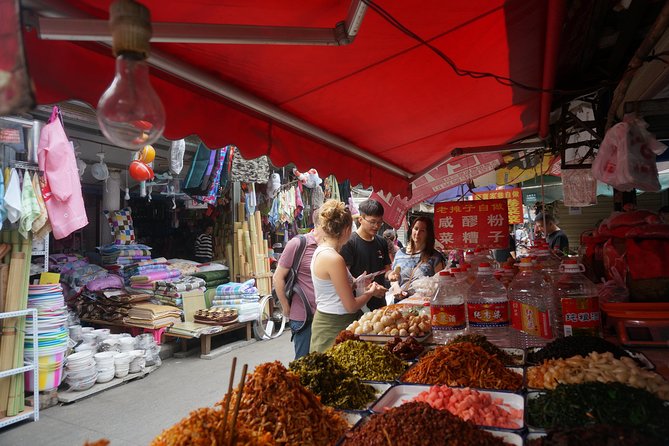
- Spice market first, game second: you learn what’s used in Sichuan cooking before you start thinking strategically.
- Tea-house learning with food and drinks included: afternoon tea, snacks, bottled water, and coffee and/or tea keep the lesson comfortable.
- Rules taught in an easy way: you’re guided step-by-step, then tested with a local tea moment.
- Easy logistics in Jinniu District: meeting at Zhangjia Alley, with the activity ending back there.
Private Mahjong in Chengdu: What You Actually Get in 3–4 Hours
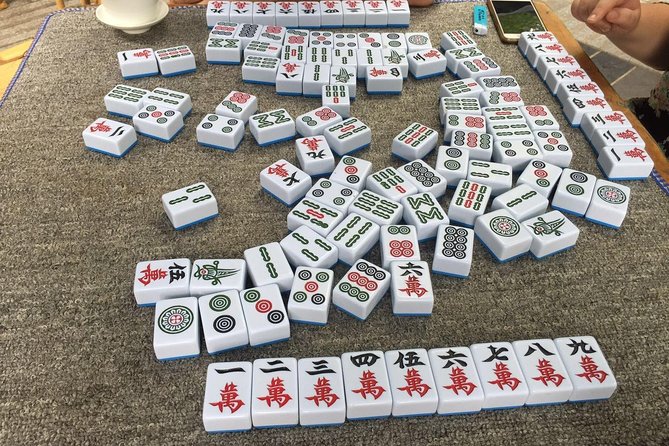
This half-day experience is built for people who want something hands-on in Chengdu—less looking around, more doing. You’re signing up for a private Mahjong course that lasts about 3 to 4 hours, so it fits nicely into a packed travel schedule without eating an entire day.
The best part is the combo. You start with a local spice market visit where you’re shown different Sichuan spices and ingredients used in Sichuan cuisine. Then you shift from “tasting and spotting ingredients” to “tasting and thinking” with a Mahjong lesson in a room with Chinese character. That order matters: your brain gets warmed up with sensory learning first, and then the game feels like a natural next step rather than a totally separate activity.
If you want a class that’s friendly for first-timers, this is the kind of structure that helps. You learn the rules in an easy way, and the guide checks understanding with a tea moment at the end—so you leave with more than just a basic explanation.
You can also read our reviews of more tours and experiences in Chengdu.

Meeting at Zhangjia Alley and Using Hotel Pickup Smartly
The tour starts and ends at Zhangjia Alley, Jinniu District, Chengdu. That means you’re not stuck trying to figure out a complicated handoff point far from where you’re already staying.
What makes the logistics easier is hotel pickup and drop-off. In practice, this is the difference between doing something local and spending half your time coordinating taxis. The experience also uses a mobile ticket, which should help you move through the start smoothly once you’re at the meeting point.
Here’s a practical way to prepare: when you confirm your booking, make sure your pickup details are clear. One review specifically praised quick contact from the operator to clarify hotel location for pickup. If you do the small admin step quickly, your day usually runs without friction.
Chilli Cool’s Kitchen Spice Market: Learn Before You Sit Down
Stop 1 is the heart of the cultural flavor: Chilli Cool’s Kitchen (the name used for this experience) leads you into an authentic local spice market first. This is where you’ll explore the market and learn about different species of Sichuan spices and ingredients that show up in Sichuan cuisine.
I like this approach because it gives you context you can use immediately. After the class, you’re more prepared to notice how Sichuan cooking is built—what ingredients are important, and how local dishes connect to what you saw in the market. Even if you don’t cook, this kind of ingredient literacy makes meals feel less like randomness and more like a story with characters.
There’s also a real comfort to starting with movement and sensory shopping. You’re not forced to sit through a lecture right away. You get to look, ask, and taste along the way because food tasting is included, along with bottled water and snacks.
A small note on expectations: this is a market-focused stop, not a museum-style route. Wear shoes you’ll be happy walking in, especially if you tend to wander slowly or stop often to look at stalls.
The Tea House Mahjong Lesson: Rules That Actually Stick
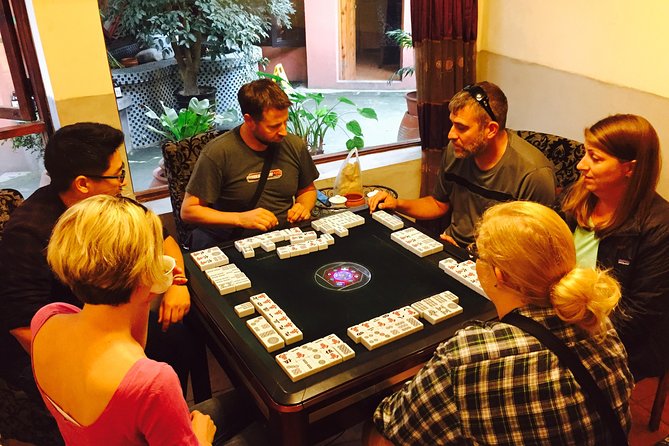
After the market, you head to a cozy room with Chinese characteristics for the Mahjong portion. This is where the experience earns its high marks: the course is taught by an English-speaking guide, and the rules are presented in an easy way.
You’ll learn the core rules, then you practice and get checked by the guide. The itinerary description mentions a local tea used as part of the understanding test—so the lesson doesn’t feel like a dry classroom session. It’s more like a guided game night with structure.
Why this works: Mahjong isn’t just a game of memorizing tiles. It’s a game of patterns, planning, and reading what’s happening. When the guide slows it down and explains it clearly, you start to feel the logic instead of just chasing terminology.
The included food and drink help you stay comfortable. You’ve got afternoon tea, plus coffee and/or tea, and the whole schedule is designed around the idea that you’re learning while being fed and hydrated. That matters because Mahjong can be mentally tiring if you’re hungry or distracted.
If you’re worried about your level, you’re not the only beginner. Reviews highlight patient teaching and a friendly, personable guide. In other words, this isn’t the kind of class where you get thrown into complicated scoring right away.
When Your Group Is Small: How the Experience Handles It
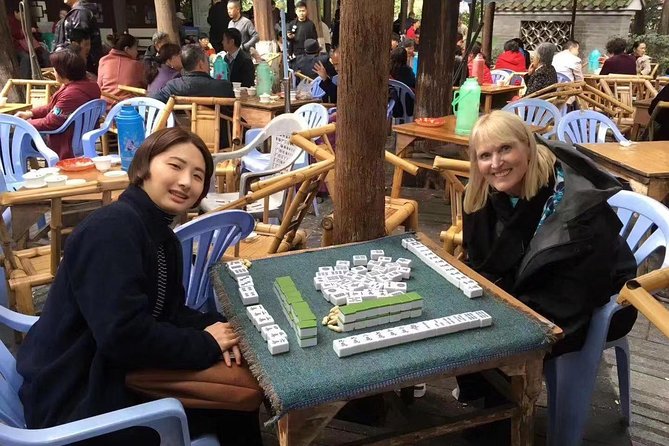
Mahjong is often known as a multi-player game, and the course runs as a private activity for only your group. That can be great—less waiting, more attention from the instructor. But it also raises a practical question: what happens if your group size isn’t what you’d expect for a full table?
One review mentioned being solo (so it was just two people) and noted that normally you need four people to play Mahjong. The takeaway for you is this: the instructor adapts the learning situation so you can still study strategy and understand how the game works, even when the classic setup isn’t possible in the usual way.
So if you’re traveling as a couple or alone, don’t assume you’re signing up for a “watch and hope” experience. The structure is set up as a teaching class, and the guide’s job is to make sure you’re actually learning, not just standing around.




Food, Tea, and Snacks: Included in a Way That Helps the Day
This half-day plan includes more than just the game. You’ll get:
- Afternoon tea
- Snacks
- Bottled water
- Food tasting
- Coffee and/or tea
- A professional guide
That mix sounds standard until you connect it to the pacing. You’re doing a market walk, learning about spices, then switching to a table-game lesson. Without food and drinks, it would be easy to lose energy or get cranky halfway through. With the included tea and snacks, the lesson feels like a full “experience” instead of a time slot.
Also, the tea angle is not random. In many Mahjong sessions, the game becomes calmer when everyone slows down for conversation and a drink. Here, the tea is part of the instruction rhythm, including the tea moment used to check your understanding.
Price and Value: Is $60 a Smart Deal?
At $60 per person, this is positioned as an affordable private class compared with larger group tours that still charge for admission-style experiences. You’re not just paying for Mahjong instruction. You’re paying for:
- A guided spice market walk with tastings
- English-speaking teaching
- Afternoon tea, snacks, and drinks
- Hotel pickup and drop-off
- A private setting for only your group
If you compare it to “just do Mahjong” style activities, the spice market part is what tilts the value. Many game lessons focus only on the mechanics. Here, you get an ingredient-and-culture start, then the game. That combination helps you leave with something you can carry into how you order food and talk about Sichuan cuisine.
One more value point: time. You’re looking at 3 to 4 hours. That’s ideal when you want a real activity but don’t want to lose an entire day to logistics and travel across town.
Who This Mahjong and Spice Course Fits Best
I’d strongly consider booking if you want:
- A hands-on cultural activity that isn’t just photos
- A way to understand Sichuan cuisine through spices and ingredients
- A structured Mahjong start, even if you’re a total beginner
- A private class with hotel pickup that doesn’t require careful scheduling around taxis
It may be less ideal if you’re the type who only wants famous sights. This experience is purpose-built for local flavor and local learning, not landmark hopping.
It’s also a good fit for travelers who like small, friendly group energy. Reviews repeatedly point to a guide who is personable and patient, and to the comfort of being in a less touristed area.
Small Practical Tips Before You Go
A few things will make your half-day smoother:
- Bring curiosity and questions. The guide’s explanations land better when you’re asking what things are used for in Sichuan cuisine.
- Wear comfortable shoes. Market walking is part of the plan.
- Go in expecting learning, not mastery. The goal is understanding the rules clearly enough to play and think strategically.
- If you’re traveling with kids, note that children must be accompanied by an adult and the minimum age is 5.
If you like activities where culture and fun meet, this hits the sweet spot.
Should You Book This Half-Day Mahjong Course?
If you want Chengdu beyond the obvious, I think this is worth booking. The spice market + tea-house Mahjong pairing is smart: it connects Sichuan food culture to a game that feels part of daily life, not just entertainment. Add hotel pickup, included tastings, and English instruction, and it becomes a low-stress way to spend a half-day with real local texture.
I’d book it especially if:
- You’re short on time and want a strong cultural activity in 3–4 hours
- You’re interested in learning Mahjong without feeling lost
- You’d rather spend the day with a guide than navigate markets and instructions alone
If your priority is only big-ticket sightseeing, you might find the focus too narrow. But if you want a memorable skill and a real sense of neighborhood life, this is the kind of class that leaves you talking about what you learned.
FAQ
How long is the Mahjong course?
The experience runs for about 3 to 4 hours.
Is this tour private or shared?
It’s private. Only your group will participate.
Do I get hotel pickup and drop-off?
Yes. Hotel pickup and drop-off are included.
What’s included in the price?
Included items are afternoon tea, bottled water, food tasting, a professional guide, hotel pickup and drop-off, snacks, and coffee and/or tea.
Can I participate if I’m new to Mahjong?
Yes. The course is designed to teach the rules in an easy way, with an English-speaking guide.
What are the age requirements?
The minimum age is 5, and children must be accompanied by an adult.
Is it free to cancel?
Yes. You can cancel for a full refund if you cancel at least 24 hours before the experience starts. If you cancel less than 24 hours before, the amount paid is not refunded.