REVIEW · XIAN
Xi’an Calligraphy & Tea Ceremony – Dive into Ink & Brush Artistry
Book on Viator →Operated by YUNYUN TOURS · Bookable on Viator
Calligraphy in Xi’an is usually about looking. This one is about making. I love that it mixes ink-and-brush practice with real tea ceremony and incense traditions, not a quick photo stop. I also like that you leave with multiple finished pieces, so the time feels useful (not just “watch and leave”). One consideration: if you want classic landmark sightseeing, this is a studio-focused cultural session, so your map will barely change.
What makes this experience click is the pacing. You get a short history story, then you move to your own practice station and start writing real strokes and characters. The guide, Yunyun, is part teacher, part translator, and part friendly coach—exactly the kind of person who helps you feel confident even if you’ve never held a brush before.
Because you’re learning by doing, your wrist might get a little tired toward the end. Also, the plan depends on good weather, even though a lot of the time is indoors—so check conditions on the day.
In This Review
- Key Points to Know Before You Go
- A Calligraphy Workshop That Feels Like a Scholar’s Day
- Your Small-Group Setup With Yunyun
- Tea Ceremony and Incense: Starting With the Senses
- The Character Wall: Seeing 3,000 Years of Writing Change
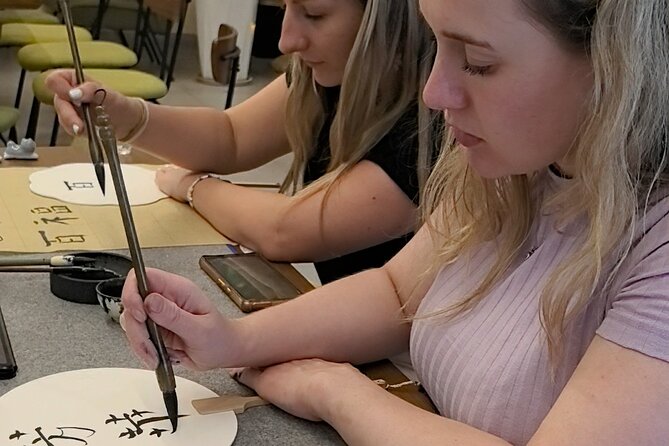
- Brush Control at Your Practice Station
- Fan, Bookmarks, and Scroll Painting: What You Take Home
- Price, Time, and Value in Xi’an
- Who This Tour Suits (and Who Might Skip)
- Practical Tips to Get Better Results (Fast)
- Should You Book Xi’an Calligraphy & Tea Ceremony?
- FAQ
- How long is the Xi’an Calligraphy & Tea Ceremony?
- What do I get to make during the workshop?
- What’s included in the price?
- Do I need to bring any art supplies?
- Where is the meeting point and when does it start?
- What happens if the weather is bad?
Key Points to Know Before You Go
- Small-group energy (under 6) means you get more attention while you practice strokes.
- Jasmine tea plus incense ritual sets a calm, scholar-style tone before you write.
- 3,000 years of writing evolution comes alive through a character wall display.
- You write characters with meaning, including 一, 十, 大, 小, 米, 永, 家, and themes like 龙, 武, and 爱.
- Take-home art is real work: painted folding fan, personalized bookmarks, and a traditional scroll painting.
- Materials are included, so you can focus on technique instead of supplies.
A Calligraphy Workshop That Feels Like a Scholar’s Day
This is one of those rare activities where the “culture” part isn’t delivered only through stories. You actually work with brush, ink, and paper. That matters in calligraphy, because the beauty isn’t just in the final look—it’s in the controlled pressure, the timing of each stroke, and the way ink flows.
You’ll also notice the difference between calligraphy as decoration and calligraphy as a way of thinking. The session connects characters to ideas and everyday life. You start with fundamentals (basic strokes), then you progress to characters that carry meaning, such as words tied to concepts like home, love, strength, and even the imagery behind dragon and martial themes.
The vibe is intentionally traditional. You’re not rushed through a checklist. The guide keeps the pace manageable, especially for first-timers, while still giving you a path to improve from station to station.
You can also read our reviews of more tours and experiences in Xian.
Your Small-Group Setup With Yunyun
This experience runs as a small-group tour capped at 6 travelers. That limit isn’t just marketing. It affects everything: you spend less time waiting, and you get help when your brush angle or ink consistency isn’t cooperating.
Yunyun is the kind of guide who explains in a way you can use immediately. In particular, she’s described as being very knowledgeable and open to requests, and she’s praised for speaking excellent English. That combination matters because calligraphy has technical details—how to hold the brush, how to start a stroke, and how to lift without smearing—that are hard to guess without a clear guide.
Also, if you like asking questions, this is a good format. The session isn’t only one-way teaching. You can get direct answers while you work.
Tea Ceremony and Incense: Starting With the Senses
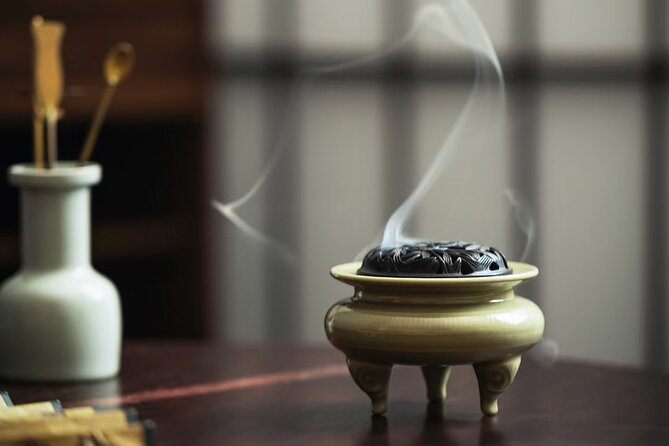
Before ink touches paper, you begin with jasmine tea and an incense ritual in a traditional studio atmosphere. This part isn’t filler. In Chinese scholar culture, tea and incense aren’t random add-ons—they’re part of how people slow down, focus, and prepare their mind.
You’ll be in that mindset for the rest of the workshop. When you start writing, you’re not fighting distractions. The whole experience is built around calm attention, which makes learning brush control much easier.
They also include tea and snacks, so you don’t need to “arrive hungry” and hope you find something nearby. For a Xi’an afternoon, that’s a nice practical bonus, especially if you’re trying to avoid the heat and crowds that can come up later in the day.
The Character Wall: Seeing 3,000 Years of Writing Change
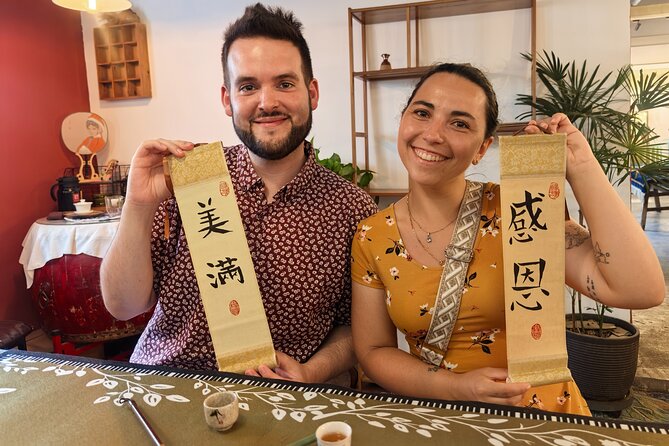
One of the most fun parts is the short history stop centered on a character evolution display. You’ll walk through how Chinese writing transformed over time, with an emphasis on how characters changed from early forms to more modern script.
The character wall experience uses interactive visuals to help you understand the logic of evolution. A good example is how 家 (home) changes across eras. The idea here is simple but smart: when you understand where a character came from, its modern form feels less random and more meaningful.
This stop also does something practical for the rest of the workshop. It gives you context before you start repeating strokes. Instead of only memorizing shapes, you start seeing each character as a product of history, culture, and design choices.
It’s also a short stop, so you don’t feel like history weighs down the day. It feels like a warm-up that makes the hands-on part more satisfying.
Brush Control at Your Practice Station
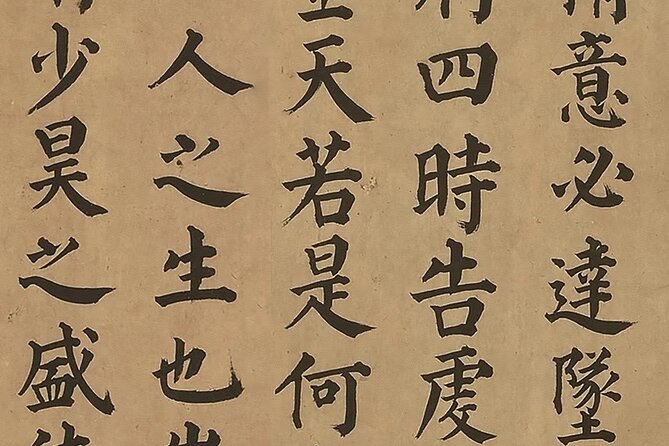
After the character history, you move to your own practice area. This is where the workshop earns its value. You begin with basics—basic strokes—then build into characters.
The session is progressive. You’re taught how to handle the brush, then you practice the building blocks before jumping to full characters. That sequencing helps if you’re starting from zero, because the hardest part for beginners isn’t memory—it’s stroke confidence.
You’ll work with a mix of characters and components, including single-stroke essentials and word-like forms such as:
- 一, 十
- 大, 小
- 米, 永
And you also connect with meaningful themes using examples such as 龙 (dragon), 武 (martial), and 爱 (love).
The key takeaway isn’t that you’ll master calligraphy in three hours. It’s that you learn how strokes work as a system. Once you understand start, pressure, and lift, you can keep improving after the tour with less frustration.
Fan, Bookmarks, and Scroll Painting: What You Take Home
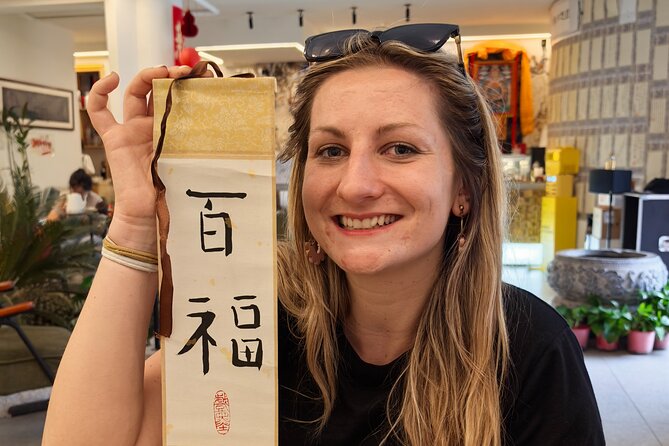
This is where the experience becomes tangible. Instead of leaving with only photos, you create finished art items you can actually use or gift.
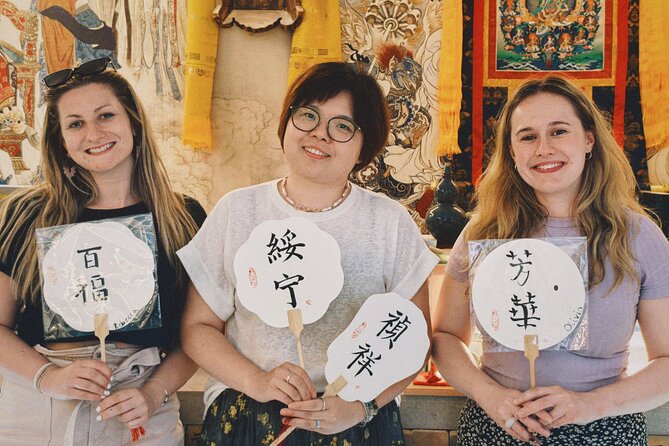
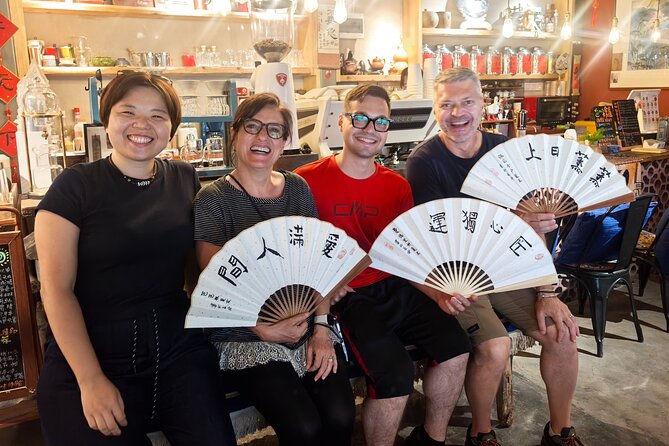
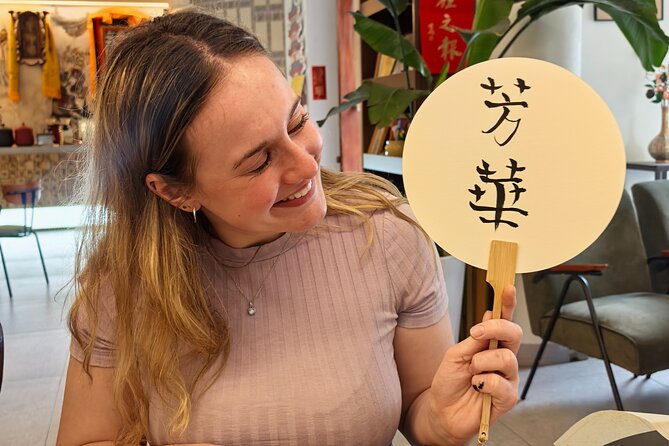
You’ll paint a folding fan with chosen Chinese characters. You’ll also make personalized bookmarks using your Chinese name, plus you’ll produce a traditional scroll painting as another takeaway.
Having three separate pieces is a smart design choice. It gives variety, and it also gives you multiple chances to apply what you learned:
- The fan helps you work with a specific composition.
- The bookmarks let you practice clarity and legibility.
- The scroll painting emphasizes brush flow and finishing touches.
Your materials are included—ink, paper, and an inkstone—so you don’t need to hunt for supplies afterward. That included-kit approach also means you’re using the same type of tools the instructor expects, which helps your results look more coherent.
If you’re buying souvenirs in Xi’an, I’d treat these items as the high-value option. A painted piece with your own brushwork feels personal in a way a mass-produced magnet doesn’t.
Price, Time, and Value in Xi’an
The price is $69 per person, for about 3 hours to 3 hours 20 minutes. For Xi’an, that’s not “cheap,” but it also isn’t vague. You’re paying for a native guide, instruction, small-group time, and a full set of materials. You’re also not just learning—you’re producing multiple artworks.
Here’s how I judge value for activities like this: does the cost replace something you’d otherwise pay for? In this case, the answer is yes. If you tried to replicate this on your own, you’d have to cover an instructor, practice materials, and you’d still spend extra time figuring out technique without feedback. Paying for guided coaching is usually the difference between a decent attempt and something you’re proud to take home.
Another value point: you get a weather-friendly plan. One review notes it helped with the extreme heat (around 40 degrees). Even if you’re not traveling in peak summer, a studio session can be easier on your energy than a long outdoor day.
Who This Tour Suits (and Who Might Skip)
This is a great fit if you:
- Want something more meaningful than standard sightseeing.
- Like hands-on workshops and learning by repetition.
- Prefer smaller groups and direct help.
- Want take-home art that doesn’t feel generic.
It’s also ideal for people who don’t want to be stuck outside. The format is designed for comfort, and you’ll be close to shade and seating for most of it.
You might want to look for something else if you:
- Only care about major monuments and don’t enjoy slower cultural activities.
- Are hoping for an all-day street market crawl.
- Want a purely lecture-based history tour. This one requires your hands.
Practical Tips to Get Better Results (Fast)
You’ll get the best results if you treat this like a skill practice, not a craft project. That means small corrections and patience with the first attempts.
A few practical pointers:
- Expect the first brush strokes to feel awkward. That’s normal. Use the instructor’s feedback and move on.
- Keep your attention on stroke start and lift. Those are the details that make calligraphy readable.
- Pace yourself during the fan and bookmark steps. Don’t rush the middle; that’s where most mistakes happen.
- Since bookmarks are personalized with your Chinese name, be ready with the correct spelling/characters you want used. If you don’t have it, ask your guide before you write.
Also, if you’re camera-happy, plan to take photos mainly of the process and the finished items. The quality you create is the highlight—so let yourself actually make, not only film.
Should You Book Xi’an Calligraphy & Tea Ceremony?
Book it if you want a genuinely different Xi’an afternoon—one where you trade a few tourist photos for something you can hold. I like that the experience blends tea and incense with progressive brush practice, and I especially like that Yunyun’s approach is set up for real understanding, not just performance. The small-group size helps you learn without feeling lost.
Skip it only if your trip style is strictly monument-hunting. This won’t replace the big sights, and it isn’t trying to. But for culture with a hands-on payoff—plus multiple take-home pieces—it’s a strong choice.
If you’re open to learning a few characters and trying something new with your hands, this is the kind of activity that makes Xi’an feel personal.
FAQ
How long is the Xi’an Calligraphy & Tea Ceremony?
The tour runs about 3 hours to 3 hours 20 minutes.
What do I get to make during the workshop?
You’ll create a painted folding fan, personalized bookmarks with your Chinese name, and a traditional scroll painting.
What’s included in the price?
The package includes jasmine tea and snacks, a calligraphy instructor, small-group instruction (up to 6 people), and all writing materials such as ink, paper, and an inkstone.
Do I need to bring any art supplies?
No. All materials are provided for you, including the ink and paper used for writing and painting.
Where is the meeting point and when does it start?
The meeting point is 15 An Ju Xiang, Bei Lin Qu, Xi An Shi, Shan Xi Sheng, China, 710001, and the start time is 2:00 pm. The activity ends back at the meeting point.
What happens if the weather is bad?
This experience requires good weather. If it’s canceled due to poor weather, you’ll be offered a different date or a full refund.