REVIEW · FUJISAWA
Trip to Kamakura & Enoshima: Shrines, Seaside, Temples &Tea
Book on GetYourGuide →Operated by Machinovate Japan Ltd. · Bookable on GetYourGuide
A temple-plus-sea day beats the usual Tokyo loop. You’ll get matcha with a classic Japanese sweet, then ride the retro Enoden train to Kamakura and Enoshima for big-sight moments and small, calm details. It’s one of those days where every stop gives you a different angle on Japan.
I love how the tour blends hands-on culture with sightseeing. The tea house experience at Hokokuji turns a pretty bamboo setting into something you can actually taste, and the Enoden ride adds an easy, scenic “travel time” that feels like part of the attraction.
One thing to plan for: this is a walking day. Expect several hours outdoors, plus stair and uneven paths at temples and on Enoshima, so sturdy shoes matter.
In This Review
- Key things I’d plan around
- Kamakura and Enoshima: a one-day taste of old Japan meets the sea
- From Shinjuku 08:00 to Fujisawa: start like a local, not a commuter
- The Enoden train: your scenic break between cities
- Hokokuji bamboo forest and tea house matcha: where the quiet becomes the point
- Shirahata Shrine: red gates, bridges, and a koi-feeding ritual
- Lunch break strategy in Kamakura
- Kōtoku-in Great Buddha: seeing scale, then stepping inside
- Enoshima coastline walk and the observatory views
- How to handle the walking load without ruining the day
- Price and value: what $150 covers (and what it doesn’t)
- Which kind of traveler should book this?
- Final call: should you book this Kamakura and Enoshima day trip?
- FAQ
- What time does the tour start?
- Where exactly do I meet the guide in Shinjuku?
- How long is the trip?
- Is the Enoshima Kamakura Freepass included?
- What is included besides transport?
- Do I get lunch included?
- Will I be able to enter the Great Buddha?
- How much walking is involved?
- Can I see Mount Fuji during the Enoshima part?
- Is there free cancellation?
Key things I’d plan around
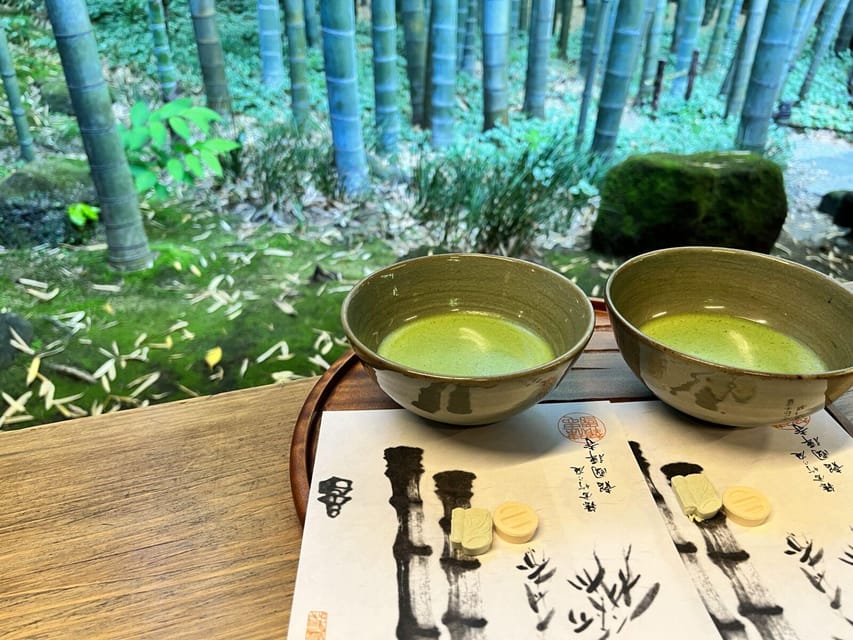
- Matcha + Japanese sweet at Hokokuji: you’re not just watching—there’s a tea break with local flavors.
- Koi feeding at Shirahata Shrine: a simple ritual that makes the shrine pond feel alive.
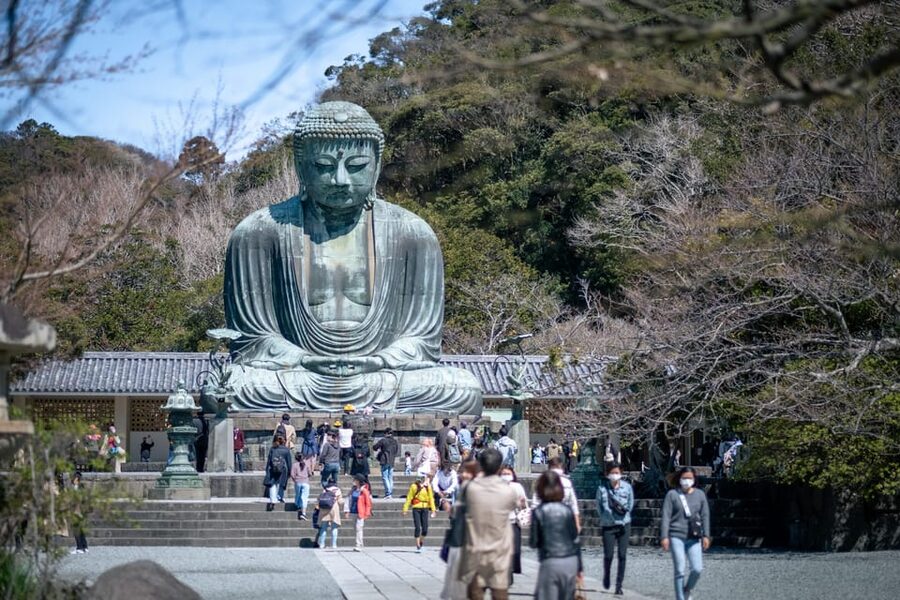
- Going inside the Great Buddha at Kōtoku-in: the scale hits harder when you step in.
- Enoden train time: a built-in, retro route between stations and seashore views.
- Enoshima observatory views: you’ll finish the day with wide-angle coastal panoramas.
Kamakura and Enoshima: a one-day taste of old Japan meets the sea
If you want a day trip that feels more like a story than a checklist, this one delivers. Kamakura gives you the classic Japan package—shrines, temples, and that calm, slightly coastal “history” atmosphere people come looking for. Then Enoshima shifts the vibe to ocean air, sea views, and a climb-up payoff.
The tour is built around strong anchors: Hokokuji for bamboo and tea, Shirahata Shrine for koi and a red-gate shrine walk, Kōtoku-in for the Great Buddha (including entry inside), and Enoshima for panoramic viewpoints.
You also get an English-speaking guide, and in the reviews I saw real variation in guide style (Jeff, Naoto, Jade, Beth), but the common thread was clarity—how the guide connects what you see to how people live and worship in Japan.
From Shinjuku 08:00 to Fujisawa: start like a local, not a commuter
Most days begin with a crowded Tokyo train. This one begins at 08:00 outside Shinjuku Station South Exit, at the Green Window ticket office. Your guide will be holding a Snow Monkey Resorts sign, which makes it easier to find the group quickly.
From there, the tour uses public transport: you go to Fujisawa Station, and the ride time is listed as about 60 minutes in one place and 85 minutes in the schedule. In practice, you should treat this part as about an hour to an hour-and-a-half depending on how the route lines up that morning.
Why this matters: you’re leaving early enough that you’re not fighting the worst crowd peaks at Kamakura, and you’re also positioned to switch from big-city transit mode to the local rhythm of the Enoden line a bit later.
The Enoden train: your scenic break between cities
The Enoden is the signature move. After you arrive and walk partway around Kamakura, you’ll catch the local line that connects the area and runs through streets and near the water. The train itself is part of the experience—retro feel, real local commuting energy, and lots of photo chances without having to rush.
You’ll ride Enoden to Enoshima, then later return back toward the stations that lead you home. The schedule lists a ~23-minute ride to Enoshima from the Hase area timing, and longer overall train time as you loop back at the end of the day.
Practical tip: this is one of the easiest times to slow down mentally. Sit back, watch the scenery, and let the day feel like travel instead of constant moving.
Hokokuji bamboo forest and tea house matcha: where the quiet becomes the point
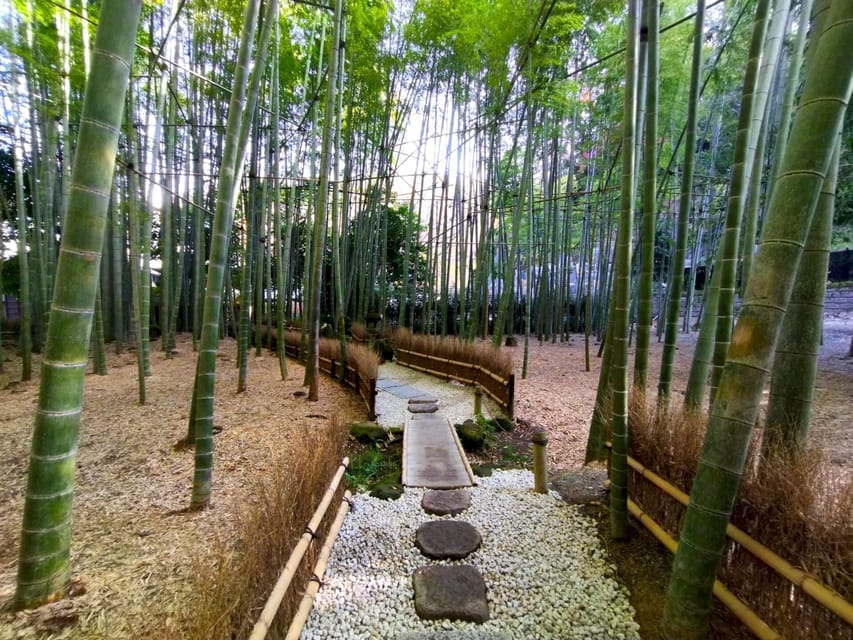
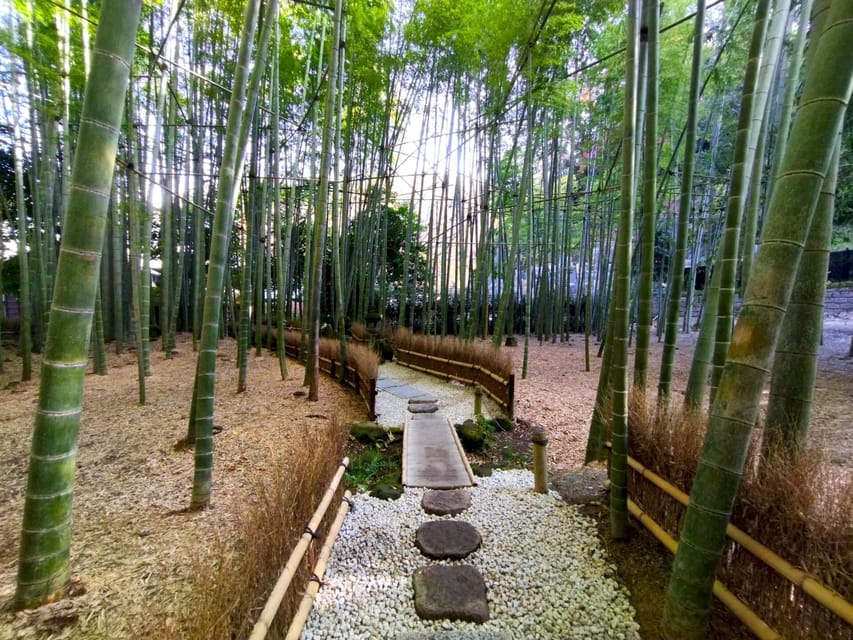
Kamakura is famous for temples, but Hokokuji is the stop that turns scenery into a moment. You’ll walk about 30 minutes from Kamakura Station toward a temple known for a bamboo forest, statues, and a tea house.
That walk is doing work for you. You pass along a river and traditional houses, so you’re not arriving at the bamboo area as a sudden tourist bubble—you transition into it. It’s also outdoors, so wear shoes you trust and bring a small umbrella if the forecast looks iffy.
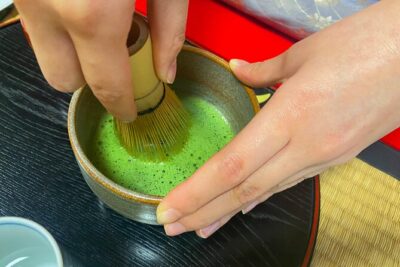
At Hokokuji, the highlight is the matcha and wasanbon (traditional Japanese sweet) experience in the tea house overlooking the bamboo. This is not just “have tea.” Tea ceremony culture is woven into how the space is presented—quiet, attentive, and focused on tasting and pace. When people rave about this part, it’s usually because you get to slow down at the exact moment the setting demands it.
One more subtle win: you’ll learn about the tea culture and tea ceremony importance from your guide, which helps you understand why the tea house moment is treated like a proper event, not a side snack.
Shirahata Shrine: red gates, bridges, and a koi-feeding ritual
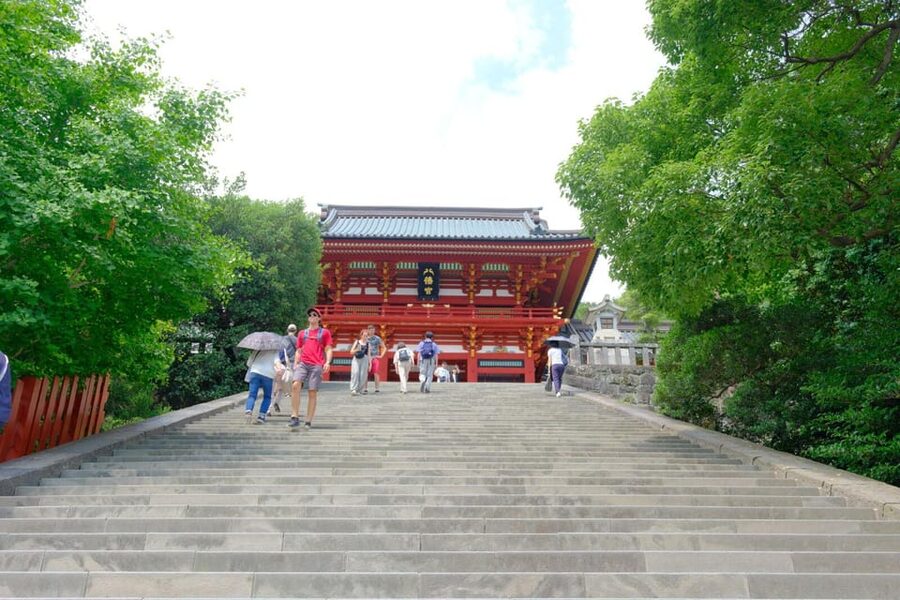
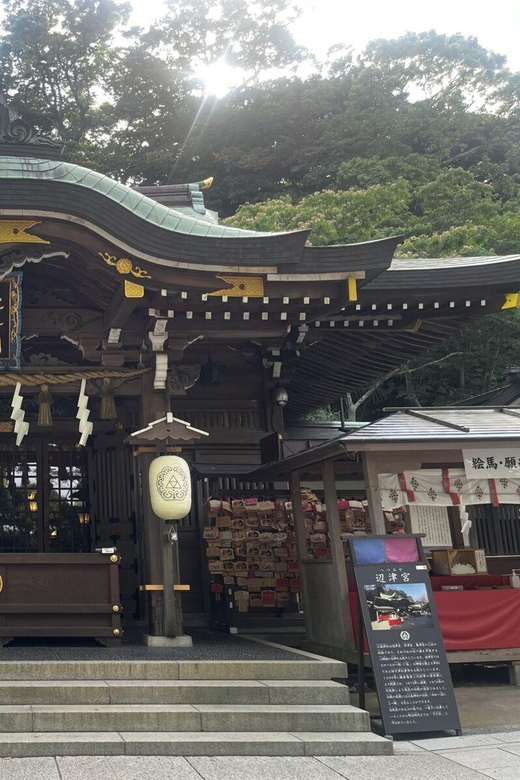
After the bamboo temple, you’ll head back toward central Kamakura and the next stop: Shirahata Shrine. It’s known for its large red Torii gate and the bridge-and-path approach into the shrine complex.
The time here is about 30 minutes with guide context. The focus isn’t just architecture—it’s atmosphere and ritual. You’ll also feed the resident koi in the pond. That koi-feeding moment is small in logistics and big in feel. It breaks the sightseeing rhythm and gives you something calm and interactive to do while you take in the shrine setting.
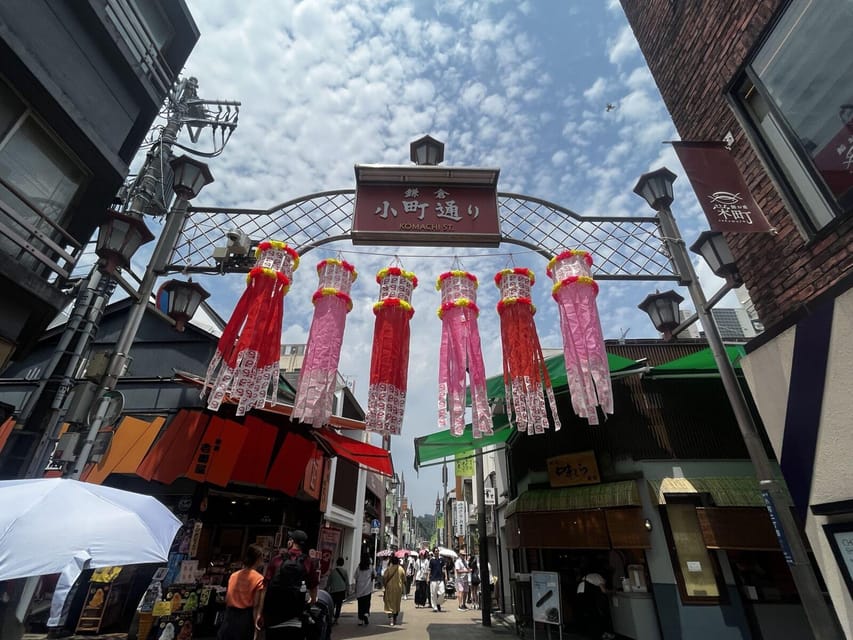
Then you get a short walk—about 5 minutes—to Kamakura’s main shopping and eating area. This is where the day turns from guided to personal.
Lunch break strategy in Kamakura
You’ll have about 1 hour of free time for lunch. The tour doesn’t include specific meals beyond whatever you choose there, but this is one of the best chances of the day to sample street food and local snacks. Several review notes praised the variety of street food choices, and it makes sense: Kamakura is built for wandering and snacking.
My practical advice: pick something you’ll actually eat while you’re standing there, and save souvenirs or extras for later browsing. You’ll be ready to move again after lunch.
Kōtoku-in Great Buddha: seeing scale, then stepping inside
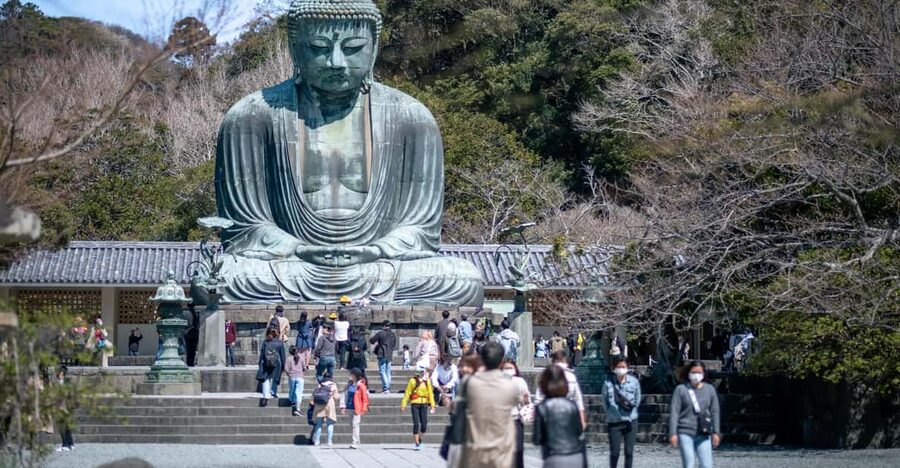
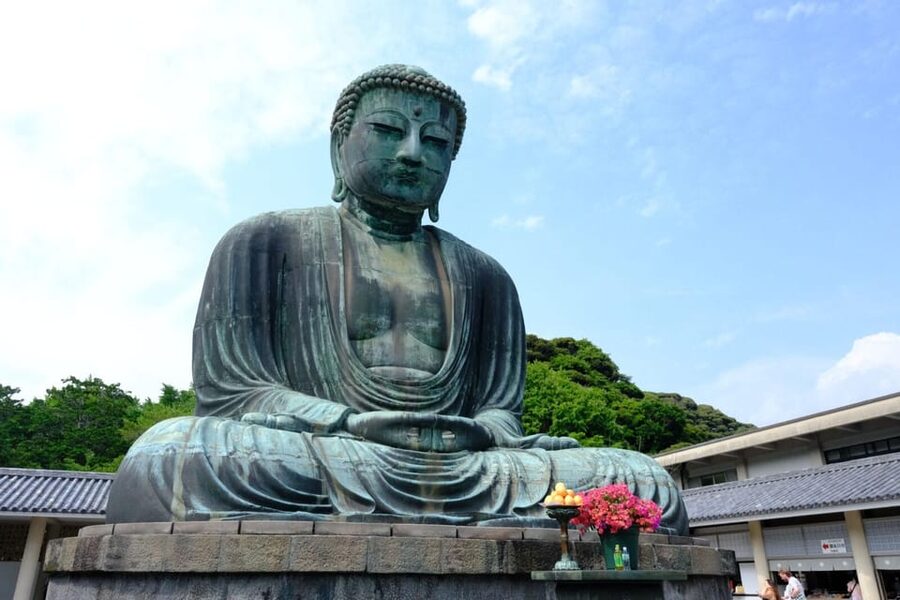
Now you hit the heavy hitter: Kōtoku-in, famous for the Great Buddha. You’ll walk from the shrine area to Hase Station and use the transport link to reach Enoshima later, but first you do Kōtoku-in.
This stop is roughly 30 minutes guided, and it includes something most self-guided visits don’t automatically make easy: you can enter the Great Buddha. Walking into the statue area is where the scale lands. From outside, it’s impressive. Inside, it becomes real in a physical way—space, structure, and that sense of history you can feel in your body.
Because this is a temple area, expect walking paths and possibly steps. Plan for it, especially if you’re coming from lunch with warm weather.
Enoshima coastline walk and the observatory views
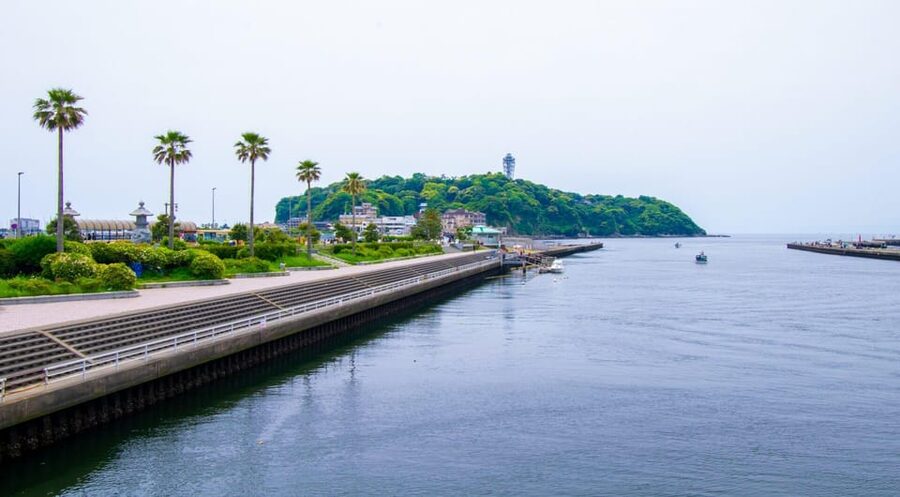
Enoshima is where the day turns coastal. After Kōtoku-in and getting back to the station area, you ride Enoden to Enoshima. The schedule gives about 1.5 hours total for Enoshima including guided hiking/walk time, plus the earlier train transfer timing.
Once there, you’ll walk along the coastline. This route is popular with locals and tourists for good reason: it gives you strong, open sightlines, and on very fair weather days you can even see Mount Fuji from the area.
Then you’ll go to the Enoshima shrine and observatory at the top for panoramic views. This is a classic payoff stop—climb, look out, then enjoy the sense of distance over the sea.
And if time allows, the tour notes that on some seasons you might catch sunset as you leave the island. Don’t count on it, but it’s a nice bonus idea.
How to handle the walking load without ruining the day
This tour is built for people who don’t mind movement. It includes outdoor walking at multiple stages: a 30-minute walk to Hokokuji, a walk back through central Kamakura, another set of shrine-to-temple transitions, the coastline walking on Enoshima, and the climb toward observatory viewpoints.
So here’s how I’d do it:
- Wear shoes with grip. Temple steps and coastal paths can be slick if it’s damp.
- Bring a light layer even if it looks warm at Shinjuku. Coastal wind can change the comfort level fast.
- Pace lunch like a pro: eat, rest your feet for a moment, and then keep going.
- Have a small rain plan. The tour specifically notes being outdoors for hours and recommending an umbrella or rain coat.
If you want a day trip that’s mostly sitting, this isn’t it. If you want an active cultural day with real variety, it fits well.
Price and value: what $150 covers (and what it doesn’t)
The tour is priced around $150 per person for a 1-day outing. The value is strongest if you account for admissions and transport that would cost you money if you planned it yourself.
Included items are a big deal here:
- Enoshima Kamakura Freepass covering transport for the tour
- Admission and tea/sweet experience at the bamboo-area temple
- Koi feeding fee
- Great Buddha admission plus the entrance fee to go inside
- Enoshima escalator and observatory admission fees
- An English-speaking guide
Not included: trains and transport before and after the tour, and additional food and drink.
Why this is good value: the inclusions tackle the spots where a DIY day trips tends to get messy—multiple ticketed attractions plus a rail day pass plus entrance fees that can add up quickly. You’re also buying the guide’s time to connect the sites so you get more out of each location than just a photo.
Which kind of traveler should book this?
I think this tour is a great match if you want:
- A structured, guided day but still time to wander (that lunch window is genuinely useful)
- Cultural experiences that include tasting (matcha + wasanbon) and ritual moments (koi feeding)
- A must-see anchor like the Great Buddha, including entry inside
- A scenic train ride (Enoden) rather than only station-to-station commuting
It may not fit if you:
- Hate walking outdoors for hours
- Want a day with long sit-down meal breaks
- Prefer to avoid crowds at iconic sites (Kamakura and Enoshima can get busy)
From the review notes, one theme also stood out: some groups ran smaller with Beth, which can make the tour feel more personal. If you like a more intimate pace, this is the kind of tour you can hope for.
Final call: should you book this Kamakura and Enoshima day trip?
If you’re choosing one day trip from Tokyo that mixes temples, tea culture, a real interactive moment (koi feeding), a signature train ride, and panoramic coastal views, I’d book it. The best part is that it doesn’t feel like three random stops glued together. Each segment sets up the next: bamboo calm leads into shrine ritual leads into Buddha scale leads into sea air and viewpoint payoff.
But be honest with your feet. If you know you struggle with walking or stairs, you might feel rushed or tired. If you’re comfortable with a full active day, this is a smart use of time—and the included admissions make the $150 feel less like a gamble and more like a planned day that runs smoothly.
FAQ
What time does the tour start?
The tour starts at 08:00am outside Shinjuku Station South Exit.
Where exactly do I meet the guide in Shinjuku?
Meet outside Shinjuku Station South Exit at the Green Window ticket office (midori no madoguchi). Look for your guide holding a Snow Monkey Resorts sign.
How long is the trip?
It’s listed as a 1-day tour. The schedule includes a total of several train rides plus walking at multiple stops.
Is the Enoshima Kamakura Freepass included?
Yes. The Enoshima Kamakura Freepass is included to cover transport for the tour.
What is included besides transport?
Included are the bamboo temple admission and the matcha and sweet experience, koi feeding fee, Great Buddha admission and entrance to go inside, Enoshima escalator and observatory admission fees, and an English-speaking guide.
Do I get lunch included?
No. Lunch is a free time break, and additional food and drink are not included.
Will I be able to enter the Great Buddha?
Yes. The tour includes admission to go inside the Great Buddha at Kōtoku-in.
How much walking is involved?
There are several hours of walking outdoors across temple approaches, shrine connections, and Enoshima’s coastline and viewpoint area. The tour recommends sensible shoes and weather-appropriate clothing.
Can I see Mount Fuji during the Enoshima part?
On very fair weather days, Mount Fuji can be visible from Enoshima’s coastline area.
Is there free cancellation?
Yes, you can cancel up to 24 hours in advance for a full refund.