Tea fields on a timetable beats a long bus day. This Uva Halpewatte experience lets you step into Sri Lanka’s Ceylon tea world with tea picking as a hands-on requirement, plus a scenic break at Sky Café. I especially like the way the day mixes participation (basket, mottu, and a plucker-style wrap) with Ceylon tea tasting that explains grades and flavors for what ends up in your cup.
One thing to keep in mind: the “factory” part can feel more like an overview of how tea is handled than a full, deep inside tour, and some people find the tasting portion a bit basic.
In This Review
- Key things to know before you go
- Tea Plantation Tour in Ella: What makes Halpewatte special
- Enter the routine: Ganesh worship, basket, and plucker style
- Uva Halpewatte Tea Factory Tour: what you’ll actually get
- Tea picking in the fields: stamina, technique, and real work
- Sky Café views: a scenic break that’s worth planning for
- Ceylon tea tasting: grades, flavors, and what to look for
- Price and logistics: is $25 a good deal?
- Who should book this tea plantation tour in Ella?
- Best tips to get more out of it
- Should you book this tea plantation tour in Ella?
- FAQ
- What does the tour include?
- How long is the experience?
- Where does the tour start and end?
- What time does the tour run in Ella?
- Is the tea-picking session required?
- What should I know about weather and refunds?
Key things to know before you go
- Tea picking is required: you get a basket and a mottu, and you’ll be expected to harvest tea leaves as part of the tour
- Small group size: the experience caps at 10 travelers, which helps the guide keep things moving
- Culture first: before picking, there’s a short customary worship at a small kovil close to the plantation
- Sky Café adds the wow-factor: you’ll relax with sweeping views from about 300m above ground / 1300m above sea level
- Ceylon grades show up in the tasting: you’ll learn why tea differs by grade and flavor (you might hear names like OP/BOP/FBOP)
- Weather matters: the experience needs good weather, and rain can change the flow
Tea Plantation Tour in Ella: What makes Halpewatte special
Ella is surrounded by tea hills, so it’s tempting to think “it’s all the same.” This one stands out because it’s built around a short, focused format that still gives you the feel of real plantation work. You start in the Uva Halpewatte area, then you’re guided through tea cultivation and handling before you actually pick leaves yourself.
For me, the best part is the balance: you get movement in the fields, a scenic pause, and then a practical explanation tied to what you taste. It’s not just “look at the tea.” It’s “here’s how it becomes tea, and here’s how grades can taste different.”
And the price—around $25 for roughly 1 hour—is part of why this works. You’re paying for participation and instruction, not a full half-day excursion. If you’re trying to stack experiences around Ella (Nine Arch Bridge, hiking, waterfalls), this is an easy slot to protect.
You can also read our reviews of more tours and experiences in Ella.
Enter the routine: Ganesh worship, basket, and plucker style
Right before tea picking, you’ll join a short customary worship at a small kovil near the plantation. It’s brief, but it gives context. Tea isn’t treated here as an abstract product; it’s woven into daily life, work rhythms, and local beliefs.
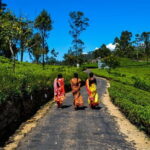
Then you receive your tools: a basket for collecting leaves and a small mottu. You’ll also have the chance to wear traditional tea plucker attire—often described as a wraparound saree or sarong style—if you want to lean into the role.
This matters more than it sounds. Dressing for picking and holding the basket changes your posture and pace. You’ll move differently than you would in casual sightseeing clothes, and that’s part of what makes the experience feel real.
Uva Halpewatte Tea Factory Tour: what you’ll actually get
The main stop is the Uva Halpewatte Tea Factory tour area, set among tea fields. The flow is designed to connect three steps in your head: how tea is grown, how it’s harvested, and how it ends up processed.
You can expect some combination of:
- walking through tea gardens and field edges
- learning how tea leaves are harvested and handled
- hearing the tea manufacturing process in an explanation-led way
- finishing with a cup of tea made for you as part of the tea journey
Here’s the practical twist. Some guests feel the tour stays mostly outside and that the processing section isn’t as in-depth as they expected. If you’re the type who wants wall-to-wall equipment tours, you may want to manage expectations and ask what parts are included during the time you’ll be there.
Still, even with that limitation, the tour works well as a foundation. You leave with language you can use later when you spot tea grades and packaging in Sri Lanka.
Tea picking in the fields: stamina, technique, and real work
Tea picking is the heart of this experience. You’re not watching someone else do it from a safe distance—you’re joining the harvest session.
And it’s harder than most people think. When you start plucking, you feel quickly why tea pluckers work all day. The pace is steady, your arms get involved, and you learn to pick the right parts of the plant without being rough. It’s physical work disguised as a quiet countryside activity.
One of the most praised parts of the tour is how the guides connect you with skilled pickers in the field. Names like Maria and Marietta come up in feedback as friendly, experienced tea pickers who help bring the session to life. If you’re placed with someone like that, you’ll likely get more than “here’s what to do.” You’ll get little tips that make your picking easier and more accurate.
If you want the best experience, come with moderate physical fitness and be ready for a bit of walking and repetitive movement. This is not a sit-down tasting only.
Sky Café views: a scenic break that’s worth planning for
Between the field time and the tea tasting, you’ll get a chance to relax at the Sky Café. It’s described as sitting on a mountain top about 300m above ground / 1300m above sea level, with views across tea greenery and the surrounding countryside.
This pause is more than a postcard moment. It gives you a mental reset after the repetitive picking. Also, it helps you “land” the story you’re hearing—because once you look out over the estates, tea grades and harvesting steps start to feel connected to place, not just a lecture.
If the weather is clear, you’ll enjoy the open-sky feel. If the day turns rainy, you might still get the break, but expect the schedule to bend a little—Sri Lanka weather can be unpredictable.
Ceylon tea tasting: grades, flavors, and what to look for
After picking and the café break, the tour ends with tea tasting and explanation. The goal is to show you how and why Ceylon tea comes in different grades and flavors that suit different palates worldwide.
You’ll likely hear grade names and taste differences tied to them. In feedback for this kind of experience, you often see examples like OP, BOP, and FBOP mentioned. The practical value for you is that after tasting, you can read labels with more confidence. You stop buying purely by brand or marketing and start noticing what “grade” could mean for strength and character.
That said, there’s one common caution: some guests find the tasting portion underwhelming. A few describe cups being made in advance and the tasting being mostly about naming teas rather than explaining the differences in detail while you sip.
So here’s how to make it better. Ask questions while you’re tasting—like what to notice in aroma, color, or finish. If your guide is talkative (names like Sallay and Nari show up in feedback as strong explainers), you’ll get more out of those four cups.
Price and logistics: is $25 a good deal?
At around $25 for about 1 hour, this tour is priced like a “high value, low time” Ella activity. You get:
- guided field time
- hands-on tea picking (required)
- a tea journey ending in tasting
- a scenic break at Sky Café
- an included admission ticket for the factory stop
Where the value gets mixed is in how much of the factory process you actually see. If you expect a full behind-the-scenes, inside-the-machinery experience, some people feel the tour doesn’t go that far. If your goal is participation plus learning the basics, the price feels fair.
Also, timing inside the day matters. Tours run across the operating window from about 8:00 AM to 4:30 PM, and tours happen multiple times during that span. In practice, that means you should plan to arrive with a little cushion so your explanation time doesn’t feel short.
Who should book this tea plantation tour in Ella?
This tour is a strong match if:
- you love tea and want a hands-on way to understand Ceylon grades
- you enjoy short, structured activities with a clear ending
- you’re okay with moderate physical effort for picking leaves
- you want a cultural touch (the kovil worship) mixed into a nature setting
It may be less ideal if:
- you mainly want a deep factory machinery tour
- you prefer long, slow tastings with lots of guidance per cup
- you’re traveling when rain is likely and you’re counting on outdoor time without schedule changes
The small group limit (up to 10 travelers) helps the experience feel more personal, especially during the picking portion.
Best tips to get more out of it
If you want this to feel like a memorable Ella highlight rather than a quick stop, here are the practical moves:
- Wear shoes you don’t mind getting tea-field dust on. You’ll be moving more than you expect.
- Bring a light layer even in warm weather. Mountain air near viewing points can shift fast.
- If it’s rainy season or cloud-cover season, keep a small rain solution handy. The tour requires good weather, and heavy rain can interrupt the flow.
- During tea tasting, ask about what you should notice between grades. If the tasting feels thin, your questions can pull the guide into better explanations.
Should you book this tea plantation tour in Ella?
Book it if you want the best part of the tea story: picking leaves yourself, then tasting with a clearer sense of grades and flavor. For many people, that combination is the standout value, especially because the group stays small and the tea session isn’t just passive sightseeing.
Think twice if your top priority is a long, deeply technical factory visit. Some guests feel the factory side is more overview than full access, and the tasting can feel basic if you’re hoping for a masterclass-style explanation.
If you’re planning a short list of Ella experiences, this is an easy yes. It fills about an hour, gets you into the tea fields, and leaves you with tea knowledge you can use back home.
FAQ
What does the tour include?
You’ll visit the Uva Halpewatte Tea Factory tour area, take part in a tea-picking session, receive a basket to harvest tea leaves and a small mottu, and enjoy a tea tasting experience. There’s also time to relax at Sky Café with views.
How long is the experience?
The tour takes about 1 hour (often described as 40 minutes to 1 hour to complete).
Where does the tour start and end?
It starts at Uva Halpewatte Tea Factory, Badulla Road, Hela Halpe, Ella and ends back at the meeting point.
What time does the tour run in Ella?
Operations run from about 8:00 AM to 4:30 PM, and you can join during that window.
Is the tea-picking session required?
Yes. Participation in the tea-picking session is required for the plantation tour.
What should I know about weather and refunds?
The experience requires good weather. If it’s canceled due to poor weather, you’ll be offered a different date or a full refund. You can cancel for a full refund up to 24 hours before the experience starts.