REVIEW · MARRAKESH
Marrakech: Moroccan Pastries and Tea Class with a Local
Book on GetYourGuide →Operated by Khmisa Workshops · Bookable on GetYourGuide
A warm oven and a real local recipe. This Moroccan pastries class in Marrakech is practical, hands-on, and focused on the small tricks that make the dough and fillings taste like Morocco. I especially liked learning how to shape classic sweets and using fragrant ingredients like fennel seeds and orange blossom water under a local instructor’s watchful eye. I also liked that the session doesn’t stop at food: you finish with Moroccan mint tea you learn to make yourself.
The main catch is logistics. There’s no hotel pickup, and the exact workshop address is sent before your date, so you’ll need to plan your own way to get there on time. If you’re the type who hates coordination, build in a little buffer for finding the door.
You’ll spend about 150 minutes working step-by-step, tasting what you bake, and leaving with a box of pastries for later. With small groups capped at 10 people and a chef/instructor who can explain in Arabic, French, and English, it’s a relaxed break from the souk shuffle.
In This Review
- Quick take: what makes this Marrakech workshop worth your time
- Why this Marrakech pastry class feels more local than a food stop
- The 150-minute flow: what happens while you bake and taste
- The one “watch-out” here
- Moroccan mint tea: the part you’ll actually use back home
- What pastries you may make (and why the flavors matter)
- Price and value in Marrakech terms (why $40 can make sense)
- Meeting point, timing, and what you should bring
- Who this pastry-and-tea class is best for
- Practical considerations before you book
- Should you book this Marrakech workshop or skip it?
- FAQ
- How long is the Moroccan pastries and tea class in Marrakech?
- How much does the class cost?
- Is hotel pickup included?
- Where do I meet the group?
- What’s included in the price?
- What should I bring with me?
- What languages will the instructor speak?
- Are allergies accommodated?
- Is this class suitable for children?
- What is the cancellation policy?
Quick take: what makes this Marrakech workshop worth your time
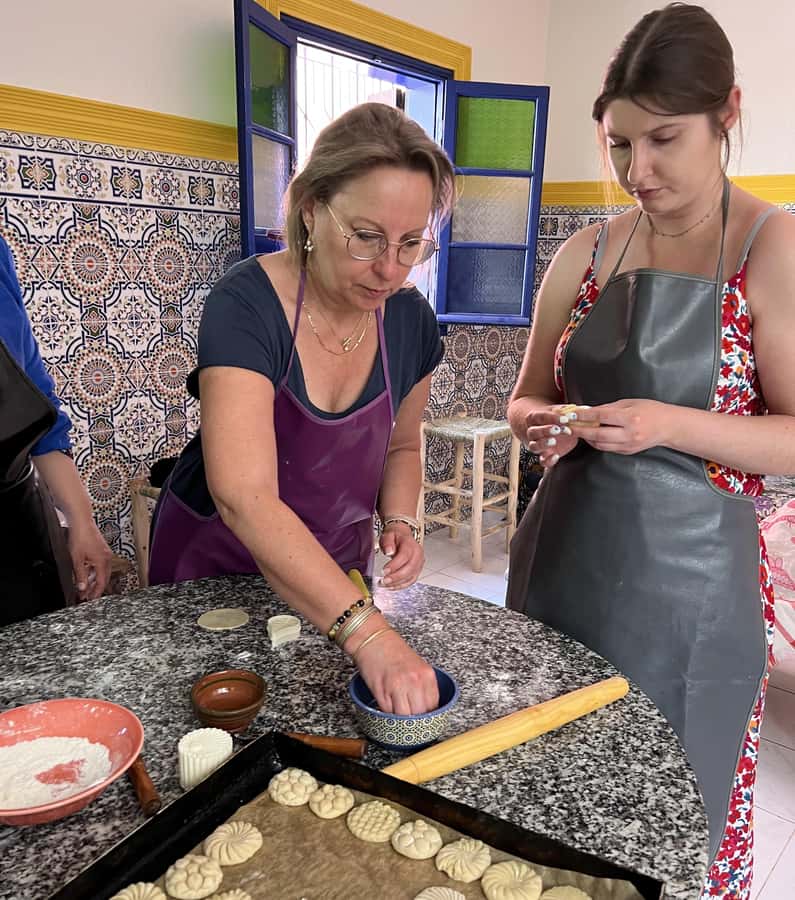
- Small group (up to 10) means you get real instruction, not just stand-and-watch
- Hands-on pastry making with classic Moroccan sweets like fekkas and kaab el ghazal
- Mint tea workshop included, including pouring technique
- Take-home box so your work doesn’t end when the tasting is over
- All equipment included, so you’re not hunting kitchen gear on your vacation
- 150 minutes is long enough to learn, bake, and taste without dragging on
Why this Marrakech pastry class feels more local than a food stop
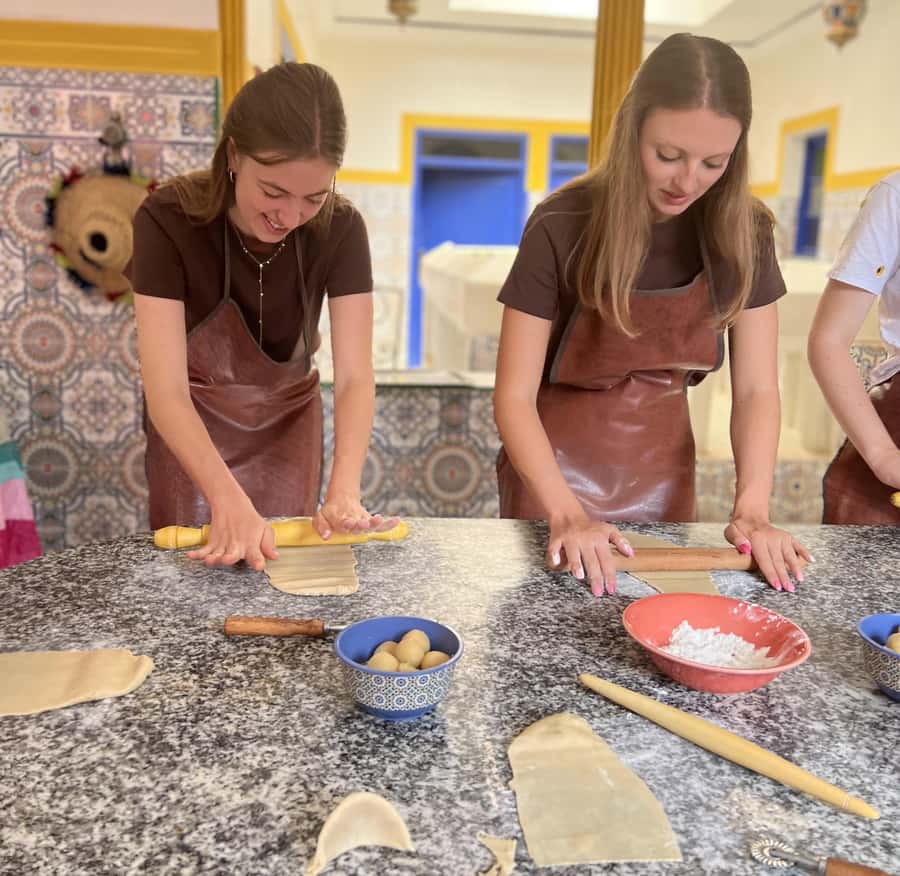
Marrakech has food everywhere. Street snacks, stall displays, menu signs in five languages. But this kind of class scratches a different itch. Instead of just eating, you learn how the flavor is built—through dough texture, shaping style, and spice/aroma choices.
I like that the format is straightforward: you work with a local chef in a real cooking setting, then you eat what you make while it’s still fresh from the oven. In a city where it’s easy to rush from one photo stop to the next, this gives you a calmer rhythm and a skill you can repeat later.
And you’re not just learning recipes in theory. The class is designed around simple but precise techniques, the sort of things that are hard to guess if you’ve only ever watched someone else cook. It’s also family-friendly in the sense that it’s interactive—people of different ages can participate in the dough-and-tea flow, as long as you meet the age guidance.
You can also read our reviews of more tours and experiences in Marrakesh.



The 150-minute flow: what happens while you bake and taste
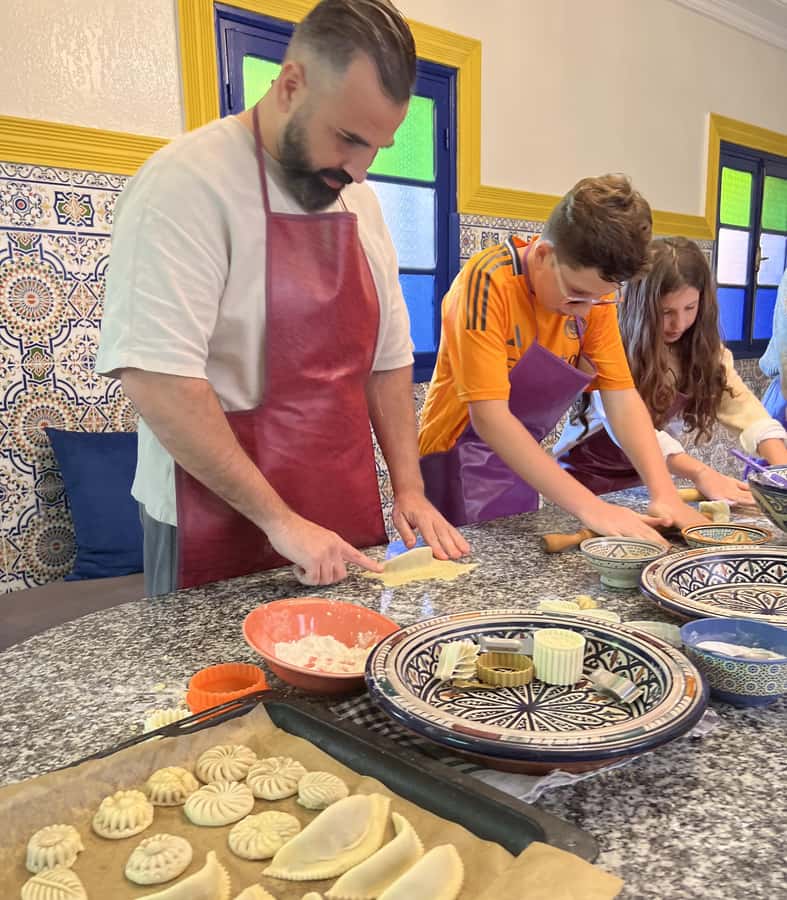
You should plan on about 150 minutes from start to finish. The workshop is structured like a real cooking class: you’ll be guided through pastry steps, then you’ll shift into tea after the baking/tasting window.
Here’s the practical rhythm you can expect:
1) Get set up and start with the pastry base
You’ll use the provided equipment, so you can focus on learning. You’ll work through the process step-by-step, which matters because Moroccan pastries often depend on small texture moments—how the dough is handled and how you portion and shape.
2) Learn the key “tricks” behind Moroccan pastry style
The class is explicitly about the secrets that make Moroccan pastries unique. That usually comes down to technique: correct handling, consistent shaping, and the way fillings and aromatic ingredients work together. In real sessions, you’ll see ingredient flavor profiles such as fennel seeds and orange blossom water—both are signature aromas that help sweets taste distinctly Moroccan, not just sweet.
3) Bake, then taste what you made
Once your pastries are baked, you get a tasting portion. This is one of the best parts because you get immediate feedback. If a pastry came out crisper, softer, or more fragrant than expected, the taste tells you what the technique did.
4) Make your own Moroccan mint tea
After the pastries, you learn how to prepare Moroccan mint tea. This isn’t just mixing leaves and sugar; it’s about doing it the Moroccan way, including pouring. The pouring style matters because it changes how it looks and how it feels in the moment, and you’ll likely have a go at it.
5) Leave with a box of pastries
You get a box of pastries to take home. That turns the class into something you can share the same day or save for later. It’s also a smart way to get through Marrakech without needing extra meals: you can snack on your own baking later, not just right after class.
The one “watch-out” here
If you’re very hungry when you arrive, you’ll still need to wait for baking to finish. The good news is that the process is active, so you’re not stuck sitting around. Just don’t plan to squeeze it between two super-tight appointments unless you’re comfortable arriving early.
Moroccan mint tea: the part you’ll actually use back home
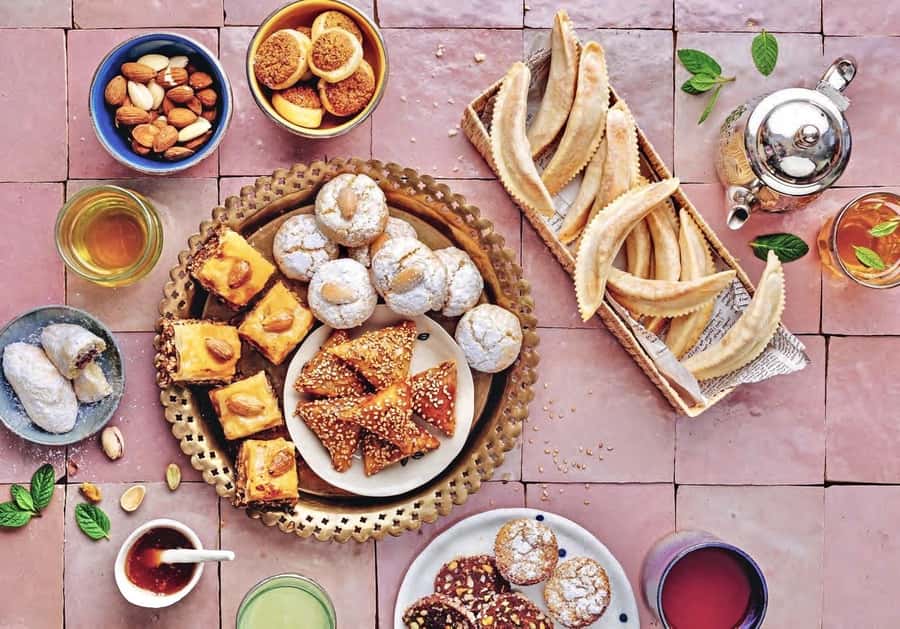
Moroccan mint tea is one of those things people talk about a lot, but it’s often done casually by the time it reaches home kitchens. This workshop treats it as a skill, not a garnish.
You’ll learn how to make Moroccan mint tea and finish with a tasting session alongside your pastries. The best practical value is that you’ll see the process in action and get the chance to pour it yourself. Even if you don’t recreate it perfectly on your first attempt, you’ll leave with a clearer idea of how it should look and taste.
And because mint tea is part of the social rhythm in Morocco, learning it adds an extra layer to your travel memories. You’ll be able to explain what makes it Moroccan beyond just calling it mint tea.
What pastries you may make (and why the flavors matter)
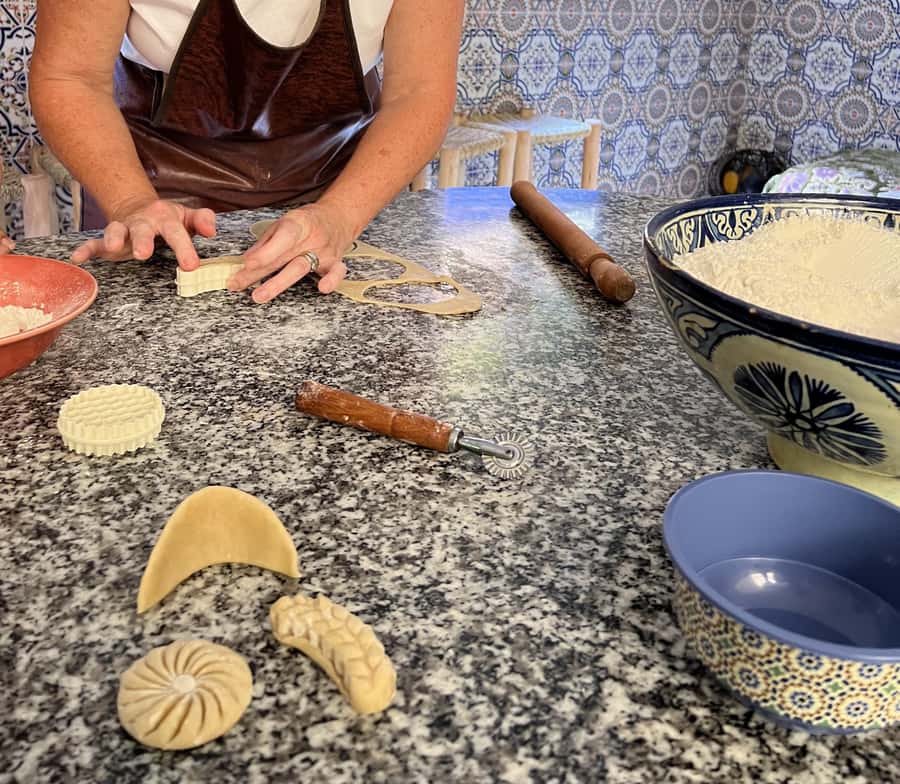
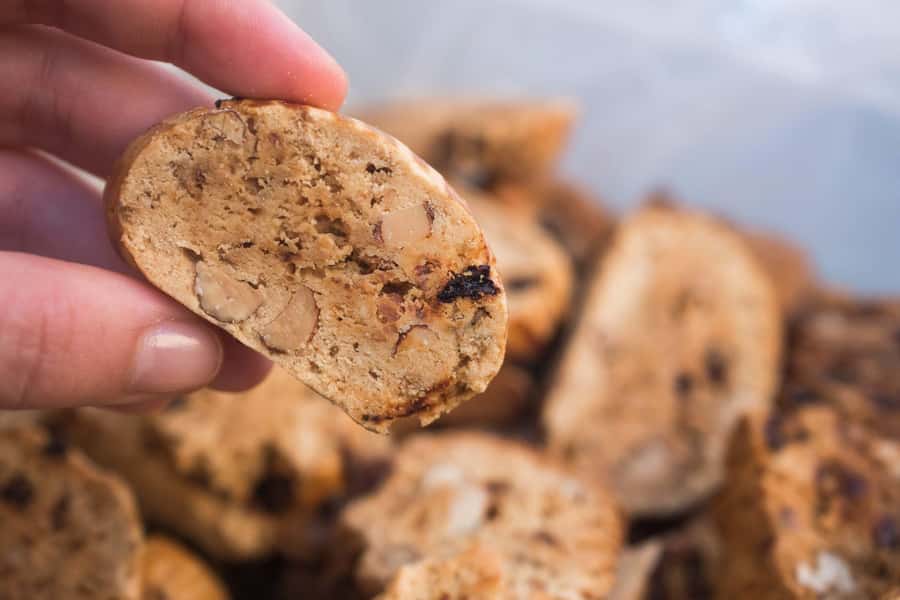
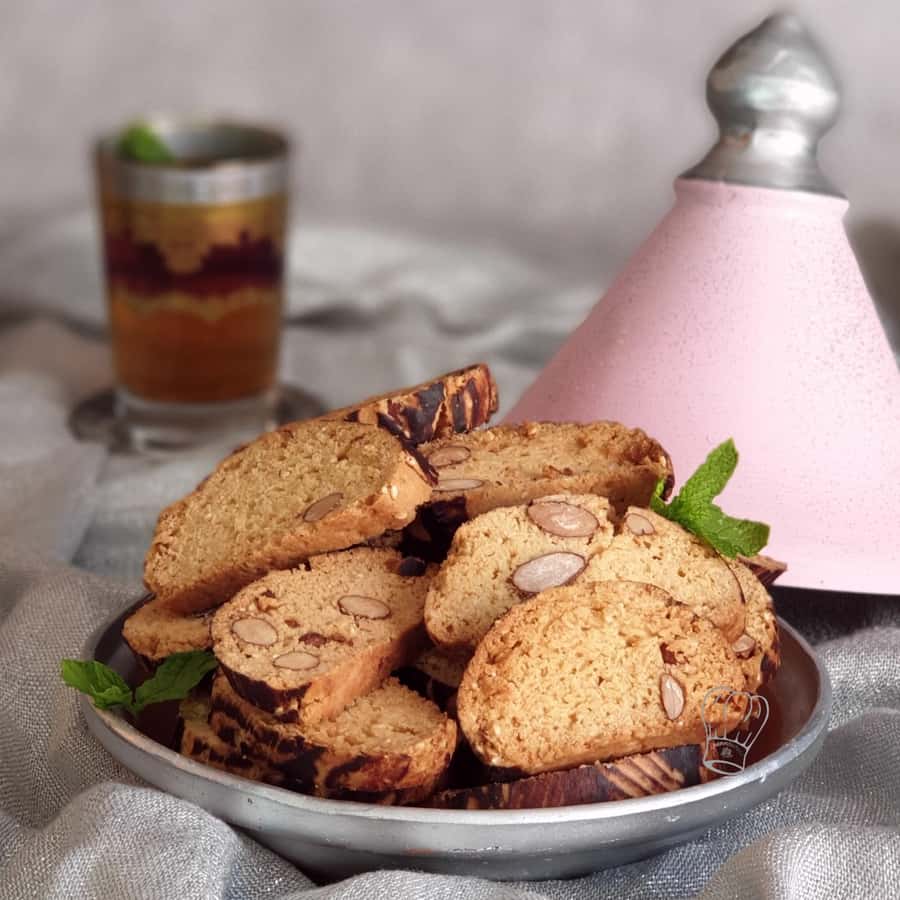
The class centers on Moroccan pastries in a way that feels both traditional and approachable. In at least some sessions, you might work with sweets such as:
- fekkas
- kaab el ghazal
You may also get exposed to common Moroccan pastry aromatics and ingredient signatures, like:
- fennel seeds
- orange blossom water
Why this matters: these are the kinds of flavors that instantly separate Moroccan sweets from generic bakery cookies. Fennel brings a warm, slightly sweet herbal note. Orange blossom water adds a floral, perfumed character that can smell like Morocco before you even taste it.
Also, it helps that the class is small (maximum 10). When you’re learning dough and shaping, you don’t want to compete for attention. A smaller group makes it easier to correct technique before it becomes baked into the final pastry.




Price and value in Marrakech terms (why $40 can make sense)
$40 per person for about 2.5 hours can sound like a “nice-to-have” if you’re comparing it to grabbing pastries from a stall. But the value here isn’t just the food. It’s the full package:
- a cooking class with a local chef/instructor
- all necessary equipment
- a taste session with Moroccan mint tea
- a box of pastries to take home
So you’re paying for instruction, ingredients that go into what you bake, and the experience of tasting fresh results. If you’ve ever tried to learn pastry baking at home without knowing the technique, you’ll understand why that kind of guidance is hard to price.
Compared to buying multiple pastries daily, this can even function like a food budget win—especially because you take home the work you did.
Meeting point, timing, and what you should bring
This workshop doesn’t offer hotel pickup and drop-off. The exact meeting point gets sent before your date. Plan your route ahead of time and aim to arrive a little early so you don’t feel rushed.
You should bring:
- water
- comfortable clothes suitable for cooking
If you’re going after a long day walking, this matters. You’ll be doing hands-on work, so wear something you can move in and that won’t make you worry about spills.
Also, if you have allergies, you need to provide the information in advance. That’s not a “nice detail”—it’s essential for a cooking class where you’ll be working with multiple ingredients.
Who this pastry-and-tea class is best for
This is a great pick if you want:
- a break from the souks that still centers on Moroccan food
- hands-on learning instead of a passive tour
- something you can share later because you take a box of pastries home
It’s also a solid choice for families, since it’s interactive and people often enjoy participating. The main limitations are age-related: it’s not suitable for children under 4 years, and anyone under 18 must be accompanied by an adult.
Because the group is limited and the instructor can work in Arabic, French, and English, it’s also a good option if you want less language stress.
Practical considerations before you book
A few things to think about, so you’re not surprised:
- You’ll be using your own transport to the meeting point since pickup isn’t included.
- You’ll need to share allergy info ahead of time.
- You should wear comfy clothes and expect a hands-on kitchen setting.
- You should plan around the full 150 minutes, not just a quick stop.
One more practical note: some classes include different pastry styles, but this workshop is clearly built around multiple Moroccan pastries and includes tea. So you’ll leave with both a dessert experience and a drink-making skill.
Should you book this Marrakech workshop or skip it?
I’d book this if you want a hands-on Moroccan food experience with real take-home value. The combination of pastry instruction, fresh tasting, and a Moroccan mint tea lesson is exactly the kind of activity that turns a travel day into something memorable and repeatable.
Skip it only if you strongly dislike cooking classes, hate coordinating meeting points without pickup, or you’re short on time. Otherwise, this is a fun, relaxed way to get beyond just eating what Morocco sells and instead learn what makes the flavors work.
If you’re building your Marrakech “day plan” and you want one calm, skill-based activity that still feels deliciously local, this one earns a spot.
FAQ
How long is the Moroccan pastries and tea class in Marrakech?
The experience lasts 150 minutes.
How much does the class cost?
It costs $40 per person.
Is hotel pickup included?
No. Hotel pickup and drop-off are not included.
Where do I meet the group?
The exact workshop location is sent before your experience date.
What’s included in the price?
You get the Moroccan pastry cooking class, all necessary cooking equipment, a tasting session with Moroccan mint tea, and a box of pastries to take home.
What should I bring with me?
Bring water and comfortable clothes suitable for cooking.
What languages will the instructor speak?
The instructor can work in Arabic, French, and English.
Are allergies accommodated?
Yes, but you must provide your allergy information in advance.
Is this class suitable for children?
It is not suitable for children under 4 years. Participants under 18 must be accompanied by an adult.
What is the cancellation policy?
You can cancel up to 24 hours in advance for a full refund.