REVIEW · CHIANG RAI
7 Wonders of Chiang Rai: Temples, Tea, and Golden Triangle
Book on GetYourGuide →Operated by R U tour and trek · Bookable on GetYourGuide
Chiang Rai in one day is a lot. This tour mixes modern temple art, local culture, and two sides of the region’s story, all with an English guide and a smooth pace. I especially love the White Temple at Wat Rong Khun (yes, it sparkles) and the stop at the Golden Triangle for that quick “wow, this is real” moment where borders meet.
The main consideration is simple: it’s a full day, and you’ll be moving between several sites, with optional entrance fees along the way. If you hate long transport days or prefer deep time at one place, plan on adjusting your expectations.
In This Review
- 6 things you’ll like about this Chiang Rai highlights day
- Starting in Chiang Rai: an early start that works
- Wat Rong Khun: the White Temple’s mirrored glow and pop-culture twists
- Wat Rong Suea Ten: Suea Ten, Dancing Tiger legend, and gold-on-blue details
- Baan Dam (Black House): confronting the dark side without getting morbid
- Long Neck Karen village: cultural traditions, weaving, and the brass-ring story
- Choui Fong tea plantation: a calm break with tastings and panoramic views
- Golden Triangle: where Thailand, Laos, and Myanmar meet
- House of Opium Museum: a small museum that explains the machinery of a dark trade
- Price and value: why $41 can work if you actually use the included parts
- Timing, comfort, and who this day tour fits best
- Should you book this Chiang Rai tour?
- FAQ
- What time is hotel pickup in Chiang Rai?
- How long is the tour?
- Is lunch included?
- Do I need to pay temple and museum entrance fees?
- How big is the group?
- What does the tour include in terms of transportation and guide?
- What should I bring for the day?
6 things you’ll like about this Chiang Rai highlights day
- Wat Rong Khun: mirrored-glass details and murals that blend Buddhist themes with modern references
- Wat Rong Suea Ten (Suea Ten): the blue-and-gold Lanna-style look, plus the Dancing Tiger legends
- Baan Dam (Black House): a dark art complex focused on mortality and life’s shadow side
- Long Neck Karen village: learn about brass-ring traditions and see weaving in action
- Choui Fong tea plantation: tea tastings with views over neatly trimmed fields
- Golden Triangle + Opium Museum: river views and a museum that explains the opium trade’s mechanics
Starting in Chiang Rai: an early start that works
Pickup runs from about 8:00 to 8:30 AM, right from your hotel area in central Chiang Rai (within 3 km). That early timing matters here. Chiang Rai’s “wow” stops are spread out, and this schedule is built to fit them without rushing every moment.
The group stays small, capped at 10 people. For me, that’s the difference between a day that feels like a checklist and one that feels like a guided route with space to ask questions and actually look around.
You’ll also get a Thai lunch buffet and drinking water included, plus travel insurance. That helps the day feel more like a package than a string of separate tickets.
You can also read our reviews of more tours and experiences in Chiang Rai.
Wat Rong Khun: the White Temple’s mirrored glow and pop-culture twists
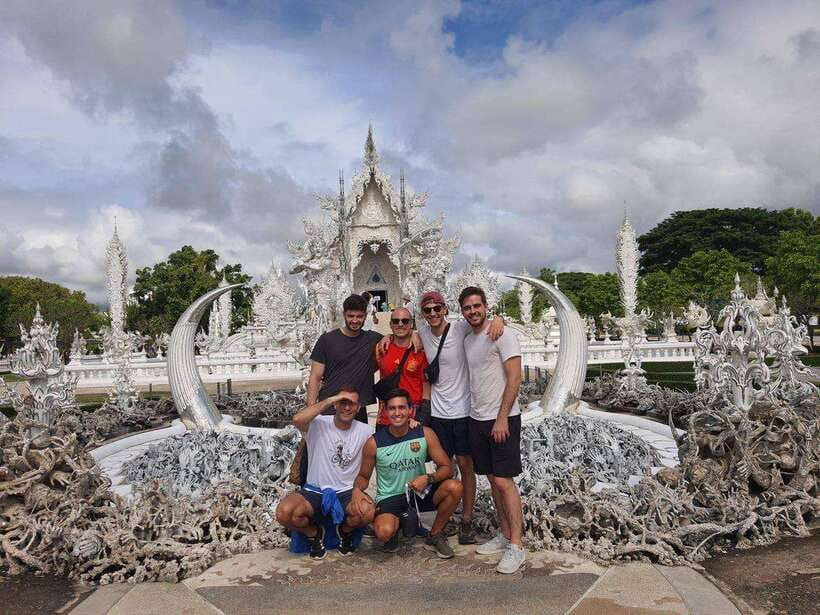
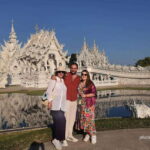
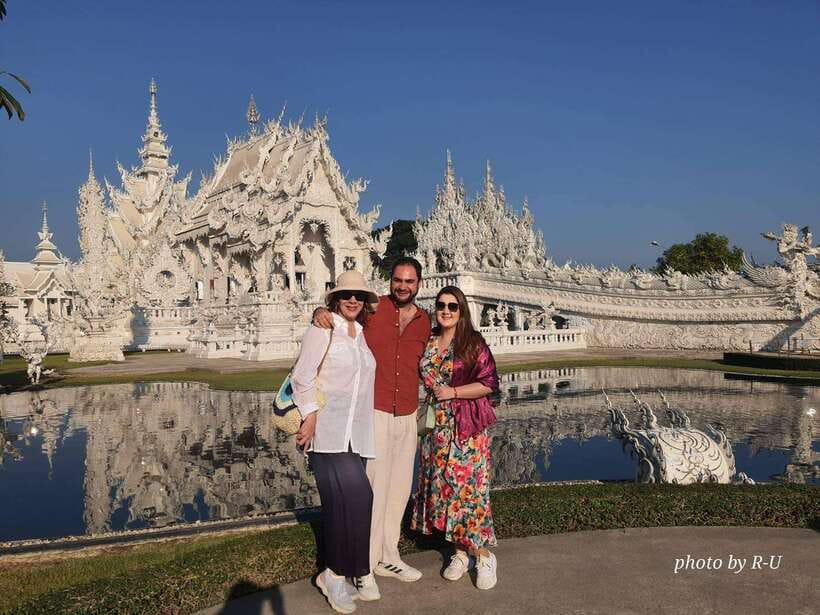
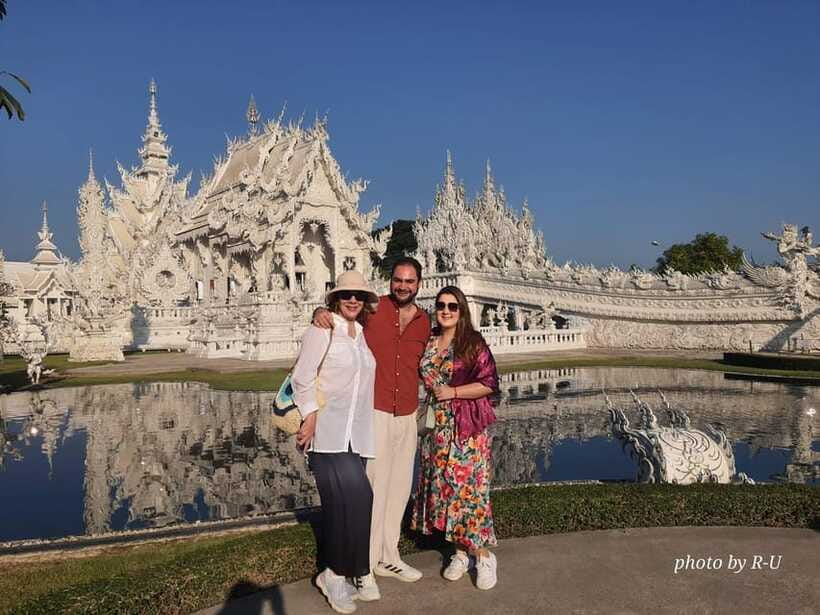
Wat Rong Khun, created by Chalermchai Kositpipat, is the first stop for a reason: it sets the tone for the whole day. The temple’s look is impossible to ignore. White surfaces, mirrored glass, and intricate details make it feel like the building is lit from the inside when the sun hits.
What I like most is how the symbolism shows up in the art. The White Temple is linked with ideas of purity, but the design doesn’t stay in a strict “only traditional” box. Inside, you’ll find murals that mix Buddhist themes with modern pop-culture references. It can feel surprising at first, then oddly satisfying, because it makes the temple feel alive rather than museum-still.
Practical tip: bring a camera and expect to take a lot of photos. Also note the entrance fee is not included (100 baht per person), so decide in the moment whether you want to go all the way in.
Wat Rong Suea Ten: Suea Ten, Dancing Tiger legend, and gold-on-blue details
Next comes Wat Rong Suea Ten, also known locally as Suea Ten. The color scheme is the star: deep blue hues with gold accents. The style draws on modern interpretations of traditional Lanna designs, so it feels like Chiang Rai’s temple world is both rooted and reinvented.
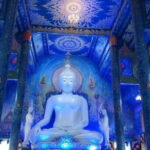
Inside, a serene white Buddha statue is the focal point, surrounded by detailed murals. And there’s a local story attached to the name. Suea Ten means Dancing Tiger, from legends about tigers that once roamed the area. You’ll hear that context from your guide, and it adds weight to details you might otherwise miss.
Entrance fees here aren’t listed separately in the tour extras you provided, so I’d treat entry as pay-as-you-go. If you’re temple-art curious, this one is usually worth budgeting time and ticket money.
Baan Dam (Black House): confronting the dark side without getting morbid
The Black House, or Baan Dam, flips the tone. Instead of a temple meant to uplift, it’s an art complex by Thawan Duchanee that explores darker themes: life, death, and how people think about mortality.
What you’ll notice is the way materials are used. Buildings are decorated with animal bones, skins, and horns, tied to local beliefs about existence. It’s not meant as horror entertainment. It’s meant to make you sit with questions.
I appreciate that the tour balances the day. After glittering-white beauty, you get a space that refuses to be comfortable. If you only want light-and-hopeful sights, you might find this stop heavy. But if you like art that challenges you, it lands as one of the more memorable experiences on the route.
The Black House entrance fee is not included (80 baht per person). It’s also listed as optional, so you can decide on the spot based on how you feel in the moment.
Long Neck Karen village: cultural traditions, weaving, and the brass-ring story
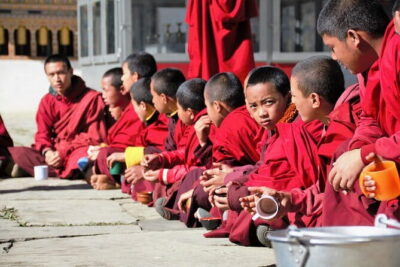
Then you head to a Long Neck Karen village. Here, the tradition you’ll learn about is the brass rings worn around women’s necks. The rings create the illusion of elongated necks and are part of a cultural identity passed down through generations.
This stop can be the most personally intense part of the day for many people, because it’s not just a photo stop. You’ll have time to learn about daily life, see weaving skills, and browse handcrafted souvenirs. The important thing is how you approach it. Treat it like a community you’re visiting, not a stage set. Ask questions, look closely, and avoid rushing.
A practical note: the Long Neck Karen Village fee is not included (300 baht per person). That’s on the high side compared to other entrances on this list, so I’d only budget for it if you genuinely want the cultural interaction, not just a quick snapshot.
Choui Fong tea plantation: a calm break with tastings and panoramic views
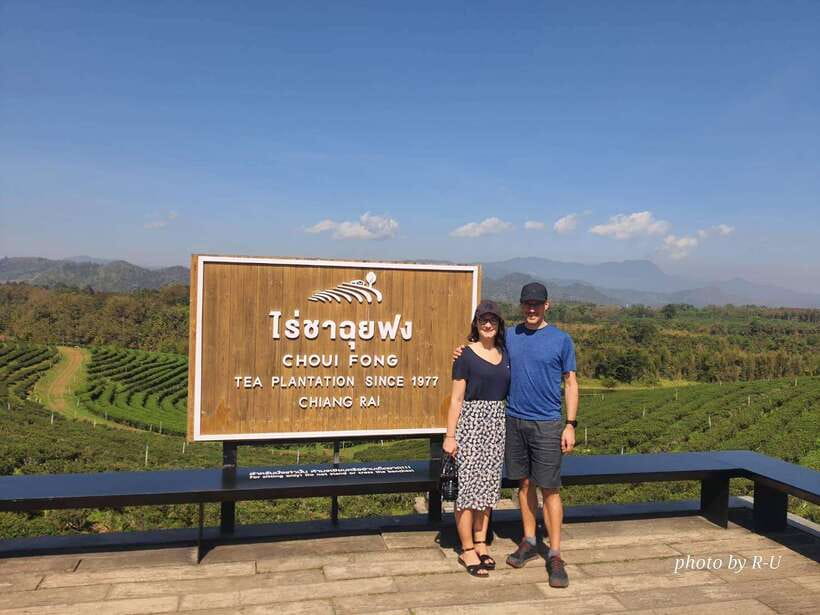
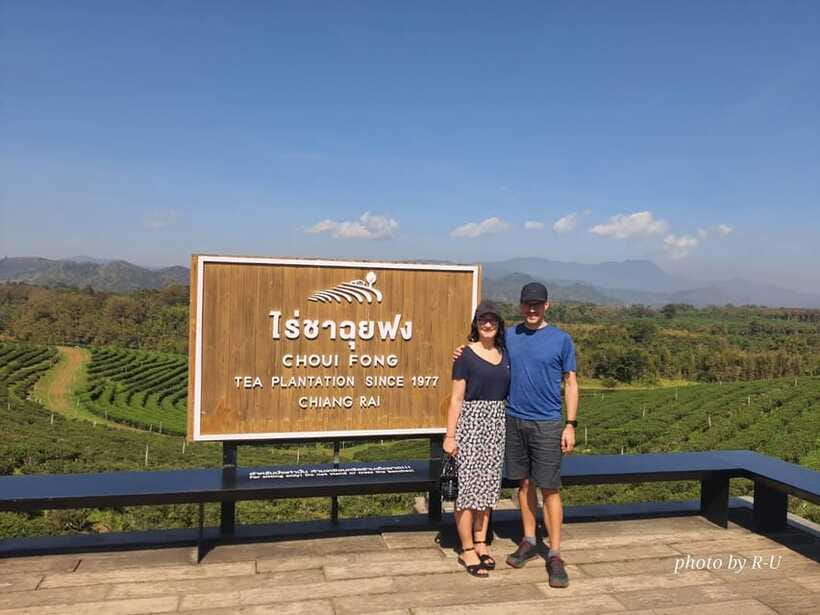
After the heavier stops, Choui Fong Tea Plantation gives you something different: rolling green hills and neat, trimmed tea fields. It’s a break in both mood and pace.
You’ll walk through the plantation and learn the basic cultivation process. Then you get to taste tea—freshly brewed—and you can usually enjoy tea-based desserts at the café. The panoramic views are part of the payoff, and it’s a nice place to reset before the final stretch.
The good value here is that this isn’t just “look at plants.” You get the story of how tea grows and how it ends up on your cup. That context makes the tasting more meaningful.
Also, tea farms are practical for photographers. Morning light and green textures tend to cooperate. Just wear comfortable shoes. The ground can be uneven.
Golden Triangle: where Thailand, Laos, and Myanmar meet
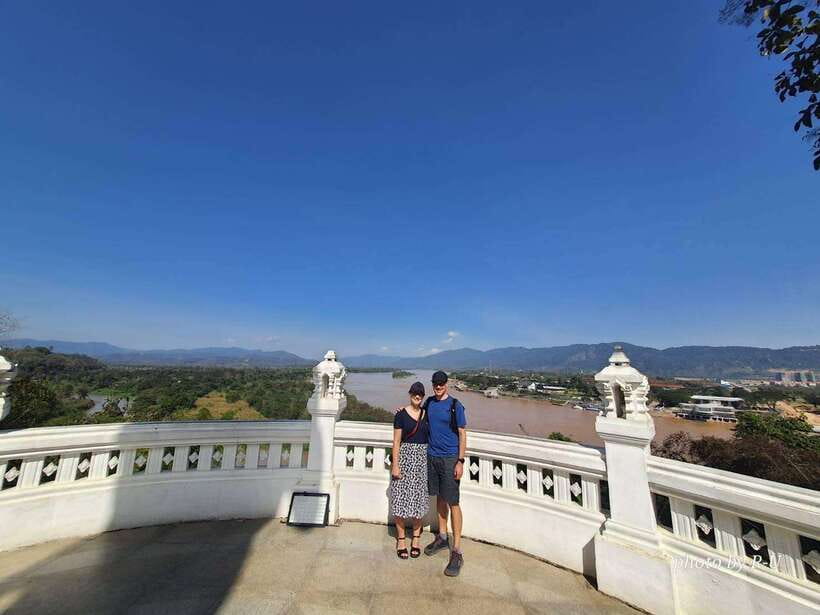
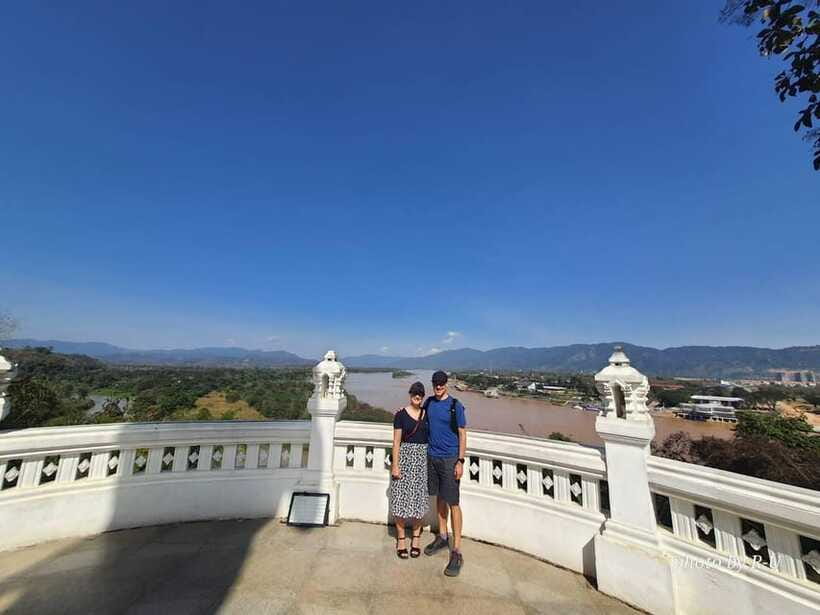
The Golden Triangle stop is where the geography lesson becomes real. You’ll be at the meeting point of three countries: Thailand, Laos, and Myanmar. On a clear day, it feels like the world is literally framed by rivers.
This area used to be notorious for opium trade activity. Now it’s a calmer visitor zone where you can enjoy views of the Mekong and Ruak rivers. Your guide will explain how the region has changed and why it matters in Southeast Asia’s wider story.
What I like is the balance. This isn’t presented as a myth. It’s presented as history that shifted over time, and that makes the later museum visit more understandable.
Photo tip: plan on taking shots from different angles, especially where river views open up. Light changes quickly, and the “three-country” feeling depends on perspective.
House of Opium Museum: a small museum that explains the machinery of a dark trade
Right near the Golden Triangle, you’ll find the House of Opium Museum. It’s smaller than many big-history museums, but it focuses on how the opium trade worked and how it affected local communities.
Inside, you’ll see opium pipes and tools, plus displays explaining cultivation and smuggling processes. There’s also educational context about global efforts to combat the trade.
I find this stop valuable because it connects two things you might otherwise treat separately: geography and history. When you understand the trade’s mechanics, the Golden Triangle’s modern calm makes more sense.
Entrance fee here is not included (50 baht per person). Since it’s optional, you can also decide whether you want the full museum experience or just a quick look. If you’re sensitive to heavy subject matter, take your time. There’s no prize for rushing.
Price and value: why $41 can work if you actually use the included parts
At around $41 per person, this tour can be a good value in Chiang Rai, mainly because several costs are bundled.
What you’re getting included:
- hotel-area pickup and drop-off
- an English-speaking guide for the whole route
- a Thai lunch buffet
- drinking water
- travel insurance
What you should expect as add-ons:
- Wat Rong Khun entrance (100 baht)
- Baan Dam entrance (80 baht)
- Long Neck Karen Village (300 baht)
- Opium Museum (50 baht)
If you pay for every listed entry, you’ll add up the total. The big swing factor is the Karen village fee. If that’s not a priority for you, you can reduce the extras and still get a lot from the temple and triangle stops.
For me, the real “value” isn’t just money. It’s the fact that you get a guided day that connects sites with context. That’s what turns photo stops into something you remember.
Timing, comfort, and who this day tour fits best
This is a full-day tour. You start early and finish late, ending around 6:30 to 7:00 PM. That means your energy plan matters. Bring snacks if you know you get hungry between stops (only if you’re allowed to, since outside food rules aren’t specified). Most importantly, wear comfortable shoes. You’ll be walking, standing, and taking photos for long stretches.
The tour isn’t recommended for people over 80 years old, and it’s not suitable for babies under 1 year. Also, baby strollers and bikes aren’t allowed, and alcohol and drugs aren’t allowed.
If you’re coming from Chiang Mai, note that returning the same day isn’t recommended. This route keeps you out late.
This tour is a strong match if you want:
- variety in one day: temples, art, culture, tea, and history
- an English guide who keeps the day moving and makes stops make sense
- a small-group feel rather than a huge bus crowd
Should you book this Chiang Rai tour?
Book it if you want a high-contrast day: sparkling modern temple art, a darker art stop, a cultural village visit, and the Golden Triangle story tied to the opium era. The route is built to keep momentum, and the mix is what makes it exciting and varied.
Skip it if you want a slow, in-depth day at one or two places, or if cultural village visits and darker museum topics don’t match your comfort level. You can still enjoy Chiang Rai, but this one is made for people who like a packed itinerary.
If you do book, I’d go in with one mindset: be curious at every stop, and give yourself permission to feel both impressed and uneasy. That’s where the day earns its impact.
FAQ
What time is hotel pickup in Chiang Rai?
Pickup is available from your hotel between 8:00 AM and 8:30 AM. You should wait at the hotel lobby during that window.
How long is the tour?
It’s a full-day tour that ends back at the meeting point between 6:30 PM and 7:00 PM.
Is lunch included?
Yes. A Thai lunch buffet is included.
Do I need to pay temple and museum entrance fees?
Entrance fees are not included for the White Temple, Black House, Long Neck Karen Village, and the Opium Museum. The tour also notes that paying admission fees is optional, so you can decide on-site.
How big is the group?
The group is small, limited to 10 participants.
What does the tour include in terms of transportation and guide?
The tour includes pick-up and drop-off within Chiang Rai city, plus an English-speaking live guide.
What should I bring for the day?
Bring comfortable shoes and a camera. You should also have cash and a credit card with you.