REVIEW · STRATFORD UPON AVON
Traditional Afternoon Tea Experience and Baking Class in Stratford-upon-Avon
Book on Viator →Bookable on Viator
Scones made with your own hands. This private Stratford-upon-Avon class turns classic afternoon tea into a hands-on baking session, with homemade jam and clotted cream before you even touch the ovens. It is built for people who want the fun part of baking, not just a quick taste and a walk out.
What I like most is the structure: you get guided steps for several bakes, then you all sit down together to eat what you made. I also like the “go home with it” payoff, because you should have leftovers to take away plus a mini jar of jam and an antique-style piece of crockery as a souvenir.
One consideration: this experience is food-heavy and timed (about 3 hours), so if you prefer sightseeing first and cooking later, you may want to plan your day around it.
In This Review
- Key things that make this class worth your time
- First steps at The Dough House in Stratford-upon-Avon
- The jam and clotted cream lesson you will actually remember
- What you bake: scones, Victoria sponges, fudge cakes, and more
- The sit-down afternoon tea: what comes to the table
- The take-home payoff: jam, leftovers, and that souvenir crockery
- Price and value: is $175.90 per person fair?
- Who this class suits best (and who might not)
- The host factor: why Fulden makes a difference
- Should you book this Stratford baking and afternoon tea class?
- FAQ
- What do I make during the baking class?
- How long does the experience last?
- What is included with the afternoon tea?
- Can kids join?
- Do you have gluten-free options?
- Do I get anything to take home?
Key things that make this class worth your time
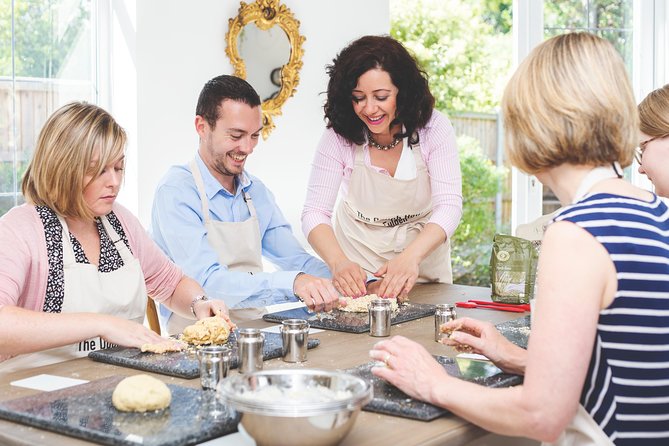
- Homemade jam and clotted cream first: you start from scratch, then build the rest of the afternoon tea around it
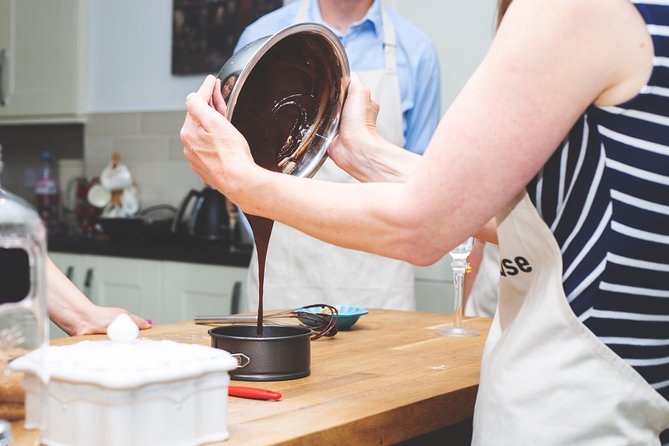
- Real variety of bakes: scones (sweet and savoury), Victoria sponges, chocolate fudge cakes, plus a seasonal pudding
- A private class feel: only your group participates, so you get more hands-on attention
- Organic ingredients at The Dough House: you get to bake with what the kitchen chooses, not mystery shortcuts
- You eat together, then take leftovers: the session ends with a proper sit-down tea and take-home goodies
- Recipe support after: you receive written recipes and lots of tips to practice at home
First steps at The Dough House in Stratford-upon-Avon
The experience starts at 9 Ely St, Stratford-upon-Avon (CV37 6LW). You will meet the host at the same spot where it ends, which makes it easy to build into a day without complicated transfers. You are also told it is near public transportation, which matters if you are not going by car.
Because it is a private activity, you avoid the awkwardness of getting placed in the middle of strangers who are all at different skill levels. You still get a friendly, guided atmosphere, but the pace feels designed for your group. One review even notes the setting is in a beautiful, very old building, which helps you shift from travel mode into slow down and bake mode.
The jam and clotted cream lesson you will actually remember
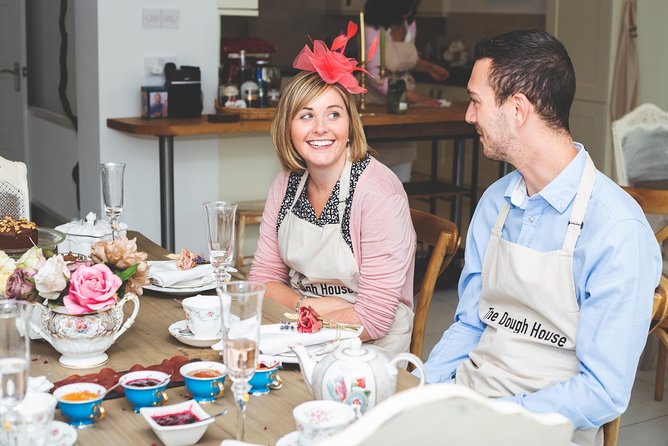
Before any baking, the class focuses on two foundations of afternoon tea: homemade mixed berry jam and clotted cream. That is the part many people think they can only get from a store. Here, you learn how it comes together in a kitchen setting, with guidance so you can repeat it later.
You also make a seasonal pudding during the earlier phase. Even if you are not a “dessert person,” the pudding helps break up the afternoon so it does not feel like one long stretch of dough work. It also gives you a fuller tea spread, since afternoon tea is supposed to be a mix of textures and tastes, not only scones.
And yes, the class uses organic ingredients at The Dough House. For me, that matters because you can often taste the difference in how simple ingredients behave. It also signals the kitchen has a consistent style, not a grab-bag of whatever is convenient.
What you bake: scones, Victoria sponges, fudge cakes, and more
Once the foundations are done, you move into the fun part: hands-on baking. Expect to bake mini chocolate fudge cakes, Victoria sponges, and multiple types of scones. The scones are a big deal here, because you are not just making one standard batch.
You should have a chance to try both traditional scones and seasonal or unique varieties. In one example from the class experience, someone made pizza scones, while other group members made different flavours. That kind of variety is exactly what you want if you are worried afternoon tea baking might feel repetitive.
The class also sets you up with a workflow where you get a job to do. One nice detail from the experience is that the pace allows for group instruction, then you can work on individual tasks (like scone shaping or finishing your portion). That helps if you have mixed baking confidence in your group. Even better: several people note they did not need to take a bunch of notes because you are given written recipes and tips to follow along.
There is also a mention that gluten-free requests can be accommodated, including gluten-free sponges and gluten-free scones. That is great to know if you need options. The key rule is simple: advise in advance about any food allergy or restriction.
The sit-down afternoon tea: what comes to the table
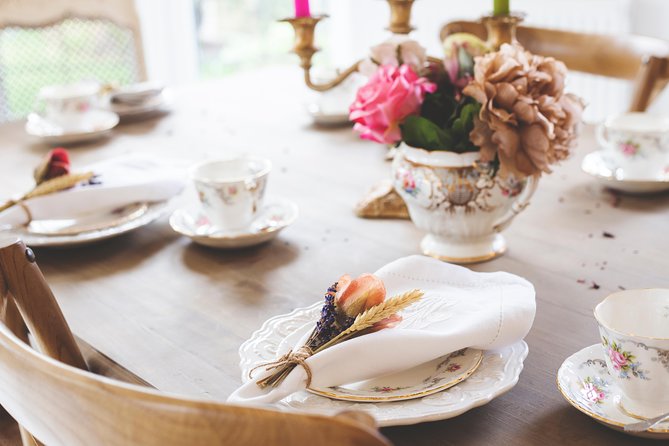
After baking, you all gather for a proper afternoon tea. This is not a quick bite while you stand around. You sit down and share what you made, plus additional items that round out the spread.
The classic components are there:
- scones
- clotted cream
- different jams
- cakes (including what you baked during the class)
- seasonal pudding
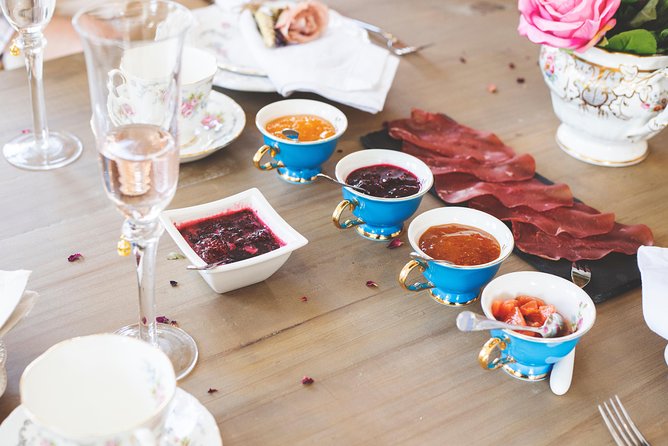
You also get charcuterie, dips, and other tea-time treats. Drinks are part of the meal too: tea and coffee, plus a glass of sparkling wine. One review also mentions Turkish spreads, which hints the spread can go beyond the basic scone-and-jam lineup.
This part matters for two reasons. First, it turns your baking effort into a full experience, not just a cooking class. Second, it gives you time to taste and compare your own results to what the kitchen intended. If something is slightly different (shape, sweetness, texture), you can still learn by eating.
The take-home payoff: jam, leftovers, and that souvenir crockery
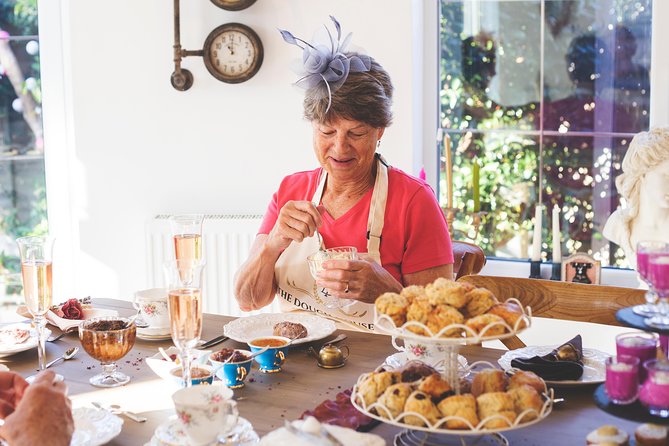
Here is where this class feels especially thoughtful. The session is designed so you do not leave hungry and empty-handed. The expectation is that there will be plenty of leftovers, and you can take extras home.
You should also receive:
- a mini jar of jam
- an antique-style piece of crockery as a souvenir
That combination is smart. A mini jar lets you remember the flavour immediately. The crockery gives you a physical reminder you can reuse or display. For most people, this is what makes the class feel like more than a one-time activity.
And because you should have written recipes (plus tips sent by email), you are not just paying for an afternoon. You are also buying a future weekend project: baking your own version again.
Price and value: is $175.90 per person fair?
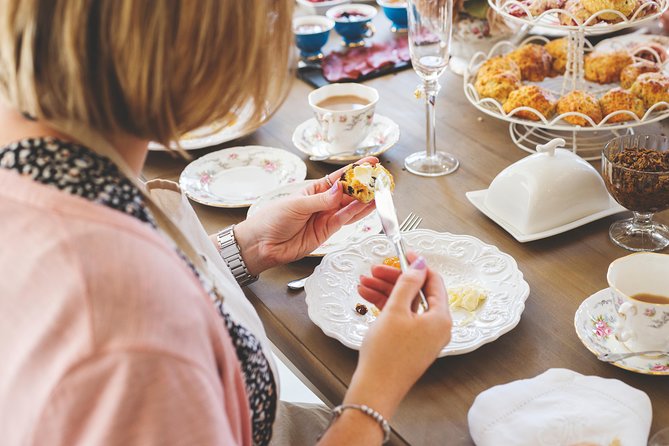
At $175.90 per person (for about 3 hours), this is not a budget activity. But it also is not priced like a basic tasting. You are paying for guided instruction, ingredients, equipment, and a full afternoon tea meal with drinks and take-home food.
What pushes it toward value is the amount of output you get:
- multiple baked items (scones plus cakes)
- homemade jam and clotted cream
- a seasonal pudding component
- a sit-down tea with bubbly
- leftovers and take-home jam
- recipe support after the class
If you compare it to the cost of buying a full afternoon tea plus paying for a separate baking workshop, the price starts to look more reasonable. It is also a private activity, which can matter a lot if you are traveling with a small group or family.
The one thing to watch is your own preference. If you love baking and want a practical skill you can recreate, this price makes more sense. If you mainly want atmosphere and photos, you might find it heavy on cooking tasks.
Who this class suits best (and who might not)

This works especially well for:
- couples or small groups who want a shared activity
- families with kids ages 10 and up (with an adult)
- people who like learning by doing, not only watching
- anyone who wants to take home real food, not just a souvenir
It may feel like a mismatch if:
- you are looking for a short, light activity with minimal hands-on time
- you hate sticky mess and flour on your sleeves (it is baking, after all)
- you have a very tight schedule and cannot spare about 3 hours
If your group has different skill levels, the class style described across the experience helps. You get steps, group guidance, and then you complete assigned parts of the bake.
The host factor: why Fulden makes a difference
A standout theme is the quality of the teaching. In multiple parts of the experience, the head baker Fulden is named. People describe her as warm, skilled at explaining, and good at keeping things relaxed while everyone stays involved.
There is also a mention of Lola as part of the supportive team. That matters because a cooking class is not only technique. It is comfort. When you feel at ease, you are more likely to try the tricky steps like shaping scones or getting the timing right on cakes.
If you take one thing from all of this, take this: the experience is designed so you do not feel pushed to be an expert. You get help, you get to work, and you still end up with a satisfying tea spread.
Should you book this Stratford baking and afternoon tea class?
Book it if you want a hands-on Stratford-upon-Avon activity that produces edible results, not just a meal. The homemade jam and clotted cream start is a big draw, and the mix of scones plus Victoria sponges plus fudge cake gives you variety in one sitting. I also like that you should go home with leftovers, plus recipe support to recreate it.
Skip it or think twice if you would rather spend your time wandering around and tasting without cooking. This is about baking, mixing, shaping, and then eating together. It is a true workshop, and the best part is the doing.
Finally, since it is private, it can fill up. You might find it helps to plan ahead.
FAQ
What do I make during the baking class?
You will focus on homemade mixed berry jam and clotted cream first, plus a seasonal pudding. Then you will bake mini chocolate fudge cakes, Victoria sponges, and a variety of sweet and savoury scones, including traditional options and seasonal or unique types.
How long does the experience last?
The activity runs about 3 hours.
What is included with the afternoon tea?
Your afternoon tea includes scones, clotted cream, different jams, dips and charcuterie, and cakes or meringues. Drinks include tea, coffee, sparkling wine (a glass of bubbly), and alcoholic beverages.
Can kids join?
Yes. Guests ages 10 and up can attend with their parents.
Do you have gluten-free options?
The class advises you to message in advance about food allergies or restrictions. In at least one described experience, gluten-free sponges and gluten-free scones were available.
Do I get anything to take home?
Yes. You should have leftovers to take home, plus a mini jar of jam. You are also given a souvenir antique-style piece of crockery.