REVIEW · ALBERTA
Discover the Lake Agnes Tea House Trail with an Audio Nature Tour
Book on Viator →Operated by Tripvia Tours · Bookable on Viator
Your phone becomes your quiet trail guide. This Lake Agnes Tea House Trail experience uses GPS-triggered audio so you hear what matters as you walk around Lake Louise’s countryside. You get the Lake Agnes viewpoint plus the big-name backdrops like the Victoria Glacier, all at your own pace.
What I like most is that it’s private. No random group to keep up with, and you can still download the tour on multiple devices for your own crew. I also love the offline setup: download on Wi‑Fi first, then the app can keep working even if you lose signal.
One thing to plan for: this is still a real hike. Even if the trail is described as relatively smooth, expect lots of uphill and some rocky sections near the top, and the app experience can be hit-or-miss on a few phones.
In This Review
- Quick hits before you walk
- What this audio nature tour actually feels like
- Starting at Fairmont Chateau Lake Louise: where the story begins
- Lake Louise viewpoints: names, water, and the turquoise magnet
- Victoria Glacier stop: the backdrop you can learn to read
- Banff National Park history: short, usable context
- Through boreal forest: Banff’s Boreal Biome and the changing feel
- Wildlife crossing: the bridge-underpass design
- The switchbacks and early glimpses: keep your breath steady
- Castleguard Cave: a fun detour in information
- Wildlife facts: birds, plants, and the numbers game
- Mirror Lake: the quiet pause before the Tea House
- Lake Agnes Tea House: waterfall views and the final ascent
- Lake Agnes viewpoints: elevation and the right-side perspective
- The return path: Castle Mountain, peaks, and repeat learning
- Recreational in Banff National Park and glacial melting: why the freeze matters
- How I’d plan this hike to get the best payoff
- Is this worth $8.22 per person?
- Should you book the Lake Agnes Tea House Audio Nature Tour?
- FAQ
- Do I need cell service during the tour?
- How long is the hike on this audio tour?
- What distance is it?
- Is this a private experience?
- Do I need to bring a smartphone and headphones?
- What language is the tour offered in?
Quick hits before you walk
- Offline-friendly audio with live GPS: download before you go, then follow along with the map and automatic playback.
- Private by design: only your group participates, so you set the pace and stop when you want.
- 7 km, scenic payoff: the walk links Lake Louise-area highlights to the Lake Agnes Tea House.
- Game + guidance: a fun location game pops up when each audio segment plays.
- Lots of themed stops: from boreal forest to wildlife crossings, the story changes as the trail changes.
- Bring a charged phone: you need a smartphone (headphones aren’t provided) and solid battery for 2–3 hours.
What this audio nature tour actually feels like
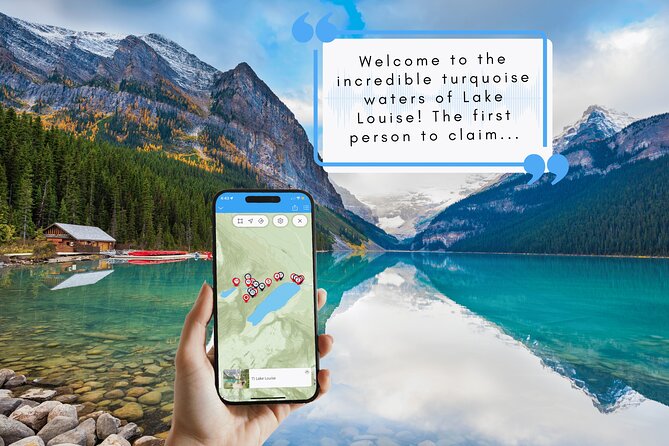
This isn’t a “press play and hope” audio walk. The tour is built around auto-playing commentary that kicks in when you get close to each stop, plus a live GPS map that shows where you are and where to go next. That matters on this route because the trail is climbing, and it’s easy to get mentally tired and start moving on autopilot.
Also, you’re not trapped in a big group rhythm. You can pause for photos, check the view for long minutes, or take a breather without anyone giving you the sideways stare that says hurry up. If you’re traveling with friends, you can make it a shared experience: the tour is private, and you can include as many people as you like in your personal group by adding their devices for downloads.
The price is low compared with many guided tours, which makes the value part of the appeal. For about $8.22 per person, you’re paying for a guided-style route with phone-based audio, not for someone leading you in person. That can be a big win if you like independence but still want context for what you’re seeing.
Starting at Fairmont Chateau Lake Louise: where the story begins
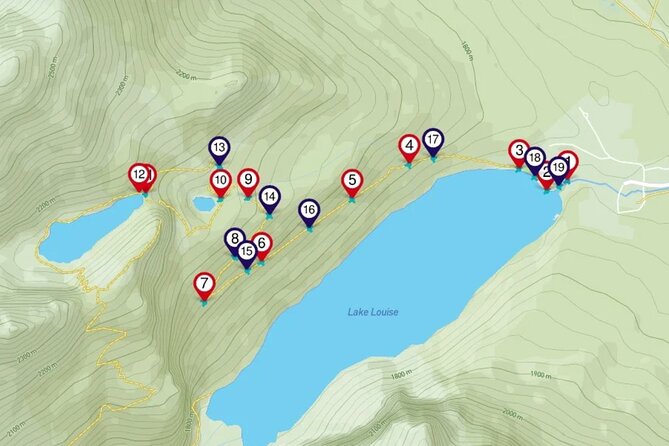
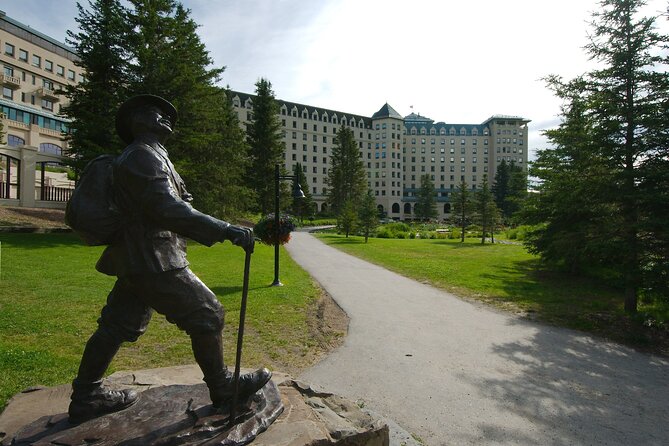
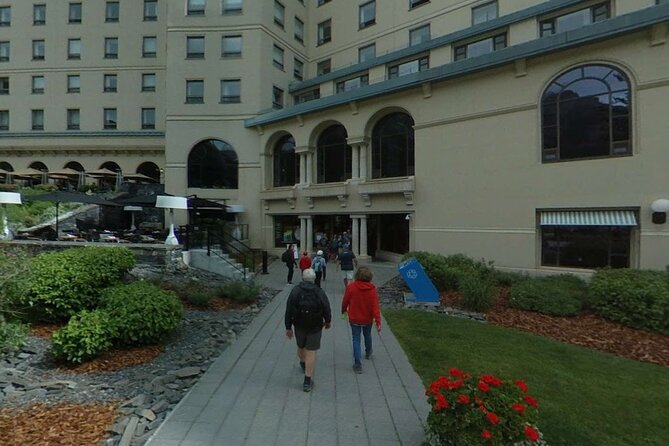
You start at 111 Lake Louise Dr, Lake Louise, AB. The first stop is the Fairmont Chateau Lake Louise, which is a smart place to begin. The area is iconic, easy to locate, and it sets the tone: this hike is about big views, but it’s also about what’s going on in the plants, animals, and glacial geology around you.
From there, the audio nature guide leads you along a 7 km walk described as relatively smooth, heading toward the Tea House. The commentary at this beginning phase focuses on the local ecosystem—animals and plants—and also gives some grounding in the region’s history.
I especially like that this stop frames what you’re going to see later. The audio mentions Victoria Glacier, Lake Louise, Mirror Lake, and more, so your brain tags the scenery as you go. You’re not just counting switchbacks; you’re learning what you’re looking at.
There’s also a location game tied into the audio. When each segment plays, you check your device and tap your answer. It’s not required, but it adds a little “walk and pay attention” energy without turning the hike into a chore.
Practical note: the tour says the app can be used without signal once downloaded. Still, you’ll want your phone working normally (GPS enabled, screen brightness reasonable, battery charged).
Lake Louise viewpoints: names, water, and the turquoise magnet
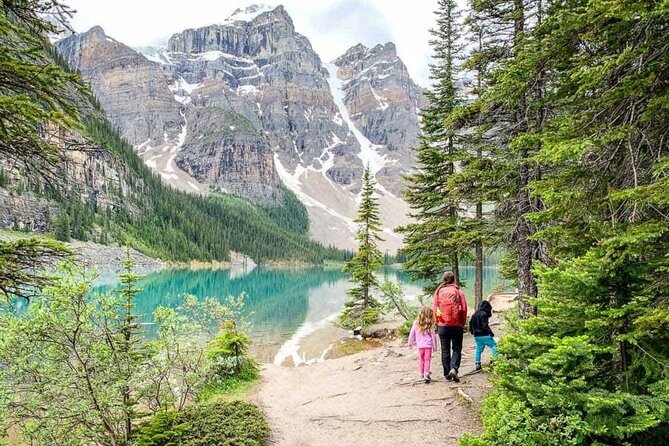
The next audio stop focuses on Lake Louise and includes language and place-name context. You’ll hear the idea of Lake of Little Fishes, and the tour references how the area is called in the Stoney language of the Nakoda people. That’s a helpful reminder that this is living land, not just scenery for photos.
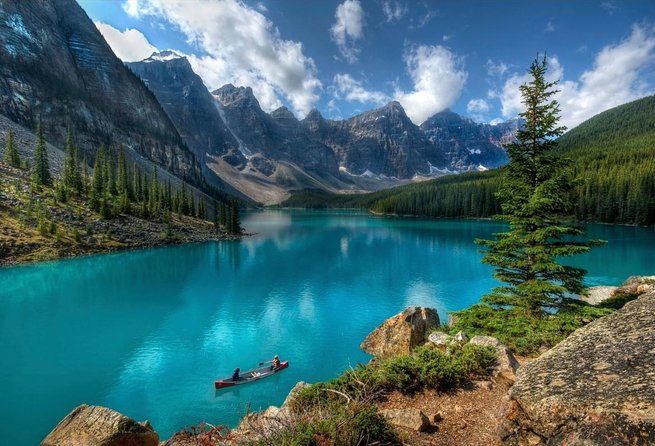
As the walk continues, the audio keeps anchoring you to what you’re about to see: a brilliant mass of blue water opening up, framed by mountains. If you’ve been here before, you’ll recognize the draw. If you haven’t, this is the part where the views start to feel real instead of theoretical.
Possible drawback here: you’ll probably want to stop often. The trail is climbing, and the scenery keeps pulling your attention sideways. That’s good for the experience, but it can stretch your “2 to 3 hours” estimate if you linger.
Victoria Glacier stop: the backdrop you can learn to read
At the Victoria Glacier stop, the audio explains the glacier that forms the backdrop to the Lake Louise vista. This is a classic Banff-area pairing: jaw-dropping visuals plus glacial history you can understand in simple chunks.
When you hear the commentary, try to connect it to what you physically see: the way the valley holds light, the scale of mountains, and how the glacier’s presence shapes what the water looks like. The tour aims to do that for you by moving you from general scenery into specific natural features.
This is also where an audio guide shines compared with just looking around. You don’t have to research later because the “what is that?” questions get answered while your eyes are already on the right angle.
Banff National Park history: short, usable context
The audio then shifts to Banff National Park, including key historical context like its establishment in 1885 and its age relative to other parks worldwide. You don’t need a history lecture on a hike like this. You just need a few facts that make the place feel bigger than one viewpoint.
I like that the tour doesn’t treat history as a sidebar. It ties history into the rest of the ecology commentary, so you’re walking through an actual system, not a stage set.
If you like learning while moving, you’ll appreciate how the content stays tied to nearby cues: mountains, forest changes, and the kinds of terrain you’re currently stepping on.
Through boreal forest: Banff’s Boreal Biome and the changing feel
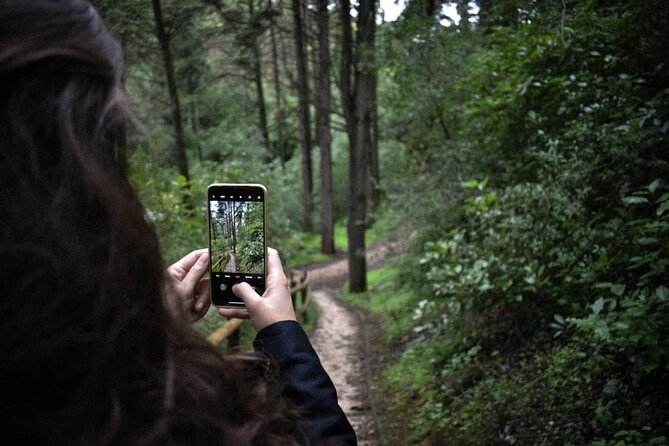
One of the more interesting parts of the route is the switch in vegetation and forest vibe. The tour includes a stop labeled Banff’s Boreal Biome, describing how the forest thickens as you go up an inclined trail.
This matters because, on real hikes, your body notices changes even when your brain doesn’t. The boreal forest reference is a way to give those shifts meaning. You’re not just sweating. You’re traveling through a specific habitat type.
If you’re a “plants person,” you’ll likely enjoy this segment more than you expect. Even if you’re not, it’s a good moment to look for patterns: the density of trees, the look of understory, and how the soundscape changes when the trail gets deeper into the woods.
Wildlife crossing: the bridge-underpass design
Next comes a stop on Wildlife Crossing. The audio describes those bridges and underpasses with trees and grass growing on top, and even calls out the visual comparison to a large pair of spectacles.
This is one of those Banff details that most people drive past without really clocking. Hearing it while you’re walking helps you look at the infrastructure differently. It’s not just “cool engineering.” It’s part of a plan to reduce animal-vehicle conflicts and keep habitat connected.
Value-wise, this section turns the hike into something more than a viewpoint run. You get a sense of how people and animals share the same region.
The switchbacks and early glimpses: keep your breath steady
There’s a stop that focuses on Lake Louise again as you get to the first of many switchbacks. The audio notes how switchbacks reduce the incline on mountainous trails, and you’re encouraged to catch a glimpse of the turquoise waters through the trees before making a turn.
This is practical guidance. When you’re climbing, the most common mistake is rushing yourself into exhaustion and then moving slower for the rest of the hike. Switchbacks are designed to pace you; the audio nudges you to use that.
You’ll also notice that the trail’s pace often changes your mood. Early on, you’ll feel upbeat and curious. Mid climb, you’ll feel the effort. This section helps you stay connected instead of just grinding.
Castleguard Cave: a fun detour in information
Another stop mentions Castleguard Cave. The tour says you won’t see it on this hike, but it explains that Banff National Park has caves and highlights Castleguard Cave as one worth mentioning.
I appreciate this type of “you can’t go here from this trail, but you should know it exists” content. It keeps the audio from being a strict point-to-point sequence. It also gives you a little future travel homework if caves are your thing.
If you want only what’s directly in front of you, this might feel like a quick tangent. But it’s short, and it keeps the guide voice active while you climb.
Wildlife facts: birds, plants, and the numbers game
The tour includes a wildlife-focused stop that points out an array of species—up to 310 different species of birds and 840 species of plants in the area. The audio uses those numbers to frame how much life exists beyond what you can immediately spot on the trail.
When you hear a number like that, it changes how you look. You start scanning the edges: where a bird might be perched, where plant growth suggests moisture, and where your best chances for wildlife sightings actually are.
For readers who want “nothing but views,” this segment could feel like extra. For most people, it adds a rewarding layer because it turns the hike into active observation.
Mirror Lake: the quiet pause before the Tea House
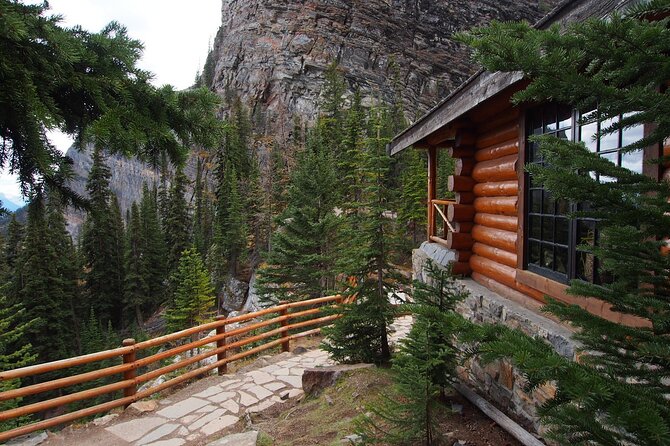
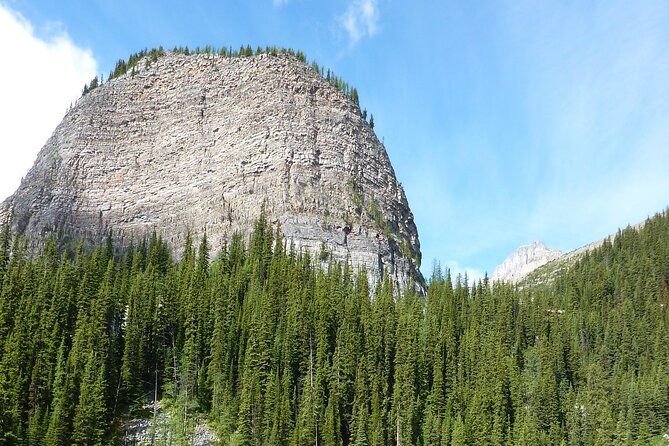
A key highlight on this route is Mirror Lake—small, picturesque, and one of the only stops along the trail to the Tea House. The audio encourages you to look across the water at Big Beehive Peak and mentions what that peak is known for.
Mirror Lake is the kind of stop where time slows down. The name suggests stillness, and you’ll likely want to take a few photos and just watch water and light change over minutes.
Also, Mirror Lake is a psychological checkpoint. After enough climbing, you need a payoff that feels like rest. This stop gives you that before you push to the Tea House.
Lake Agnes Tea House: waterfall views and the final ascent
Then you reach the big moment: Lake Agnes Tea House. The audio sets you up for the final approach with talk about picturesque waterfall views as you crest the wooden stairs.
The stairs matter. Even if you’ve been moving steadily, the stairs often feel like your last real push. They’re also where you’ll notice the trail shift from “trail walk” into “stairs and crowds-at-peak-energy” territory—though this is still a private, self-guided tour, so you’re not stuck in a scheduled group.
The audio also frames Lake Agnes Tea House in the context of early explorers and how you’re following in their footsteps. It ends up being more than a souvenir stop if you take the time to listen through the arrival segment.
Lake Agnes viewpoints: elevation and the right-side perspective
Next is Lake Agnes, with audio that puts you at an elevation of 7,005 feet. The tour encourages you to take in the view, and it points out Mount St. Piran to your right.
That direction cue is small but useful. On big scenic overlooks, people wander around and miss the “best angle.” A right/left clue helps you find the payoff faster without turning it into a scavenger hunt.
The audio also suggests that if you’re feeling energetic, there’s more to do. The details aren’t spelled out in what you provided, so I’d treat that as a nudge to check what’s actually possible in person on the day.
The return path: Castle Mountain, peaks, and repeat learning
On the way back, the tour keeps you reading the region as you move. There’s a stop that explains Castle Mountain (spelled as Caste Mountain in the stop label), plus another that focuses on Mountain Peaks and encourages you to spot differences around you as you descend.
Why this is valuable: you don’t get the same view twice. Even if the trail feels like it’s retracing steps, the angle changes and the light changes. The audio helps you notice that, instead of tuning out during the return.
You also get an Indigenous People stop that mentions long-standing evidence of human presence in Banff National Park going back as far as 10,000 years, plus a note that the audio continues with more detail. This is another moment where context turns a viewpoint into a place with deep time.
Recreational in Banff National Park and glacial melting: why the freeze matters
Another audio segment focuses on recreation in Banff National Park and points out that hiking is one of the first activities that comes to mind. It’s a simple wraparound reminder that this trail fits into a much larger outdoor culture.
Finally, there’s an audio stop about Lake Louise and Glacial Melting. It explains that during winter, the region sees subzero temperatures, and it ties that to how the lake behaves—so the seasonal cycle becomes part of the story. That matters because Lake Louise’s look isn’t fixed; water, ice, and melt shape the experience.
For a reader planning your own timing: this also supports the idea of checking conditions in the season you go. Even if the audio works, the physical trail might change.
How I’d plan this hike to get the best payoff
If you’re aiming for a smooth experience, treat the tour like a self-guided guidebook plus a soundtrack.
- Download the audio before you arrive on Wi‑Fi. The tour says it works without signal after downloading.
- Bring headphones if you want quieter audio, since headphones aren’t included. If you use your phone speaker, expect the sound to depend on phone volume and wind.
- Keep your battery up. It’s a 2–3 hour experience and you’ll be using GPS and the screen.
- Expect uphill and rocky near the end. One review called it more than moderate because it’s all up hill, and that matches how switchback hikes feel in real life.
Also, one practical reality from feedback: the phone app didn’t work for at least one person, and for another the audio kicked in and out often due to GPS behavior. You can reduce frustration by starting early, keeping GPS enabled, and being ready to play audio manually if needed.
Is this worth $8.22 per person?
Yes, if your travel style matches the format. At $8.22 per person, you’re paying for a guided-style route with offline capability, a live map, and a professional audio nature guide voice—without the cost and time constraints of a traditional group tour.
It’s especially good value if:
- you want a quieter experience than a crowded group,
- you like hiking at your own pace,
- you enjoy learning while walking,
- you can handle 2–3 hours of uphill effort.
If you dislike hiking on inclines, or you rely on technology working perfectly every time, you might decide to use a different approach (like a paper map plus your own research). The tour is designed to work without signal, but it still depends on your device.
Should you book the Lake Agnes Tea House Audio Nature Tour?
Book it if you want the independence of a self-guided hike with the bonus of on-trail interpretation. The stops are timed around real landmarks, and the mix of ecology, glacial context, and Banff history makes the walk feel like more than just exercise.
Skip it or think twice if you know you struggle with uphill trails, because this route is described as more challenging than moderate for some hikers. Also, bring backup common sense: charge your phone, download ahead, and plan your expectations so a tech hiccup won’t ruin the day.
If you’re prepared, you’ll come away with Lake Agnes Tea House in your memory—and a better sense of what all that scenery means.
FAQ
Do I need cell service during the tour?
No. The tour is designed to work without signal once you download it. You should download on Wi‑Fi before you go, then use the app while you hike.
How long is the hike on this audio tour?
Plan on about 2 to 3 hours, depending on pace and how long you stop at viewpoints like Mirror Lake and the Lake Agnes Tea House.
What distance is it?
The trail is about 7 km, leading from the Lake Louise area up to the famous Lake Agnes Tea House.
Is this a private experience?
Yes. It’s private, so only your group participates, with no other travelers joining you.
Do I need to bring a smartphone and headphones?
Yes for the smartphone. A smartphone or tablet is not included. Headphones are also not provided, and the audio can play from your device speaker if you prefer.
What language is the tour offered in?
The tour is offered in English.