REVIEW · ONNA SON
Tea ceremony experience with simple kimono in Okinawa
Book on Viator →Operated by SASAGIRIAN / 笹桐庵 · Bookable on Viator
Tea feels different when you slow down. At Sasagirian (笹桐庵) in Onna, you step into a real tea setting, don a simple kimono, and learn the flow of an Okinawa-focused tea ceremony you will not find anywhere else on the island. I especially love the careful attention to details like the tea room’s scroll, flower arrangements, and utensils, because it turns a simple drink into a full ritual. I also like that you get to do more than watch—you handle the tools and make your own green tea.
One possible drawback: this is an etiquette-first experience, so you cannot treat it like a quick photo stop. You need a calm pace and a willingness to follow the steps, even if you just want a cultural activity.
In This Review
- Key points at a glance
- Onna-son’s Sasagirian (笹桐庵): a real tea-room setting
- Dressing for respect: the simple kimono and changing cloths
- How the ceremony is taught: manners, scrolls, and the tool ritual
- Sweets, then bitter tea: what you taste at the Ryurei table
- Making your own matcha: tea tools, silk cloth, and hand work
- The gold folding screen photo and final moment
- Price, timing, and fit: should you book this tea ceremony?
- FAQ
- Where is the meeting point?
- How long is the experience?
- What is the group size?
- What ages can participate?
- Can I participate if I cannot sit up?
- What happens during the ceremony?
- Does the experience include kimono and photos?
- What if weather is bad or I need to cancel?
Key points at a glance
- Small-group tea time at Sasagirian: capped at a few people, starting and ending at the same facility
- Kimono included: you change into a simple kimono and get a final clothing change too
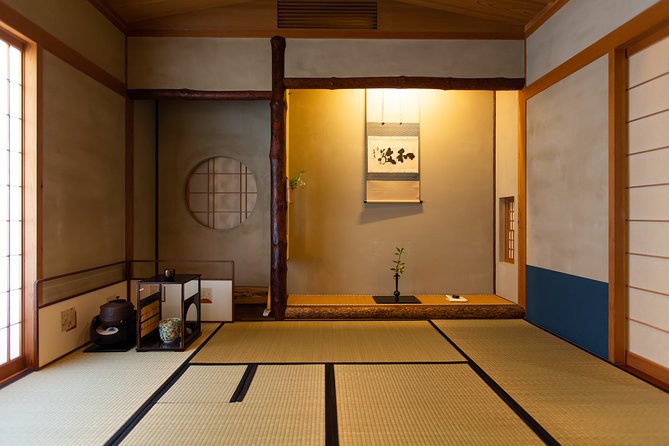
- Manners taught from the doorway: you practice the entry and learn what to look at inside the tea room
- Ryurei-style setup for tasting: sweets first, then the bitter tea, followed by hands-on tool practice
- You make and taste your own matcha: learn how to handle the cloth and tea utensils carefully
- Gold folding screen photo moment: planned photo time in front of a standout visual backdrop
Onna-son’s Sasagirian (笹桐庵): a real tea-room setting
This experience is built around one main idea: you are not just sipping matcha, you are stepping into the culture of how tea is hosted. Sasagirian is the setting, and the whole thing is designed to feel like a tea room you could picture from a storybook—quiet, ordered, and respectful.
I like that it is not trying to be flashy. Instead, you notice the small things: how you are guided into the tea room, what you are encouraged to observe, and how the utensils are treated with care. That is where the value lives.
And the group size stays intimate. The session runs about 1 hour 15 minutes, with a minimum of 2 people and a maximum listed for the experience. That matters because you get time to learn without feeling rushed or lost.
Dressing for respect: the simple kimono and changing cloths
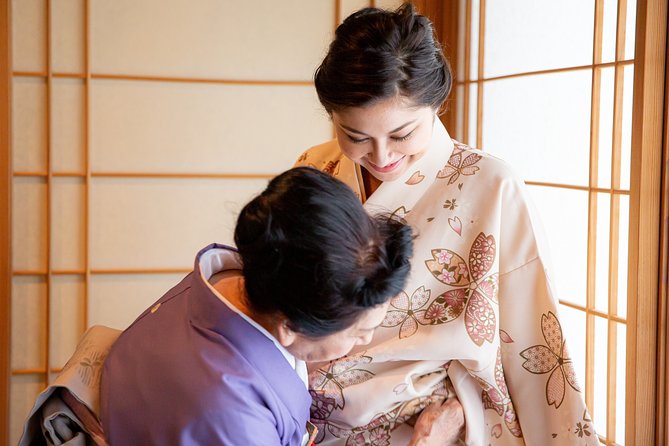
One of the first moments that hits is the kimono change. You start by putting on a simple kimono, and the outfit is not just costume. It helps you slow your body down so the etiquette instructions land more naturally.
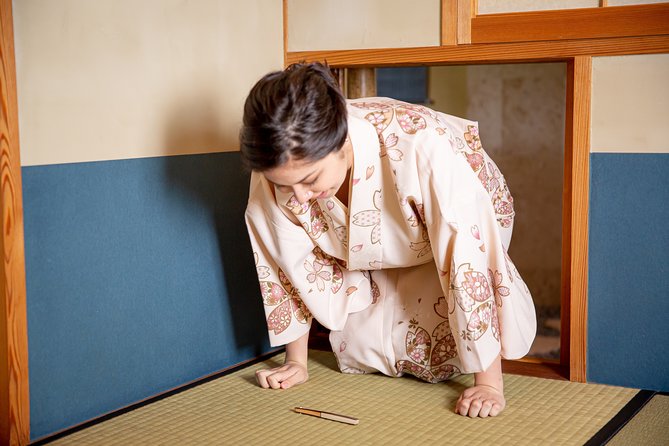
You then move through the early steps that set the tone. You cleanse your hands, enter the tea room through the small entrance the way you are taught, and learn what you should do as you take in the space—especially the hanging scroll and the flower arrangement.
By the end, there is also a final clothing change. That last step feels like a clean wrap-up, and it helps the whole experience feel like a complete arc, not a one-and-done class.
How the ceremony is taught: manners, scrolls, and the tool ritual
The teaching approach is structured and practical. You do not just get a lecture; you follow along step-by-step.
Here is the typical flow you should expect:
- You are shown how to enter the tea room through the small entrance.
- You learn what to appreciate as you look around, including the hanging scroll and the flowers.
- You get guided into the next room where the Ryurei-style setup is arranged with table-and-chair seating.
That Ryurei-style detail is important if you are worried about physical comfort. The experience specifically notes that you can participate even if you cannot sit up. So you are not forced into one single posture.
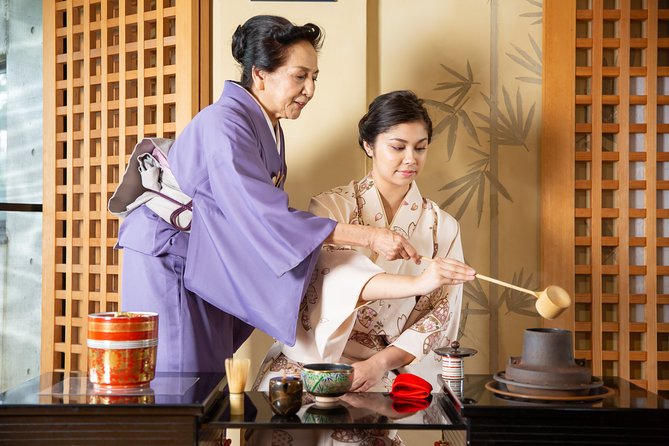
In addition, the ceremony emphasizes respect for the tools. You learn how to handle them properly, and you practice cleansing steps for tea utensils. This is not just for show. It gives you a real sense of why tea ceremony is treated like a discipline, not a drink service.
If you like calm, thoughtful cultural activities, this part is the payoff.
Sweets, then bitter tea: what you taste at the Ryurei table
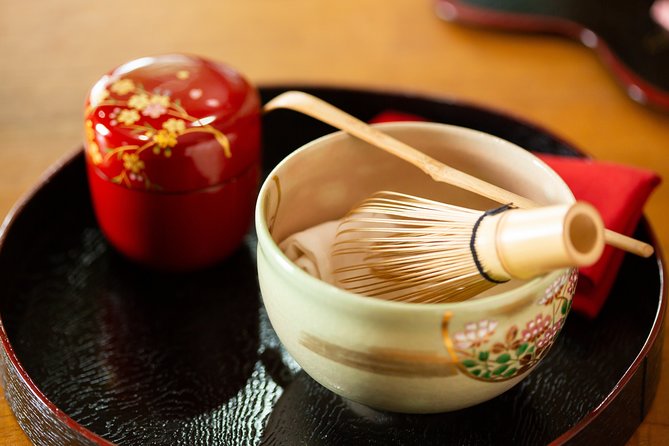
Before you get to the tea, you get to eat. At the Ryurei-style tables, you enjoy sweets that mix Japanese and Okinawan flavors.
That order is more than tradition—it helps your palate adjust. The experience moves from sweet toward something more bitter and focused. When you later taste the tea, you are not starting from scratch, and you are better able to notice the difference.
Another detail I like: the experience keeps your attention on tasting and learning, not on performing. You are served sweets, then you shift into the tea portion with instruction on how to treat the tools and the space.
So yes, you will taste bitter tea too. If you usually avoid bitterness, this is still worth it because you will understand what you are tasting and why it matters.
Making your own matcha: tea tools, silk cloth, and hand work
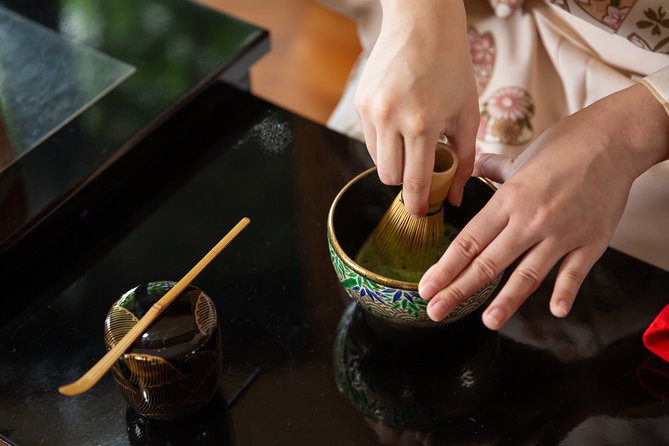
The hands-on part is what makes this feel like an activity, not a show.
You learn how to:
- add matcha green tea and hot water to the bowl
- make your own green tea
- handle the tea tools with the right care
You also learn about the silk cloth and the cleansing steps for the utensils. Those small actions matter. They are part of the discipline—how you move, how you present, and how you treat each item like it has purpose.
Then you taste what you made. That is the moment you start to understand the ceremony. Drinking tea is easy. Making it properly, with guidance, turns it into a skill you can remember.
I also appreciate how the teaching is supported. The experience includes an instructor plus translation support during the session, which makes it easier to follow the meaning behind each step rather than just copying the motions.
The gold folding screen photo and final moment
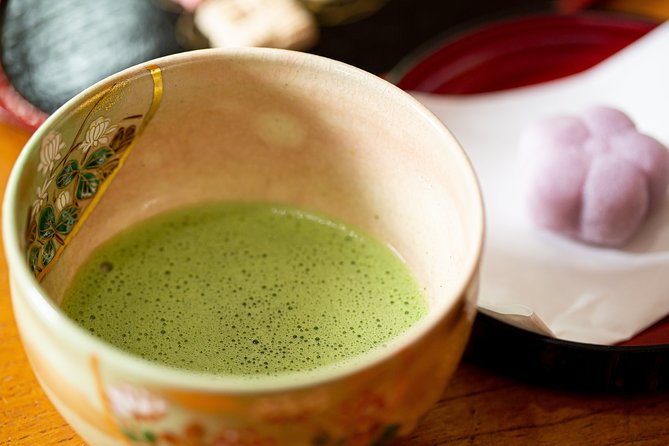
This is not only about eating and making tea. It also includes a planned photo moment in a meaningful setting.
You will take photos in front of the gold folding screen. It is a nice visual payoff because it is connected to the room itself, not a random staged background.
After the tea portion and your final taste, you finish with the last steps of the experience, including the change of cloths back into your own outfit. That ending feels organized and respectful, which fits the tone you experience throughout the session.
If you want a souvenir, the photos help. But the better souvenir is knowing what you did: the order of actions, the reason behind the care with utensils, and the fact that you made the tea yourself.
Price, timing, and fit: should you book this tea ceremony?
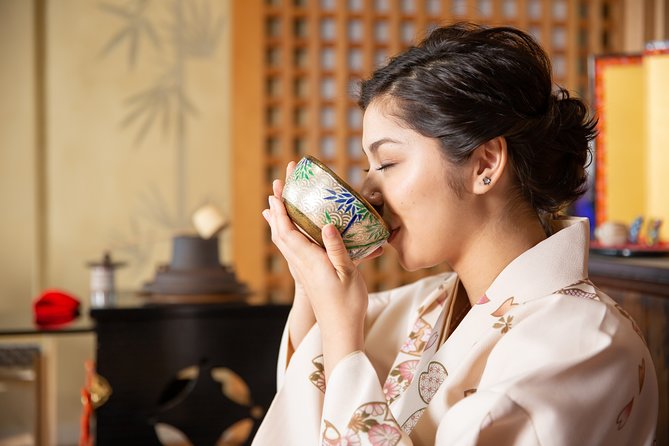
Let’s talk value. At $85.39 per person for about 1 hour 15 minutes, you are paying for several things at once:
- instruction from the tea master
- guided learning of etiquette and tool handling
- the setting inside an actual tea room
- kimono dressing and the supplies for tasting and making matcha
- a small-group format so you are not just one face in a crowd
So this is not just a snack tour. It is more like a structured cultural workshop—complete with clothes, tools, sweets, and guided practice.
Timing-wise, you will want to book ahead. The average booking window is around 22 days in advance, and the reservation needs to be made at least 3 days before the experience. That means if you are building your Okinawa days last minute, this is one of the first activities to lock in.
A few fit notes to help you decide:
- Great fit if you want a peaceful, respectful cultural experience and enjoy details like flowers, scrolls, and careful tool handling.
- Great fit for families too, since the experience is described as working well across a wide age range.
- Good if you want a tea ceremony that includes doing the work: making matcha and tasting what you make.
- Think twice if you want something more casual or fast. This is about manners and process.
FAQ
Where is the meeting point?
You meet at Japanese Cultural Experience Facility Sasagirian (笹桐庵) at 1765-8 Nakama, Onna, Kunigami District, Okinawa 904-0401, Japan.
How long is the experience?
It runs for about 1 hour 15 minutes.
What is the group size?
The experience requires a minimum of 2 people and has a maximum listed at 6 travelers.
What ages can participate?
Children under age 3 cannot participate. Children age 4 and up can participate.
Can I participate if I cannot sit up?
Yes. The experience notes that most travelers can participate, including if you cannot sit up.
What happens during the ceremony?
You change into a simple kimono, cleanse your hands, enter the tea room, learn manners and what to appreciate in the room, taste sweets, learn tool care, then add matcha and hot water to make and taste your own green tea. You also take photos in front of the gold folding screen.
Does the experience include kimono and photos?
Yes. You wear a simple kimono, and there is a planned photo time in front of the gold folding screen.
What if weather is bad or I need to cancel?
The experience requires good weather. If canceled due to poor weather, you will be offered a different date or a full refund. Free cancellation is available up to 24 hours before the experience starts.