REVIEW · HONG KONG
Hong Kong: MingCha Tea Tasting and Pairing Workshop
Book on GetYourGuide →Operated by MINGCHA TEA HOUSE · Bookable on GetYourGuide
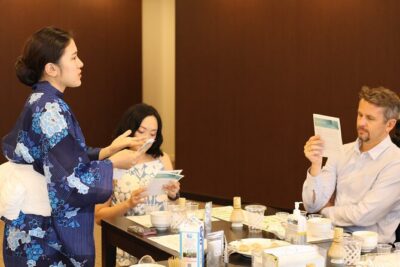
Tea can be both science and comfort. I love the step-by-step sensory tasting (dry leaves, steeps, and multiple brews), and I love the hands-on gungfu brewing with a gaiwan; the workshop also teaches you why harvest and processing shift flavor. One thing to consider: at $63 for about 1.5 hours, it’s best if you’ll actually use the brewing tips after you leave.
MingCha Tea House has serious credibility behind the scenes. Founded by artist-and-designer-turned-entrepreneur Vivian Mak, it’s been recognized as a Hong Kong Top Brand and featured by major food and wine media as a world-class tea stop, and that energy shows in the way the session is paced. Expect a small group atmosphere (up to 20) and a mix of English plus Traditional Chinese and Mandarin.
In This Review
- Key Points You’ll Care About
- MingCha Tea House: A Workshop Set Up to Teach, Not Perform
- What You’ll Taste in 90 Minutes (and Why It Matters)
- The 5-Sense Tasting Method: Train Your Palate Fast
- The Tea Master Lesson: History, Botany, and Processing You Can Taste
- Brewing Like a Pro With Gungfu Style and a Gaiwan
- Tea and Snack Pairings: The Rose Honey Toast Example
- Who This Workshop Is Best For (and Who Might Want Something Else)
- Price and Value: Is $63 Worth It?
- Getting There Without Stress
- Should You Book This Tea Tasting Workshop?
- FAQ
- How long is the MingCha tea tasting and pairing workshop?
- What is included in the workshop?
- How many teas will I taste?
- Do I get to brew tea myself?
- What kind of tea pairing snacks are served?
- How big are the groups?
- Where is the workshop located?
- How do I get there from public transport?
- What languages is the workshop offered in?
- What’s the refund policy?
- Is transportation included?
Key Points You’ll Care About
- 4–5 Chinese tea varieties typically make up your tasting set, moving across flavor families
- Multiple rounds per tea (about 5–6) help you taste the same leaf evolve
- Sight, smell, taste, touch, and sound are all used to train your palate
- Gaiwan brewing practice teaches you how Chinese tea is meant to be brewed
- Tea-and-snack pairings turn the tasting into something you can copy at home
- Hosted by Vivian Mak’s team, with presenters such as Vivian and Vanessa mentioned as strong, clear communicators
MingCha Tea House: A Workshop Set Up to Teach, Not Perform
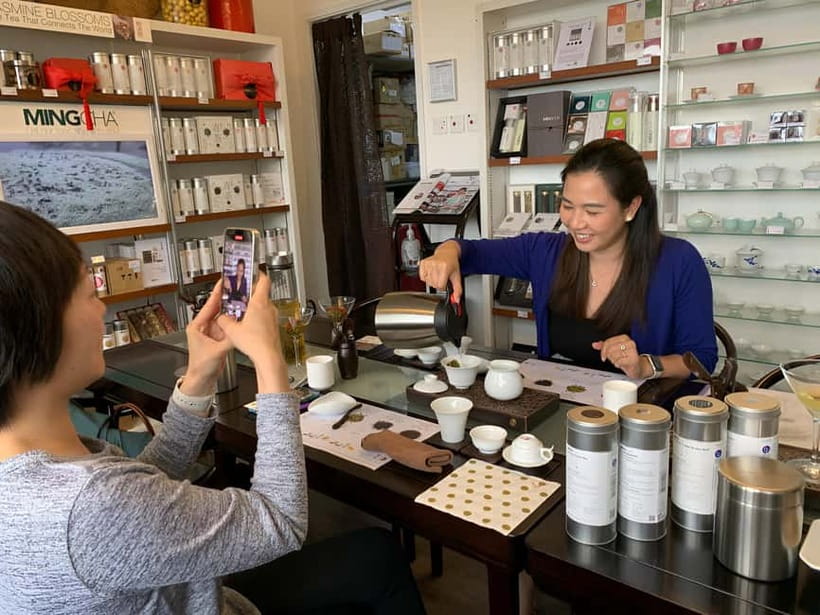
This isn’t just a tea “sampling flight.” MingCha’s workshop is structured like a guided class that keeps circling back to one idea: tea is easiest to understand when you treat it like something you can observe and control.
The setting helps. MingCha Tea House is inside Fortune Factory Building (Block B, 15/F, Unit B2). If you’re walking in from the green entrance that looks like a parking lot, you’ll turn left, find Block B (there’s a stainless-steel sign), take the passenger lift to 15/F, and look for the brown door. The bell is on the right side of the door—small detail, but it saves time when you’re standing there with your first-timer nerves.
The big win here is that MingCha is built on design-minded attention to craft. Vivian Mak’s background as an artist and designer-turned entrepreneur matters, because you can feel it in the way the tasting is paced: you’re not rushed, and you’re not left staring at a tray wondering what to do next.
What You’ll Taste in 90 Minutes (and Why It Matters)
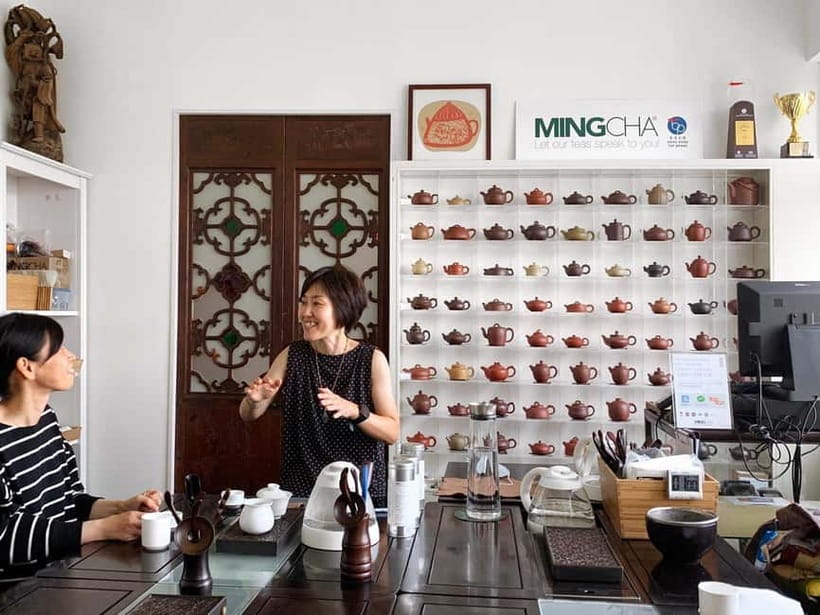
The workshop centers on tasting 4 premium handcrafted teas. Depending on the session, you’ll typically run through a range such as green, scented green, red, oolong, white, and puer—so you’re not stuck in one flavor lane.
What makes this valuable is the way the tasting is designed. Instead of one quick sip per tea, you’ll brew and taste in 5–6 rounds. That means you can notice how the same leaves open up across time: aroma changes, sweetness can shift, bitterness may soften (or appear), and the finish can move from light to lingering.
For your trip, that matters because Chinese tea isn’t one “taste.” Green tea can feel crisp and vegetal; oolong can go floral to roasty depending on how it was made; puer often shows deeper, earthier notes that build over repeated steeps. With multiple rounds, you learn what you’re actually tasting rather than relying on first impressions.
And you’ll also get guidance on what to look for in the leaf itself. You’ll learn to observe the tea leaves before brewing, then smell the aroma from both dry leaves and steeped leaves. That’s a practical skill you can reuse at any tea shop later.
The 5-Sense Tasting Method: Train Your Palate Fast
Here’s the part I’d tell you not to skip: the workshop asks you to use all your senses on purpose. You’re guided to notice sight, smell, taste, touch, and even sound—yes, sound. In tea, that can mean the quiet cues of brewing and the way you handle the gaiwan and steam aroma, and the workshop uses these moments to focus you.
When you’re standing at a tea counter in Hong Kong later, this training pays off. You’ll know what to do first. Look at the leaf form. Smell dry aroma. Then smell again after steeping. Taste in small sips and pay attention to how the flavor develops across rounds.
This also keeps the session accessible. The workshop is friendly to tea enthusiasts who want language for what they already sense. But it’s equally useful for beginners because it gives you a repeatable checklist. You’re not expected to memorize tea-scientific jargon right away. You learn by doing, smelling, and tasting in the right order.
The Tea Master Lesson: History, Botany, and Processing You Can Taste
A good tea workshop explains why tea tastes the way it does—not just what it tastes like. MingCha’s session covers the history, botany, classification, and production processes of Chinese tea, and it connects those topics to flavor.
So when you hear about harvest timing, climate, and processing techniques, it’s not theory-floating-in-space. You’ll connect it to what you experience in the cup: different types of tea behave differently during brewing, and processing choices influence everything from aroma intensity to how bitterness shows up.
This is also where the workshop feels “real” rather than touristy. Chinese tea isn’t only a beverage—it’s an agricultural product shaped by region and method. When you understand that, your tasting becomes less about personal preference and more about pattern recognition.
Brewing Like a Pro With Gungfu Style and a Gaiwan
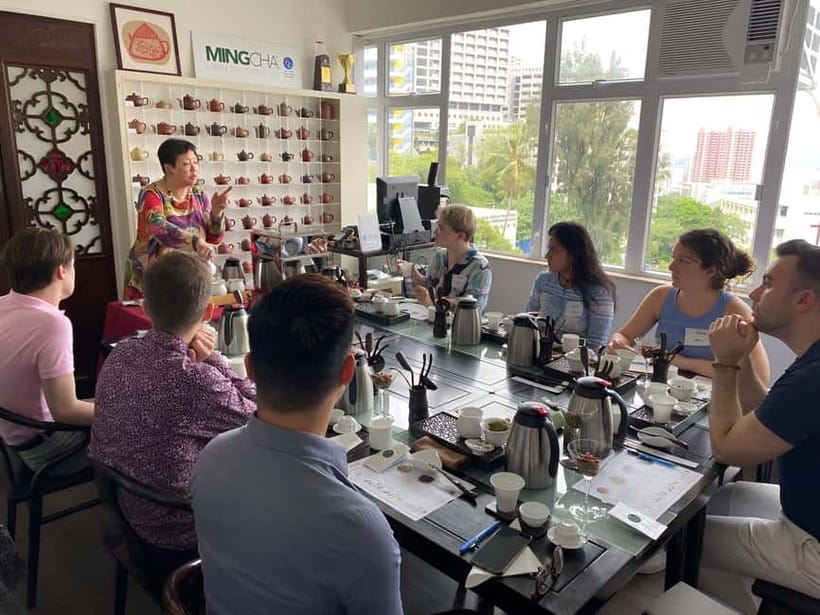
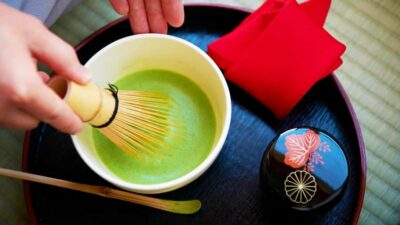
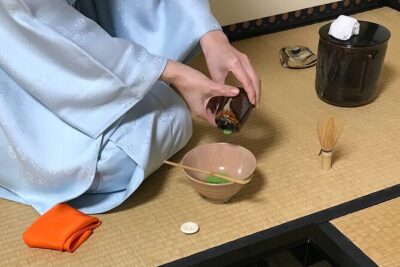
If you only remember one takeaway, make it this: gungfu style is about control. MingCha teaches traditional brewing using a gaiwan (a lidded bowl used for brewing), and the hands-on portion helps you practice brewing for yourself and others.
You learn practical technique steps rather than just watching someone else do it. That includes how the brewing rhythm influences taste across rounds. Because you’ll brew multiple times, you’re not stuck with one “bad cup.” If your first steep is too strong or too weak, you can adjust with the next round and connect cause and effect.
For your own life after the workshop, this is one of the best parts. Many tea tastings end at drinking. This one trains you for repetition—so you can recreate the learning at home with the tea you buy (or any tea you already have).
Tea and Snack Pairings: The Rose Honey Toast Example
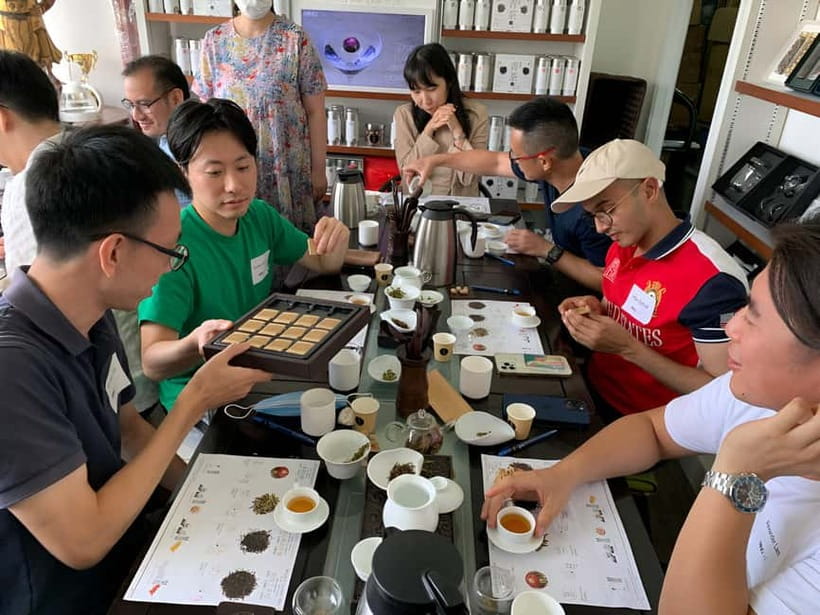
The snack pairing is where the workshop turns from education into something you’ll actually want to recreate. You’ll taste tea alongside complementary snacks designed to match what the tea is doing.
A great example is rose honey toast. Crisp texture plus subtle floral sweetness can support tea aromas and soften rough edges. That’s the kind of pairing logic you can apply later even if you don’t buy the exact same snack again.
What’s smart here is that the pairing isn’t random. The pairing teaches you what a tea needs. If a tea is bright or sharp, the snack can add roundness. If a tea is deeper and heavier, the snack can add contrast. And it makes the tasting feel like a full experience, not just a sequence of sips.
In short: you leave knowing how to think, not just what to taste.
Who This Workshop Is Best For (and Who Might Want Something Else)
This is a strong fit if you fall into one of these groups:
- You want a guided, structured tasting where someone shows you what to notice
- You’re curious about Chinese tea types like green, oolong, white, and puer, but you don’t know where to start
- You like hands-on learning and want to practice technique with a gungfu brewing approach
- You enjoy food pairings and want to understand how flavor matching works
It may be less ideal if you only want casual drinking with no technique. The workshop is active and instructive. You’ll likely be happiest if you’re open to tasting repeatedly, smelling intentionally, and applying brewing tips.
Also, note the room style: sessions are capped at 20 participants. That keeps the experience interactive, but it does mean you should plan to arrive on time so you can settle in before tasting begins.
Price and Value: Is $63 Worth It?
At $63 per person for about 1.5 hours, the value comes from what’s included and how the session is run.
You’re getting:
- Tasting of 4 premium handcrafted teas
- Hands-on brewing practice using a gaiwan
- Tea-and-food pairings with complementary snacks
- Guided instruction on tea history, botany, classification, and production
- A small-group, interactive structure (up to 20)
If you compare that to buying tea at a shop and trying to learn on your own, you’re paying for guidance, pacing, and technique. The multiple rounds per tea also makes a big difference: you’re tasting more than a quick flight, and you’re practicing how steeping choices change flavor.
It’s also a good “single investment” choice if you’re only in Hong Kong for a short window and want one experience that teaches skills you’ll use again.
Getting There Without Stress
The tea house is about a five-minute walk from Chai Wan MTR Station, Exit C. That’s convenient if you’re doing other parts of Hong Kong Island the same day.
As for the address, it’s clearly specified at Fortune Factory Building, Block B, 15/F, Unit B2, and the entrance is identifiable (green entrance that looks like a parking lot). If you prefer digital directions, do that only as a backup—because the internal “turn left, find Block B, passenger lift to 15/F” notes are the exact kind of detail that helps you arrive smoothly.
Should You Book This Tea Tasting Workshop?
I’d recommend booking if you want an experience that actually teaches you how to taste and brew Chinese tea, not just where to drink it. The combination of multi-round tastings, gungfu technique practice, and tea-and-snack pairing makes it feel practical and fun at the same time.
Book it if you enjoy structured learning, small-group attention, or you’re the type who likes coming home with a repeatable skill. If you’re only looking for a quick drink without technique practice, you might prefer a simpler tea stop.
If you’re unsure, use the simplest test: do you want to taste the same tea more than once and learn why it changes? If yes, this is the kind of workshop you’ll remember.
FAQ
How long is the MingCha tea tasting and pairing workshop?
It lasts approximately 1.5 hours.
What is included in the workshop?
You’ll get a tea tasting of 4 premium handcrafted teas, a hands-on brewing practice, tea and food pairing with complementary snacks, and guided instruction from tea masters.
How many teas will I taste?
You’ll taste 4 premium handcrafted teas. The session typically includes varieties across categories like green, scented green, red, oolong, white, and puer, depending on what’s selected for your group.
Do I get to brew tea myself?
Yes. The workshop includes hands-on brewing practice, using traditional methods such as gungfu style with a gaiwan.
What kind of tea pairing snacks are served?
You’ll have complementary snacks paired with the teas. A listed example is rose honey toast.
How big are the groups?
Maximum of 20 participants per session.
Where is the workshop located?
MingCha Tea House is in Fortune Factory Building, Block B, 15/F, Unit B2.
How do I get there from public transport?
It’s about a five-minute walk from Chai Wan MTR Station, Exit C.
What languages is the workshop offered in?
It’s conducted in English, Traditional Chinese, and Chinese.
What’s the refund policy?
You can cancel up to 24 hours in advance for a full refund.
Is transportation included?
No. Transportation to the venue is not included, and additional food or drinks outside the pairing are also not included.