REVIEW · ONNA
Tea Ceremony experience with simple kimono in Okinawa
Book on GetYourGuide →Operated by SASAGIRIAN OKINAWA · Bookable on GetYourGuide
A tiny doorway, a folded crane, and a bowl of matcha. This Okinawa tea ceremony experience turns Japanese tea etiquette into something you can actually do, not just watch. I especially like how hands-on it is, from cleansing the tools to making and tasting your own tea, and I also like the English support and clear, step-by-step instruction. One consideration: you enter through a small tea-room entrance, so it is not the most comfortable setup for anyone who is uncomfortable with tight spaces.
You get a traditional flow inside the tea room, then you sit in Ryurei-style seating to enjoy Okinawan and Japanese sweets before the bitter tea. The small group size (max 6) keeps the pace relaxed, but it also means you’ll want to be on time so the group stays together. Plan for about 90 minutes in total, with around 75 minutes for the ceremony itself and changing time.
In This Review
- Key Things I’d Bet You’ll Remember
- A Traditional Okinawa Tea Ceremony You Don’t Have to Guess At
- Price and what’s actually included (and why it matters)
- Before You Sip: Kimono Dressing and Hand Cleansing
- What to do if you’ve never worn a kimono
- Entering the Tea Room: Small Door, Big Focus
- Ryurei-Style Seating and the Sweets-and-Tea Sequence
- A small tip on tasting
- Learning to Handle the Silk Cloth and Cleanse Tools
- Making Your Own Matcha: From Bowl to First Sip
- Matcha comes with expectations—so here’s a realistic mindset
- Photos by the Gold Folding Screen and Your Keepsake
- Who This Tea Ceremony Experience Is Best For
- Potential Drawbacks (So You’re Not Surprised)
- Should You Book SASAGIRIAN OKINAWA Tea Ceremony?
- FAQ
- How long is the tea ceremony experience?
- What is included in the price?
- Do I need to speak Japanese?
- How large is the group?
- Is it wheelchair accessible?
- What is the minimum age for children?
Key Things I’d Bet You’ll Remember
- Kimono rental included: you change into a simple kimono for the full tea-room experience.
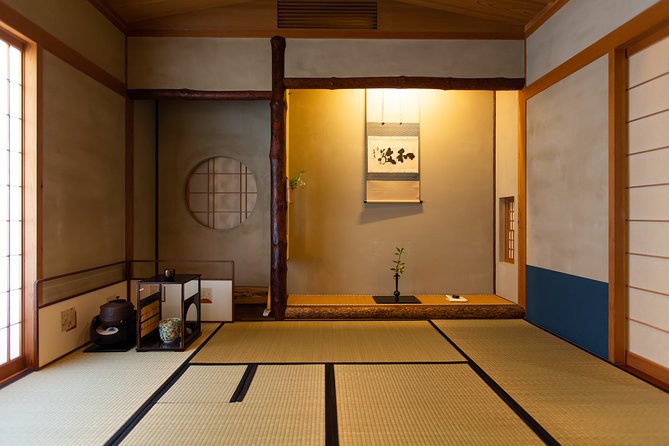
- Tea room manners, explained: you learn what to notice and how to move, including the hanging scroll, flowers, and tea tools.
- Okinawan + Japanese sweets first: you taste sweets before the bitter matcha, which makes the tea easier to enjoy.
- Make your own matcha: add matcha and hot water, then taste what you made.
- Photos by the gold folding screen: photography is included, so you can focus on the moment, not your phone.
- Origami crane souvenir: a small keepsake that fits the tea-ritual mood.
A Traditional Okinawa Tea Ceremony You Don’t Have to Guess At
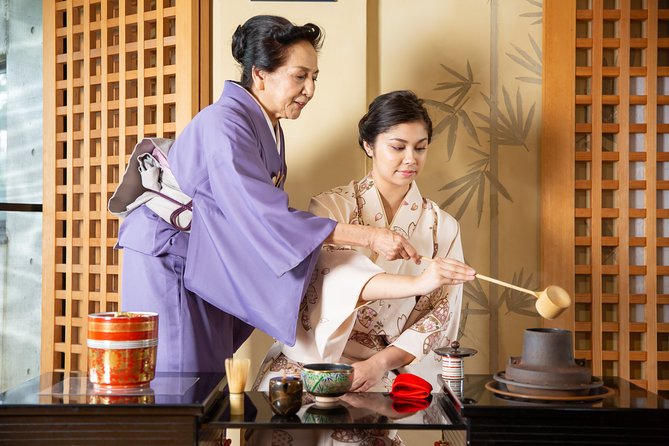
Tea ceremonies can feel a little mysterious when you don’t know the rules. Here, you’re taught the sequence and the meaning as you go, so you’re not standing there wondering why everyone is doing the same quiet movements. The experience is built around a traditional tea-room setting, including the small entrance you use to step inside and the way the instructor introduces each tea utensil before you do anything yourself.
This is also one of those activities where the setting matters. A tea room is designed for attention—on the scroll, the flower arrangement, the tools, and your own pace. In Okinawa, that focus can be a refreshing change from the usual sightseeing rhythm, especially if you want something cultural that’s not tied to a big-ticket attraction.
I like that the structure is practical. You learn what to look for, then you learn what to do with your hands—first cleansing, then handling the cloth, then preparing the bowl of matcha. By the end, you’re not just tasting matcha; you’re tasting matcha you made, with the etiquette in your body memory.
Price and what’s actually included (and why it matters)
At $83 per person for about a 90-minute slot, it can look like a “lesson” price at first glance. But the value is in what’s bundled: simple kimono rental, instruction, tools use, Okinawan and Japanese sweets, matcha green tea, photography, and an origami crane souvenir. You’re also in a small group of up to 6, which usually means more time with the instructor for questions and corrections.
If you were to recreate this yourself—kimono rental, a guide, and a proper place with utensils—you’d almost certainly spend more. Here, you’re paying for the full ritual setup and for someone to guide your pace and posture, which is the part most people can’t DIY well.
Before You Sip: Kimono Dressing and Hand Cleansing
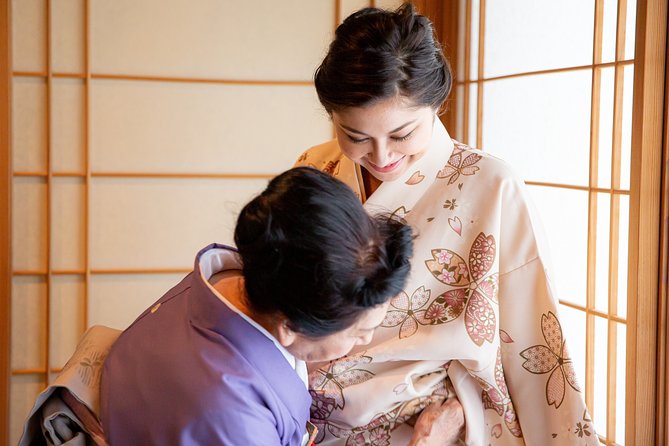
The experience starts with changing into a simple kimono. That isn’t just a cute photo step. Wearing it helps you slow down and follow the ceremony’s physical rules. In practice, it also sets the tone: you’re dressing for the tea room, not dressing for the street.
Once you’re in the kimono, you do the ritual hand cleansing before entering the tea space. This matters because tea ceremony etiquette isn’t only about politeness in words. It’s also about showing respect through actions—how you prepare yourself and how you move calmly.
What to do if you’ve never worn a kimono
You’re not expected to know anything beforehand. The instructor leads you through the process. Still, it helps to wear easy clothing underneath and plan for a bit of dressing time. If you’re bringing a schedule pressure, this is the moment to give yourself breathing room.
Entering the Tea Room: Small Door, Big Focus
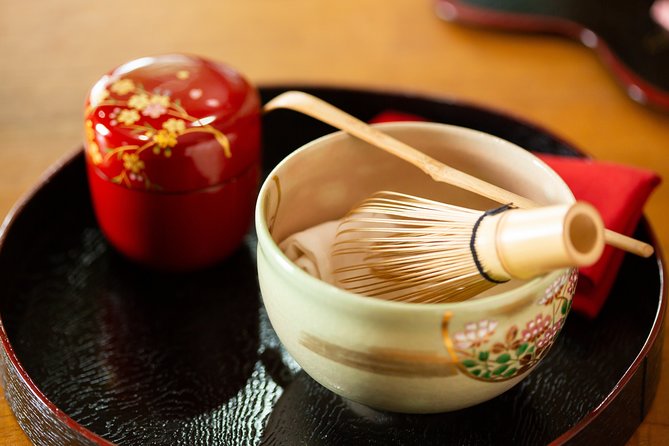
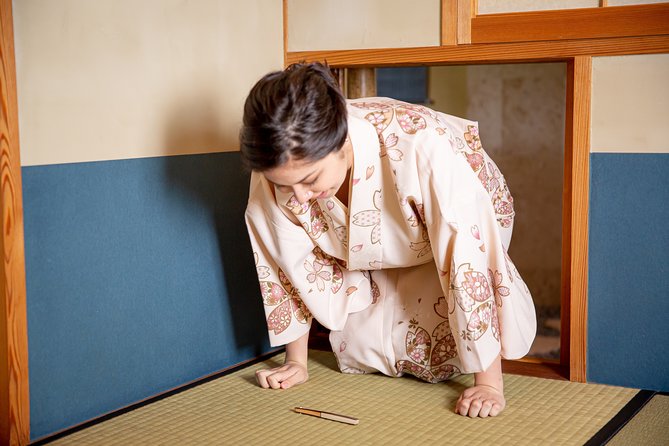
After you cleanse your hands, you enter the tea room through a small entrance. This is one of those details that makes the ceremony feel real. You’re physically stepping into a space designed for quiet attention, not walking through an attraction.
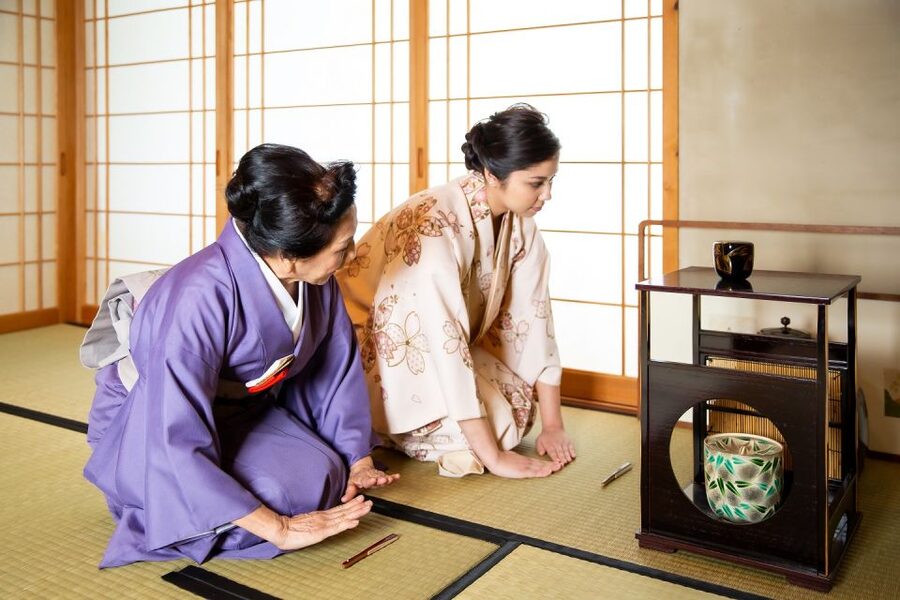
Inside, you’re taught the etiquette of the tea room: how to appreciate the setting, including the hanging scroll, the flowers, and the tea tools. The instructor also introduces the utensils one by one, so you know what each item is for and why it’s treated with care.
One thing I like about this part is the instruction style. You’re not being lectured. You’re being oriented. When you understand what you’re looking at, everything feels more coherent—especially when you later learn how to handle the tools yourself.
Ryurei-Style Seating and the Sweets-and-Tea Sequence
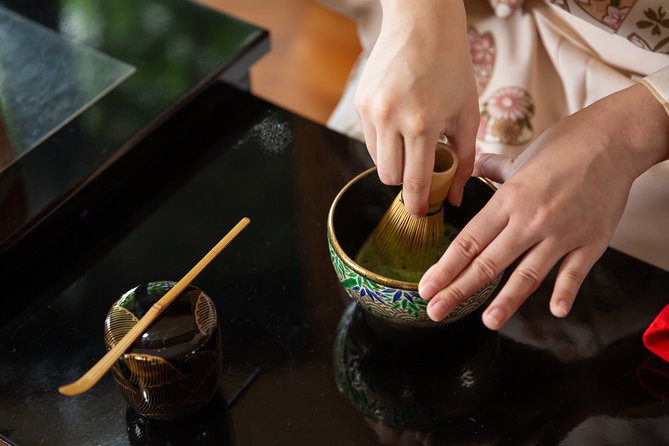
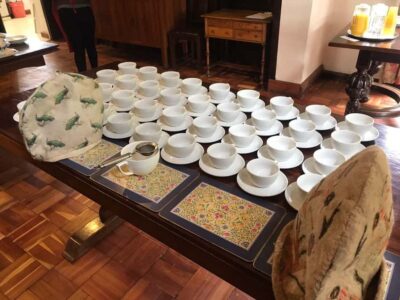
Next, you move into the room set up with Ryurei-style tea ceremony seating—tables and chairs arranged for the tea ritual. This is a practical detail that makes the experience easier for many people. It gives you a formal tea setting without requiring you to sit on the floor for the whole ceremony.
At the table, you start with tasting Okinawan and Japanese sweets. This is a smart way to structure the experience. Sweet first makes the shift to bitter matcha feel less harsh and lets you enjoy the flavors of the region and the wider Japanese tradition side-by-side.
Then comes the tea: you taste the bitter tea after the sweets, following the flow you’ve been taught. Even if you don’t love strong bitterness in other settings, this is often easier to appreciate because you’re experiencing it in sequence—with the sweets doing their job.
A small tip on tasting
Don’t rush your first sip. Tea ceremony tasting is supposed to be slow. If you taste quickly, you miss the point. Take a moment, notice the bitterness and aroma, and let your palate adjust.
Learning to Handle the Silk Cloth and Cleanse Tools
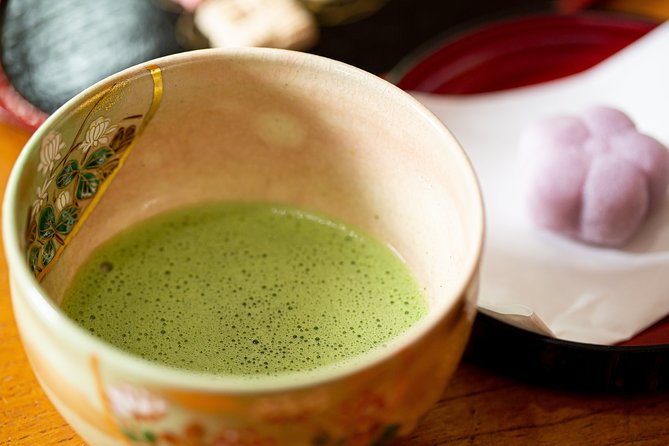
Before you make matcha yourself, you learn how to treat the utensils and how to use the silk cloth properly, along with how to cleanse the tea tools. This is the behind-the-scenes part most first-timers overlook.
But it’s also the part that makes you feel like you’re joining the ritual, not just performing it. When you learn the care steps—how to handle, cleanse, and prepare—you’re learning respect as a technique, not a rule you recite.
This is also where the instructor’s guidance matters. Tools are sensitive and the ceremony is precise. If you’re unsure, you’ll be glad you have an instructor showing you the correct way.
Making Your Own Matcha: From Bowl to First Sip
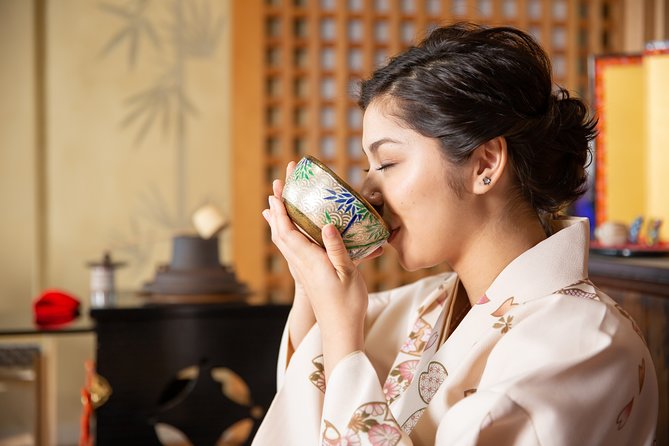
Now you get to do the main action: making green tea (matcha). You add matcha green tea and hot water into the tea bowl, then prepare it and taste what you made.
This is the “I can do this” moment of the experience. You’ll likely remember it more than the photos, because your hands are part of the process. It’s one thing to see matcha prepared. It’s another to mix it, watch it come together, and then drink your own.
Matcha comes with expectations—so here’s a realistic mindset
Matcha can be bitter and intense, especially if you’ve only had sweetened drinks. Treat this tasting as an education, not a test. The point is the process, the etiquette, and learning how the flavor is meant to be experienced.
Photos by the Gold Folding Screen and Your Keepsake
Photography is included, and there’s a specific photo moment near a gold folding screen. That’s a practical win. Instead of awkwardly interrupting the ceremony to find a good angle, you get a planned moment to step into the frame.
After the tea portion, you finish by changing cloths. You also receive an origami crane souvenir, which fits the quiet craft energy of the ceremony. It’s small, but it works as a travel memory: not just a photo, but something you can keep.
Who This Tea Ceremony Experience Is Best For
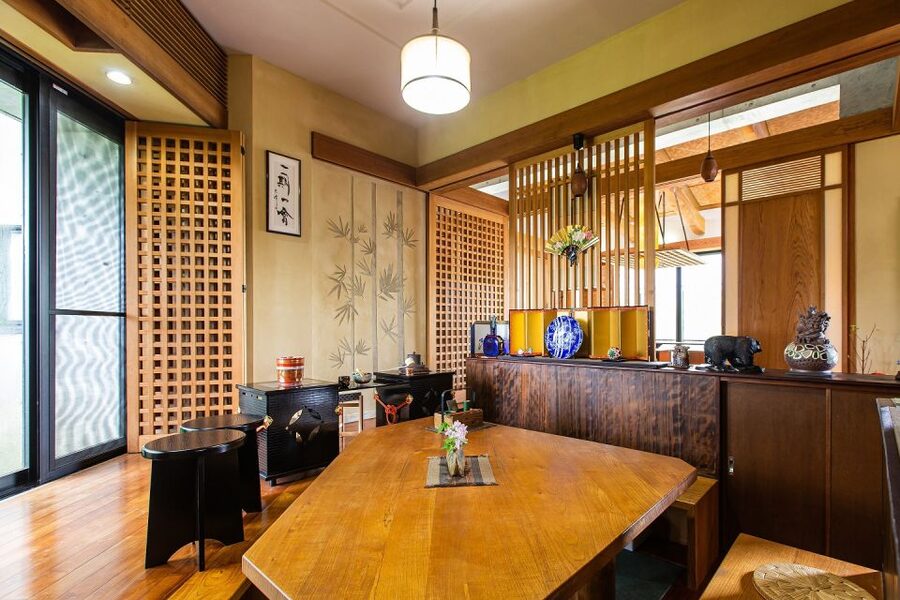
This is a great fit if you want:
- A hands-on cultural activity with clear guidance
- A calmer alternative to Okinawa’s busiest sightseeing
- A chance to wear a kimono in a setting that actually uses it
- Matcha time plus sweets, without needing advanced Japanese skills
You might enjoy it even more if you like ceremonies, crafts, or food experiences where etiquette is part of the flavor experience. It’s also friendly for first-timers, since the instructor walks you through the steps, manners, and tool care.
Potential Drawbacks (So You’re Not Surprised)
- The tea room entrance is small, which can feel tight.
- It’s designed for a seated tea-room flow with careful handling, so it’s not the best pick for anyone who wants to move around freely.
- This experience isn’t suitable for wheelchair users, and children under 3 years can’t join.
If you’re okay with a calm, structured activity and don’t need lots of roaming time, you’ll probably love the format.
Should You Book SASAGIRIAN OKINAWA Tea Ceremony?
If you’re in Okinawa and you want one memorable cultural experience that isn’t just a “see it and leave” stop, this one earns its place. The combination of kimono rental, tool-focused instruction, Okinawan + Japanese sweets, and the chance to make and taste matcha gives you more than a passive show. The small group helps the instructor keep the pace personal, and the English support means you won’t have to translate your way through the meaning.
If you hate tight spaces or you want maximum flexibility and spontaneity, you may want to choose something else. But if you’re curious about tea culture and you’re willing to slow down for about an hour, this is an easy yes.
FAQ
How long is the tea ceremony experience?
You book a 90-minute slot. The ceremony experience itself is about 75 minutes, with additional time for dressing.
What is included in the price?
The price includes simple kimono rental, tools use, instruction, Okinawan and Japanese sweets, matcha green tea, photography, and an origami crane souvenir.
Do I need to speak Japanese?
No. The instructor supports English and Japanese, and the experience is taught with language support.
How large is the group?
It’s a small group limited to 6 participants (minimum 2 people).
Is it wheelchair accessible?
No. It’s not suitable for wheelchair users.
What is the minimum age for children?
Children under 3 years old are not suitable for this experience.