REVIEW · OSAKA PREFECTURE
Tea ceremony experience in Osaka with a small group
Book on Viator →Operated by Shuminavi Inc. · Bookable on Viator
A quiet tea ritual can be a fast path to understanding Japan. This small-group Osaka tea ceremony puts you in a tatami room, then teaches the Ryurei style step by step—plus you make your own matcha. It runs about 60–90 minutes, so it fits easily between Osaka and Kyoto plans, and it’s designed for first-timers.
Two things I really like: you get patient guidance on what to do (not just a performance), and you’ll actually taste Japanese sweets alongside the matcha you prepare. One consideration: you’ll want to build in a little extra time to reach the meeting point near Ibaraki-shi, since walking is 10–15 minutes and the experience is time-based.
In This Review
- Key Points You’ll Care About
- A Tatami-Room Tea Lesson in Osaka That Feels Personal
- Where You Meet and How to Get There Without Stress
- What the 60–90 Minutes Actually Includes
- Tatami Room Etiquette: The Lesson That Makes Everything Click
- The Ryurei Style Table Ceremony (and Why It’s a Great Learning Format)
- Hands-On Matcha Making: The Part You’ll Remember
- Japanese Sweets + Matcha: Why the Pairing Matters
- Price and Value: Is $67.11 a Smart Use of Time?
- Logistics You’ll Want to Know Before You Go
- Who This Tea Ceremony Fits Best
- A Quick Reality Check: The One Drawback to Plan Around
- FAQ
- FAQ
- How long is the tea ceremony experience?
- Is this a private experience?
- Where is the meeting point?
- What is the nearest train station?
- How far is the walk from the station to the meeting point?
- What will I do during the ceremony?
- Are matcha and Japanese sweets included?
- Are the tools and materials included?
- What expenses are not included?
- What if I’m late or get lost?
- Should You Book This Osaka Tea Ceremony?
Key Points You’ll Care About
- Small group up to four people with a private feel
- Tatami-room experience, including how to enter properly
- Ryurei style table tea ceremony explained in clear steps
- Hands-on matcha making: you’ll enjoy what you make
- Japanese sweets and matcha included so you don’t worry about add-ons
- Located between Osaka and Kyoto, making it a practical cultural stop
A Tatami-Room Tea Lesson in Osaka That Feels Personal
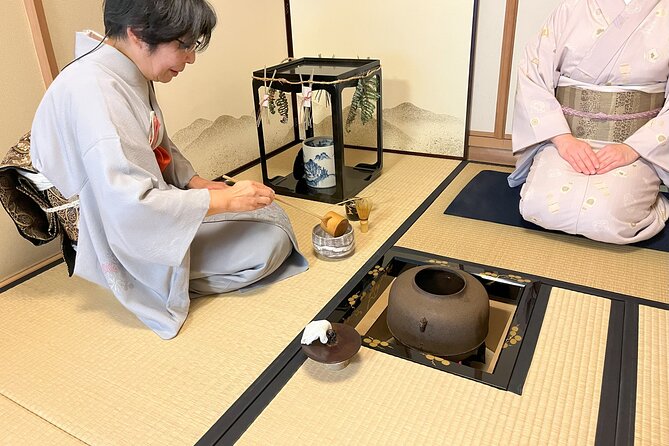
Osaka has plenty of food, neon, and day-trip energy. But this tea ceremony offers something calmer and more focused. The setup is simple and traditional: you’ll sit in a tatami room and go through the tea flow in a way that makes sense even if you know close to nothing about tea culture.
The big value here is the teaching style. You’re not just watching someone do the steps. You’re guided on what’s happening and how to do it yourself. That matters because Japanese tea ceremony is built on details—how you move, how you handle objects, and how you present tea. When you understand the logic, the ritual sticks with you longer than a quick photo stop.
Where You Meet and How to Get There Without Stress
You’ll meet at Repark Ibaraki Oike, in Ibaraki, Osaka. The nearest station is Ibaraki-shi Station on the Hankyu Kyoto Line. Plan on about 10–15 minutes on foot from the station to the meeting point.
After you book, you’ll get the address and a phone number for the location. On the day, the instructions are straightforward: arrive on time, call when you get there, and the host will come to see you. If you’re late or you get turned around, you should call right away rather than trying to speed-walk in panic mode.
A small practical tip: since you’re walking from the station, wear comfortable shoes. Tatami rooms and careful movements are part of the experience, so you’ll be happier if your body feels relaxed before the ceremony starts.
What the 60–90 Minutes Actually Includes
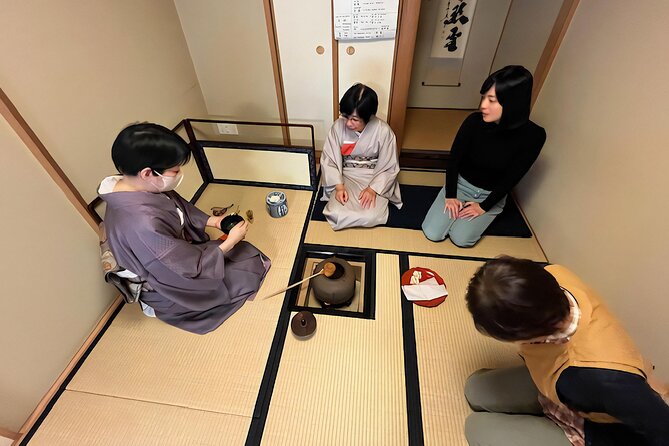
This is a compact experience, roughly 1 hour 30 minutes (about 60–90 minutes). The flow is designed so you get both the classic tea setting and the table style practice. Here’s how it typically unfolds, and why each step is worth your time.
First, there’s an intro on how to enter the tatami room correctly. This might sound minor, but it sets the tone. Tea ceremony is ritualized, and this small lesson helps you feel like you’re participating in a respectful way, not just sitting in a room.
Then you’ll see a demonstration using matcha and Japanese traditional sweets. You’ll learn what you’re looking at—tools, order of actions, and the overall pacing—so when it’s your turn, the steps don’t feel random.
After that comes Ryurei style, which is the table-based tea ceremony approach. You’ll learn how to make matcha and then enjoy the matcha you prepare, paired with traditional sweets. That last part is huge: you taste the results while the process is still fresh in your mind.
Tatami Room Etiquette: The Lesson That Makes Everything Click
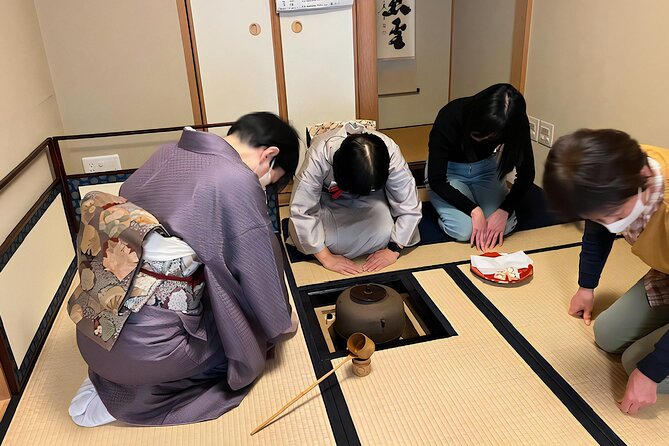
The tatami room segment is more than scenery. The ceremony includes rules about posture, movement, and respect for the space. Even if you never studied Japanese etiquette before, you’ll be walked through it in a way that’s easy to follow.
This is one reason this experience works well for first-timers. Many cultural activities fail because you don’t know what the rules are until you accidentally break them. Here, you get a heads-up early—so you can focus on learning the tea instead of worrying about whether you’re doing things wrong.
The Ryurei Style Table Ceremony (and Why It’s a Great Learning Format)
Ryurei style focuses on the tea ritual at a table, which can feel more approachable than the most formal setups. You still get the traditional structure, but it’s often easier to learn because the actions are paced and explained.
In this experience, you’re not left with vague instructions. You’ll get an introduction to how the table ceremony works, then you’ll practice making matcha. The goal is to make the process feel repeatable, not mysterious.
If you’ve ever taken a cooking class where the instructor shows you the basics and then watches while you do the real work, that’s the vibe here. It’s a teaching moment you can actually carry home in your memory.
Hands-On Matcha Making: The Part You’ll Remember
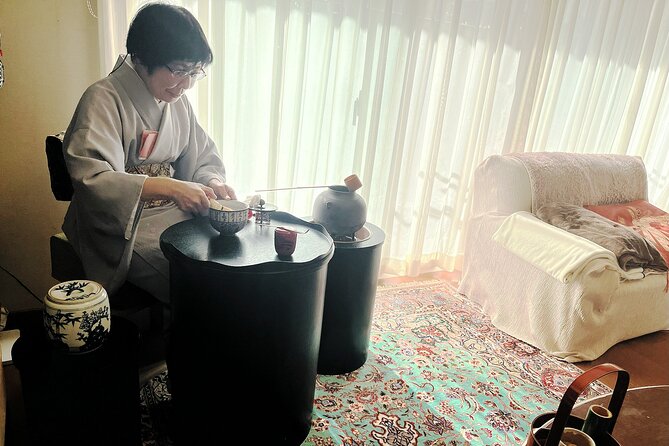
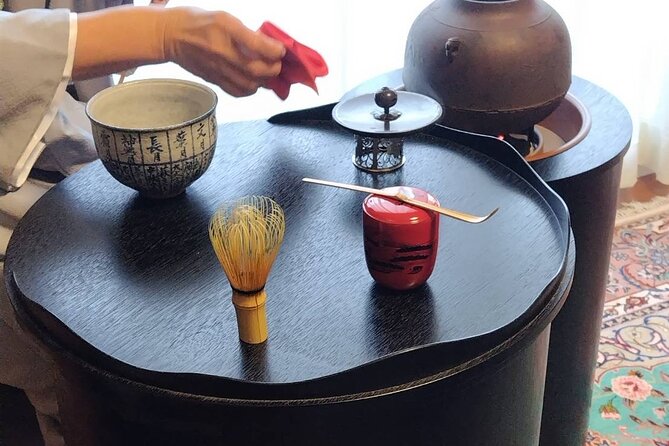
The ceremony includes tools and materials, plus matcha green tea and Japanese sweets. That sounds like the standard package—but the key is that you’ll learn how to make matcha yourself.
What you’re learning is not only how to mix tea. You’re also learning the rhythm: preparing the moment, handling items carefully, and understanding when to pause and when to move. Those are the details that turn a beverage into a small ritual.
The reviews back this up. People praise the teacher and assistant for being attentive and for guiding participants through performing the ceremonies themselves. That hands-on emphasis is what transforms a tea ceremony from entertainment into education you can feel.
Japanese Sweets + Matcha: Why the Pairing Matters
Tea ceremony is often thought of as tea first. But in practice, the sweets are part of the storytelling. Here, you’ll have Japanese traditional sweets during the session, and you’ll pair them with the matcha experience.
Why that pairing matters: sweets change how you notice flavor and aroma. You’ll likely find that the matcha experience feels different once you’ve tasted something traditional alongside it. It’s also a practical way to enjoy the ritual without needing tea knowledge beforehand.
Also, because sweets are included, you don’t need to estimate what to order later or worry about finding a snack after the ceremony.
Price and Value: Is $67.11 a Smart Use of Time?
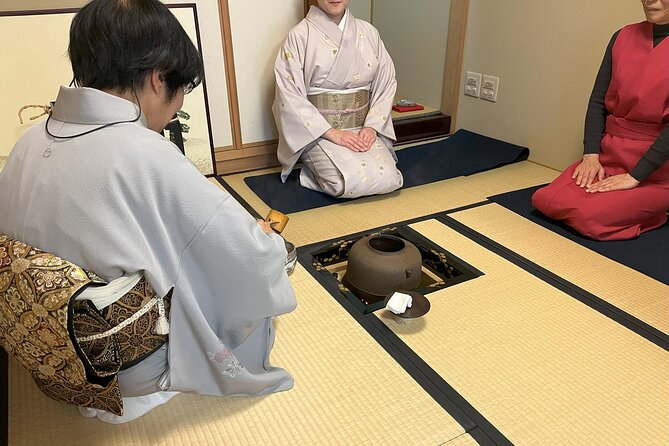
The price is $67.11 per person, for a private small-group tea ceremony lasting about 60–90 minutes. That’s not a budget activity, but it also isn’t a long full-day commitment.
What makes it decent value is the combination of:
- a Japanese tea ceremony master
- a private, small-group setting (up to four)
- hands-on matcha making
- included sweets and matcha materials
If you’ve done group tours before, you know the trade-off: cheaper often means less time with the guide and less chance to ask questions. In a tea ceremony, the learning depends on attention and pacing. This format is built for that.
One more practical detail: on average, this tends to be booked about 37 days in advance. That suggests it’s popular enough that planning ahead can help you lock in a convenient time.
Logistics You’ll Want to Know Before You Go
This is a private tour/activity. Only your group participates, up to four people. That’s a good setup for families, couples, and small groups who want a calmer experience than big-city group tours.
The meeting point is fixed (Repark Ibaraki Oike), and the activity ends back there. So you’re not getting dropped across town and left to figure out the rest.
Travel expenses aren’t included. So you’ll want to plan your own transit from where you’re staying in Osaka or from nearby areas heading in.
Who This Tea Ceremony Fits Best
This tea ceremony is made for people who want authentic Japanese culture without needing prior knowledge. If you’re a first-timer, it’s especially useful because the experience is described as easy to understand, with detailed explanation from the tea master.
You’ll likely enjoy it if:
- you want something calmer than shopping or sightseeing
- you’re curious about tea but don’t know the etiquette basics
- you’d rather learn through doing than just watching
- you like small-group experiences where questions are welcome
It might be less ideal if you’re looking for a fast, high-energy activity. This is time for attention, not a whirlwind.
A Quick Reality Check: The One Drawback to Plan Around
The main consideration is timing and the short walk from the station. If you’re the type who runs late, build in buffer time. The ceremony is set up as a sequence—entering the tatami room, demonstration, then Ryurei style practice—so arriving late can shrink your comfort level even if the host tries to help.
If you’re traveling between Osaka and Kyoto, this is still a great stop. Just don’t schedule it with a sprinting connection that assumes everything will go perfectly.
FAQ
FAQ
How long is the tea ceremony experience?
It’s about 60–90 minutes, approximately 1 hour 30 minutes.
Is this a private experience?
Yes. It’s a private tour/activity with only your group participating, up to four people.
Where is the meeting point?
The meeting point is Repark Ibaraki Oike 1-Chome 1-14-46, Ibaraki, Osaka 567-0826, Japan.
What is the nearest train station?
Ibaraki-shi Station (Hankyu Kyoto Line) is the nearest station.
How far is the walk from the station to the meeting point?
It’s about a 10–15 minute walk.
What will I do during the ceremony?
You’ll learn how to enter the tatami room, watch a matcha and sweets demonstration, then learn Ryurei style and how to make matcha yourself.
Are matcha and Japanese sweets included?
Yes. Japanese sweets and matcha green tea are included.
Are the tools and materials included?
Yes. Tools and materials needed for the activity are included.
What expenses are not included?
Traveling expenses are not included.
What if I’m late or get lost?
You should call the phone number provided with the confirmation details so they can guide you.
Should You Book This Osaka Tea Ceremony?
If you want a cultural experience that’s structured, calm, and hands-on, I’d book it. The best reason is also the simplest: you’re not just observing. You’re guided through steps in the tatami room, then you practice matcha making in Ryurei style and get to enjoy what you make with traditional sweets.
I’d also book it if you’re traveling with a small group and you want more personal attention than typical sightseeing tours. The up-to-four size keeps things manageable and respectful.
The only pushback I’d give is about timing. Add a little cushion for the walk from Ibaraki-shi and plan to arrive on time. Do that, and you’ll likely leave with something more useful than photos: a small ritual you understand well enough to appreciate it again later.