REVIEW · LONDON
London Traditional English Scone Making and Tea Workshop
Book on Viator →Operated by We Are London · Bookable on Viator
Scones in London take an hour. This traditional scone making and tea workshop is a fun, hands-on British comfort-food lesson with a small group and real guidance from hosts like Ron (and sometimes Danny), so you’re not just watching. I really like that you get to bake from scratch and then eat right away, and I also like the tea pairing that keeps the whole thing relaxed and cozy. One key catch: it’s not suitable if you’re gluten or dairy intolerant.
You’ll be based in the West End, starting at De Hems Dutch Cafe Bar, where the vibe feels more like a friendly cooking get-together than a formal class. The session is only about 60 minutes, so you’ll likely fit it neatly into a sightseeing day, especially if you want a break that’s active (not another museum line).
For $48.20, you’re paying for more than ingredients: you get equipment, instruction, tea (or coffee), and 3 or more freshly baked scones plus a scone baking certificate. If you love Britain through food, this is the kind of activity that leaves you with a repeatable skill.
In This Review
- Key Points I’d Plan Around
- Where You’ll Start: De Hems Dutch Cafe Bar in the West End
- The 60-Minute Format: How This Workshop Fits a Sightseeing Day
- What You Learn: The British Scone Basics That Actually Improve Results
- Step-by-Step: From Dough to Shaped Scones
- The Baking Experience: Timing, Technique, and Golden Tops
- Tea Break Included: Clotted Cream, Jam, and How to Serve It Right
- Small Group Size: Why Max 15 Makes a Difference
- Value Check: Is $48.20 Worth It?
- Who This Workshop Is Best For (and Who Should Skip It)
- Practical Tips Before You Go
- Should You Book This London Scone and Tea Workshop?
- FAQ
- How long is the London traditional scone making and tea workshop?
- What does the workshop cost?
- How big is the group?
- What’s included in the class?
- What do I eat with the scones?
- Is this workshop okay for kids?
- Is it suitable for travelers with gluten or dairy intolerance?
- Where do I meet for the workshop?
- Can I cancel for a full refund?
Key Points I’d Plan Around
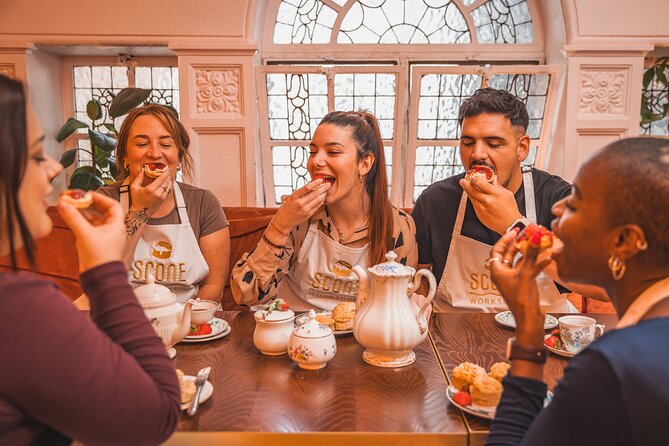
- Small group (max 15) means you can ask questions and actually get feedback while you’re shaping dough.
- Bake from scratch during the 60-minute flow, not just assembly or tasting.
- English tea time with clotted cream and jam turns the baking into a proper British serving moment.
- You leave with scones and a certificate, so it feels like an accomplishment, not a snack stop.
- West End meeting point keeps it convenient if you’re already wandering central London.
- Hosts like Ron and Danny come through repeatedly in the experience, and that matters for comfort and pacing.
Where You’ll Start: De Hems Dutch Cafe Bar in the West End
The workshop meets at De Hems Dutch Cafe Bar, 11 Macclesfield St, London W1D 5BW. This location choice is smart for two reasons: first, it’s central enough that you can weave it into a day of walking around London; second, you avoid the stress of getting out to a far-off neighborhood just for a one-hour activity.
Because the session ends back at the meeting point, you also don’t have to plan a second transit step afterward. That’s a real plus in London, where travel time can balloon if you’re relying on timing.
You’ll get a mobile ticket, and confirmation comes at booking. If you’re the type who likes to show up without drama, that helps you keep your day moving.
You can also read our reviews of more tours and experiences in London.

The 60-Minute Format: How This Workshop Fits a Sightseeing Day
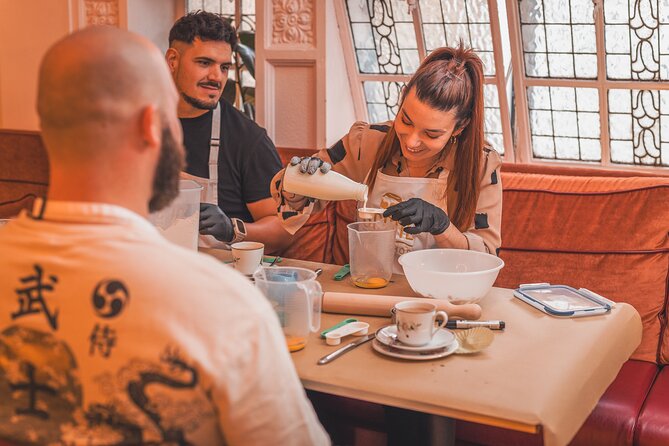
This is listed as about 1 hour, and the structure matches what you’d want from a short class: quick orientation, then hands-on baking, then eating and tea.
That time window matters. In a city full of half-day tours, a one-hour workshop is the easiest way to get a local skill without sacrificing a big chunk of your day. It also changes the feel of the class: it’s not built for long lectures. You learn the essentials that affect results—how to handle the dough, how to shape, and how to bake for that golden look—then you put it into practice immediately.
What You Learn: The British Scone Basics That Actually Improve Results
The point of this workshop isn’t just to make scones. It’s to understand why scones succeed or fail, and how to fix the common problems without turning it into a science experiment.
Here’s what the session emphasizes as you move through it:
- Scone history and context: you’ll get an introduction that frames the snack as a long-standing British treat. That context matters because it helps you understand what makes the scone “the thing” it’s meant to be.
- Hands-on technique: the baker walks you through the process so you can do the steps yourself, not just copy a vague method.
- Practical shaping and baking tips: the goal is consistent results—dough that comes together properly and scones that bake into that familiar layered texture.
Multiple people in the experience highlight that even if you’re not a confident baker, the instruction is approachable and step-by-step. That’s important for you if you want a win without stress.
Also, you get a scone baking certificate. It’s a small thing, but it makes the class feel official and worth your time.
Step-by-Step: From Dough to Shaped Scones
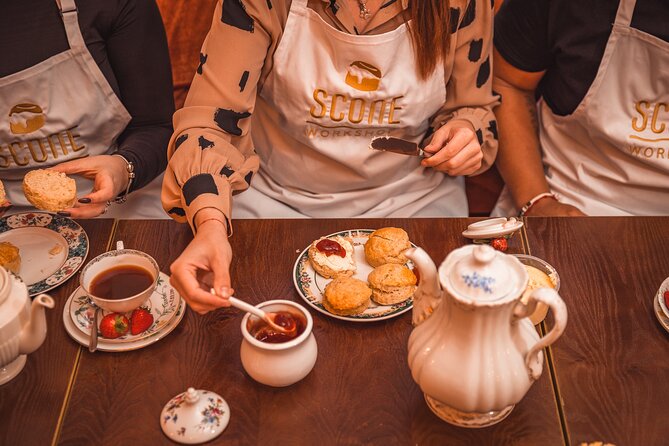
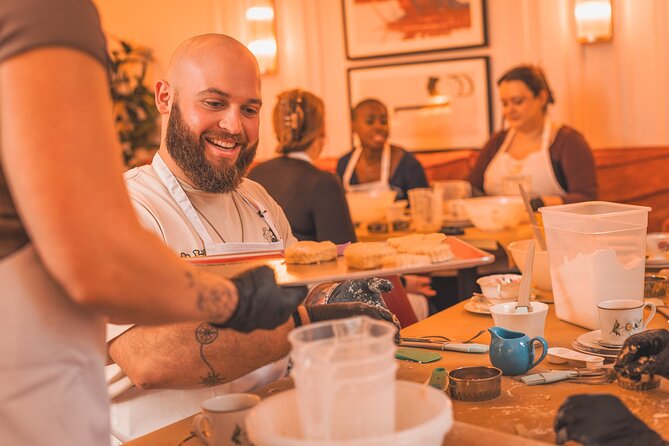
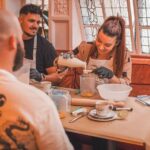
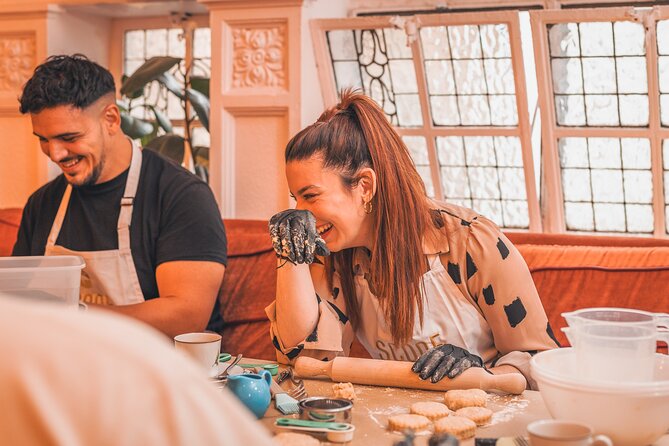
You’ll start by putting on an apron and jumping into the dough. The most valuable part of the format is that the setup is designed so you’re not spending the whole hour measuring and scrambling. In reviews, people repeatedly praise how ready everything feels—ingredients and equipment laid out—so your energy goes into learning and doing.
As you roll out the dough and shape your scones, pay attention to what your host says about delicate handling. If you’ve ever ended up with tough scones, that’s usually about dough being overworked. This workshop’s rhythm nudges you toward a lighter touch.
And since your group is capped at 15, it’s easier to get help while you’re shaping. That matters because scone shape isn’t only about looks; it affects even baking and how the layers develop.
The Baking Experience: Timing, Technique, and Golden Tops

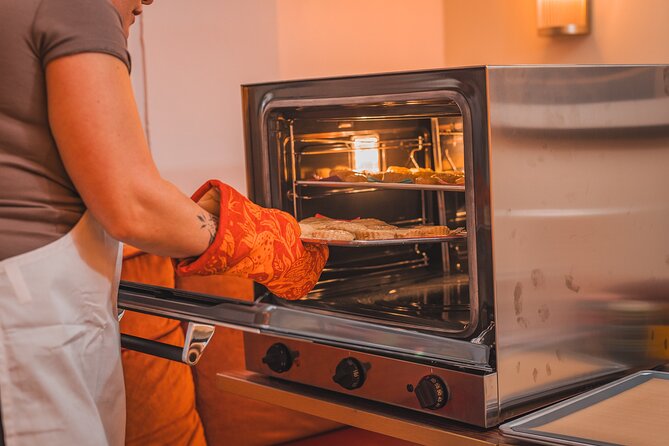
Once your scones are shaped, you’ll bake them to perfection. The workshop timing is tight, so the host keeps things moving while still giving you the “why” behind the key steps.
This is also where your host’s style shows up. People mention Ron and Danny (and also Rob in some sessions) as being patient and clear, especially with first-timers. That’s exactly what you want in a short class: guidance that stays calm when you’re learning something new.
One more practical point: because you’re in a small group and the space is kept tidy, you’re less likely to feel crowded. If you’ve done cooking classes where you’re squeezed in next to strangers, you’ll appreciate the more comfortable setup.




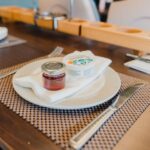
Tea Break Included: Clotted Cream, Jam, and How to Serve It Right
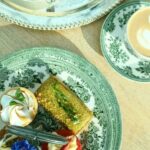
Then comes the best part: you eat your scones the traditional way. The workshop pairs your baked scones with:
- Clotted cream
- Jam
- English-style tea (and tea/coffee is included)
This is more than a food finish. It’s a taught ritual. The classic British scone experience is about balance—soft baked bread, rich cream, bright jam—plus tea that makes the sweetness feel right instead of heavy.
A lot of the positive feedback centers on this moment: bottomless or free-flowing tea (depending on how the host runs the session) and the warm, social break after you’ve worked with your hands. If you’re doing this on a sightseeing day, that tea pause also gives you a natural reset.
Small Group Size: Why Max 15 Makes a Difference

A group size cap of 15 is not just a number—it changes your quality of learning.
In a bigger group, scone class often turns into a “do what you can” experience. In a class this size:
- You can ask questions while they matter.
- You’re more likely to get feedback on your dough handling and shaping.
- The host can notice when someone is stuck.
And reviews consistently mention that the instruction feels easy for beginners. That tracks with a small-group setup where the host can slow down for the people who need it without the entire class falling behind.
Value Check: Is $48.20 Worth It?
At $48.20 per person for about an hour, you’re paying for a lot of “done-for-you” parts:
- all equipment
- tea/coffee
- 3 or more freshly baked scones
- a professional local instructor
- a scone baking certificate
- a structured lesson you can repeat at home
What makes it good value is that you don’t just leave with food. You leave with technique. In other words, you’re not paying only for what you eat during the workshop—you’re paying for the method so you can make it again later.
If you’re a tourist who wants a hands-on London moment (and not just a snack stop), this is one of the clearer “pay once, benefit twice” experiences: you get the tasting now and the skills later.
Who This Workshop Is Best For (and Who Should Skip It)
This is a strong fit if you want:
- a short London activity that feels properly British
- a hands-on cooking class that doesn’t require experience
- a social break with tea and a fun food payoff
- a beginner-friendly skill you can repeat at home
It may be less suitable if:
- you’re gluten- or dairy-intolerant (not suitable based on the tour’s info)
- you’re traveling with children under 6 (not recommended for that age group)
- you expect a long, sit-down meal—this is 60 minutes, then you’re done
Practical Tips Before You Go
Here are a few small planning tips that keep the experience smooth:
- Plan to arrive a few minutes early at De Hems Dutch Cafe Bar so you’re not rushing into apron time.
- Wear clothes you’re comfortable with getting a little flour on. Even well-run classes sometimes mean tiny spills.
- If you’re camera-happy, this is the kind of class where you’ll want photos of finished scones. The apron-and-recipe vibe is part of the fun.
- If you’re doing this on a day with other West End sights, treat it like a warm, guided break in the middle of walking.
Should You Book This London Scone and Tea Workshop?
Yes—if you want a compact, genuinely hands-on London experience built around an iconic food ritual, book it. The biggest reasons I’d put my money here are the small-group format, the from-scratch baking lesson, and the fact that you don’t just learn—you also enjoy your clotted cream and jam scones with tea.
Skip it only if you have dietary restrictions (gluten or dairy intolerances) or if you’re looking for a long, multi-course meal rather than a focused one-hour workshop.
If your goal is to taste Britain and leave with a technique you can use at home, this is the kind of activity that makes your London trip feel personal.
FAQ
How long is the London traditional scone making and tea workshop?
It’s approximately 1 hour.
What does the workshop cost?
The price is $48.20 per person.
How big is the group?
The maximum group size is 15 travelers.
What’s included in the class?
You’ll get all equipment, tea or coffee, 3 or more freshly baked scones, a professional local instructor, and a scone baking certificate.
What do I eat with the scones?
You’ll enjoy the scones with clotted cream and jam, along with traditional English-style tea.
Is this workshop okay for kids?
It’s not recommended for children under the age of 6.
Is it suitable for travelers with gluten or dairy intolerance?
No, it’s not suitable for travelers who are gluten or dairy intolerant.
Where do I meet for the workshop?
You start at De Hems Dutch Cafe Bar, 11 Macclesfield St, London W1D 5BW, UK, and it ends back at the meeting point.
Can I cancel for a full refund?
Yes. You can cancel up to 24 hours in advance for a full refund. Cancellation less than 24 hours before the start time isn’t refunded.