REVIEW · LONDON
Private Tour: Royal High Tea At Kensington Palace Gardens
Book on Viator →Operated by Top Tasting Tours · Bookable on Viator
High tea with a guided walk beats a standard tea run. You get Kensington Palace grounds plus a private afternoon tea experience near the palace.
I love that your guide sets the pace and turns garden stops into real stories, and I also love the hands-on feel of eating at your own table with classic English treats. The one thing to weigh is value: at $272.85 per person, you’ll want to double-check whether palace entry is included for your choice, and confirm where tea is served if the Orangery is closed.
In This Review
- Key things to know before you go
- What this Royal High Tea outing really feels like
- Getting there: Queensway start and the 2-hour rhythm
- Kensington Gardens stops: the art, the planning, and the small clues
- Physical Energy statue: the future-looking start
- Hyde Park: a quick name-history stop
- Italian Gardens: basins, marble rosettes, and urn shapes
- Round Pond: Queen Caroline’s ornamental water
- Kensington Palace grounds: what you can see without getting stuck
- Kensington Palace: Wren, Kent, and whether entry is included
- Statue of Diana: a modern royal marker
- The Orangery afternoon tea: menu, setting, and the wine/cocktail option
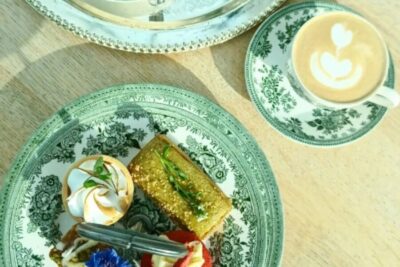
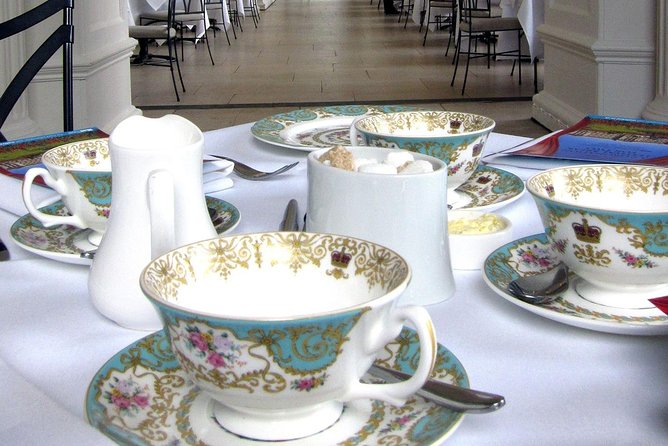
- What’s on the table: sandwiches, scones, and cake
- Alcohol included: sparkling wine or a cocktail
- A key venue caveat: if the palace tea room is closed
- Price and value: is $272.85 per person worth it?
- Who this Kensington High Tea is best for (and who should skip it)
- Should you book Royal High Tea at Kensington Palace Gardens?
- FAQ
- How long is the Royal High Tea tour?
- Is this a private tour?
- Where does the tour start and end?
- Is entry to Kensington Palace included?
- Where is the afternoon tea served?
- What food is included with afternoon tea?
- Are drinks included?
- What’s the tour language?
- Is the tour easy for people with mobility concerns?
- Do I get a ticket on my phone?
Key things to know before you go
- It’s private: only your group, with a dedicated guide who can slow down or speed up.
- Garden design details matter: you’ll stop at the Physical Energy statue, Italian Gardens urns, and Queen Caroline’s Round Pond.
- Palace time depends on your option: Kensington Palace entry is only included if you select it at checkout.
- Afternoon tea happens by the palace: tea is served at the Orangery designed by Hawkesmore in 1704.
- The guide names show up in real experiences: people rave about guides like Doug, Astrid, and Barbara Ann for keeping things engaging.
- There’s an important tea-venue caveat: the operator has shared that if the palace tea room is closed, tea may be moved to Harvey Nichols instead.
What this Royal High Tea outing really feels like
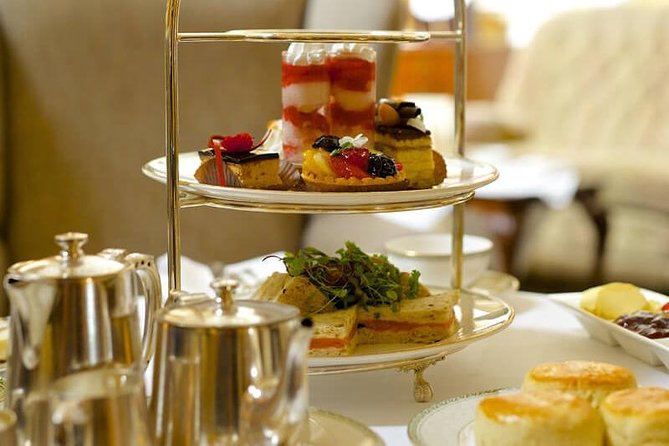
This is not just a ticket to eat cake. You’re paying for a smooth, guided circuit around Kensington Palace grounds, then landing in the Orangery for afternoon tea. The private format changes everything. When you’re in a group, you’re often stuck matching the slowest walker and the loudest chatter. Here, you get to choose the pace, and your guide can tailor the flow so you actually see what you came for.
I’m also drawn to the way this experience mixes formal and slightly playful. You’re in royal surroundings, but you’re also getting practical, direct guidance on what to look for: statues, garden layouts, and why certain features exist. Then the finale is the classic English set you expect from afternoon tea: finger sandwiches, scones with clotted cream and strawberry jam, and a proper sequence of cakes and eclairs.
The main consideration is cost. At $272.85 per person for about 2 hours, it’s a “make it special” purchase. If you’re hoping for a bargain, this won’t feel like one. And if you’re the type who cares deeply that tea must be at the palace specifically, you should confirm the tea room situation before you go.
You can also read our reviews of more tours and experiences in London.

Getting there: Queensway start and the 2-hour rhythm
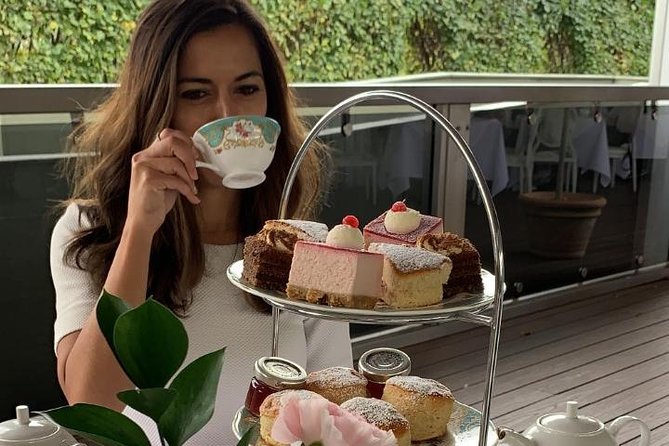
The meeting point is Queensway station (London W2 4RW). Tours typically run about 2 hours, with short stop times along the gardens and palace area (often around 5–10 minutes each), then a longer ~45 minutes for tea.
That timing matters. You’re not being asked to treat this like a full day of sight-seeing. Instead, think of it as a focused loop: quick introductions at each stop, then enough time at tea to actually relax. If you like your tours structured but not rushed, this format should click.
One more practical note: there’s no return transport included. You’ll end at the Royal High Tea experience location after tea, so plan your next step with your own tube/bus plan or a short walk/taxi.
Kensington Gardens stops: the art, the planning, and the small clues
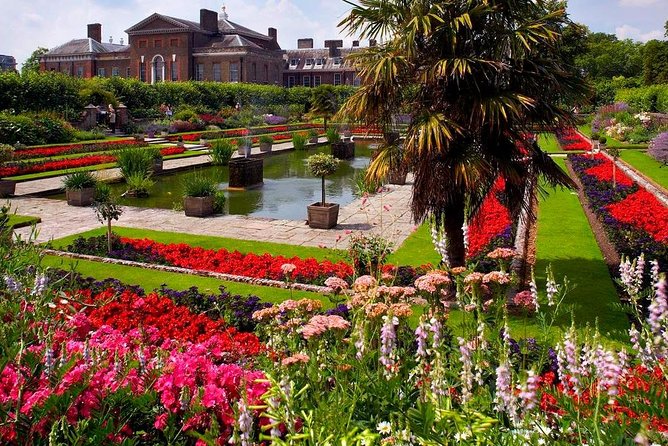
This experience builds its magic from details. Even if you’ve only seen Kensington Palace in photos, you’ll start noticing how the grounds are designed like a story—each stop adds a new chapter.
Physical Energy statue: the future-looking start
Your first notable stop is the Physical Energy bronze statue. It’s a man on horseback by George Frederic Watts (1817–1904). The idea is not just a cool sculpture. Watts intended his work to push humanity toward progress, with Physical Energy representing that restless impulse to seek what’s still unachieved.
Practically, this is a great “reset” moment. It sets a thoughtful tone before you move into the park’s more decorative features. It also gives your guide an easy entry point to explain symbolism, not just dates.
Hyde Park: a quick name-history stop
Next comes Hyde Park. You’ll get the origin of the name, tied to the Manor of Hyde, a subdivision recorded in the Domesday Book. It’s not a long stop, but it’s a neat reminder that even the biggest parks start as mapped land with older names and ownership.
If you love place-based context, you’ll appreciate the way this tour compresses it into bite-size facts.



Italian Gardens: basins, marble rosettes, and urn shapes
Then you reach the Italian Gardens, known for four main basins and a set of sculptural elements. Look for the central rosettes made from Carrara marble, plus the Tazza Fountain in Portland stone and white marble. You can also play a small spotting game with the urn designs: there are five main urn types—swan’s breast, woman’s head, ram’s head, dolphin, and oval.
This is the kind of stop that rewards you for looking slowly. Even with limited time, you should find at least one or two features your guide highlights. If you’re the type who loves garden geometry and symmetry, you’ll get a lot out of this.
Round Pond: Queen Caroline’s ornamental water
The next stop is Round Pond, commissioned by Queen Caroline. Again, it’s short (about 10 minutes), but it’s meaningful. This is where the gardens stop feeling like random greenery and start feeling like court-designed scenery.
This also tends to be a good photo moment—round water features usually look great from multiple angles, and your guide can point you toward the best views.
Kensington Palace grounds: what you can see without getting stuck
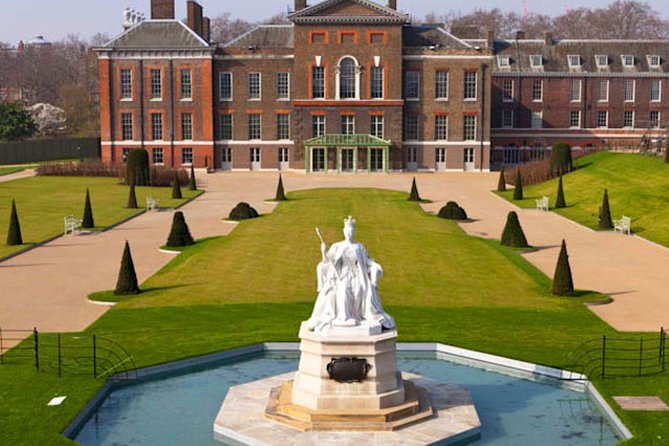
After the garden sequence, you move into the Kensington Palace area. The palace stop is time-limited, but it’s one of the biggest “wow” points of the tour.
Kensington Palace: Wren, Kent, and whether entry is included
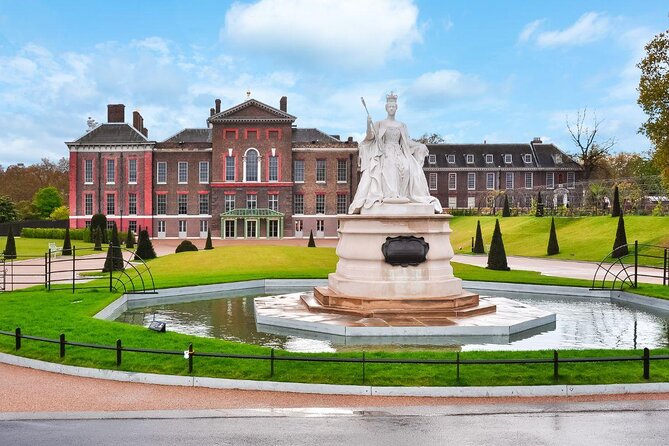
Kensington Palace was built by Sir Christopher Wren between 1789 and 1794, with additional work by William Kent. This stop is described as only accessible if you select the option that includes Palace Entry.
So here’s the practical takeaway: if you want time inside the palace itself, you must choose the palace entry add-on at checkout. If you don’t, you can still enjoy the grounds and related landmarks, but you should not expect full indoor palace access.
Statue of Diana: a modern royal marker
Next is the Statue of Diana at Kensington Palace. It was commissioned by Diana’s sons in January 2017 to commemorate the 20th anniversary of her death, and it was executed by Ian Rank-Broadley.
This is another stop where the tour shines through interpretation. It’s easy to walk past a statue and move on. With a private guide, you’re more likely to understand why it was placed here and how it fits into the palace’s story.
The Orangery afternoon tea: menu, setting, and the wine/cocktail option

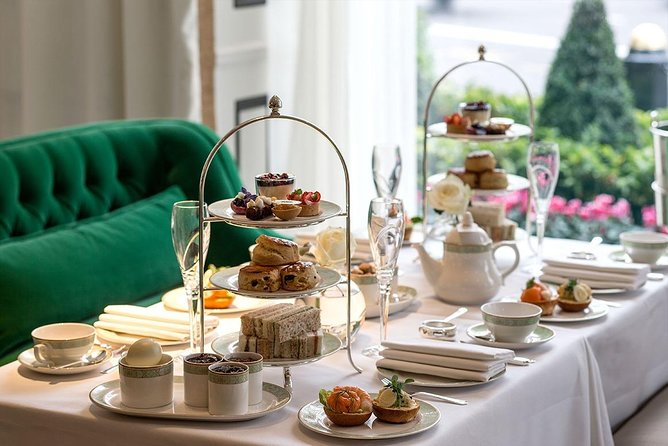
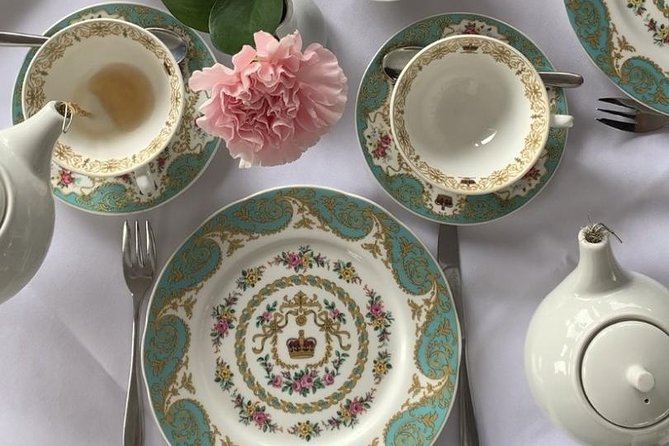
Tea is the finale and the real reason many people book. The tour serves afternoon tea at the Orangery next to the palace, designed by Hawkesmore in 1704. In other words, you’re not just eating desserts—you’re in a setting with serious period credentials.
What’s on the table: sandwiches, scones, and cake
The menu includes a classic lineup:
- Finger sandwiches: English cucumber, smoked salmon, egg salad, and ham & tomato
- Scones: clotted cream and strawberry jam
- Desserts: Victoria sponge, chocolate cake, assorted chocolate-inspired cakes, lemon cake, and eclair
This mix is the traditional afternoon tea structure done properly. And because it’s served at a private table, you get a calmer meal rhythm than a crowded public service line.
Alcohol included: sparkling wine or a cocktail
You can choose alcoholic beverages: sparkling wine or a cocktail. That means the tea can feel like a “celebration meal,” not only a snack break.
If you’re traveling with someone who likes a little extra polish, this detail can make the experience feel more adult and special without turning it into a fancy-dress event.
A key venue caveat: if the palace tea room is closed
One disappointment described in the feedback was tea being served at Harvey Nichols instead of the palace. The operator response said this happened because the Palace Tea room was closed, and an alternative location was provided. So I recommend you treat this as a check-before-you-go item: if having tea inside the palace grounds is your priority, confirm the venue details closer to your date.
Price and value: is $272.85 per person worth it?
This is where you should be honest with yourself.
You’re paying for four things bundled together:
1) A private guide who can explain what you’re seeing and keep the pace comfortable
2) A structured route through key garden/palace stops instead of piecing it together yourself
3) Tea at the Orangery with a set menu
4) Your own private table, plus the option of sparkling wine or a cocktail
If you were going to do Kensington Palace gardens anyway and you’re the type who wants context, the private guide can be the differentiator. People specifically praised guides like Doug for standout engagement and knowledge, and Astrid and Barbara Ann for making the time feel friendly rather than stiff.
But if your main goal is only the tea, it can feel steep. One critique called the price ridiculously expensive for what was effectively a walk plus tea. Even if your tea and setting are excellent, the value question still matters because you could potentially replicate parts of the walk on your own and spend less.
My practical rule: book this if you want the guided garden circuit to be the core event, and you’re aiming for a calm, special meal at the end. If tea alone is what you want most, price it against what you’d pay for tea independently and how much you actually care about the guide.
Who this Kensington High Tea is best for (and who should skip it)
This experience is private, offered in English, and uses a mobile ticket. Service animals are allowed, and it’s near public transportation.
That said, it’s not for everyone. It’s described as not recommended for those who find walking difficult. Even though the stop durations are short, you’re still moving through multiple points in a park and palace-adjacent area. If mobility is tight, plan for a gentler option or ask for guidance on what the walking looks like on your specific day.
It’s a great fit for:
- Couples who want a romantic but not stiff London plan
- People who like gardens and design details (Italian Gardens urn spotting is a fun hook)
- Anyone who enjoys a guide who adapts to their pace, rather than strict group timing
It may not be the best fit for:
- Budget-first travelers trying to DIY everything
- Anyone who strongly needs palace entry and must have it inside the building (only included if you select the palace entry option)
Should you book Royal High Tea at Kensington Palace Gardens?
I’d book it if you want a guided Kensington Palace gardens loop that ends with a classic afternoon tea experience at the Orangery, with time at your own private table. The format is built for comfort: short orientation stops, then real time to eat and slow down.
I’d think twice if:
- You’re mainly chasing tea and not the gardens/interpretation, because the guided component is what makes the price feel reasonable.
- Palace tea venue accuracy matters to you, especially with the possibility of a palace tea room closure and an alternative like Harvey Nichols.
If you do book, my simple checklist is: confirm whether Palace Entry is included for your selection, and confirm where tea will be served on your date. Once you have those two pieces clear, you’ll be set up for a very memorable Kensington afternoon.
FAQ
How long is the Royal High Tea tour?
The tour lasts about 2 hours.
Is this a private tour?
Yes. It’s a private tour/activity, and only your group participates.
Where does the tour start and end?
It starts at Queensway station, London W2 4RW and ends at the Royal High Tea experience location (the tour description notes the end point without return transport).
Is entry to Kensington Palace included?
Entry to Kensington Palace is included only if you select the option with Palace Entry at checkout. If you don’t, the palace stop is not accessible.
Where is the afternoon tea served?
Tea is served at the Orangery next to the palace. If the palace tea room is closed, an alternative location has been provided.
What food is included with afternoon tea?
You get sandwiches, scones, and a dessert selection that includes items such as Victoria sponge, chocolate cake, lemon cake, and eclair.
Are drinks included?
Yes. Alcoholic beverages are included, with choices of sparkling wine or a cocktail, plus tea.
What’s the tour language?
The tour is offered in English.
Is the tour easy for people with mobility concerns?
It’s near public transportation, but it’s not recommended if you find walking difficult.
Do I get a ticket on my phone?
Yes. The tour uses a mobile ticket, and confirmation is received at booking.